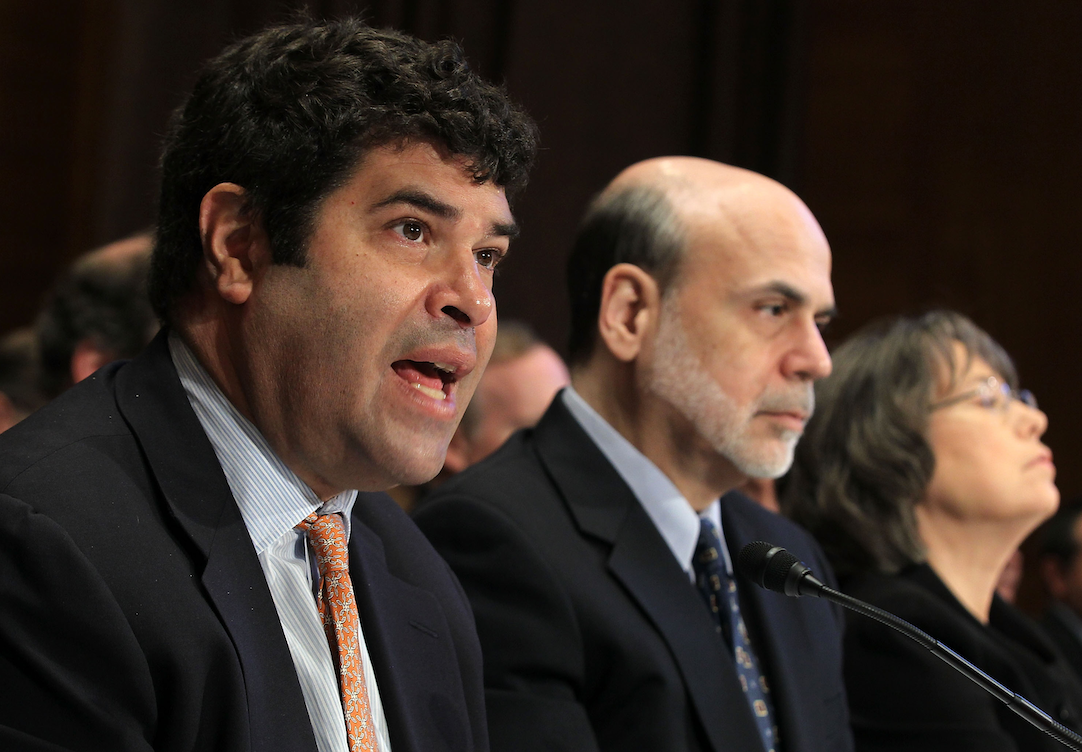
Brunswick Vice Chairman Neal Wolin, who helped steer the US Treasury through the financial crisis, on lessons that have stayed with him.
When Neal Wolin became Deputy Secretary of the US Treasury in May 2009, Barack Obama had inherited the worst economy of any incoming president since the inauguration of Franklin D. Roosevelt in 1933. Over the next four years, Wolin served as the Treasury Department’s Chief Operating Officer, where he supervised all of its bureaus and policy offices and was a key architect of the administration’s financial reform plan. In early 2013, he also served as Acting Secretary of the Treasury.
From 2018 to 2024, Wolin served as Brunswick CEO, leading the firm through the COVID pandemic. Wolin, now a Vice Chairman, recently spoke with Brunswick Review Editor Kevin Helliker.
Which lessons from the financial crisis have stuck with you, nearly 20 years on?
There are a number of lessons. At a high level, I would offer these: First, leaders have to make high-stakes choices with incomplete and rapidly shifting information. Plan beats no plan; you have to make judgments without knowing everything you want to know.
Second, it is really important to keep one’s eyes on the ultimate prize. Not how you are judged day to day or what the immediate reaction is, but over time. How will history judge what you have done? Keeping your eyes focused on that longer, more consequential, horizon is, I think, a really important lesson.
Third is the importance of pragmatism over doctrine. That means being flexible, being more focused on getting things done and making progress than on some fixed preconceived notion or dogma.
Fourth is to make sure one understands and engages the stakeholders in whatever crisis occurs. Understand who else is relevant to navigating or resolving that crisis—and engage with them.
Fifth, and relatedly, is the criticality of communicating: telling stakeholders where you are headed and why, and keeping them updated along the way. One of the things we learned in the financial crisis, more than anything else, is that it is really important to lay out what your plan is and why it is your plan. You might have to change the plan, but let people know where you are headed, and why, and how.
These lessons are easier said than done, but they are important.
We learned those lessons, sometimes the hard way, and they have stuck with me in the years since.
“Plan beats no plan; you have to make judgments without knowing everything you want to know.”
How has helping manage the response to the financial crisis, and more recently leading Brunswick through COVID, informed how you advise companies navigating today’s economic and geopolitical uncertainties?
A lot of those lessons are things I share with clients who are navigating complexity, uncertainty or a crisis of one type or another. They are broadly applicable, some more than others.
The extra thing I would add is that it is important to lead through crises with a lot of humility and a lot of humanity. That is partly related to communications, partly about being empathetic, and partly about making sure you do not think you have all the answers, or leave the impression that you think you do. As the crisis unfolds, you will learn a lot you would not necessarily have understood at the threshold, and you take account of it as you go along. It is critical to listen and adjust.
What are two or three actions you would recommend CEOs and the C-suite take now that would be extraordinarily difficult to stand up once a crisis starts?
There are several things that are important to try to do in advance of a crisis, which put one in a better position to deal with crises when they do show up, as they inevitably do.
The first is to consider and understand the range of potential risks you face. What are they? What are their dimensions? They could be commercial, regulatory, political or human capital risks. Or they could be natural catastrophes or public health events. Try to create a taxonomy, a catalog of those risks, and understand how they might affect the company, its operations and its path forward. Of course, you will never predict exactly the crisis that shows up. But think about categories of possible risk and do as much as you can to get your head around what they might mean.
The second follows very closely from the first: plan contingencies. Do scenario planning and tabletop exercises. Create playbooks. Think about who inside the company is important to dealing with this or that kind of crisis. What are the protocols? Who is responsible for what? Who has authority to make what decisions? And then who on the outside is important? Think about prearranging external advisors. And who are your stakeholders? Government officials, customers, employees, the media? For different categories of potential crisis, think in advance about the who, and also the what: How would you engage them? What would you need them to think about, or do, or help with?
The third, which I think is important in general but certainly in preparing for crises, is to invest in and develop relationships with various stakeholders. Get to know them. Create real relationships. It is really about building capital that can be useful in a crisis—with regulators, government officials, customers, thought leaders, a range of folks. When a crisis occurs, having deep relationships with the stakeholders who matter puts one in a much better position to deal with whatever comes.
Are leaders today more willing to prepare for a crisis? Is there a greater expectation than 20 years ago that a crisis will come?
Many leaders understand that there are a set of crises that could show up on the doorstep. They could be market-created, product-created, geopolitical—things leaders see in the newspapers happening to others and know have some probability of visiting them.
But it is hard. Leaders are busy. There is a lot of competition for their scarce time and capacity. To think about a thing that has not happened and plan for it is hard. It requires looking over the hill and around the corner. But it is really important.
I am not sure I can make the comparison to 20 years ago. But it is definitely the case, in a world in as much flux and as challenging as ours is—technologically, politically, geopolitically, demographically, in all kinds of ways—that leaders understand things could happen that they didn’t expect. And all things being equal, they should do what they can to put themselves in a position to respond effectively.
Meet the authors
-

Partner
New York
Kevin joined Brunswick in early 2017 as Editor of the Brunswick Review. In 27 years at the Wall Street Journal, he covered politics in London,…
More from this issue
Crisis
Most read from this issue
Answering to the Truth

Dubai: Lessons from 2009
You might also like

Foreword

Meeting the Moment