Mark Palmer shares insights from his time as Vice President of Communications at Enron during its collapse.
Twenty-five years ago, I experienced a corporate crisis so shocking and so consequential that it spawned half a dozen books, a documentary and a spectacularly bad TV movie. It was a crisis that sent friends and several other top executives to jail, a crisis that for me proved the wisdom of an adage I’d heard in journalism school: The truth is your boss. That applies as much to the Vice President of Communications for Enron—as I was—as it does to a White House reporter. Your boss isn’t a person; it’s the truth.
The experience, related in the following 2018 article by Kevin Helliker, gave me the equivalent of a Ph.D. in crisis survival—“Enron is your Vietnam,” said my father, a decorated Naval Aviator who’d flown more than 100 missions during that horrible war. As it must for him and other veterans, it feels to me somehow wrong to claim any degree of honor from an experience that caused so much decimation to the lives of so many others—for Enron that meant countless investors, including thousands of hardworking Enron employees. Nor does my experience at Enron or anywhere else make me a know-it-all. In 42 years as a corporate advisor, I’ve seen the best and I’ve seen the worst, but I still haven’t seen the same thing twice. As a Brunswick Partner advising clients, I listen far more than I talk. Listening may be my superpower.
In listening to clients, colleagues and leaders of all kinds, I hear two words too often, a phrase that to my ears is thrown around almost recklessly: “crisis management.” On this point, I will assert that my Enron experience provided crucial perspective. When you discover that the CFO and several of his mob are running a criminal enterprise, and you lie awake nights hoping you didn’t unintentionally advance his efforts, you develop a hardcore baseline for crisis. Believe me, you can’t manage it. If you can manage it, it’s an incident. You must lead—with the truth as your scepter and sword—through a crisis.
To be sure, these are interesting times, war following war following global pandemic, while around the world political unrest tests long-held alliances. Little wonder that Britain’s venerable Collins Dictionary, dating back to 1839, made “permacrisis” its 2022 Word of the Year. Crisis is real, and indeed there’s a lot of it out there. But I’m not sure it helps to call every setback, every unexpected obstacle, every disappointment, a crisis. Doing so suggests the second-most abused mindset in crises: “We don’t have a business problem, we have a PR problem.”
Let’s be clear, I’m not just talking about semantics. Identifying, organizing and operating in this fog is fraught. You can screw it up either way. And there are plenty of practitioners out there, of all stripes, to grind their axes on your situation. So, you must lead.

The following is an abridged version of the 2018 Brunswick Review article “Mark Palmer.” The full article can be found at: review.brunswickgroup.com/article/mark-palmer-enron.
On October 25, 2001, the phone rang on the desk of Mark Palmer, Vice President of Communications for Enron. The caller was a Wall Street Journal reporter inquiring about an Enron special-purpose entity called Chewco.
“Never heard of it,” said Palmer. Promising to look into Chewco, he said he would get back to the reporter.
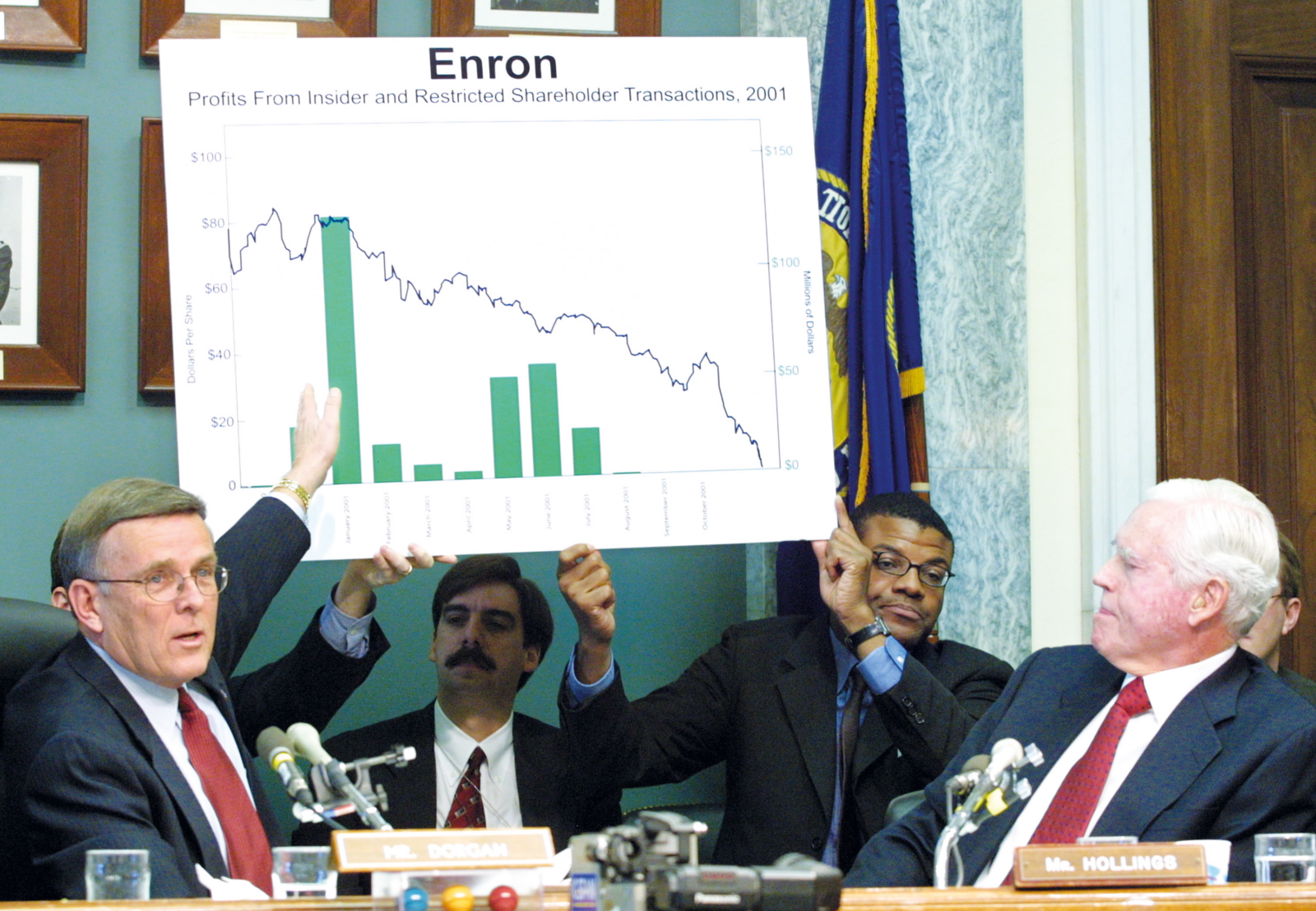
During his first five years as Enron spokesman, Palmer had scrambled to accommodate ever-mounting interview requests from journalists enthralled with the innovation, boldness and incredible growth of Enron. During that time, the value of Enron stock more than quadrupled to $90 a share.
But 2001 brought a series of setbacks: Short sellers planted skepticism in the media, the company’s charismatic CEO abruptly resigned and Enron took an unexpected $1.2 billion charge against equity. The stock sank to below $20 a share.
As he set out to gather information about Chewco, Palmer still believed in Enron’s capacity to recover. He still believed in the leadership of Kenneth Lay, the company’s long-time Chairman who had recently re-assumed the title of CEO. But within moments, he learned from an Enron executive that Chewco might be a deeply flawed entity.
Enron executives investigating the files of Andy Fastow, the company’s recently departed CFO, were finding that Fastow may have improperly structured Chewco to circumvent accounting rules and enrich himself. If this suspicion were true, Chewco’s obligations would turn into Enron debt, further destabilizing the company’s finances and destroying what was left of its reputation. The news floored Palmer.
Exercising an authority that he arguably didn’t wield, Palmer called for an immediate gathering of top management, including Kenneth Lay. So distraught was he that on the way to that meeting Palmer made a detour to the bathroom to vomit, a delay that cost him a seat at the meeting he had called. So Palmer sat on the floor of a small, crowded conference room.
During the meeting, when Lay failed to immediately grasp the Chewco implications, Palmer took charge by loudly slapping his hand on the floor. “I’ll tell you what’s going on, Ken,” Palmer shouted at the Chairman and CEO. “The Wall Street Journal knows more about what’s going on at your company than you do!” Then Palmer demanded, as he had before, that Enron hire an independent investigator. This time Enron followed his advice.
The son of a Vietnam War Navy attack pilot, Palmer grew up believing that hardship should be embraced, tackled and internalized, rather than just talked about. But the trial he endured as chief Enron spokesman during its spectacular rise and scandalous fall convinced him that post-traumatic stress disorder is a real affliction. “Before Enron, I could have been a sword swallower. Ever since Enron, if I get just a little bit stressed my gag reflex is hypersensitive,” he says.

The experience underscores a type of risk not always appreciated on the front lines of corporate communications. After government investigators swarmed Enron, Palmer lay awake nights replaying every communication he ever issued on behalf of the company, aware of the potentially criminal implications of a corporate spokesman knowingly saying anything wrong or misleading.
Palmer passed that test, in the view of the media as well as government investigators. Even so, he can’t help second-guessing himself. “It’s awful to look back on statements that I made based on getting an answer (from an Enron executive) and having it end up being wrong,” he says.
Kurt Eichenwald covered Enron’s fall for The New York Times and wrote a 700-page masterpiece on Enron, Conspiracy of Fools, which conveys the shock for those at the company charged with investigating Fastow’s deals. “Mark Palmer never even approached the line of being deceptive to me or I think to any reporter,” says Eichenwald. “If Mark told me I was going down a wrong path with my reporting, I would immediately stop. He had that kind of credibility. … He’d always do his best to get an answer and if the answer was ugly, he’d give it to you.”
The Wall Street Journal’s Rebecca Smith and John Emshwiller played a significant role in uncovering Fastow’s secrets. In their 2003 book, 24 Days, they said they “didn’t think Palmer had ever knowingly given them false information.” It seemed obvious “that he had been trying to be helpful and honest.”
A University of Missouri journalism graduate, Palmer worked as a broadcast journalist before joining Fina, an oil-and-gas company, as its all-around spokesman and marketing guru. He was 35 in 1996 when a headhunter recruited him to Enron, a natural-gas pipeline company that was disrupting the industry by creating a market for trading natural gas. This gas bank not only was proving to be profitable but also good for consumers. “It really improved the natural gas market in the US. It solved the problem of there being shortages in one market and surpluses in another,” says Palmer.
A brilliant Enron executive named Jeffrey Skilling—instrumental in the gas bank concept—was pushing for deregulation of the electricity market, an effort that required approval of both federal and state regulators. “We felt like we could do the same thing with electricity that we had done with natural gas—even out supply and generally lower the price,” Palmer says.
After government investigators swarmed Enron, Palmer lay awake nights replaying every communication he ever issued on behalf of the company.
As Enron became more a trading company than an energy concern, its accounting grew increasingly complex, puzzling some analysts and investors. But Enron’s deals and books had the blessing of white-shoe lawyers and a blue-chip accounting firm, Arthur Andersen. Meanwhile, Enron’s critics often had their own agendas, as short sellers or foes of deregulation, and Palmer pushed back hard. “I zealously communicated our message,” he says.
“When you’re the spokesman of a company whose success played out on the free and open market, a company that’s the darling of Wall Street and of the media, you develop a level of confidence that becomes arrogance,” he says. “Looking back, it’s shocking how full we were of ourselves.”
The beginning of the end came in the spring of 2001 when Fortune ran a story asking whether Enron was overpriced and pointing out that few analysts understood how Enron actually made money. The stock began to fall. In August, the stock took a steep dive when Skilling, CEO only since February, resigned citing personal reasons. Then The Wall Street Journal began questioning the accounting behind certain limited partnerships set up by Fastow.
When the WSJ persisted, Palmer asked Fastow to provide an interview. Fastow refused, yelling on the phone that the idea was idiotic and questioning Palmer’s competence as a spokesman. “Looking back, I realize that Andy Fastow screaming at me should have been a tell-tale sign,” says Palmer. “I know that dogs don’t bark because they’re going to bite you. They bark because they’re afraid.”
To make matters worse, Palmer recalls, Lay told him, “Mark, what are you doing to get the Journal to quit writing these stories? They’re killing us.”
Even as the SEC announced an investigation into Enron, and as the company’s own executives turned up ever-grimmer details about its slipshod financial structures and in many cases improper accounting, Lay kept exhorting Palmer to somehow improve media coverage. That prompted the financial team that had replaced Fastow to sit Palmer down and show him what they had discovered to be the true state of affairs: The company had little in the way of cash flow and the value of its equity paled beside a potentially $40 billion load of debt triggered by its falling stock price and lowered credit ratings. For Palmer, that horrible news brought relief.
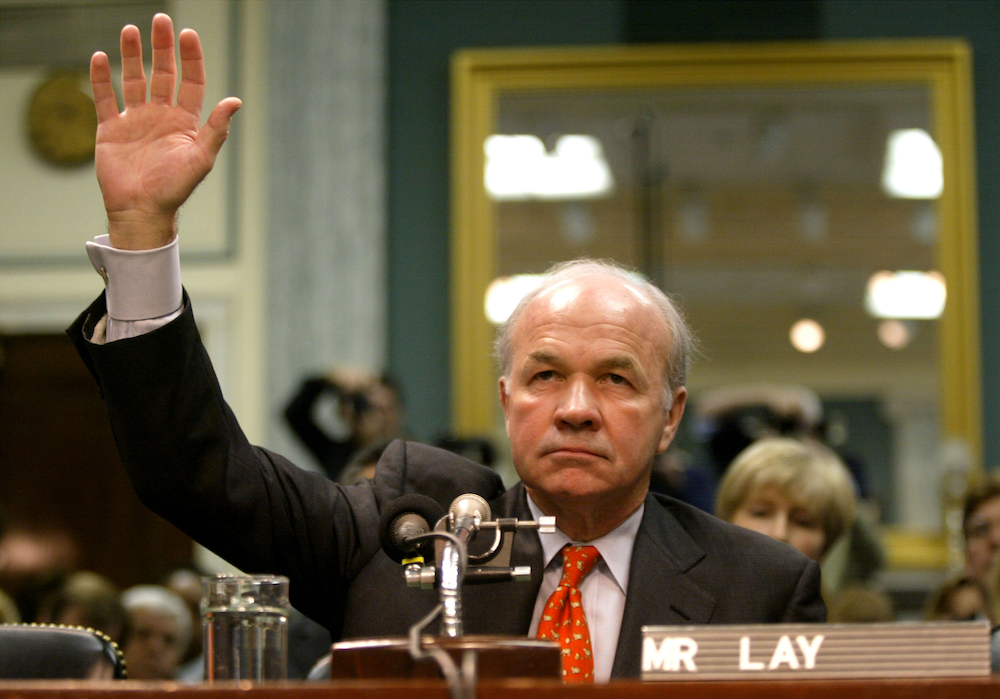
“I had thought this was my fault. I had thought that all of our 401(k)s were going to zero because I couldn’t convince the media that they were wrong,” he says. Later that evening when Lay again beseeched Palmer to silence the WSJ, Palmer replied, “Ken, $40 billion in obligations and no cash flow is a PR problem, but bad PR didn’t cause it and good PR can’t fix it.” As Palmer puts it now, “You can’t spin your way out of trouble you acted your way into.”
Enron’s falling stock price was creating havoc at a company that had heavily used its shares as collateral, and rising doubts about the company’s financial integrity prompted its trading partners to insist upon more and more onerous terms. Growing counterparty distrust of Enron and its CFO forced Lay to fire Fastow. Because it came only a day after Lay had publicly expressed confidence in his CFO, the firing hardly calmed nerves, inside or outside the company.
Then came The Wall Street Journal call asking Palmer about a partnership called Chewco. It turned out that some of the structures Fastow and his co-conspirators had set up were being used to disguise bad business decisions, create phony income and funnel money to Fastow and other cronies.
In the days, weeks and months that followed, Enron filed for bankruptcy protection. Lay, under pressure from creditors, left both the board and the company. Congress ran hearings. Federal prosecutors investigated and brought criminal charges against Fastow, Skilling and Lay, in addition to dozens of other Enron executives forced to plead guilty to crimes rather than risk defending themselves. How much Lay and Skilling knew about Fastow’s crimes remains unclear, but both had sold massive amounts of Enron stock ahead of the company’s downfall. The accounting firm Arthur Andersen collapsed under the weight of an Enron-related obstruction-of-justice conviction that was reversed years after the closing of the firm.
All the while, Palmer and his team continued running the Enron communications department. After Enron filed for bankruptcy protection in late 2001, Palmer’s communications staff was slashed to seven from 27. Since August, that team had handled the resignations of the CEO and CFO, new president and CEO announcements, September 11-related announcements, a $1.2 billion-charge against equity, news about Enron credit crunches and now bankruptcy, among other big announcements. The remaining seven team members worked around the clock often without going home, fielding as many as 400 calls a day.
“Ken, $40 billion in obligations and no cash flow is a PR problem, but bad PR didn’t cause it and good PR can’t fix it.”
Palmer slept on a boardroom couch while another member of his team slept under her desk. He showered in the company gym and saw his wife, Cozy, only when she arrived to bring him fresh clothes. In the last three months of that year, he lost 35 pounds.
Recruited to take charge of Enron a month after its bankruptcy, turnaround specialist Steve Cooper encountered, as he recalled in an interview, “the most catastrophic, most investigated, most chaotic scene you could imagine. Enron was being investigated by virtually every arm of the US government—the DOJ, SEC, FTC, Department of Energy—and sued by dozens of states’ attorneys general. It had all the elements that attracted scrutiny by the press.”
Fielding all that was Palmer. “He brought order and thoughtfulness and transparency to what was a massive shitstorm,” says Cooper.
Once, Palmer called his father to ask if he should quit. His father, the stalwart Naval aviator and former TWA captain, noted that no one was shooting at him. “My father said, ‘I think you’re really good at what you do. If you stick it out, you’ll probably learn a lot. You’ll probably be even better.’”
Palmer remembered listening to a former squadron-mate of his father’s, a man who had spent seven years as a prisoner of war in Vietnam, describe the ways he and his fellow prisoners had stayed positive—by seeing how long they could stay conscious during torture, by communicating with each other via a kind of Morse code, by memorizing the name and capture date of every other prisoner, and honoring a system wherein the longest held would be the first released.
In that way, Palmer turned the months-long slog into a kind of contest. He began to pride himself on making sound decisions despite fatigue and anxiety. Long accustomed to feeling pressure from both his superiors and the media, he saw clearly now what he had known all along, that his only duty was to the truth, even if the truth was, “I don’t know.” Tackling one phone call at a time, one day at a time, he began to feel more than equal to the task. “In a crisis like that, what matters is mindset—somehow maintaining a productive, positive mindset,” he says. Yet he also regrets not having demanded the company hire a psychological consultant—ideally one with crisis expertise—to help the staff through the storm.
A serious crisis, he now says, can’t be managed according to any pre-conceived playbook. But it offers an enormous opportunity for leaders to negotiate the unforeseen in a way that inspires and encourages employees, investors and the media. Never is a leader more closely watched or more widely heard than during a crisis, Palmer notes, adding that what all stakeholders seek from a leader at such moments is competence, diligence and honesty, especially honesty.
His experience leading during the crisis gave Palmer extraordinary insight into how to avoid or limit such debacles. The key factor, he says, is honesty. Given the very human desire to please one’s boss, and given the boss’s very human desire for positive reports, how can leaders create a culture where their workforce isn’t afraid to tell even the most unpleasant truths?
“I got my Ph.D. in that at Enron,” says Palmer.
Meet the authors
-
Partner
Dallas
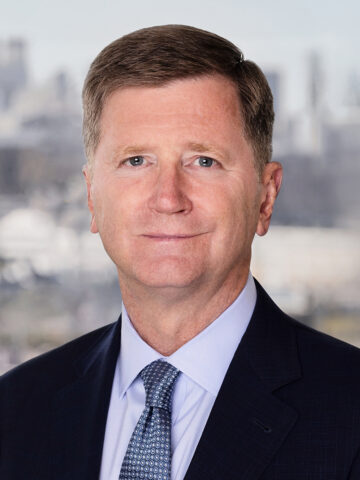
Mark brings 40+ years of corporate communications and journalism experience to clients facing critical situations such as crises, mergers, labor issues, and succession. -
Partner
New York
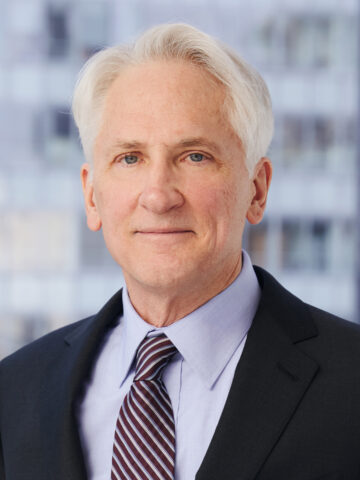
Kevin joined Brunswick in early 2017 as Editor of the Brunswick Review. In 27 years at the Wall Street Journal, he covered politics in London,…
More from this issue
Crisis
Most read from this issue

Critical Moment: Crisis
Under the Gun
You might also like

Fighting Back
Why a Global Sports Legend Joined the Investment Firm Sixth Street