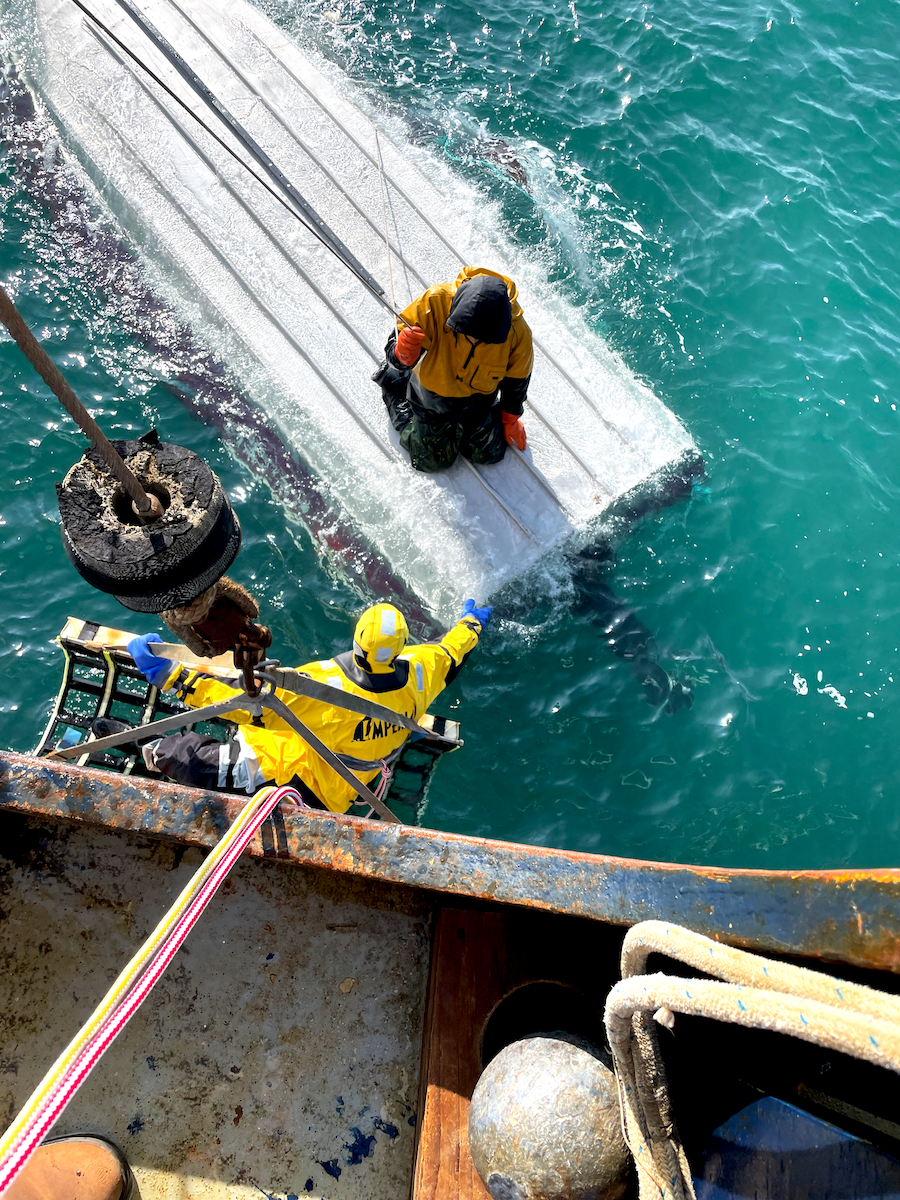
September 7, 2026—Fifteen-year-old Derek Aghnaanga was rescued by the US Coast Guard after clinging to his capsized skiff for over 60 hours in arctic waters.
After spinal cancer struck Reynolds Price, subjecting him to treatments that left him paralyzed, the novelist looked skyward one day from his hospital bed, asking a question: How much more pain must he endure? In response, as Price later recounted in his memoir, A Whole New Life, he heard what sounded like an actual voice, one he understood to be the voice of God. It said, “More.”
When it comes to crisis, whether that be disease, war or cyberattack, uncertainty is the rule. To our relentlessly posed query, “How much more?,” the answer almost always is “More,” presenting us with a test of resilience that offers no guarantees. In those moments, what sustains us—besides faith, hope and strength of mind and body—is the example of others who persisted against all odds. Paralyzed at age 51, Reynolds Price went on to publish his finest works.
Becoming a model of perseverance doesn’t require experience or college degrees. Maybe just heart. Derek Parker Aghnaanga is a 15-year-old Native Alaskan from St. Lawrence Island, a fishing community closer to Russia but belonging to the US. On the morning of Friday, September 4, Derek set out on a skiff to catch halibut with his 35-year-old brother and 34-year-old cousin. Early Sunday morning, the skiff having failed to return as scheduled, Derek’s mother alerted authorities, and the US Coast Guard set about launching a search, although weather conditions that Sunday severely limited rescue efforts.
On Monday morning, about 72 hours after the skiff departed, the Coast Guard spotted it upturned in the Bering Sea. Frigid water was washing across its bottom, on which knelt a lone figure. Derek. Exactly how long he had knelt there isn’t clear. But accounts in The New York Times, Reuters and the AP, along with social media posts from his relatives, suggest that the skiff capsized after about 10 hours, meaning that Derek clung to its bottom for about 62 hours in arctic conditions, without food or fresh water.
As it happened, the Coast Guard’s HC-130 lacked the ability to pull Derek up, so it dropped a raft and some survival equipment near the upturned skiff. But rescuers later said Derek was too weak to swim to it. The Coast Guard then radioed the nearest ship, the Northwest Express, which was four hours away. Could Derek hang on? The captain of that ship, Adam White, later told The New York Times, “It was the longest four hours of my life.”
Derek wasn’t alone during the entirety of his ordeal on the overturned skiff. At some point, according to press accounts, his brother got caught under the boat and drowned. Then the night before the rescue, his cousin slipped off the upturned boat into the sea. Through chattering teeth, Derek told his rescuers that he’d tried to hang on to his cousin’s body. A speck floating in the Bering Sea, dehydrated and hypothermic, he clung to the skiff, praying for a miracle, according to a Facebook post by his mother, who was listening to a live Coast Guard transmission at the moment her boy was rescued.
“I’m not sure how anybody else would survive that,” Captain White told The New York Times.
Meet the authors
-

Partner
New York
Kevin joined Brunswick in early 2017 as Editor of the Brunswick Review. In 27 years at the Wall Street Journal, he covered politics in London,…
More from this issue
Crisis
Most read from this issue

25 Years Later
Critical Moment: Crisis
You might also like
In Millennials We Trust
The Language of Nature