
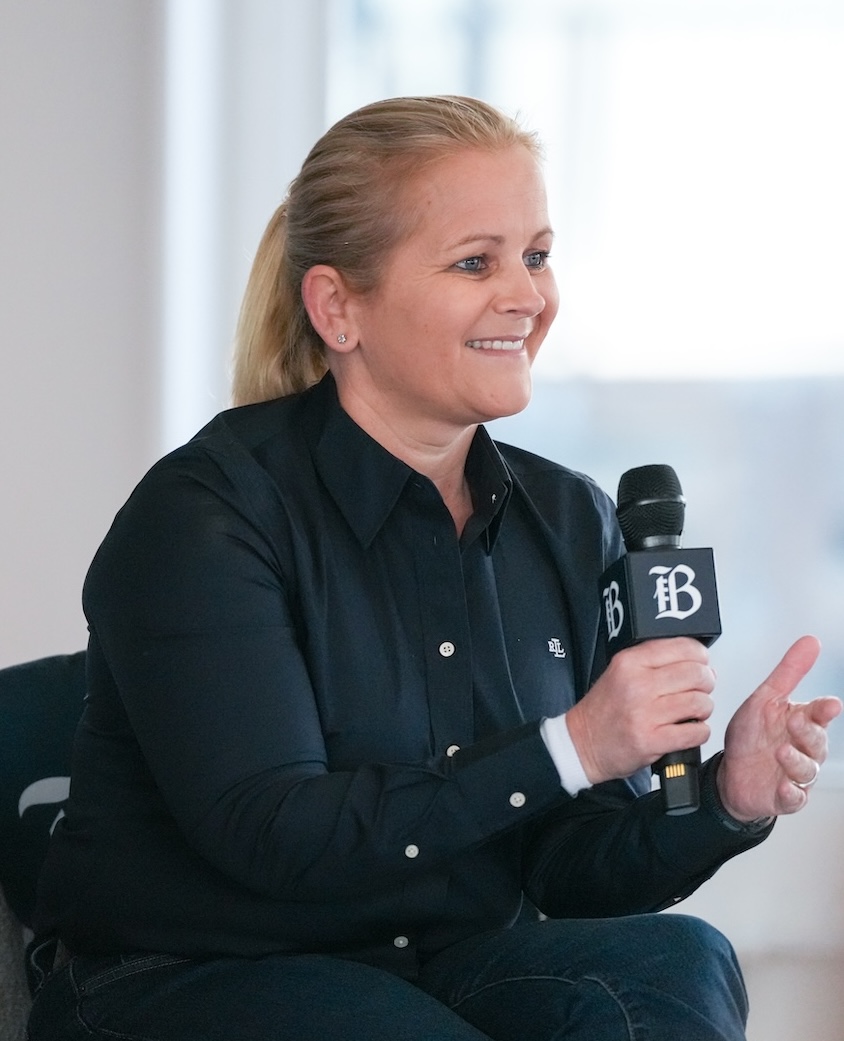
Kay Cossington helped turn England’s women’s national football team into back-to-back champions of Europe and World Champion runners-up. Now she is leading Bay Collective, a Sixth Street-backed platform investing in the future of the women’s sport.
In the tight-knit world of women’s football (or soccer, as Americans call it), Kay Cossington, MBE, is a superstar.
Cossington spent 20 years inside England’s storied Football Association (the FA)—the oldest body of its kind, and which laid the foundation for the modern game—rising from Under-15 coach to the FA’s first-ever women’s Technical Director. Cossington spearheaded the strategy that transformed England’s women’s teams, from hiring the head coach of the women’s national team to designing the development pathway that produced players such as Lauren James, Lauren Hemp and Alessia Russo. That system helped propel England to its Euro 2022 victory—the country’s first international football trophy since 1966—its run to the 2023 World Cup final, and its successful Euro 2025 title defense. Research suggests the Lionesses’ success inspired record numbers of women and girls across the UK to play and coach football, and more fans to watch it.
Meanwhile, the global investment firm Sixth Street was building one of the more impressive sports portfolios in finance, with partnerships spanning FC Barcelona, Real Madrid, the New England Patriots, the Boston Celtics, the San Antonio Spurs, and the San Francisco Giants.
Sixth Street was also one of the first to recognize the growing investment potential in women’s sports. In 2023, the firm launched Bay FC, the San Francisco Bay Area-based team competing in the National Women’s Soccer League (NWSL). That investment led the firm to Cossington, who began working as a strategic advisor to Sixth Street as it became the first institutional investor to fully own and operate a US professional sports franchise.
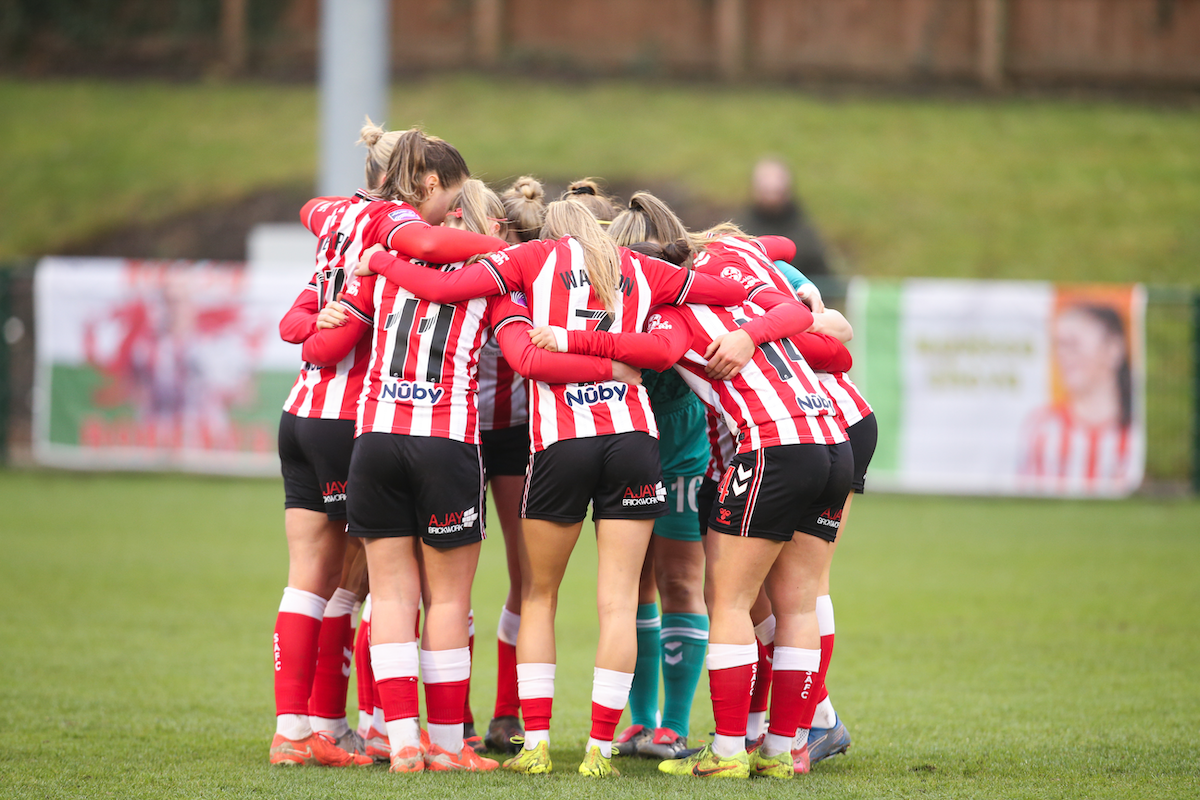
In 2025, after Cossington ended her stellar run at the FA, she became CEO of Bay Collective, a new multi-club ownership platform backed by Sixth Street which looked to “raise the bar for women’s football, and then keep moving it higher.” Bay FC became Bay Collective’s first club, and earlier this year it acquired a majority stake in Sunderland AFC Women, an English club with roots stretching
to 1879.
Cossington is scaling a framework similar to the one she used in England, and is doing so at a time when women’s sports are seeing huge growth. McKinsey research described US women’s sports as reaching an “inflection point,” finding that between 2022 and 2024, revenue from women’s sports grew 4.5 times faster than it did in men’s sports. Propelling that expansion were larger fan bases, media-rights deals and sponsorship investments.
Women’s football sits at the forefront of that surge. In 2021, it cost roughly $2 million to open an NWSL franchise. Five years later, a group agreed to pay more than $200 million to bring a franchise to Columbus, Ohio. Research by Nielsen found that the average viewership of NWSL regular season games increased by 61% in 2025, with the NWSL Championship game drawing more than 1.5 million viewers at its peak. That same research found 64% of NWSL fans are men.
Cossington’s pitch is more sophisticated than “business is booming.” She believes that this boom will reward builders who appreciate the distinctive features of the women’s game. “I hear so many people say women’s football is different,” she says. “My question back is: how so? Because unless you understand how it is different, you don’t know what to do with it.”
In a recent conversation with Brunswick’s Preston Golson and Lauren Hendricks, Cossington laid out the framework she used to help revitalize England’s women’s football team and explains how she is scaling it across Bay Collective. “Not only do we have the patient capital of Sixth Street,” she says, “we have the capital and the expertise of knowing what to do with it, how to sustainably and strategically deploy it, and how to develop and build specifically for women’s football.”
How different is it being a leader inside the FA, one of the world’s oldest sporting institutions, compared to leading a newer venture like Bay Collective?
In terms of my leadership philosophy, and in what matters in building a winning structure within an organization, I think it’s exactly the same. I have a high-level, five-step process that serves as my framework.
The first step is having a clearly defined and articulated vision that everybody is excited by and aligned with—words really matter. The second is clarifying what it takes to win. What are your competitors doing? What does “best in the world” look like?
The third is understanding the gap between yourself and world’s best. You turn the mirror on yourself and ask, “Here is where we are, here is where we need to be, what does the distance look like?”
The fourth is designing and implementing a strategy to close that gap—the plan.
And the fifth, by no means the least, is people. Who do you need in terms of structure, expertise and experience to deliver the plan, and what kind of culture will bring out the best in them?
One of the mistakes I have seen, certainly in sport, is that people jump straight to the plan without having clarity on the vision, the competitive analysis and the gap. My approach is to spend a deliberate amount of time on each of those steps before executing. Now, obviously, it would be lovely if you could just pause everything and work sequentially through the process, but life doesn’t happen like that. But fundamentally, that’s the system we follow.
The main difference between the FA and what we’re doing here is speed. At the FA, with its governance structure, it took years to influence the right boards and committees, to have a voice in the women’s game, and then it took even more time to implement our strategy. Bay Collective is a speedboat by comparison. The entrepreneurial mindset means we can move much faster.

You talk about building winning systems rather than just winning individual matches. What does that look like in practice?
It means thinking across three strategic horizons. The first is to optimize across a 12 to 18 months period. Doing everything you already do as well as you possibly can, no shortcuts. That is what we are doing right now at Bay FC and at Sunderland.
The second across two to three years, is innovation. What can you do differently from the rest of the ecosystem? That means going beyond just the results on the pitch to also build a team capable of developing players for the world stage.
The third horizon is transformation. And the question we ask each other constantly is: What should we be thinking about that nobody else is asking? That tends to be the trickiest question. If I ask, “What are we all doing well?” everybody has a lot to say. But if I ask, “What are we not doing? What are we not thinking about?”—that is where the real advantage lives.
And like player development, business development is not always linear. There are ups and downs. We have a phrase at Sixth Street, which is to face the tiger. Every day we face the tiger as a team, because things do not always go right, and having the resilience, belief, togetherness and the culture to keep facing problems head-on—that is such an important value for us.
Superstars are born when no one else is looking; having the grit, doing the hard yards in the gym and on the pitch when nobody is watching creates superstars. The same is true of business. Nobody sees the work we are doing day to day to build solid foundations in which performance is built on, people only see the result, but not the stuff that makes it possible. These things take time to do it properly.
“We had a phrase at the FA: The history of the women’s game was its biggest strength and its biggest weakness. It was constantly compared to the men’s game.”
What excites you most about where women’s sports stands right now?
Having been someone who grew up playing and coaching the game when it was not taken seriously—it was a hobby for many of us—the thing that excites me most is that people genuinely see this as a business asset, something you can capitalize on. That is enormously encouraging.
The second thing is that people are recognizing the differences in women’s football as strengths. We had a phrase at the FA: The history of the women’s game was its biggest strength and its biggest weakness. It was constantly compared to the men’s game. Now people are beginning to understand that there is a different fan base, different commercial partnerships, and different biology in how you develop female athletes.
And the match-day experience is brilliant for families and young people, which is exactly who our fan base is. Women’s football is accessible and while the world becomes digital, those live entertainment moments are going to be incredibly important for families to connect and for the fans to keep that connection with their heroes.
Bay Collective now has clubs in two of the biggest women’s football markets in the world. How does the multi-club structure actually work?
Our ambition is to expand across different geographies with the philosophy that business excellence and sporting excellence can successfully coexist. In each club, we are building out the infrastructure, the player pool and, critically, a local pathway: academies and youth development that feed each senior team.
One of our core values is “local heart, global ambition.” In practice, that means we are not a copy-and-paste model. Sunderland will never be Bay FC. Bay FC will never be Sunderland. The fan base and the badge they wear are deeply important to those communities. At Sunderland, we are blessed with local heroes: Lucy Bronze, Steph Houghton, Jill Scott … It is important that we develop a pipeline to produce more, so the community continues to have those opportunities.
I talk a lot about sustainable growth. The build I described at the beginning of this conversation—the vision, the gap analysis, the plan—is the same build we are going through now with every club both on and off the pitch. How do we ensure we maximize what we have with the capital and capacity available, and how do we build a business that is sustainable long after we are here?
What makes us unique is the combination of Sixth Street’s patient capital plus a global team at Bay Collective that has decades of experience in women’s football. We have the capital and the expertise of knowing what to do with it, how to deploy it, how to develop and build specifically for women’s football. That covers everything from sporting performance and academy development to marketing, commercial strategy and match-day experience.
And at the global level, we are building shared resource and infrastructure that enhances what each club can do locally. Working across the platform we raise standards with practitioner and departmental communities of practice and knowledge share with the mindset of “no one of us is as strong as all of us.”
As private capital flows into women’s football, how do you protect athlete well-being and the culture that makes the sport distinctive?
It comes down to having people who understand the fabric of women’s football and what really matters. Another one of our values is “treasure the treasures.” The history and identity of women’s football, our DNA, and our story are unique and we have a responsibility to honor that.
I was watching the England–Mexico match at this year’s World Cup and it brought back memories, because that was the same stadium where the first unofficial Women’s World Cup was played in 1971. Mexico played Denmark in the final before more than 100,000 fans.
So when people say women’s football is new—it is not. It has been here, and everything that was happening back then, with very little resource and very little capital, but a lot of passion and an understanding of who wanted to come to those games, is what we are trying to bring back to the forefront.
Before Euro 2022, we brought back the “Lost Lionesses,” those women who had played in that 1971 tournament and been hidden from the world for decades. They told the current squad what it had meant to pull on that shirt. Watching our current lionesses listen to their individual stories, understand what they had lived for many years, and handing them a shirt, building a strong connection from the past to the present. A deep connection was formed—it was a sense of belonging.
So we make sure we keep telling the stories of our past, and use them as the foundation of who we are. That doesn’t mean we are living in the past, but that identity makes us unique as a sport, and that is for a big part why fans and commercial and broadcast partners love women’s football.
And then at the front end, everything we do around female athlete health, player development, staff development—we have a value, “football first, for her.”
One of the most refreshing things about Bay Collective is that I can think about how to build a women’s football club without anybody saying, “On the men’s side, we do not do that, so why do you need it?”
“One of the most refreshing things about Bay Collective is that I can think about how to build a women’s football club without anybody saying, ‘On the men’s side, we do not do that, so why do you need it?’”
You spent 20 years building the system behind England’s women’s team. Was there a single moment when you knew it was working?
It was gradual. I started to believe we were on the right track when players we had developed—Lauren James, Lauren Hemp, Alessia Russo, Chloe Kelly and others—began debuting for the Lionesses. They had been part of the very beginning of this plan, and seeing them come through the system, each with a very different journey, was reassuring and an important sign of progress.
But of course you have your wobbles. I’d spent my entire career at the FA convincing people that the women’s game was different, that we needed to drive change, and showing them how we could do it. The FA gave us a task to win a major tournament. I remember being at the quarterfinal of Euro 2022, and we were playing Spain at the AmEx Stadium in Brighton, and we were 1-0 down. It looked like we were going out. And all I could think about was that I had spent years convincing people this was the right approach, and now I was going to face them after a loss. Then, Ella Toone and Georgia Stanway scored very late in the game. And it felt like everything we had been building toward was still right.
We kept telling each other throughout that tournament to trust the process. I know that phrase is overused, but we really did have an intentional process, and we stuck to it.
Before the tournament started, before we kicked off against Austria for our first match, I asked everyone: Is there anything we could have or should have done differently? I wanted a true reflection on the work before emotion took over.
And the answers gave us real confidence. Everyone felt we had done what we needed to do to the best of our ability. Then it was game time, and you let the sport take over.
Looking ahead to 2031, when the Women’s World Cup comes to North America, what does success look like?
Full stadiums, first and foremost, in an environment that is right and fit for purpose for the women’s game and the fans. A thriving match-day experience. A diverse and connected community with real connectivity between fans and players.
Beyond that, success is the players returning to club environments that are fully professional, with the right capability, capacity and infrastructure to allow them to be the top athletes they deserve to be. And I always take care with this, because I do not say “the same as the men.” I fundamentally believe the women’s game should have the right facilities and infrastructure to give the players the tools they need. Some of that is similar to the men’s game, but some of it is not.
I have been to Arsenal games at Emirates Stadium, and I have seen big, grizzly guys in the stands with “Russo” on the back of their shirts [Alessia Russo plays for Arsenal and the English national team]. That is so fulfilling, because it means we are capturing an audience that genuinely cares about the women’s game. When we reach the point where these role models are on the backs of shirts and people know who these players are, we will have really raised the profile, the brand and the identity of women’s football. But the most important thing is that we keep the very things that are unique to the game at the core of everything we do.
Meet the authors
-

Director
Washington DC
Preston has served in a variety of national security positions, including as an analyst at the Central Intelligence Agency (CIA) and an aide to the… -

Associate
Washington DC
Lauren Hendricks is an Associate on the Foundations, Education and Public Health team. She is based in Washington, DC.
You might also like

An Operating System for the Ocean
Expectations of Youth