
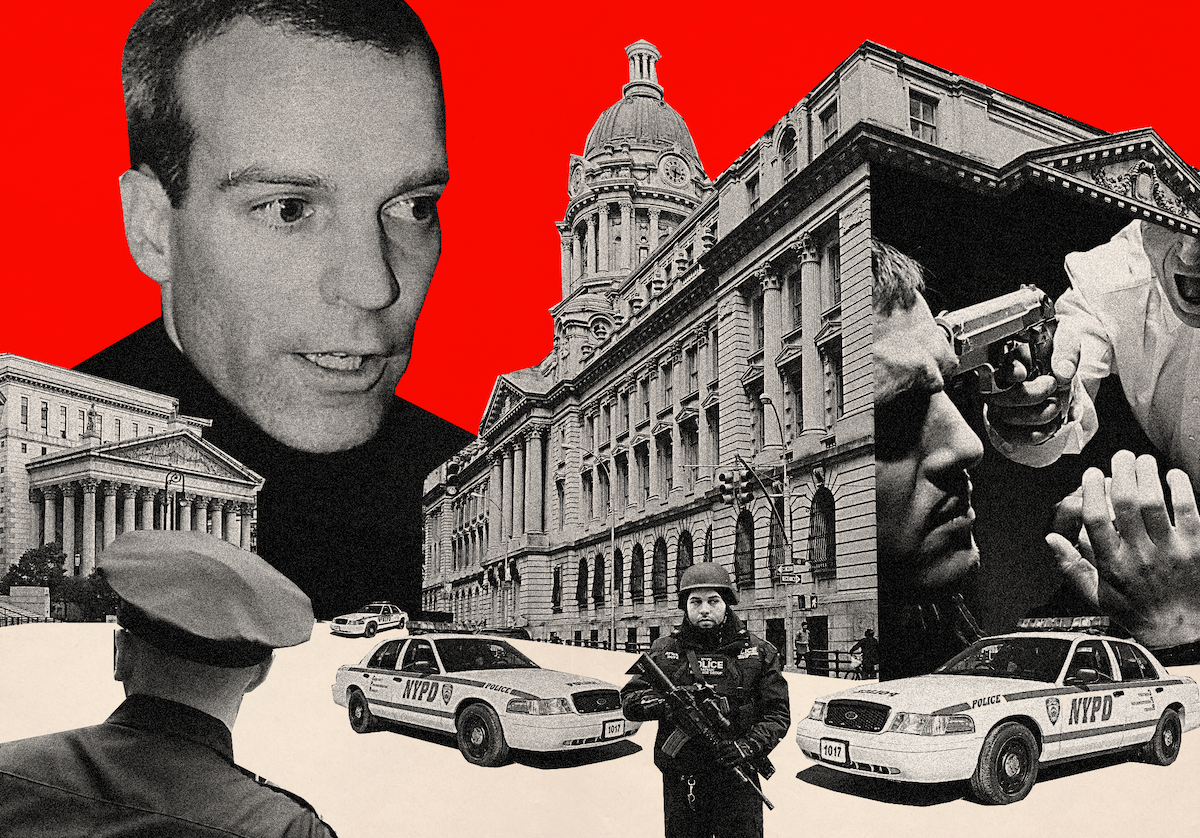
Days after being sworn in as Deputy Commissioner of the NYPD, Michael O’Looney, now a Brunswick Partner, faced an armed kidnapper.
I was dead asleep when the phone rang just before midnight.
“Commissioner. We have a hostage situation at the 19th Precinct Stationhouse. Commissioner Kelly wants you to meet him there ASAP.”
It was a bitterly cold January night. I got dressed fast, too fast. Jeans, long underwear, a thick sweater.
A large crowd had gathered outside the 19th. Reporters and dozens of cops, including heavily armed Emergency Service officers. ESU is the NYPD’s version of SWAT, the cops other cops call when they need help.
Commissioner Ray Kelly’s black SUV pulled up a minute later. He stepped out of the back seat in a navy suit, crisp white shirt and maroon tie. He looked me up and down just a second too long. I had dressed for the wrong job. I tucked that in the back of my mind. Suit. Always a suit.
We walked in together, officers leading us through the crowd to the second floor. We were met by the chief of department, the head of ESU, and the head of the Hostage Negotiation Team.
“Here’s the situation. Some sort of domestic dispute. Both parties brought in for questioning. No arrests. Detective Michael Ahearne brings the father up to the interrogation room just to talk. Once inside, the guy pulls a gun, pistol whips him and shuts the door. Right now, we got Ahearne on the floor and the gunman has a 9mm jammed into the back of his head.”
We walked back to another room. There was a one-way mirror looking into the interrogation room. Ahearne was on the floor just in front of the door. The gunman, Adrian Leibovici, was over him, the gun in his right hand, the muzzle against Ahearne’s head. Two ESU counter-snipers were set up, rifles on tripods, ready.
The plan, if needed, was two quick shots. The first would shatter the plexiglass window. The second would kill the gunman. The snipers needed a face shot, what tactical officers call the T-box, designed to shut down the central nervous system before he could reflexively pull the trigger.
Commissioner Kelly spoke: “What does he want?”
“He’s demanding to talk to a reporter. Something about the CIA, the Mossad, seeing his daughter,” said the Chief Hostage Negotiator, Jack Cambria.
Kelly glanced at me. The others glanced at me. Then they stopped glancing and just looked at me. No words.
“I can talk to him,” I said.
Two minutes later I was wearing a heavy bullet-resistant vest, metal helmet, and standing behind a Kevlar shield in front of the interrogation room door, directly in the line of fire of the NYPD snipers.
I had been a TV reporter in New York City for more than a decade. Two weeks earlier I had stood on a stage at police headquarters as Mayor Michael Bloomberg swore me in as the NYPD’s Deputy Commissioner of Public Information. I was the department’s new top spokesperson, a civilian outsider in a world deeply suspicious of outsiders.
“Get Michael ready,” said Kelly.
Two minutes later I was wearing a heavy bullet-resistant vest, metal helmet and standing behind a Kevlar shield in front of the interrogation room door, directly in the line of fire of the NYPD snipers. Jack stood next to me, along with Sam Miller, another member of the Hostage Negotiation Team.
A large hand grabbed the collar of my vest.
“Commissioner, if this goes bad, I’m gonna pull you back and down. Back and down, you got it?”
“I got it.”
Jack slipped my old WCBS-TV business card under the door and told Adrian he had his reporter to talk to.
Then we waited.
If Adrian had read any of the coverage of my leaving WCBS for the NYPD, this could all go bad in seconds.
Then Adrian read my name out loud off the card. His Israeli accent was unmistakable. And he sounded angry.
“Michael the reporter. I remember you. So, we have Michael the reporter and Michael the detective,” he said, referring to Ahearne, who was lying behind the door just a few feet from me with the Glock pressed against his head.
It began.
Adrian was angry and he wanted his story out in the world, and he saw me as the channel to get it out. He began to rant. He said he had been a CIA contractor, a hitman, that he had worked for the Mossad. They had screwed him. Now his common-law wife was screwing him as well. He wanted to see his six-year-old daughter. She didn’t want that. He was the father, he had rights. It wasn’t fair.
He had written a manifesto. He had demanded police get it from his apartment in Queens. They got it. He had me read chapter after chapter. I took notes. He would stop and quiz me. I would refer to my notes.
“Good, Michael the reporter, good. Keep going. We need to get the whole story out. All of it.”
The second floor of the 19th was now crowded with police. Fifteen to 20 ESU officers in full gear holding submachine guns. Paramedics.
And against the back wall, watching quietly, were Commissioner Kelly and the senior leadership of the NYPD. Other than Kelly, I had only met a few of them.
It was hot in the room. The radiator banged. I was sweating. I had dressed like I would be outside covering a story in the cold. Now I stood in a hot room in my jeans and sweater, bullet-resistant vest and helmet, with an ESU officer’s hand gripping my collar and two police snipers waiting in the next room.
A thought appeared in my mind. This can only end three ways, and two of them are bad, very bad.
One hour, two hours. We talked. I read more passages out loud. Jack tried to put a limit on it.
“Adrian, we have read your manifesto. Michael will get your story out. It’s time to put down the gun and let Detective Ahearne go.”
“I say when this is done.”
Another hour. My throat was raw. The ESU officer still had his hand on the collar of my vest. I thought of the two ESU snipers in the other room. How long would the brass let this play out?
Now Jack changed tactics.
“Adrian, we know you’ve been through a lot. You are stressed. We can get you a doctor.”
“You think I’m crazy. You think I’m f***ing crazy.”
Adrian was yelling, I could feel the anger through the door, through the Kevlar shield.
They are going to shoot him.
I imagined the chief of department giving the snipers the order to fire. The plexiglass shattering. The second shot hitting Adrian in the face.
“Adrian, tell me more about the CIA. What exactly did you do for them? Where were you operating?”
I heard myself talking. My words. My voice. Calm. Focused. Changing the subject. Changing the tone. My words.
“I was all over the place. It’s all classified. I did hits around the world for the agency,” said Adrian.
The rage was gone. There were no gunshots. We kept talking.
We talked for four hours. Again and again, Adrian agreed to give up. Again and again, he kept going.
Finally, Jack played to his honor.
“Adrian, you were in the Mossad. You were in the Israeli army. You are a man of honor. A man of integrity. No soldier like you would ever kill a detective in cold blood.”
I learned that in a crisis you rarely have complete information, perfect choices or much time. You have to try to understand the current situation.
This time, Adrian agreed.
We had a deal.
“Adrian, you are going to give your gun to Detective Ahearne. When he has possession of the gun, he will say he has the weapon. Then we are going to come in the room.”
Then we heard Detective Ahearne’s voice.
“I have the weapon.”
ESU hit the door with a battering ram. They hit it again. Officers rushed the room. I was pulled down and back.
They had Adrian in handcuffs.
He was yelling for me.
“Where is Michael the reporter? I need to speak to him.”
Two big ESU officers had him by the arms. Adrian was before me, his hair disheveled, eyes wide.
“Michael, come visit me in prison. We will write a book together. Me and you.”
“Shut the f*** up,” said one of the officers as they pushed him forward and out of the room.
My new colleagues, most of them decades older, lined up to shake my hand.
“You’re one of us now,” said the chief of organized crime, who had watched from the back wall.
Commissioner Kelly took me to breakfast at an all-night diner. Two women in skintight leopard print sat in the booth across from us.
Kelly sipped his coffee.
“Well done.”
Adrian Leibovici begged to be given a life sentence. A judge agreed.
I did not visit him in prison. There was no book.
I spent another few years at the NYPD dealing with all sorts of crisis situations. Police officers murdered on the job, police-involved shootings, multiple homicides, terror threats, war protests, blackouts.
But nothing taught me more about crisis management than those four hours standing behind a Kevlar shield outside the interrogation room at the 19th Precinct.
A man’s life depended in part on the words I used, the tone of my voice, whether I listened, whether
I could control my own fear, and whether I could recognize when one approach was not working and try another.
At the most dangerous moment of that night, when Adrian was screaming and the snipers were ready, I did not argue with him. I asked him a question. He started answering. The temperature changed.
I learned that in a crisis you rarely have complete information, perfect choices or much time. You have to try to understand the current situation.
What was driving Adrian? He wanted to be heard. You have to make hard decisions before certainty arrives.
I carried those lessons with me as head of communications at Merrill Lynch during the financial crisis, at Barclays during the LIBOR scandal, at Elliott Management during tense activist campaigns and now at Brunswick, helping clients manage crises of their own.
But I learned them first, late at night in a hot room on the second floor of the 19th Precinct, wearing the wrong clothes, with a cop’s hand gripping the back of my vest and an angry man with a gun on the other side of the door. u
Meet the authors
-

Partner
New York
Michael advises clients on strategy, financial communications, including M&A and activism, crisis and other critical business and reputational issues.
More from this issue
Crisis
Most read from this issue
The Worst Possible Moment
Labor’s Expanding Role in M&A
You might also like
Legacy Rooted in Family

The Argument for Silence
