

Pavita Cooper, UK Chair of the 30% Club, on the campaign’s success and the work still to be done.
Years before she became UK Chair of the 30% Club, Pavita Cooper would debate with her husband on Sunday evenings over who could leave for work first the next morning. They were both senior executives in finance, had a young child and roles that demanded long hours in the office. “With one child, you can just about hold it together,” she says. But after their second child arrived, “I had this dawning realization that something was going to have to give.”
What gave was Cooper’s executive career. Cooper wrote her resignation letter, “distraught, angry, thinking my career was over.” But a mutual contact introduced her to Baroness Helena Morrissey, who had recently founded a campaign called the 30% Club, which looked to boost female representation at board and C-Suite levels in Britain’s biggest companies. At the time, in 2010, women held just 12% of UK board seats. Cooper threw herself in as a volunteer—as everyone involved in the campaign still is.
Today, women hold nearly 45% of board seats in the UK, while the 30% Club has expanded to 21 countries with more than 2,800 members and runs, in partnership with the social impact organization Moving Ahead, what Cooper describes as “the world’s largest cross-company mentoring program.”
All that success, though, comes with an asterisk. The number of female CEOs in the FTSE 100 peaked at 11 in 2024 and has been falling. As Cooper pointed out in a recent conversation with Simone Selzer, a Brunswick Partner and member of the 30% Club’s UK Steering Committee, the number of women in all senior executive roles has decreased (as it also has in the US), while scrutiny on women who reach the top has intensified. Cooper believes real progress won’t come from more targets, but rather rethinking what it means to lead.
What’s been the secret to the 30% Club’s success since 2010?
A small group of women, mostly from financial services and asset management, came together, but realized they were in an echo chamber: women talking to women. So the insight was: reach out to a group of very powerful, influential male chairs. In the UK, we have this term “City Grandee”—the equivalent of your Fortune 500 heavy hitters. At the time, obviously, they were all men.
These male chairs stepped forward, used their voices, and advocated for greater gender representation on boards. As they’ve openly shared, they faced some pushback and resistance.
The name itself was a bit of a pushback against the establishment—the City of London boys’ clubs that were very prevalent at the time. We’ve still got clubs here that don’t allow women in. So the idea was: well, we’ll get our own club going.
It was a voluntary, business-led approach—not mandating. We set targets to set direction, but we didn’t set quotas. First and foremost, it’s a business campaign, about better business outcomes. This isn’t some benevolent act that men are doing for women.
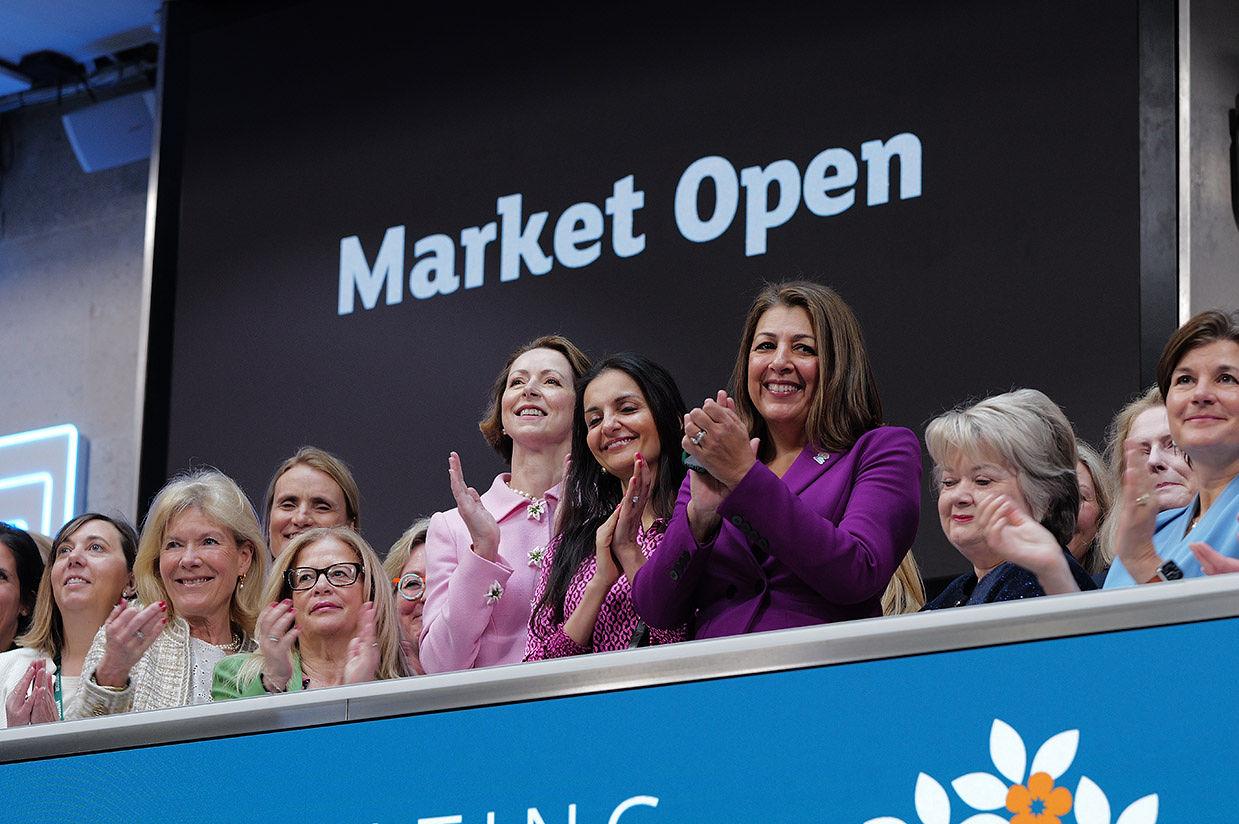
People see that board representation and might think: “job done.”
People say it to me all the time: “Are we not done yet?” We’ve done phenomenally well on boards—it really has been a voluntary, business-led approach, mostly driven by male chairs, and they are to be applauded. But we just didn’t see the trickle-down from the boardroom to the top of organizations, to executive committees, to the CEO pipeline. So we need to do something else.
We have a campaign now called “30 by 30.” It’s not a target; we’re not suggesting we can get to 30 female FTSE 100 CEOs by 2030. But it’s a clarion call, a rallying cry to those with power and influence: What are we going to do about this?
Why hasn’t increased board representation translated to the C-Suite?
One of the unintended consequences has been that the board success emptied the talent pool at the top of the executive pipeline. A lot of women left their executive careers probably slightly earlier than they should have, because of the appeal of a portfolio career and getting on lots of boards. As a result, we ended up with a talent vacuum of people who could succeed to the very top.
I’m generalizing here, but a lot of women in the senior executive ranks now are not in jobs that traditionally lead to becoming CEO. They’re CHROs, CMOs, CTOs—not traditional CEO stepping-stone roles, where you’ve got P&L control and real scale leadership challenges.
In the UK, if you look at two or three recent FTSE 100 CEO appointments of women, companies have gone to their non-executive director community and appointed women off the boards. They weren’t senior executives within the company. That speaks to the dynamic I’m describing.
Back in 2011, we had five female CEOs in the FTSE 100. Today, we’ve got seven; in April that will be eight. Our peak in 2024 was 11, but there’s been a steady decline. And what concerns us most is the narrative around it, because basically all of those women have been replaced by men. And the tone from the press has been: The woman wasn’t up to the job.
We know about the concept of the glass cliff: women being given challenges at a time when anyone would fail. But that narrative has meant a lot of women are now very reluctant to put themselves forward, because the scrutiny on them is much harsher. And what women say to us is: Why would I take that job? If I fail, I fail on behalf of all women. The scrutiny on me and my family is much harder. I don’t want to do the job in the traditional way it’s been done.
“Soon we’re going to have five generations in the workforce for the first time ever. There will be young men and women who want to work in a very different way.”
What do you mean, “the traditional way”?
The model of leadership at the top of UK organizations was set up after the Second World War, in an environment where there were few women in the workplace. Very command-and-control. Very present, very hands-on, very 24/7. Lots of women do not want to do the job that way. And so women leave silently. People say, “Oh, she left because it was really tough, or she didn’t really want it.” And that’s not true.
I mean, is it not time to redefine what it means to be CEO in 2026? How do we do that in a way that allows a broader group of people to see themselves in that job? Because if we’re going to say the only model that works is people being physically present five days a week, in the office, there’ll be plenty of men who don’t want to do that either.
Women enter the workforce in equal numbers to men. Where does that equality break down?
In the largest organizations across the UK, graduate entry is about 50/50. And actually, of that population, women are better qualified—more young women graduate with first-class degrees. But by middle management, that number drops from 50% women to 30% women. By senior management, it drops again, to between 20–25%. And then by the time you get to the top, we’re at 7%. You can see quite clearly the points at which women are falling off.
Has the pushback against hybrid working made things more challenging for women?
Hybrid working was a huge benefit post-COVID, but the pushback has been fierce. I get the argument on productivity and connection—and actually, for women, not being around can be damaging because it impacts the pay gap and promotion. But having to be present every day also gets in the way of flexibility around childcare, and women obviously shoulder far more of the load there. And so women often give up and say it’s too difficult.
Most companies have realized all the low-hanging fruit. It’s normalized that women will have families and come back to work. Companies offer shared parental leave. There are plenty of good policies in place—the problem is take-up.
In the UK, for instance, the take-up of shared parental leave has been very low because there’s still resistance from male leaders about men taking time out, and there’s still a stigma for men being the ones who care for the family. The good news is that there’s a societal shift happening: More young men entering the workforce today want to be present in the raising of their families. They expect to work for an employer that sees that as normal. We’re seeing more of that debate, but there’s still quite a lot of stigma around it.
The real change now is going to be a societal shift around who is responsible for the raising of families. There’s that old joke, “imagine what women could achieve if they had a wife at home.” Until we change the impossible expectations women face with work and family, we’ll keep having this conversation.
Has the backlash against diversity initiatives in the US reached the UK?
Organizations with a heavy US presence are obviously mindful. But on the whole, the response from UK leaders has been brilliant. A lot of CEOs have stood up and said: We’ve been on this journey 10, 15 years. We’re not going to give up now. Nothing has changed.
There has been a repositioning around language and tone. And you could argue that it’s reminded people that this isn’t the role of a department, but actually the role of leaders, to set the tone, set the culture, think about who they’re promoting, recognize how work is being assigned. So the focus is back on leaders to say: This is on us.
But clearly it’s given some people oxygen to say things they’ve been thinking for a long time—and not just around women, around race as well, the idea that anyone who gets ahead is doing so because it’s tokenistic.
When you look ahead, what makes you most hopeful? And what most worries you?
What makes me hopeful is that every single day I meet the most phenomenal women. So I know this is not about a lack of talent or capability. The talent pool coming through is phenomenal, and it’s not going anywhere. But I think we have to start earlier, giving women the aspiration to say: I can be a CEO. Because people still think of a CEO and picture a very traditional male stereotype.
At the same time, we’ve got dynamics at both ends that concern me. At the top, a lot of older women are leaving the workforce—exiting, going to do other things. At the bottom, there’s just been research done on the attitudes of young men in the Gen Z population, and two-thirds think gender equality has gone too far. These are the people who are going to join the workforce and be the leaders of tomorrow.
But there’s tremendous opportunity ahead. Soon we’re going to have five generations in the workforce for the first time ever. There will be young men and women who want to work in a very different way. The organizations that are going to win are the ones that understand that and create environments where people can truly thrive. That’s not about whether you’re a man or a woman. It’s about how you attract the very best talent.
Meet the authors
-

Partner, Financial Institutions Group Global Lead
London
Simone specializes in the financial services industry and has over 15 years of experience advising companies on financial and corporate communications, media relations, crisis communications,…
More from this issue
Investment Universe
Most read from this issue

Legacy in Milan

Brunswick’s 2026 US Investor Survey
You might also like

A Generational Deal
Why a Global Sports Legend Joined the Investment Firm Sixth Street