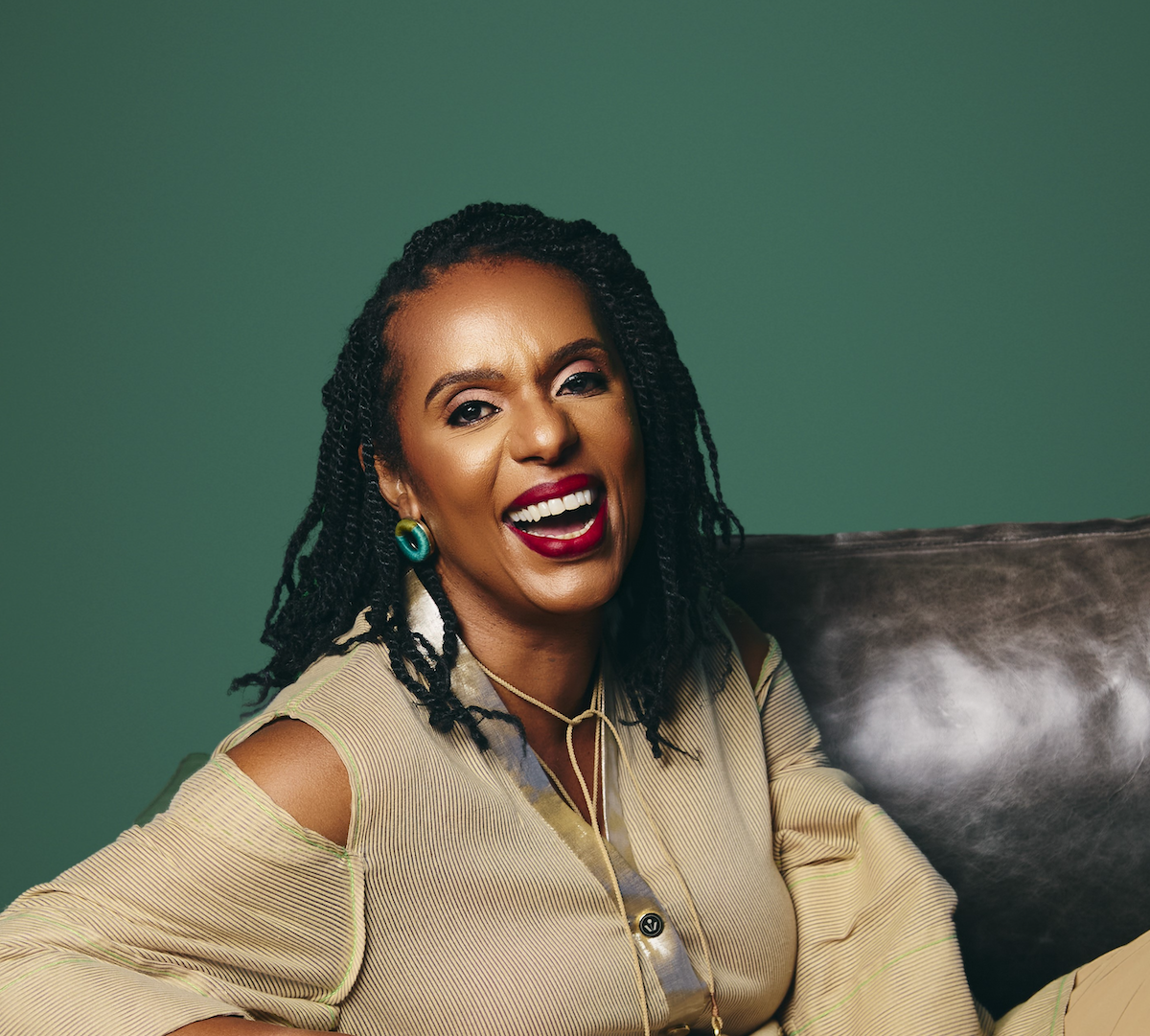
South Africa’s award-winning marketing leader Khensani Nobanda, Group CMO at Nedbank, is known for bringing out the best in brands and people. It’s a track record that starts with understanding herself.
Khensani Nobanda has redefined marketing for the South Africa-based financial services group Nedbank. But her role as Group Chief Marketing Officer and Corporate Affairs Executive goes beyond marketing to include brand alignment and social impact, including corporate social investment. And outside Nedbank, she is a respected industry voice shaping marketing locally and globally.
Nedbank is one of Africa’s largest banking groups, operating across the Southern African Development Community, with offshore presence in the Isle of Man and Jersey, and representative offices in Kenya, London and Dubai.
Nobanda has built purpose-led brands across many multinational and local businesses. Her career began as an assistant brand manager at Unilever and saw her rise to Category Director. She later worked at Diageo, South African Breweries and Vodacom. She won the prestigious Loeries 2021 Marketing Leadership & Innovation Award and was named Marketer of the Decade (2016–2026) by SCOPEN. In 2025, she was named Marketer of the Year by the Marketing Achievement Awards. She was also twice AdFocus’s Marketing Industry Leader of the Year.
At Nedbank, she transformed its marketing strategy, notably securing her team the Grand Prix at the 2020 Loerie Awards for their “Secrets” campaign, created in partnership with the advertising agency Joe Public. The campaign began with an unbranded film trailer for a dramatic thriller, Secrets, shown prominently across South Africa. It culminated with a glamorous movie premiere and an 800-cinema nationwide release, only to reveal at the end of the 15-minute short film that it was actually a campaign by Nedbank. The highly regarded film follows three South Africans deeply troubled by financial secrets, with the goal of encouraging people to “see money differently”—Nedbank’s tagline. In addition to the Loeries, “Secrets” won several awards, including at the 2020 New York Festivals Advertising Awards.
Of her management style, Nobanda emphasizes being true to herself and clearing space for people working with her to do the same. “I remember the first time I went into a board meeting at Nedbank, I was wearing my Converse sneakers,” she tells us in a recent interview. “Another executive took a picture of me and posted it, saying, ‘This must be the only banking executive who’s walking into a board meeting in All Stars.’”
But her example has spread to her team and to other members of the executive committee, she says. “It is the funniest thing. They are so much more chill; they are so much more real.”
We spoke to her about the lessons of her career, her public profile and the role of authenticity and trust behind building teams and brands.
What experiences have shaped you most as a leader?
Probably when I was made Category Director in 2005, when I was 25. I personally didn’t think I was ready. I had previously worked at Unilever for two years, but I’d left in 2002 and I was at another company. The CEO of Unilever South Africa called me and he said, “We’ve got this role for you.”
I think a lot of women don’t get that opportunity, of being offered a role when you don’t think you’re 100% ready. We probably don’t even raise our hands for those opportunities if we don’t feel we’re ready. That taught me that I never have to be 100% ready, I just need to accept the challenge. And I can promote people who are not 100% ready, because if it could happen to me, certainly I could do it for others.
It also showed me that your age doesn’t matter. I’ve had quite a number of older, more experienced people reporting to me. As long as I can deliver, that’s what counts.
Is authenticity something that has always come naturally to you, or is it something you’ve had to grow into?
As a younger person, I sort of knew that I had to be more myself in order to be successful. I understood that without necessarily being able to name it.
I think 2010 was a pivotal moment around what I wanted work to look like for me. I had moved to Dubai and I was looking after the skin category and honestly, things weren’t going very well. I wasn’t working well with my boss at the time. He wanted to be global CEO of Unilever. I can give him grace now because I understand what was driving him.
I went from doing really well to suddenly not doing well. And I couldn’t fix that situation. My brother Alex said, “Just quit.” Unfortunately, my brother died just about a month after we had that conversation. That hit me really, really hard.
I did a speech recently where I said, “When did you learn how to shrink?” That’s what was happening to me at that job. I was shrinking. It was taking parts of me. So I just quit. And in that quitting, I had no job, I had nothing.
Unilever was amazing though. I had a lot of sponsors who understood. They were unhappy with the way things were as well, and they said, “Take a sabbatical. When you’re ready to come back…”
“One of the very fundamental things I learned from that was: If you can’t accept me for who I am then I’m OK. It needs to work for both of us.”
What did that time away teach you, and how did it change the way you approached your work when you returned?
One of the very fundamental things I learned from that was: If you can’t accept me for who I am, then I’m OK. It needs to work for both of us. I know how it feels now to be in that situation, of shrinking. And if I ever get that feeling again, I’m out.
To be on my own, to not have a title, was amazing, realizing that all of that can be stripped away, but you’re still Khensi. That part doesn’t actually change. I really love marketing, I really love my job. But that experience really gave me a good sense that the job doesn’t define me.
At Nedbank, you’ve spoken about wanting to build the best marketing team in Africa. How do you create a culture where people genuinely buy into that shared vision?
First, I think about my team. When I took over, I probably had about 65 people. Right now I have over 300 people. Early on I took a step back to decide, what did I want this marketing team to look like? Although I was leading this, I was clear that it wasn’t Khensi’s journey or Khensi’s new operating model. Even when we did a town hall to talk about our new structure, I led those conversations, but all the other exco members who report to me also spoke.
The second thing was allowing ourselves to dream big. I’ve spoken to my team about this. Having a massive dream seems to have become something that people judge you for, which I don’t get. We wouldn’t have put a man on the Moon if people had never had that dream. Somehow these days if you have a big vision or a big dream for yourself, you get so judged.
With the team, I always say, even if we’re not the best, we’ll be in the top three. And we had to be clear about what we meant. One part was definitely creativity. There was a flywheel that started on creativity because we won our first Loeries Grand Prix. Since then we’ve ranked consistently high. That flywheel starts running when there’s a sense of belief. We started believing it ourselves.
The second part was the Brand Finance Global rankings. We’re number eight now. The top 10 brands in South Africa are the top 10 brands on the continent, generally speaking. We’re not growing as quickly as I’d like us to, but we’re growing, and again, it shows people that it’s actually happening and then they really start believing it.
The third thing you’ve got to think is, what does it mean for your team? If we’re going to be the best marketing team on the continent, they’re going to have to do things a little bit differently. To be the best means you’ve got to give people the skills and capabilities to be the best, so I encourage that exploration and training. When they start to learn and grow, they start thinking, “Of course we can be the best because we’re getting exposed, we’re growing, we’re learning.”
You’ve worked across various industries within the marketing space. What have brands consistently taught you about people?
Marketing is consistent no matter what category you’re in. I came to banking, got promoted in four months and I’d never done banking before. The consistencies are around ensuring that you’re giving value to the client, that your product is available and that people understand what you stand for.
For every brand, the idea of trust has become a very big thing which clients are looking for. With banks, obviously trust has always been a thing. But in this new world, the issue has grown. We had a deepfake video of our CEO Jason Quinn. People were passing it around. It was scary because it sounded like him, looked like him. For me, who knows Jason, even I thought, “This really looks like him.” So trust is being tested in new ways.
Trust is a massive value creator. When consumers trust what you’ve said as a brand, they buy into you more. Value is another crucial element of a brand—value is not about being cheap. It’s not about price. Value is about what I am getting for the price that I’m paying. Consumers are still looking for good value. Give me that and I’m happy to pay what I need to pay for that thing.
Beyond that, brands simply need to be consistent. Just be relevant and consistent so we recognize you.
“What we must show people is that you don’t have to be a particular way to be successful. I don’t expect my own team to be like me. I just expect them to be themselves and do their work well.”
You’ve also built a respected public profile of your own. Was that something you set out to do, or did it happen more organically?
I think it was a combination. I took over in 2018 as CMO. People started seeing the shift in our marketing and going, “Is this Nedbank? Who’s behind all of this?” So there was a natural curiosity about who I was, which I think was great.
I always think about where I come from. My dad is from Orlando in Soweto. He left South Africa when he was 17 years old to go into Umkhonto we Sizwe (the former armed wing of the African National Congress). My grandfather’s white, my mom’s father. He came from Portugal through Mozambique, and then into Swaziland, met my grandmother. At that time my grandfather was still building his business.
When I was born, my mom was 21 and doing her final year in university. My dad was underground somewhere, who knows where. I was with my grandmother in literally a mud house. My story was never meant to be. In many ways, the world looking at this child would have said, “You’re not meant to sit on the exco of a bank.”
So, the telling of my story is important. It’s important, especially for young Black women, to see that your starting point is not going to be your end point. There’s going to be so much for you if you dream that it’s going to happen.
There are so many female role models right now, which is fantastic. But there must also be familiar role models like me who show up in sneakers. What we must show people is that you don’t have to be a particular way to be successful.
I don’t expect my own team to be like me. I just expect them to be themselves and do their work well.
How do you view the relationship between your public profile and your workplace?
It’s the same. One of my best friends used to say the person she is at work and the person she is at home are like two different people. I was like, “That’s so draining. It’s like Batman vibes.” I don’t have the energy for it.
When I’m completely myself, you get the best out of me. You get my best work, you get my best energy.
Some organizations actively encourage public profiles, while others are more cautious. How do you think leaders and organizations should navigate that balance?
We’ve got a very clear social media policy at the bank. If you’re going to use social media to sell your side hustles, we don’t have a problem with that. We’ve also got an employee advocacy program where we actually encourage people to use the hashtags #WeAreNedbank and #TeamGreen.
There are obviously rules where you can’t post client information, for instance. When you look at what I post about Nedbank, it’s actually about my work and the work that Nedbank is doing. So it’s more about building the brand.
You have a client experience and you have an employee experience, and those things need to match up. If you want people to come and work for Nedbank, they’ve got to understand sort of what the career experience is.
So our people posting gives them a clearer idea. That’s why we have so many people who want to work in marketing at Nedbank.
You often encourage people to dream big and not let others define who they can or cannot be. What do you hope the next generation of leaders will do differently?
I hope the struggles will be different. I’ve been working for 26 years. How are we still talking about Black women getting gaslit? There will always be things to navigate that are uncomfortable.
We want equal pay for equal work of the same value. We do a lot of work on that at the bank. I hope for the next generation of leaders, that’s not even a conversation, that it’s just known that it’s fair.
It does sometimes feel to me like we take five steps forward, and three steps back, coming back to the same things. I would sincerely hope they don’t have to be dealing with that sort of stuff.
Looking at the future, where are you headed? What are you still curious about?
There is so much that’s changing in the world of marketing, business and all of that. There’s so much going on technology-wise, and you can see the rate of change. I’m really keen on continuing to learn with that.
I do get asked, “Are you still going to be CMO for Nedbank in X number of years?” And I don’t know. I’m in an interesting space where I feel like I don’t know what’s next, which is good and it’s a little bit rare for me. I never have five-year plans, but I’m happy as CMO. What I’ve decided to do is run with it and see where it takes me, and chat to people.
If someone talks about a particular opportunity, let’s talk about it, let me see, let me think about it, let me ask Hubby, let’s explore. I’m in a more open-minded space, learning and growing.
Meet the authors
-
Account Director
Johannesburg
Siya Ben is an Account Director with Brunswick specializing in Digital Advisory. She is based in Johannesburg.
More from this issue
Crisis
Most read from this issue
Labor’s Expanding Role in M&A
You might also like

Rewiring America’s Retirement
Zegna