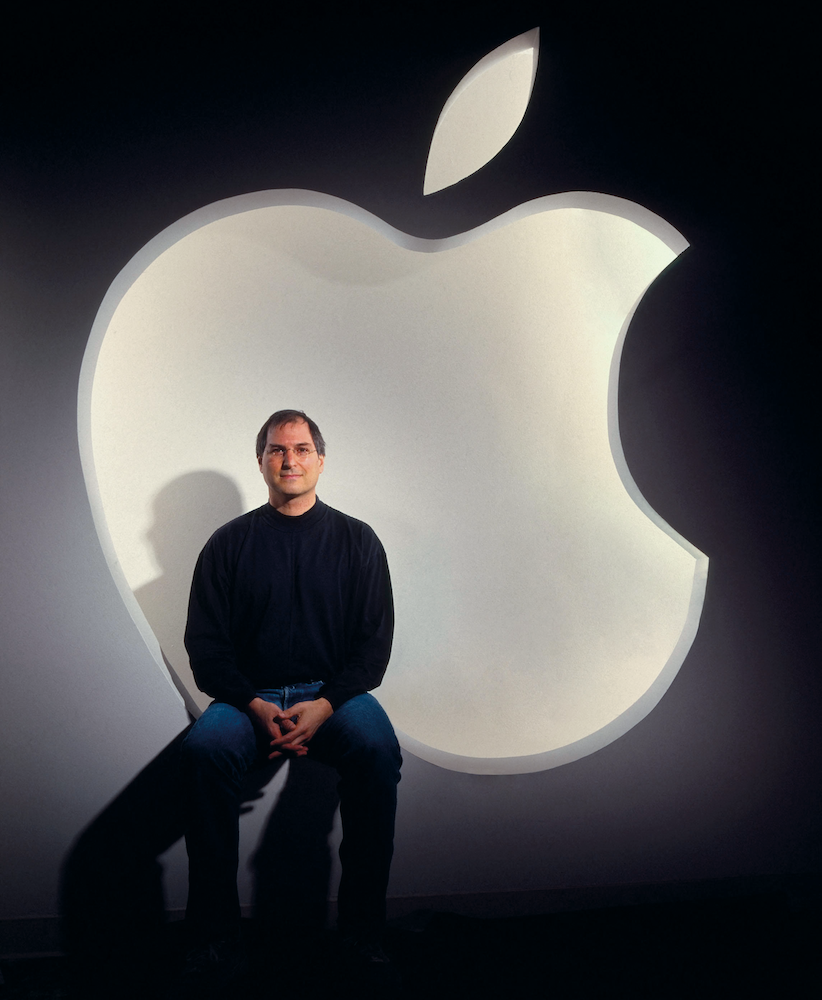
Would Apple by any other name think as differently?
In July 1997, after a period of well-documented decline, Steve Jobs returned to Apple, the company he founded, and instigated one of the best known reversals in corporate fortune. A key tenet of his approach was to talk about Apple, at its core, being about values and the brand philosophy, not the detail of its products.
In September of that year, Apple launched the mantra “Think Different” with a supporting advertisement that many regard as the greatest commercial ever made. It was called “Here’s to the Crazy Ones,” and benefited from the symbolic association of historical figures who had changed things for the better. From Bob Dylan to Albert Einstein, Maria Callas to Mahatma Gandhi, it championed creativity, courage and innovation.
In doing so, Apple also did something unique. It took a stance and defined a clear enemy: conformity. It bucked convention and was the embodiment of the spirit of thinking differently.
It shouldn’t really have been a surprise. Even the name “Apple” was unusual and chosen because it was the opposite of what technology companies sounded like in the 1970s—International Business Machines (IBM); Digital Equipment Corporation (DEC); Commodore; Tandy; Atari; Micro Instrumentation and Telemetry Systems (MITS).
And his inspiration? A day at an apple orchard in Oregon. Apple sounded human, friendly, creative, accessible, quirky and that philosophy would become one of Apple’s defining strengths: making advanced technology feel approachable rather than intimidating.
Apple sold identity not products, attitude not attributes, and became synonymous as a tool for people with creative minds. The ultimate symbol of embracing change. Apple has never looked back, today being a multitrillion-dollar company.
Non-conformity can be mistaken for rebellion, but it shouldn’t be. It should be seen as a determination to find a new path to success, a way of breaking with convention to seek a clear and ownable space. And often the truth behind these companies, and their names, is surprising.
Take Tesla. Not founded by Elon Musk, but by Martin Eberhard and Marc Tarpenning, an electrical engineer and a computer scientist respectively. They made two unconventional bets that almost every established automaker rejected. One, that electric cars should be desirable, fast and aspirational, not slow compromises. And two, that consumer lithium-ion batteries could form the basis of a high-performance automobile.
Those ideas became the foundation on which Elon Musk built what is now Tesla. He turned it into a global leader after he invested in and ultimately took control of the company.
And the name Tesla? Not the product of a marketing “namestorm,” but an homage to Nikola Tesla, a Serbian-American inventor born in 1856, who became an electrical engineer and futurist. His work helped shape the modern electrical age; his imagination anticipated technologies such as wireless networks, robotics and aspects of modern telecommunications. He was years ahead of his time. Eberhard and Tarpenning put his name above the door as a sign of respect.
Everywhere you look we enjoy the benefits of the great challengers who have collectively changed the world at an alarming pace, with the names of their companies often being equally disruptive.
Phil Knight naming Nike after the Greek goddess of victory. Jeff Bezos naming Amazon after the world’s largest river, reflecting his ambition to build the world’s largest bookstore. Richard Branson naming his brand Virgin, because the founders were virgins in running a business. Larry Page and Sergey Brin naming Google as an intentional misspelling of “googol” to represent the vast quantity of information the founders wanted to organize. Patagonia, named for a place that embodied the spirit of adventure that founder Yvon Chouinard wanted his brand to represent.
These are interesting stories, but the real interest is not in the name, but the philosophy common to all of these businesses and many more. The belief that one way is not the only way. That often non-conformity trumps conformity. Thinking different pays dividends.
They demonstrate that the strongest names and communications don’t merely project a message. They create a meaning that only the brand can own. Belief-based brands staying true to their ideas.
And when a brand owns a meaningful idea in culture, it accumulates value far beyond the product itself.
Meet the authors
-

Partner
London
Matt is a Partner in Corporate Leadership and Transformation, helping clients to stand out from their competitors with a compelling and differentiated proposition.
More from this issue
Crisis
Most read from this issue

Creating the Future at Canary Wharf

Crisis Psychology
You might also like

Chairman’s Letter

Google’s Royal Hansen