
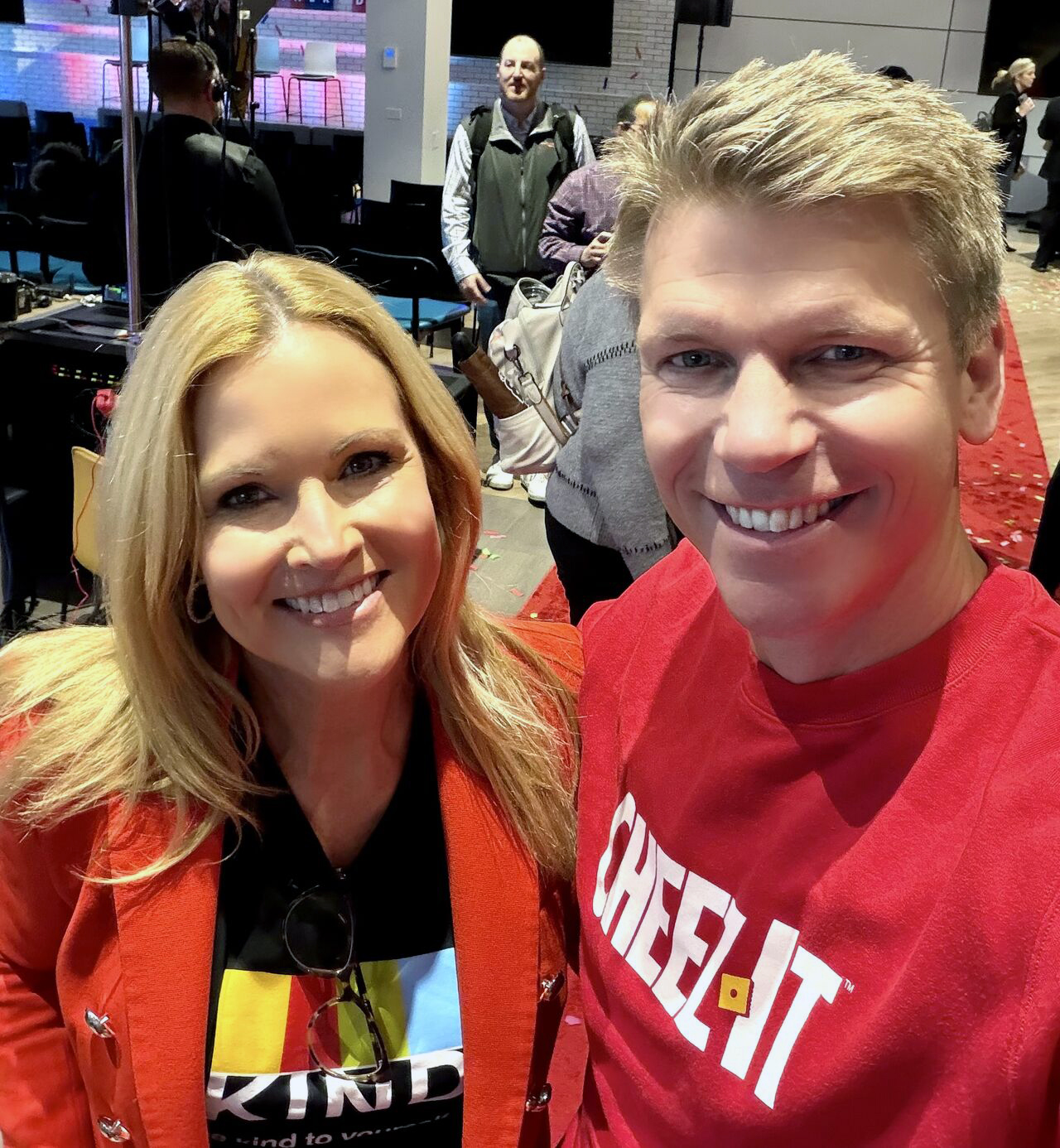
Mars and Kellanova’s corporate affairs leaders discuss building a partnership while working on a career-defining deal.
Anders Bering and Kris Bahner had never met before August 14th, 2024, when Mars announced it was buying Kellanova in an all-cash deal valued at roughly $36 billion.
By the time the deal closed 17 months later, Bering, Vice President, Global Public Affairs, External Comms and Corporate Brand at Mars, Inc., and Bahner, Chief Global Corporate Affairs Officer at Kellanova, had spoken almost every single day. In the process, they had built a partnership that challenged typical M&A communications hierarchies and helped guide the largest deal in snacking history through regulatory reviews, while building internal trust and engagement.
Most acquisitions speak the language of partnership while quietly following the acquirer’s playbook. Together with the respective management teams, Bering and Bahner wrote a different one, guided by shared convictions: both teams were experienced, but neither had worked on a deal of this magnitude or complexity. The best approach—regardless of origin—should win.
The deal’s appeal was clear, but realizing it would require uniting two companies with different structures and communications approaches. Mars is privately held and family-owned, while Kellanova, formerly Kellogg Company, was publicly listed. Both carried century-old legacies and beloved snacking portfolios: M&M’S, Skittles and Snickers meeting Cheez-It, Pringles and Pop-Tarts. For the millions of consumers who grew up with these brands, and the tens of thousands of employees who worked on them, the merger was personal.
Awaiting regulatory approvals kept the deal’s timeline uncertain, and legal restrictions limited what the two companies were able to do and say together. Of the many challenges Bering and Bahner faced, that presented one of the most central: How do you sustain trust with employees, customers, local communities, investors and other stakeholders when no one can say when the deal would close?
The pair spoke with Brunswick Senior Partner Jayne Rosefield and Partner Monica Gupta in early January 2026, on “Better Together Day,” a celebration marking the transaction’s completion and the early days of operating as a single company.
I would love to hear each of your initial reactions when you heard about the plan to bring Mars Snacking and Kellanova together.
Anders Bering: My initial thought was: “This is huge—and super exciting.” It felt like a great fit. The deal’s rationale was compelling. But what made it exciting also made it a bit daunting, given the many people affected. I definitely wondered: “What’s ahead of us here? What are they thinking on the other side?”
Kris Bahner: I was also excited. It felt like a natural next step for the snacking powerhouse journey we’d been on, which had led to the spin-off of our North America cereal business and the creation of Kellanova. It felt like a great place for our people and our brands. My next instinct was: “We need to start planning—yesterday.”
Did you have any idea what you were getting into when you took on the communications leadership role for this deal?
Bering: No, is the short answer.
The news broke over the summer break. We were scattered around the world, a lot of us had never met in person. I remember being in Colorado with my family, desperately trying to find a quiet place at 4 am to talk. I ended up sitting in a car in the driveway. And as I was walking to the car in the dark, I remember worrying about two things: waking up the kids, and being eaten by a bear.
So I guess it started pretty dramatically. And it quickly became evident how big this was. I remember we saw some 30 billion media impressions in the first 48 hours after the news broke. That took up a lot of focus early on, for good reasons, and it raised a lot of questions internally as well.
But I think we did well, early on, holding on to the fact that we didn’t know exactly what we were getting ourselves into. None of us had done this specific project before. We’d all done relevant things—numerous smaller acquisitions, Kellanova’s recent spin from Kellogg’s, Mars’ acquisition of Wrigley 16 years earlier—but nothing quite like this.
Bahner: What helped was putting the audience first: mapping stakeholders, deeply understanding them. That’s where good communications projects always begin. We had done that during the spin, including through sentiment surveys that helped us understand where employees were throughout the journey. We implemented the same type of tool here. We spent a lot of time understanding where Mars Associates were, where Kellanova employees were, what they had been through recently and where we were meeting them emotionally. We did something similar for our communities, investors and other stakeholders. That discovery helped break something enormous into manageable pieces.

“…Putting the audience first: mapping stakeholders, deeply understanding them. That’s where good communications projects always begin.”
Kris Bahner, Chief Global Corporate Affairs Officer, Kellanova
Each company came with its own strong culture and legacy. How did you think about preserving what was unique, while also establishing a unified story?
Bering: One of the first things we noticed was the different communications cadences. You take a listed company, Kellanova, and then Mars, which is family-owned, privately held—externally, the cadence and expectations for communications are completely different, and that flowed through internally as well.
Syncing those cadences was important and in many ways set the standard for how we approached everything else. We tried to be curious, to learn how each organization did things and do whatever made most sense. Sometimes that meant using one approach, or taking the best of both, or inventing a third way. We really admired the communications tactics Kellanova had built: the frequency, the openness, and the promise to Associates that even when you don’t have all the answers, you’ll communicate quickly and transparently.
So yes, there were differences, but we had some very important common ground as well. Both were strong, purpose-led businesses that prioritized empathy for people, which has carried through to the combined organization. A transformation of this size is big and exciting, but in the end, it’s about people and their lives. And we agreed on that from the start.
Bahner: One hundred percent. One of the things we learned from the spin that we shared with Mars was that showing up consistently in front of all employees—even when you don’t have new information, even when it feels uncomfortable—builds trust. Mars had previously relied on line managers as the primary communications channel, but we committed to both companies holding monthly parallel global town halls as part of the process. There were moments when we’d get close to the town hall and we might not have a lot new to say, so naturally the question would come up: “Do we skip this one?” And we’d remind everyone why we made the commitment in the first place.
And as Anders said, it’s about recognizing that this affects people’s lives and livelihoods. Being upfront that you don’t have all the information, but promising to show up anyway.
Another important area of alignment was that we had a sense going in, and it became so clear right away, that these are two organizations that have a really deep legacy and purpose. They’re what attract employees and Associates to these organizations, and they help keep them there. Lifting the companies’ purposes up early, and reassuring our people, our communities, external stakeholders, that they would remain central to the future organization, was steadying and credible.
There was also a visual and emotional element to how you brought the organizations together. Can you talk about that?
Bering: It still brings a smile to my face. What people know and love about these companies is our brands. We wanted to do more than tell people about the deal rationale, we wanted to make them feel the greatness of what was ahead. And what better way to do that than using our iconic brands and characters?
We partnered with Brunswick to come up with this concept of “Better Together,” where the M&M’S characters and Mr. P. would meet and interact with each other for the first time, and it landed brilliantly. We teased parts of this for months, showing why we would be better together as an organization, and we finally launched the full campaign to the combined organization at our Better Together celebration following the close of the deal. You could see the smiles, the emotion, on people’s faces. That’s what good communications does. When it’s grounded in real values, and you find a way to unlock that truth in images and words, that’s what this job is about.
We brought together elements from both organizations—color schemes, purpose, cultural artifacts—and showed people that what we’d been saying for almost a year and a half about “best of both” was real.
Bahner: In acquisitions, acquirers don’t always pay attention to the emotional assets that matter to people at the company they’re acquiring. However, Mars was very inclusive and respectful of Kellanova throughout.
I would cite three great examples. First, the visual identity for the future Mars Snacking gave clear nods to both organizations. Second, the video we created showing family legacies, brands and purpose coming together wasn’t just lip service.
People can tell the difference between being authentic and being slick, and this worked because the approach was genuine. Another great example is the new name and visual identity we created for the go-forward Mars Snacking purpose, which included key elements from both companies’ deep purpose legacies. When we revealed that Better Days would continue to be part of the Mars Snacking purpose going forward, it was meaningful to our employees. You could hear a sigh of relief and see the smiles on people’s faces. It’s another signal that the acquiring company sees you, understands you and wants you to be part of the future that we are creating together.
How did you think about authenticity over time, especially given the uncertainty around regulation?
Bahner: It goes back to acknowledging intent. Being clear about the principles we were operating under, and asking people to hold us accountable to them. We were honest that we didn’t have all the answers. We asked for patience. And we recognized openly that the situation might feel frustrating or unsettling. That kind of honesty goes a long way.
Our leaders—Andrew [Clarke, Global President, Mars Snacking], Poul [Weihrauch, CEO and Office of the President, Mars], Steve [Cahillane, former Kellanova CEO, now Kraft Heinz CEO]—showed up in that way. They acknowledged that while this was a transaction, it was also much more than that.
Bering: We also asked questions that were genuinely on people’s minds in town halls. Sometimes we asked the same question multiple times to show that we knew this was on a lot of people’s minds. I think they appreciated that. Over 16 months, we worked together on more than 75 town halls, which we had to manage in parallel across both organizations to ensure messaging, answers to questions, et cetera.
“A transformation of this size is big and exciting, but in the end, it’s about people and their lives. And we agreed on that from the start.”
Anders Bering, VP, Global Public Affairs, External Comms and Corporate Brand, Mars Inc.

How did you think about building the broader team to manage this, and still keep up with the rest of your job?
Bahner: Having just gone through the spin, we had experience managing a major transformation while still balancing other priorities, so the staffing model was familiar. We were deliberate about assigning clear roles and responsibilities. In some cases, like our internal communications teams, that meant dedicating people almost entirely to the transaction.
One thing that was hugely helpful—and actually pretty unusual—was that both Mars and Kellanova were working with Brunswick. Often in transactions like this, each side brings its own advisors, and that can reinforce the feeling that there are two camps. Both of us working with Brunswick meant we were able to operate from a shared baseline, and weren’t constantly negotiating whose timeline came first, or who was drafting what. It also meant we could establish a regular cadence quickly and focus on the substance of the work, which was so important given the volume of communications.
Bering: It was so helpful to have one partner working with us across both companies, someone who could provide an external perspective, help from a process point of view and keep things moving forward. This was an emotional process also for us in the central team.
If your job description is, “somebody who’s done a $36 billion acquisition in the snacking industry to unite a private company and a listed company,” you’re not going to find many people in your organization matching that. What mattered was having the right mix of capabilities around the table.
We looked for a team who could complement and engage with Kris and me as true thought partners, who could serve as creative leads, and who would be very strong on process and detail. We found that in Brunswick, and the combination made our combined team, and ultimately the approach and outcome, better.
What’s your advice for communications and corporate affairs leaders trying to build a partnership on a deal like this?
Bering: It’s a tricky question. I’m not sure there is one formula. In our case it was, I think, how we acted from the beginning, how Kris and I openly deferred to each other in meetings, encouraging our teams to stay curious about the other side and not falling into the trap of “we usually do it like this”. We made it clear from the get go that this wasn’t “the Mars way” or “the Kellanova way.” This was “Better Together.”
A big theme for us was curiosity. I kept saying to the Mars team: Let’s be humble. Kellanova might be doing things better than we are. Let’s try it and learn. That mindset raised the quality of what we produced together. And it meant we enjoyed working with each other. I certainly felt the partnership very early on. A lot of players on both teams worked like this naturally, others picked up on it quite quickly. So it spread like rings in the water.
Bahner: Just to build on what Anders said, I never felt we were competing. If you approach a shared leadership role as competition, it won’t work. The mindset has to be that the person across from you is your partner, and the only way forward is together.
Looking back, what stands out most? Any personal highs, or lows?
Bering: This entire project is a bit of a career highlight; you don’t get to do a lot of things of this magnitude. We exercised every corporate affairs muscle, from major external communications to complex government relations, intense internal communications across two organizations to building a new purpose and visual identity. Of course, the high point was celebrating the close of the deal, seeing people’s reactions to the official combination.
As for a low moment, I remember a long sleepless night in Chicago of scenario planning during a time when we saw a lot of uncertainty and anxiety in the organization—though even there, seeing how the team came together was gratifying.
Bahner: I’d agree with all that. Another highlight for me was watching our teams grow. We told our people early on this was a once-in-a-career opportunity, and they embraced it. Emotionally, the final Kellanova town hall stands out. There was real joy and pride, not sadness. It was: “Look at what we did together. Isn’t this an exciting next step?”

“If your job description is: “somebody who’s done a $36 billion acquisition in the snacking industry to unite a private company and a listed company,” you’re not going to find many people.”
Anders Bering, VP, Global Public Affairs, External Comms and Corporate Brand, Mars Inc.
Looking back, what lessons stand out for you as corporate affairs leaders?
Bahner: This crystallized how often communications becomes a forcing mechanism for decision-making. When you commit to a cadence—when you say you’re going to show up monthly, and answer questions—you very quickly surface where decisions haven’t been made yet.
We were part of the integration management office and both of our companies’ respective leadership teams. Having that seat at the table meant we could align early on what the communications cadence needed to be, and then work backwards from that. If we needed clarity by a certain date to communicate responsibly, that created a deadline that helped move things forward. Not because people weren’t motivated—there was a very clear sense of urgency—but because the reality of communicating clearly provides healthy pressure.
For me, that alignment—between communications, leadership and the broader integration work—was critical.
Bering: I’d build on that from the Mars side. What stood out is how much more effective corporate affairs can be when it’s embedded in a project of this magnitude, rather than operating on the edges—and I know we both would like to recognize and thank the corporate affairs teams on both sides, who worked so hard for so many months to get this done. Together, we were able to look across the organizations and to the outside world and see some connections others might miss. We had so many great people across our businesses working on the integration, and being able to help connect them and communicate about their great work was among the most satisfying parts of the experience.
Would you do anything differently?
Bering: I think I’d bring our corporate affairs teams together physically earlier. We spent so much time together virtually, the project was born virtually and people embraced that. But being able to bring our teams on both sides together in person really supercharged what we were able to do.
Bahner: That’s a great point. I’d add that I think we did a good job of scenario planning, but I’d do even more, even sooner. It’s easy to say in hindsight, but it matters.
Final question: Would you do it again?
Bahner: One hundred percent.
Bering: Absolutely—after checking with my family.
Meet the authors
-

Senior Partner, Head of Global Strategy & Transformation
Chicago
Jayne is Head of Global Strategy & Transformation at Brunswick Group. In this role, she works closely with Brunswick’s CEO Henry Timms in delivering the… -

Partner
Chicago
Monica is a trusted advisor to Board and C-Suite executives during moments of change and transformation.
More from this issue
Investment Universe
Most read from this issue

Baroness Dambisa Moyo

The Everything Exchange
You might also like

Engine of Progress

Above the Fray
