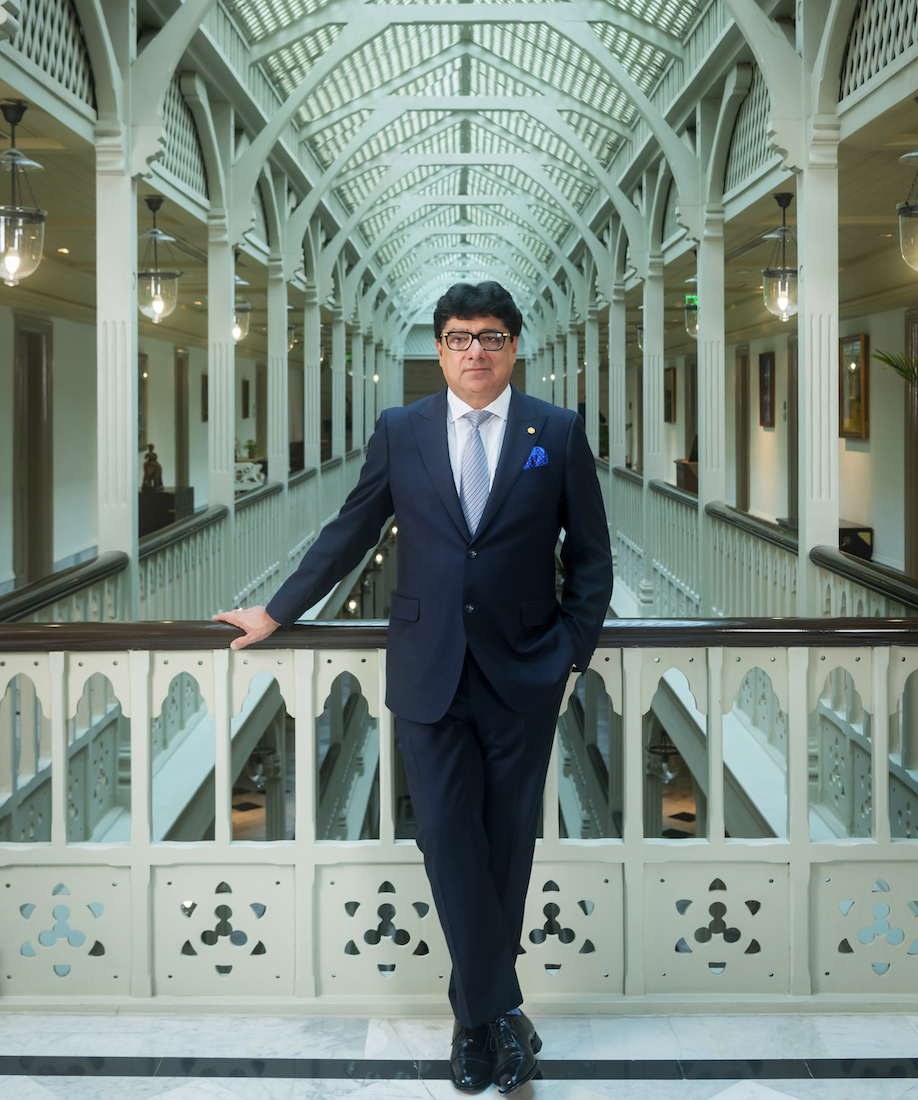
When travel halted in 2020, so did the hospitality industry. As detrimental to his business as it was, Puneet Chhatwal, CEO of IHCL, turned it into an opportunity for growth.
When COVID-19 brought the world’s travel industry to a grinding halt, the Indian Hotels Company Limited (IHCL) faced a problem for which no hotel management playbook existed. India’s largest hospitality company had more than 33,000 employees and a network of over 200 hotels, but suddenly no guests to serve. For Puneet Chhatwal, Managing Director and Chief Executive Officer of IHCL, the timing was almost cruel.
Two years after taking charge, Chhatwal had reasons to feel optimistic. He and his management team had put in place “Aspiration 2022,” a five-year plan intended to improve the company’s financial ratios, expand its portfolio through a more asset-light model and reduce debt. The approach was beginning to deliver.
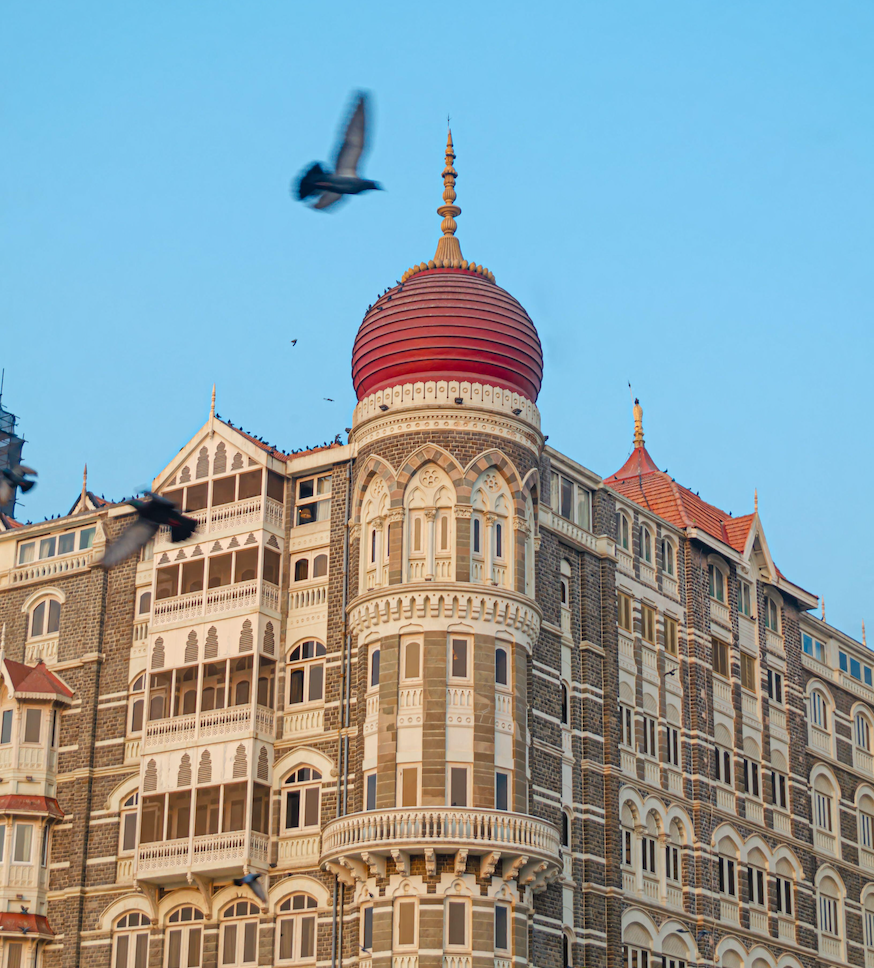
In 2020, the storied hospitality company, whose history stretches back to the opening of the Taj Mahal Palace hotel in 1903, had been adding roughly one hotel a month. Revenues were growing and consolidated margins had climbed above 24%. This was no small achievement. Competition was intensifying, international hotel groups were expanding in India, and a new generation of businesses such as Airbnb and OYO were changing the way travelers thought about where and how they booked their stays.
Then came COVID.
The pandemic wreaked damage across the global economy, but few industries were as directly exposed as aviation, travel and hospitality. Hotels revolve around movement and human contact. COVID eliminated one and made the other dangerous.
“We’d never seen or imagined such a phenomenon would happen in all our lives,” Chhatwal tells us in a recent interview.
Like much of the world, IHCL initially underestimated how long the disruption would last. Management began running simulations for reopening, assuming business could resume within a few months. “We started planning for an opening in June. Then, when it didn’t retreat, for August … and then October.”
Had someone told him in the beginning that India and the rest of the world would endure a second wave, then a third, Chhatwal says many people, including himself, might have felt like giving up.
Instead, IHCL settled on two priorities. The first was to keep its people together. The second was to find ways of doing business when the traditional hotel business had effectively disappeared.
The People Business
The first challenge went to the heart of what makes hospitality different from many other industries.
A software engineer can write code from a garage. A banker can analyze a balance sheet from a dining room. A hotel cannot be run over Zoom. “You can’t work from home in this business,” Chhatwal says.
For IHCL, the new conditions created a peculiar crisis. Thousands of employees had built careers around looking after guests who were no longer arriving. As lockdowns dragged from days
into weeks into months, Chhatwal began to see morale deteriorate.
There was also a wider vulnerability. Chhatwal had spent years working in Germany, where formal social security systems provide a degree of protection against unemployment and medical costs. India had no comparable universal cushion.
Across corporate India, companies responded to collapsing revenues by reducing costs and cutting jobs. IHCL made a different calculation: It announced that there would be no pandemic-related layoffs. Medical support that formed part of the company’s employee benefits was maintained. Many employees were allowed to continue living in hotel accommodations. As infections spread, support extended to food, medicines, medical assistance, rehabilitation and care for dependents of employees who had been hospitalized.
For Chhatwal, it became a test not simply of financial resilience, but of management.
“The crisis reinforced the importance of transparent, empathetic communication in keeping employees connected and motivated,” he says.
The senior leadership team at IHCL met weekly to review progress on initiatives under the RESET strategy and to exchange insights on navigating the unprecedented crisis. These sessions also featured distinguished external speakers who brought valuable outside-in perspectives, including renowned personalities, authors, industry specialists and senior leaders from the Tata Group. Notable celebrity speakers included Bollywood actor Anupam Kher.
There was a practical business calculation embedded in that philosophy. Ultimately, hotels sell service, and service depends on people. Preserving the organization meant preserving the human infrastructure that would eventually be needed when guests returned. But nobody knew when that would be. So IHCL searched for things its people, kitchens, brands and physical network could do now.
A Hotel Chain without Hotel Guests
One answer arrived in a matter of weeks.
IHCL’s restaurants contained something valuable even when their dining rooms were empty: kitchens, chefs, recognized dishes and customers who still wanted the food.
Working with Tata Digital, the technology company within the Tata Group, IHCL developed Qmin, a food delivery platform, in approximately four weeks. It was subsequently rolled out across multiple cities, allowing customers to order signature dishes from IHCL restaurants and cloud kitchens. The mechanics of the service were designed for the anxieties of the moment: Sanitary packaging and contactless delivery allowed hotel kitchens to reach customers who couldn’t, or wouldn’t, enter a hotel.
What began as a crisis response pointed toward something bigger. IHCL could take slices of the hotel experience beyond the bricks and mortar. There were other experiments too.
As travelers avoided crowded hotels and gravitated toward private accommodation and drive-to destinations, IHCL accelerated amã Stays & Trails, its premium homestay business. What had been a relatively new proposition suddenly fitted the way people wanted to travel.
The company also repackaged demand into new offerings: 4D Travel (“Dream, Drive, Discover and Delight”), Urban Getaways, Bizcations (a work-and-vacation package), INNERgise wellness retreats and Intimate Timeless Weddings. Sales teams that could no longer depend on conventional corporate travel, large weddings and international tourists were given new products to sell.
Some initiatives weren’t designed to generate revenue at all.
IHCL’s kitchens and hotels became part of the infrastructure responding to the pandemic. By the time the pandemic was over, 4.5 million meals had been provided to medical professionals and migrant workers across India. The company also worked with healthcare organizations to repurpose hotel capacity for medical and quarantine requirements.
In an ordinary year, a hotel room, restaurant kitchen and hospitality employees are parts of a machine designed to serve travelers. During COVID, IHCL began asking a different question: What else could those assets do?
That question would outlive the pandemic.
Building in the Downturn
Chhatwal’s instinct to keep investing during a collapse owed something to his years in Germany. One lesson he had taken from previous downturns was that bad times could also be building times.
When competitors are retrenching, assets become available, partners become more receptive and organizations have an opportunity to rethink businesses that seemed immutable during boom years.
IHCL’s response therefore evolved from surviving COVID to designing the company that would emerge from it.
That distinction matters because the IHCL of today looks considerably different from the company that entered the pandemic. Rather than depending disproportionately on a relatively small number of flagship luxury properties, it has assembled a collection of brands and businesses spanning different parts of the hospitality market. Taj remains at the top of the pyramid, but it now sits alongside SeleQtions, Vivanta, Gateway, Ginger and amã Stays & Trails, as well as the TajSATS aviation-catering business.
Each brand provides IHCL with another way to capture India’s growing appetite for travel and another earnings engine if one segment encounters trouble. The results are increasingly visible.
A crisis that initially exposed the vulnerability of a hotel company, ultimately pushed IHCL toward becoming a broader hospitality platform.
IHCL today has a portfolio of 660 hotels (386 operating and 274 signed), compared with just over 200 when the pandemic began. The company has moved to a zero-net-debt position, while its market capitalization has increased roughly sixfold over the past five years to around $11 billion.
Perhaps more revealing is what has happened beneath the Taj name.
Ginger, once primarily IHCL’s mid-market hotel brand, has grown to the point where its EBITDA is comparable with its revenue before the pandemic. SeleQtions, Vivanta and Gateway are becoming increasingly meaningful revenue drivers in their own right, while TajSATS, which provides inflight catering for airlines, is a revenue source outside the conventional hotel business.
The portfolio is becoming less a collection of hotels than a series of engines.
“We are opening a hotel a week,” Chhatwal says, pointing to more than 60 launches this year.
Amã Stays & Trails offers another example of how an initiative accelerated during COVID became part of the long-term architecture. It now encompasses more than 375 bungalows in its portfolio, with over 190 operating across more than 50 destinations.
And another long-delayed growth opportunity is finally moving. After redevelopment had been held up by permissions related to coastal-zone regulations, the Sea Rock site in Mumbai has received key clearances and construction has begun on IHCL’s planned development.
Chhatwal believes the property could eventually become a significant revenue generator that could sit alongside the company’s existing Mumbai flagships such as Taj Mahal Palace at Gateway of India, which generates about $100 million in annual revenue alone.
The Hedge
This makes Chhatwal’s answer to the obvious question interesting: Could IHCL survive another pandemic? “We are better hedged for any crisis today than before,” he says.
He isn’t talking about insurance against another virus. He is talking about diversification.
A crisis that initially exposed the vulnerability of a hotel company, ultimately pushed IHCL toward becoming a broader hospitality platform: luxury hotels at one end; mid-market properties at another; homestays, food delivery, aviation catering and other businesses around them. All of it underscored by an increasingly asset-light expansion model that allowed for growth without putting the same amount of capital behind every new property. It is a different kind of resilience from simply keeping cash on the balance sheet, of which it now has a surplus.
The company’s confidence is also tied to a much larger bet: India itself. Rising disposable incomes, improved infrastructure and an expanding domestic traveling class are changing the economics of Indian hospitality. India’s demographic dividend is expected to remain powerful through the end of this decade, while domestic tourism gives hotel companies a demand pool that is less dependent on foreign visitors than it once was.
For IHCL, that means the next constraint may be less about finding customers than building enough capacity, brands and experiences to serve them. “With a little luck, five years from now we could be the world’s largest luxury hotel chain,” Chhatwal says.
It is an ambitious statement from a man who, only a few years ago, was repeatedly moving the prospective reopening date of his hotels from June to August to October, without knowing when the doors could truly open again.
Yet the more enduring legacy of that period may not be that IHCL survived, but what the company chose not to dismantle. It kept its people. It kept investing. It found new uses for its kitchens, rooms and brands. And instead of treating the pandemic simply as something to endure, it used the interruption to begin constructing businesses that could carry it through the next cycle.
The hotels did eventually fill again. By then, IHCL had created a company with several brand new engines of growth.
Meet the authors
-
Director
Mumbai
An author of books about white-collar crime and Indian tycoons, Pavan is a former journalist specialising in coverage of big business in India as well…
More from this issue
Crisis
Most read from this issue
The Worst Possible Moment
Labor’s Expanding Role in M&A
You might also like
The Energy Shift is Underway
Brunswick Arts Celebrates Culture on a Mission