
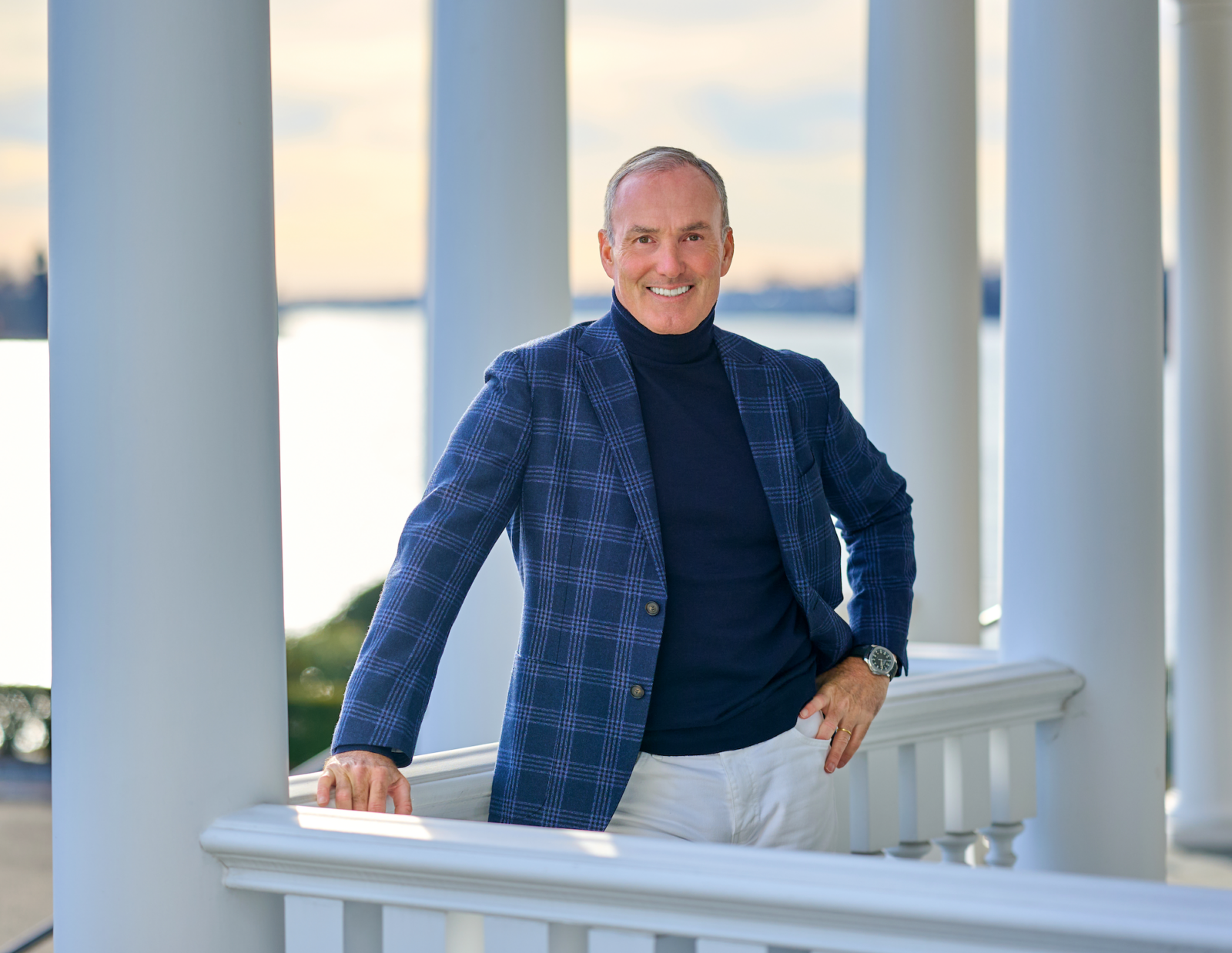
Ed Garden believes that bringing an ownership mentality to the boards of public companies is a catalyst for long-term value creation.
Strong boards seek out challenging perspectives—the kind Ed Garden has built a career providing. As Co-Founder and longtime Chief Investment Officer of Trian Fund Management, Garden led campaigns calling for major changes at companies like General Electric, Bank of New York Mellon (now BNY), Wendy’s, Invesco, Janus Henderson, Legg Mason and Pentair, winning board seats at each along the way. Working with Nelson Peltz and Peter May, he helped Trian become an influential voice in modern shareholder engagement.
In May of 2024, Garden launched Garden Investments after leaving Trian in 2023. The firm is built around an unusual premise: It accepts outside capital only when Garden invests his own money alongside it. “I don’t know of any other activist fund where the principal is putting meaningful capital right beside investors every single time,” he said. It’s a structure designed to restore the ownership mentality Garden argues public markets have lost, and which great companies possess.
Brunswick only advises companies facing activist campaigns, never the activists running them. The following interview, conducted by Brunswick Partner Charlie Koons, provides a useful insight into the perspective of one of the world’s most experienced activists.
How is Garden Investments an evolution in your approach to stewardship and value creation?
It starts with a different structure. In the past, I had a fund. Today, I’m running my family office with some participation by third-party investors. Since I’m not raising money unless I’m prepared to be the anchor investor, it creates a self-selecting mechanism for investors who share my long-term outlook and goal: to compound over time, tax-efficiently, rather than focus on daily mark-to-market.
But the approach itself hasn’t changed. We’re focused on investing in quality companies that have been undermanaged and have the potential to be compounders. Also in industries where we have significant domain expertise. We’re income statement-centric, very focused on the operations. We pull the same levers in every single investment.
I feel strongly that the recipe for success—being best-in-class operationally—starts with focus. That’s where we start. Many companies that run into trouble struggle to manage too many businesses and allocate capital effectively. In most cases, you’ll see us separate non-core operations.
The second principle is ripping out complexity. It is the killer of margin, the killer of profit. We typically do that through a Pareto analysis. The 80/20 rule [formulated by Italian economist Vilfredo Pareto, who observed that about 80% of results came from 20% of inputs] is going to tell us where the inefficiencies are—we can Pareto by SKU; by manufacturing facility; by customer; by geography. We’re always going to go after complexity.
The third is creating accountability. That was one of the most important levers we pulled at General Electric.
How did you create that accountability?
We pushed centralized costs down onto the P&L of someone who could actually control them and be held accountable for results. If you don’t control the P&L and are just allocated costs from corporate, it’s hard to take ownership.
Accountability also means aligning compensation with shareholders. We want management paid well for performance and for building the business—not simply for showing up. We focus on ensuring that incentives are tied to the right metrics.
“Twenty years ago, most investors felt that if management and the board weren’t performing their only option was to sell. That’s changed. Shareholders now see another path.”
How has the dialogue between investors and companies changed since you founded Trian 20 years ago, and what role do you see for engaged investors today?
Management teams and boards are much more willing to engage with shareholders. It’s now seen as part of public life to engage and make sure you’re soliciting feedback and understanding the pulse of the people who actually own the company. That wasn’t as prevalent 20 years ago.
Activism is a broad term, and how boards react to an activist really depends on who the activist is. Some are more aggressive, others are short term, some are balance-sheet focused—which means, “sell the company, lever up and buy back shares, realize the sum of the parts.” There aren’t many who are operationally focused.
Passive investors are playing an ever-larger role in corporate elections. What’s your assessment of their influence and stewardship?
The answer goes beyond just index funds and voting. I think public markets are flawed and need to be reimagined. Let’s start with passive investing, which is what you’re really talking about.
When you put money into a passive fund, it often gets allocated by market cap. So you have a handful of companies that dominate the index and get the capital. Ten companies represent over 40% of the S&P 500. The bottom 200 companies in the S&P 500 represent 6% of the market cap. It’s distorting valuations and creating a dynamic where what we think of the market isn’t really representative of the market. Many companies—maybe thousands—have been rendered irrelevant because they’re smaller market cap. They don’t attract passive capital because it’s primarily allocated by market cap. As a result, they tend to trade way below intrinsic value.
When shareholders are trying to facilitate positive change—and typically an activist is trying to galvanize the other shareholders to buy into a point of view—it’s hard to do when there’s no one on the other side who really lives, sleeps and breathes that industry and that business.
You end up with a lot of owners but no controlling owner—and therefore no real ownership mentality. What I’ve done, and what many activists do, is essentially arbitrage the value destruction that comes from the agency mentality in most public companies, where neither the board nor management owns a meaningful amount of stock.
I’d argue there’s been a multitrillion-dollar transfer of wealth from public shareholders to private equity over the past 40 or 50 years, as private equity has done essentially the same thing. They’ve bought public companies once written off as mediocre, or divisions dismissed as non-core, and turned them into highly profitable businesses.
In private equity, the board is made up of the owners. They know the business as well as management, they’re highly incentivized, and they have real skin in the game. Management reports directly to them. That’s not always the case in public company boardrooms, where directors often own little stock, are content simply to serve and rarely know the business as deeply as management. I’m generalizing, but it’s what you often find.
I also think it creates distortions in corporate governance and weakens the functioning of shareholder democracy—the very purpose of the proxy system. The other major flaw in the public equity market, to round it out, is short-termism.
You’re not a fan of quarterly reporting?
Most of the companies that I’ve invested in probably got in trouble because management made bad decisions trying to make a quarterly number. And a lot of what I’ve done historically is enter the boardroom and say, “Everyone, stop the madness on quarterly numbers. Let’s think about how we’re going to build this business over the next several years.” I don’t really care what next quarter is. I’m more focused on: How do we compound earnings over the next five to 10 years?

“The biggest mistake is circling the wagons and not being open to robust debate.”
What are the most common mistakes companies make when engaging with their shareholders in the context of an activist campaign?
The biggest mistake is circling the wagons and not being open to robust debate. Too many companies try to defend false narratives. As an example, I would give you GE circa 2017 saying that all of the businesses belonged under one roof because of the GE store. But the GE store added no value. And we were able to really demonstrate that.
The mistake management and boards make is rallying around those slogans instead of listening to activists and other shareholders—and refusing to challenge, let alone change, those narratives.
Has the line blurred between activist and long-term shareholder?
Activists often serve as the tip of the spear for other long-term shareholders. Twenty years ago, most investors felt that if management and the board weren’t performing, their only option was to sell. That’s changed.
Shareholders now see another path: They may not want, or be positioned, to join a board or run a public campaign, but they’ll support a shareholder who can unite the owners around a credible plan to get the business back on its front foot.
Today, most large, established long-only investors are willing to back an activist with a proven record—someone who executes effectively, acts constructively, understands the business deeply and makes it stronger for the long term.
During our proxy fight with Heinz, one of the largest long-only investors in the world told us, “We’re concerned you’ll do something that’s good for you in the next 18 months but bad for us over the next 18 years. We have a long memory, so we’ll be watching closely to make sure you make this a better business for the long term.” I’ve always remembered that conversation—it reinforced that my job, my stock-in-trade, is making companies better for the long term.
There’s a belief among CEOs that activists’ interests aren’t aligned with those of the wider shareholder universe. What’s your take?
It depends on the activist and the plan. If an activist comes in saying, “The answer is sell the company; what’s the question?” then I can see how there would be a disconnect.
In my case, there should be total alignment because I’m trying to make the company best in class in every way: operationally, in capital allocation, compensation and corporate governance.
And that should create total alignment with customers, shareholders, employees and the communities they operate in. Because if the goal is to make the company best in class, you want employees who are engaged and happy and give extra effort. You want customers who feel that your say-do ratio is great. If you’re really focused on being best in class and doing all the little things right, sooner or later it’s going to be reflected in the stock price and you’ll have happy shareholders.
If you’re doing all those things, my guess is you’re growing. And that’s good for the communities you operate in.
“If you’re really focused on being best in class and doing all the little things right, sooner or later it’s going to be reflected in the stock price and you’ll have happy shareholders.”
You’ve worked closely with the boardrooms of some of the world’s most prominent public companies. What have you learned about effective corporate leadership and the conditions that enable real change?
Number one, I would tell you that a great management team and board focuses on the things that aren’t going right. It’s OK to celebrate the victories, to high-five and feel good about successes. But what I’ve noticed in a lot of struggling companies is that it’s almost taboo to bring up the problems. Focusing on what’s not going right is viewed as an indictment of management and the board, that you want to embarrass them or get them fired.
But great boards and management teams understand that every company on the planet has problems. You want to be the kind of company that puts a bright spotlight on the problems so a lot of smart people can help get them fixed.
I’ve had the privilege to be front and center watching the transformation at General Electric, built not on an inward focus but an outward one—focusing on doing things faster, better, more efficiently for the customer. That kind of lean culture, where you ask every single day, “What are the activities that really add value for the client?” can have very outsized results.
And finally, I’ve noticed that the great manage-ment teams and CEOs focus on the things that only they can do.
How can investors and corporate boards build a more durable, mutually beneficial relationship?
It’s incumbent on the board to make an effort with the owners of the company, to understand and take the pulse of the owners. They don’t have as much accountability because of the diffuse ownership that I mentioned earlier, but that board is accountable to the owners.
There should be consistent outreach and listening—real listening—to a broad swath of investors. That’s how you build trust, how you have a mutually beneficial relationship. That doesn’t mean they have to do everything that people say. But being informed about the different viewpoints and making good judgments is going to define the legacy of a board. No one has all the answers; no one owns the truth.
What is your long-term vision for Garden Investments as a force for engaged investing?
As I’ve said, the business of investing in public equity needs to be reimagined. I mentioned the takeover by the passive funds, and what that means for price distortion, for the thousands of public companies that don’t get capital or attention, for the short-termism that’s now ingrained in the market, and all the bad things that happen from diffuse ownership.
Investors also have limited options. Index funds have great liquidity and low fees, but you’re leveraging your future to a handful of stocks and hoping the market goes up. To me, especially with the market at all-time highs, that does not seem like a great proposition.
Traditional long-only funds charge more but often struggle to add value, while alternatives like long-short funds lock up capital and carry high fees with mixed performance. Those are your options for public equity investing. Meanwhile, private equity has its own challenges: illiquidity, reliable marks, the need to use leverage, a limited opportunity set.
That’s why I think better options will emerge, and I’d like Garden Investments to be part of that. I was a pioneer of activism 1.0 and I want to be a pioneer of activism 2.0. My vision is for a new asset class that I call Sponsored Public Equity.
I want to turn one of the huge negatives of passive investing—which is thousands of unloved and undervalued public companies that trade below intrinsic value—into a positive. I want to make private equity-like skills and ownership behavior table stakes in the public markets.
“Sponsors” like Garden Investments will become large investors in ignored public companies and act like a private equity sponsor would act if they bought 100%. We will introduce an ownership mentality—encouraging management to think long term and holding them accountable for best-in-class operations, capital allocation, governance and compensation design.
What I’m describing is the convergence of public and private equity. We’ll marry the best of public equity—liquidity, quality companies, the ability to buy opportunistically and no need for leverage—with private equity’s high-value-add model of influencing corporate events and corporate behavior. The opportunity is enormous.
Meet the authors
-
Partner
New York
Charlie has more than 30 years of experience as a trusted advisor in M&A and in proxy contests to both corporate issuers as well as…
More from this issue
Investment Universe
Most read from this issue

A Stake in the Story

Why an American Acquired a Saudi Football Club
You might also like

Barista in Chief

Calling Balls & Strikes