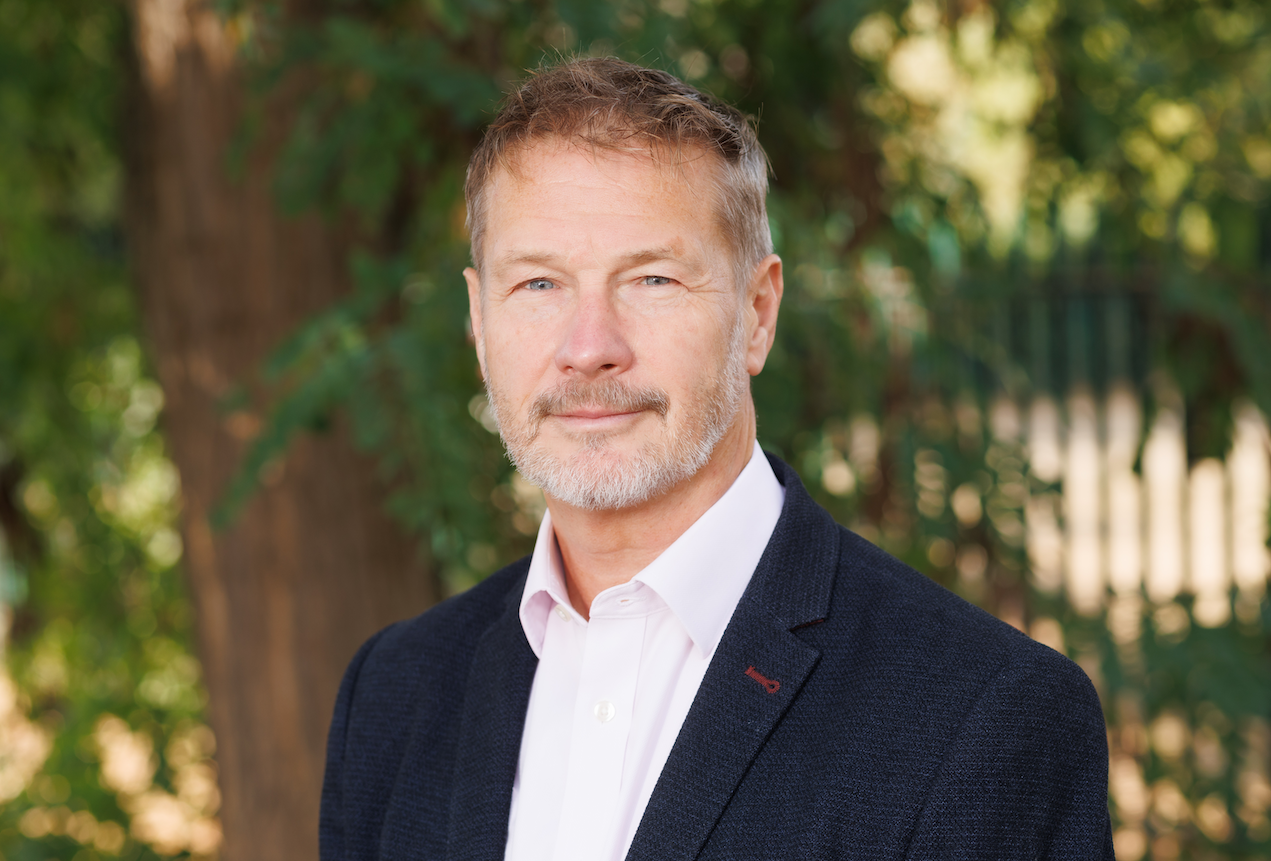
John Halsall, the new CEO of South East Water in the UK, forges a path out of crisis.
A drought in 2025 that left water supplies depleted, followed by winter storms and infrastructure failures, combined to put the UK’s South East Water into a serious crisis this year. The utility, which supplies water to around 2.3 million customers, said more than 77,000 customers experienced periods without water or with low pressure flow as a result of leaks and burst water lines across the network, contamination issues and problems exacerbated by losses of power during storms. The failures impacted entire communities, closing some schools and interrupting work schedules. In May, the CEO was forced to resign after a damning report by the UK Parliament’s Environment, Food and Rural Affairs Committee.
In July, John Halsall was brought in as CEO to help restore confidence in South East Water’s operations. He was clear about the severity of the crisis and the pressure on the organization itself.
“We know we have not done that well enough,” Halsall said in his first statement as CEO. “Our customers, communities and stakeholders rightly expect better.”
John has more than 35 years’ experience in operational and executive leadership across major infrastructure and utilities organizations. He was previously Chief Operating Officer at Pennon Group and held senior roles at Network Rail, overseeing rail infrastructure.
In a recent interview for the Brunswick Review, Halsall shares his insights about the benefits of a reset and the handling of transparency and criticism within the organization.
In your first national interview since taking this position, you used the word “unacceptable” to describe the company’s situation. How do you balance that need for acknowledgment of the problem on the one hand, with establishing trust on the other?
The first thing that you have to do is to recognize and accept that there is a problem that needs to be solved. There is an inherent link between that and building trust. If you don’t speak to the problem in an honest way, in a way that is engaging and intuitive, then you won’t build trust with the team that is going to help you to solve the problem.
You do need to emphasize that the problem is not single individuals. It’s not personal. It’s a professional problem, an idea that implies both failure and the opportunity to solve it. I do not believe anybody can immediately go in and put a pin on the tail of the donkey. You have a hypothesis, a working proposition. And then you have to feel your way through the problem. Feedback from your executives, from colleagues is really important.
It is made even more complicated because, of course, the landscape in which you’re operating is moving, both because you’re getting results from what you’re doing but also the wider financial and operating performance of the business changes. So you’ve got multiple dynamics and variables happening. You need to be ready to course-adjust all the time.
Are there advantages to having a crisis mindset?
There are definitely advantages. The burning platform, the reasons for change, the drivers for change—those are far more self-evident for an organization that knows it’s in crisis.
I’ve run businesses which are not in crisis, where you still need to deliver material change. It’s very difficult to come up with compelling reasons why thousands of people should do things differently. So, a crisis can make it easier to define clear priorities.
But the other side of the coin is that a company in crisis can do the exact opposite. Because there’s so much urgency, they’ll try and fix everything at the same time. You need a controlled crisis—very effective, tight leadership—and then a crisis can be helpful.
“The single most important thing in 12 months’ time is probably, how the business feels about itself.”
Does it come down to changing the culture of an organization?
To say that an organization has a culture isn’t entirely accurate. What you find is there’s a sort of a style that the company has, and then within individual teams, you will have different cultural pockets depending on how they’ve been led, what the makeup of the team is, its function and so on.
What I’m trying to do at the moment is to shift some critical behaviors which exist within the business, specific behaviors which of course do directly impact on the general culture. Needless to say, we have a brilliant team of people who are passionate about the work we do every day and we mustn’t forget that most of our colleagues are also customers as well, so they truly care.
One of the behaviors that we are very focused on developing has to do with accountability and being really clear about who is owning the solution to what problem. That means looking at individuals who are the leaders, with a whole bunch of people who need to help them.
Related to that, another challenge that we face is around silos. It’s a downside of any organization in crisis that typically you hunker down a little bit; you look at what you’ve got to do in your silo, and you don’t take a look at what the whole business is trying to do and how your bit fits in. So you really want to try and break those silos down, and one of the ways you do that is by being clear about accountability and responsibility.
This is all part of that notion of identifying a small number of behaviors that you think you can change rather than trying to shift the culture of the entire organization.
When you’re talking to a team of people who feel highly stressed because of how hard they’re working and the pressures they’re under, they’re not going to be interested in a conversation about culture change. But if you say, “Look, I reckon that we can change the way we do these small number of things,” then people react positively. They can see how those specific changes would help them and help the business.
Are there examples you could point to?
In my engineering background, I learned that what goes wrong in projects and programs is often quite predictable. If people don’t know what’s required of them, that’s a potential failure issue. People looking only at their part and not at its impact on the whole business is a failure issue. If there isn’t enough diversity of thinking and challenge, that’s another failure issue. If people aren’t empowered, that’s a failure issue. Thirty years ago, as I began to recognize when I got things wrong, these are the consistent fault lines that would come through. Once you become sensitive to them, they are easier to spot.
One of the behaviors to encourage that I feel strongly about is around constructive and visible challenge. Having the space to allow people to disagree with each other professionally and to create an environment where that disagreement is not personal but professional.
This is also why you want diverse thinking on your team. Because from disagreement and challenge, you create brilliant solutions. One of the challenges we face is that we have too much passive agreement, and therefore you tend not to create great solutions.
How do you signal that disagreement is an allowed behavior?
The simplest way is to wait for a person to disagree with you, hopefully as publicly as possible, and then to welcome and embrace that disagreement, and to do that over and over again.
The difficulty with that, and it is a huge difficulty, is that at the same time you receive challenge, you also have a responsibility to offer challenge back. And if the challenge you offer doesn’t land right, it can result in subduing the challenge that comes back. I tend to be direct and blunt, and that doesn’t always land well with people. So I work on softening how I go about challenge.
“If you don’t speak to the problem in an honest way … then you won’t build trust with the team.”
As you look to make changes, how do you talk to your people about the nature of the crisis they’re facing and how you can lead them out of it?
I don’t think it is possible to simply say, “I’m going to be really positive and not share the hard truths.” That would be demotivating. You have to balance praise and recognition of hard work with the honest fact that we are not performing in the way that we should be.
This is an iterative process. So it’s essential that we gauge and do temperature checks with our teams. One very interesting complexity right now is that some of my direct reports arrived in the business three or four months before me and have already done hard work toward the progress we want to see. They’re ahead on that journey. So you can’t simply give the motivational speech, you know, “You’re good people, but we need to change. We’re not good enough.” Because they’ve already been working on that. Some have already moved into wanting to be able to celebrate their successes. You run the risk of appearing out of sync. So there are mixed messages between function directors and the chief exec, which is something that is very front of mind for us at the moment.
Do you have confidence you’ll be able to achieve the change that you’re looking to do?
Yes, I’m confident. It would be arrogant and untrue to say that I walked in with the absolute confidence that we’re going to do this, because it’s a very challenging thing that we’ve got to achieve. I go through the things that we’re doing, and I cross-check, and I double-check that what we’re doing are the right things. I re-satisfy myself that we are going to do it, ’round and ’round in that sort of circular process with occasional challenges, sometimes from other executives and from the board. But yes, I do believe we can do it. We need to do the things that we say that we are going to do.
What do you want South East Water to look like in a year’s time?
At the moment, we’re a company in crisis. If I was just going to sum it up, I would say that in 12 months’ time, I want us to have regained control.
Now what on earth does that look like? It’s about shifting the balance from reactive to proactive. It’s about employees feeling that not everything is urgent. It’s about regaining pride, about the emotion of hope and belief, about engagement and job satisfaction. The single most important thing in 12 months’ time is probably how the business feels about itself.
Now, it is true that business success is measured by operational performance, financial performance and customer service. But if our people, and indeed our stakeholders, feel that the world is very different, then I believe that all of those other factors of efficiency, customer service, regulatory performance and operational performance—I think they will be delivered as well.
Meet the authors
-

Director
London
Imogen is a Director in London, working on media engagement and issues management.
More from this issue
Crisis
Most read from this issue
Dubai: Lessons from 2009

You might also like

Regarding Change

The Business Path to Nature Positive