
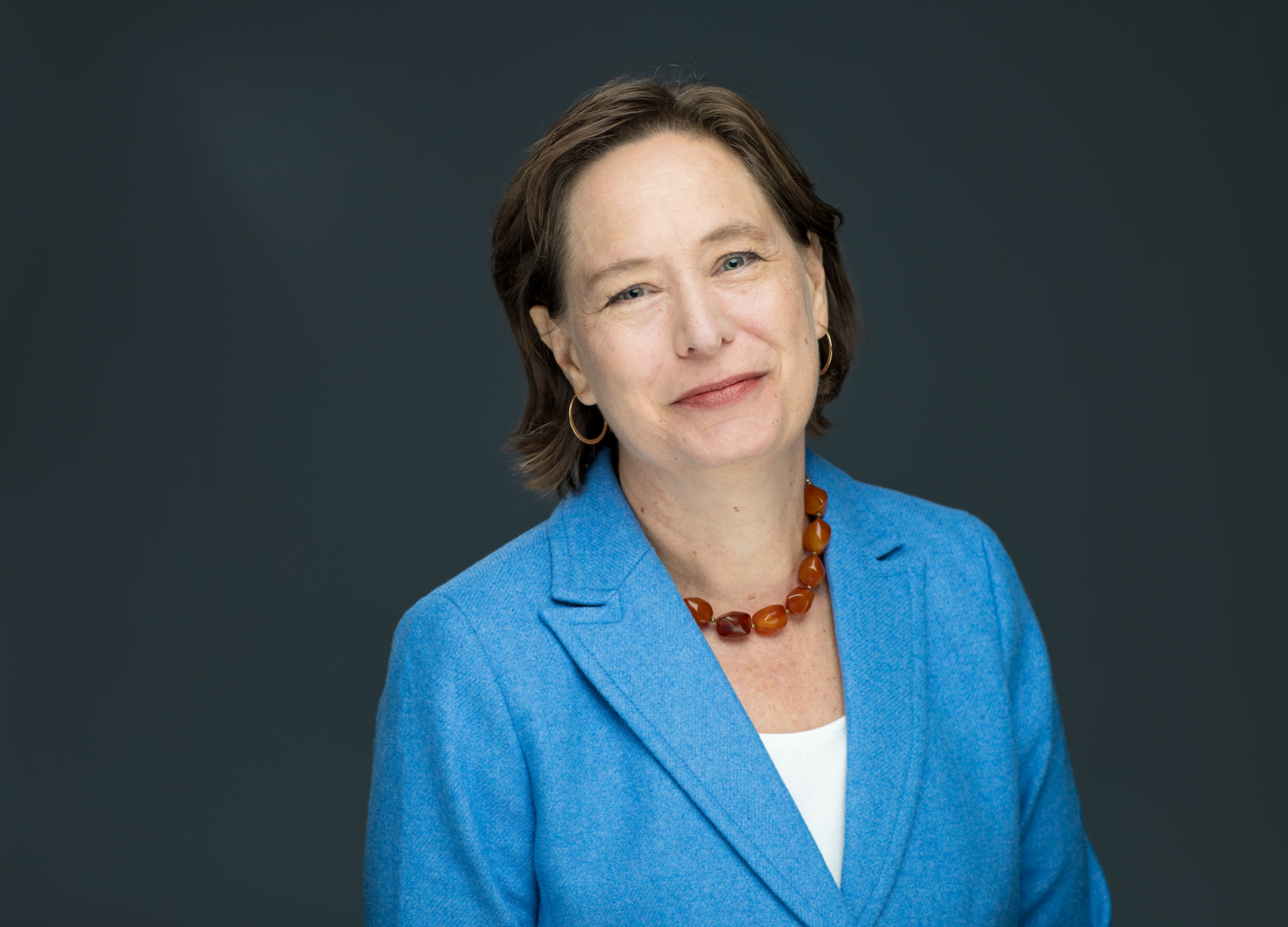
Curator Rachel Seidman on the Smithsonian American Women’s History Museum project “We Do Declare,” a series of first-hand accounts of women’s determination to build financial independence.
As a child, historian Rachel Seidman loved books, especially girls’ classics like Anne of Green Gables and Heidi. She eagerly explored used book sales, dusty piles of 15-cent cloth-bound titles.
“One of my favorite finds was from 1941, called Peggy Wayne, Sky Girl,” she tells us in a recent interview. “I loved this story of a plucky nurse who decides to become a flight attendant, a new career for women at the time. But she also secretly learns how to fly a plane, which comes in handy when the plane gets hijacked.
“Looking back, it turns out that this issue of women and careers, of broadening the scope of what women could imagine for themselves, has been something that I’ve been interested in since I was a child.”
Seidman went on to get a Ph.D. in History from Yale and is now a curator at the Smithsonian American Women’s History Museum. Established by Congress in 2020, the museum is the newest member of the national Smithsonian Institution family. The plan for a permanent facility is under way, hopefully on the National Mall. In the meantime, the organization already funds and oversees projects, exhibits and events dedicated to expanding the story of America through the often-untold accounts and accomplishments of women.
The museum itself represents more than a century of extraordinary change for women, a history attributable to the work of many generations. The museum’s two dozen Advisory Council members include former Secretary of the Air Force Barbara Barrett, Bank of America’s Chief of Human Resources Sherry Bronstein, Wonder Woman actor Lynda Carter, and tennis legend and investment entrepreneur Billie Jean King.
“The whole field of women’s history was really taking off in the mid-to-late ’80s when I was in college and graduate school,” Seidman says. “It was an exciting and intellectually eye-opening moment. There was a camaraderie in working with all these other scholars to develop this field and think about evidence in new ways.”
Seidman was previously the Director of the Southern Oral History Program at the University of North Carolina and specializes in the collection of first-person perspectives on history. At the Smithsonian, she is currently the project curator of “We Do Declare: Women’s Voices on Financial Independence,” researching, recording and presenting women’s stories related to the 20th century changes in law and culture that created greater economic equality.
Prior to the Equal Credit Opportunity Act of 1974 (ECOA), for instance, banks routinely discriminated against women. Married women could only get a credit card in their husband’s name. Couples seeking a mortgage sometimes were required to provide a “baby letter.”
“That was a shocker,” Seidman says of her research. “For a woman’s wages to be considered part of her income, she had to provide a letter from her doctor promising that she either could not or would not get pregnant.” Later, the ECOA needed to be strengthened to dismantle biases against race, color, religion, age and more, throughout the financial industry.
Like many women’s history researchers before her, Seidman’s work on “We Do Declare” had to begin by uncovering the names of women that had been forgotten in discussions of events they helped shape—for example, Emily Card, a legislative fellow who played a critical role in the passage of the ECOA and whom Seidman interviewed.
“I would venture that many women are not surprised by the fact that women’s work has often been overlooked or forgotten,” Seidman says. “That is something that many women have experienced. But what is harder for them to accept is what that has cost all of us in terms of understanding the past and our role in it.”
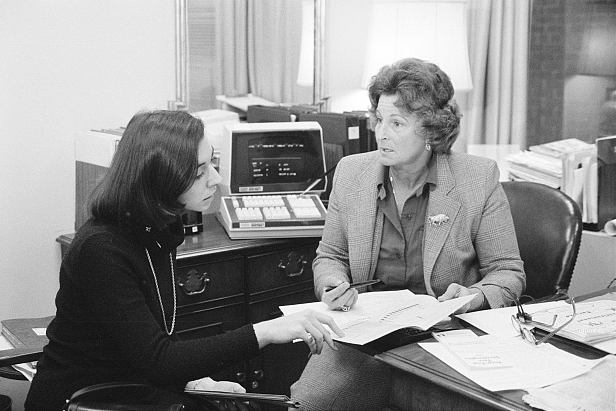
Among many others, “We Do Declare” features interviews with Claudia Goldin, the first woman to individually win a Nobel Prize in Economic Sciences for her work on gender equity; Ai-jen Poo, President of the National Domestic Workers Alliance; Jacki Zehner, the first female trader and youngest woman to make partner at Goldman Sachs; and employees of the Women’s National Bank, founded in 1977.
In the following interview, Seidman tells the Review about “We Do Declare,” which launched on March 1, some of the women she met in her work and the role that such research plays in society.
What sparked this project?
I wanted a way for our museum to commemorate the 250th anniversary of the signing of the Declaration of Independence, to explore what independence means in the context of women’s lives.
We decided to focus on financial independence as the bedrock for any other kind of independence that people might want or have or need. I set out to interview women who worked to expand women’s financial independence. Why did they think change was needed? What were their experiences before—and those of their mothers and grandmothers? What did they set out to change, and how? What kinds of strategies did they use? What kinds of resistance did they face, and what kinds of success did they have?
“One thing we can do at the Smithsonian is lift up this incredible work and help more people come to understand the complexity, the inspirational stories, the really diverse ways that women have both experienced change over time and created change over time.”
How did you identify people to be interviewed?
I did in-depth research on all the ways women’s relationship to the economy had changed over the course of the 20th century and identified different approaches women had taken to increase their own and others’ economic power—for example, by expanding the careers open to women, advocating for equal pay laws, labor organizing or through philanthropy. I also drew from my decades of teaching women’s history at the college level.
For example, I had taught students about the displaced homemakers movement. Talk about something that’s been forgotten. This was a piece of the women’s movement of the 1970s. All these women who had done what society told them to do—put aside their job aspirations to raise children—then either through widowhood or divorce, were suddenly financially on their own. In a no-fault divorce, they’re not going to get alimony. They were often in their 50s or 60s, too old for the job training programs that existed, didn’t know how to write a résumé. A whole movement formed to get them funding for job training and centers where they could find support groups, workshops and all kinds of things.
I knew that the leaders of that movement, Tish Sommers and Laurie Shields, had died quite a while ago. I found an article that mentioned a young attorney named Barbara Dudley, who had written the legislation that got the funding for these centers and services. She was not easy to find, but, putting on my best Nancy Drew impression, I found her, and then flew to Portland, Oregon and had this amazing experience interviewing her.
Were the women you approached surprised at your interest? How did they respond?
There were people who were not at all surprised of course—the ones whose work is more public or well known and are used to being interviewed. Even so, most of them feel honored to be included in the Smithsonian American Women’s History Museum, and are thrilled that their work is considered worthy of historical attention. But others were definitely surprised.
The most touching moment was with June Inuzuka. Even after the ECOA, women still had to get male co-signers for business loans. It’s not until the Women’s Business Ownership Act of 1988 that that gets addressed. Inuzuka is a Japanese American woman who had been an attorney for the Women’s Equity Action League at the time and advised on that law. She wanted to make sure the statistics that the law ensured would be collected were broken down by race—that they not just assume all women’s experiences were the same.
So, I set out to contact her. She told me later that she was deleting my emails and refusing my phone calls because she thought it had to be a scam: Why would the Smithsonian be interested in her? When I finally interviewed her, she said she “felt like a failure” after the law was passed because the first annual report that came out did not in fact break the statistics down by race as she had advocated for. She left law, moved to Denver and raised a family.
But over time, the reporting did start to reflect the detailed statistics. After I contacted her, to prepare for the interview she did some research and realized that everything she had been arguing for had eventually been included. She said the process of doing the interview completely changed the way she thought about her own impact and role in history.
That was a really powerful moment, very emotional; we both were near crying.
How will the public interact with this project?
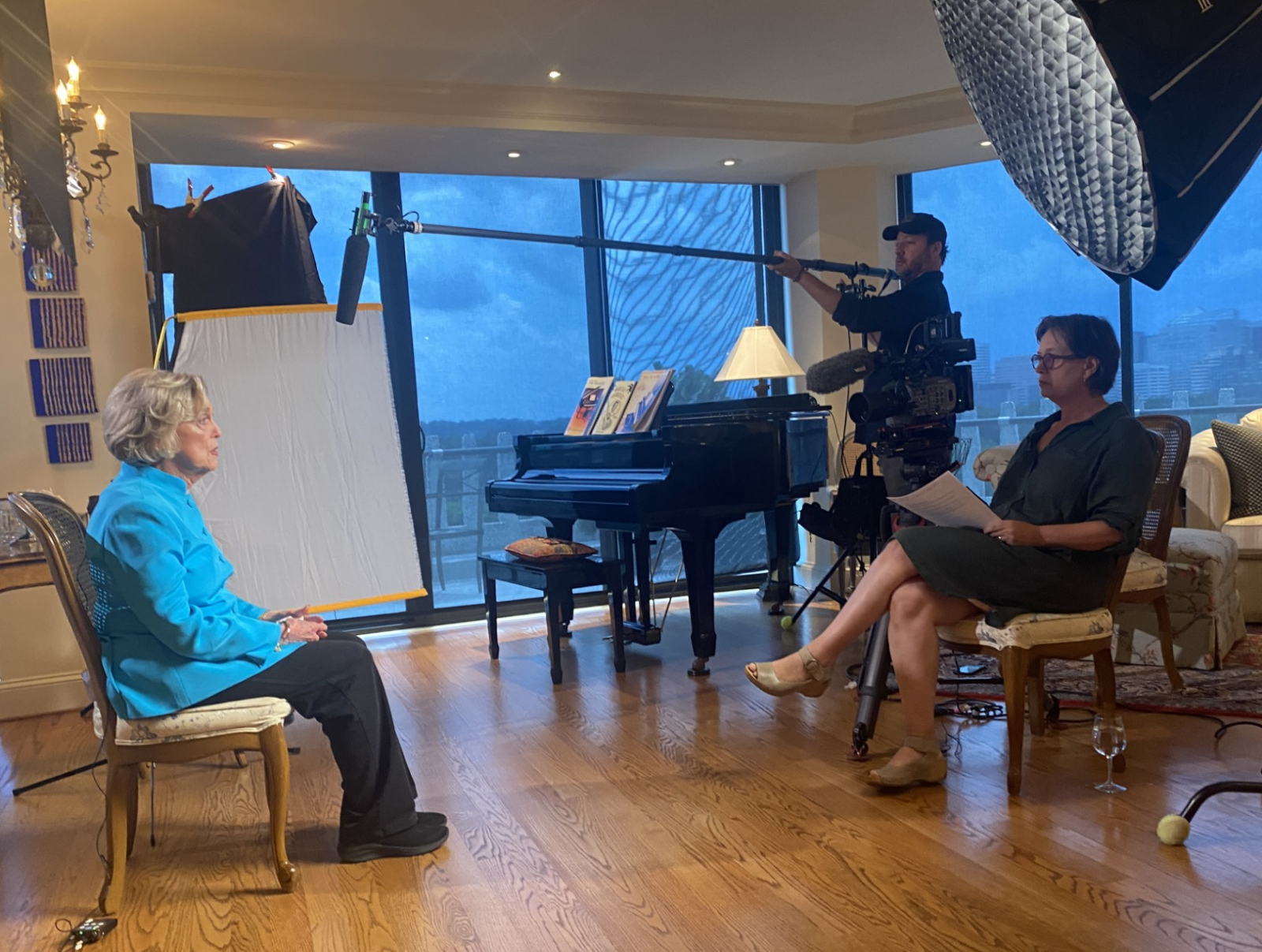
Most audiences will be interacting with short vignettes from the longer, videotaped interviews. These excerpts are focused on how each woman set about to make change, and why. We’re creating a new webpage for “We Do Declare” and the vignettes of these women’s stories will live there and will be shared via social media. We will also publish contextual essays on the website that trace the different pathways women took to create change, connecting their stories to one another and to the larger historical forces that shaped their work.
We are creating public programming and we’ll be doing public screenings of the videos. We’re going to create a kit for communities around the country to watch the women’s stories and then discuss what they’ve heard. They can have community members talk about their experiences or share memories of their families. They could potentially invite local leaders to host a panel discussion. We’re also creating materials for K–12 teachers and for the Girl Scouts—they have a badge for financial literacy.
How does this work reflect the current challenges for women in society?
The museum has an incredible opportunity to shine new light on the amazing achievements of women that have happened all around the country over the last 100 years really, but especially the last 30 to 50 years. The public doesn’t know about it for the most part. So, one thing we can do at the Smithsonian is lift up this incredible work and help more people come to understand the complexity, the inspirational stories, the really diverse ways that women have both experienced change over time and created change over time.
Even though I focused to some degree on women who moved the needle, they were just regular people who saw a problem and decided to do something about it. People often think of history as something that happened long ago and far away to people not like them. In the way people are taught history growing up, the Civil Rights Movement, for instance, equals Martin Luther King Jr. And most people feel that they can never be like MLK.
But if the only people that we notice are the people who stand up there and give the speeches, then we’re going to miss all of the work that happened behind the scenes that made change possible. We’ll miss the work of the women who organized the Montgomery bus boycotts, who mimeographed and distributed fliers, who organized meetings and made food for the people attending events. None of that happens without the incredible actions of just regular, everyday people. We can help people today see that they both experience change over time and can help create change over time—they, too, are part of history.
I think there’s a hunger out there for these new stories. And people are going to be really excited when we start telling them.
Visit “We Do Declare: Women’s Voices on Independence” at womenshistory.si.edu/we-do-declare/
Meet the authors
-
Associate
New York
Julia is an Associate with Brunswick Arts. She has been with the firm since 2019. -
Director
New York
Carlton Wilkinson is a Brunswick Director and Managing Editor of the Brunswick Review, based in New York. He is an award-winning journalist, a music educator,…
You might also like
The View from Outside
United for Africa