
Local investments made for the Olympics will keep paying off long beyond the end of the ’26 Winter Games, says Veronica Vecchi, Chair of the organization behind the Games’ infrastructure.
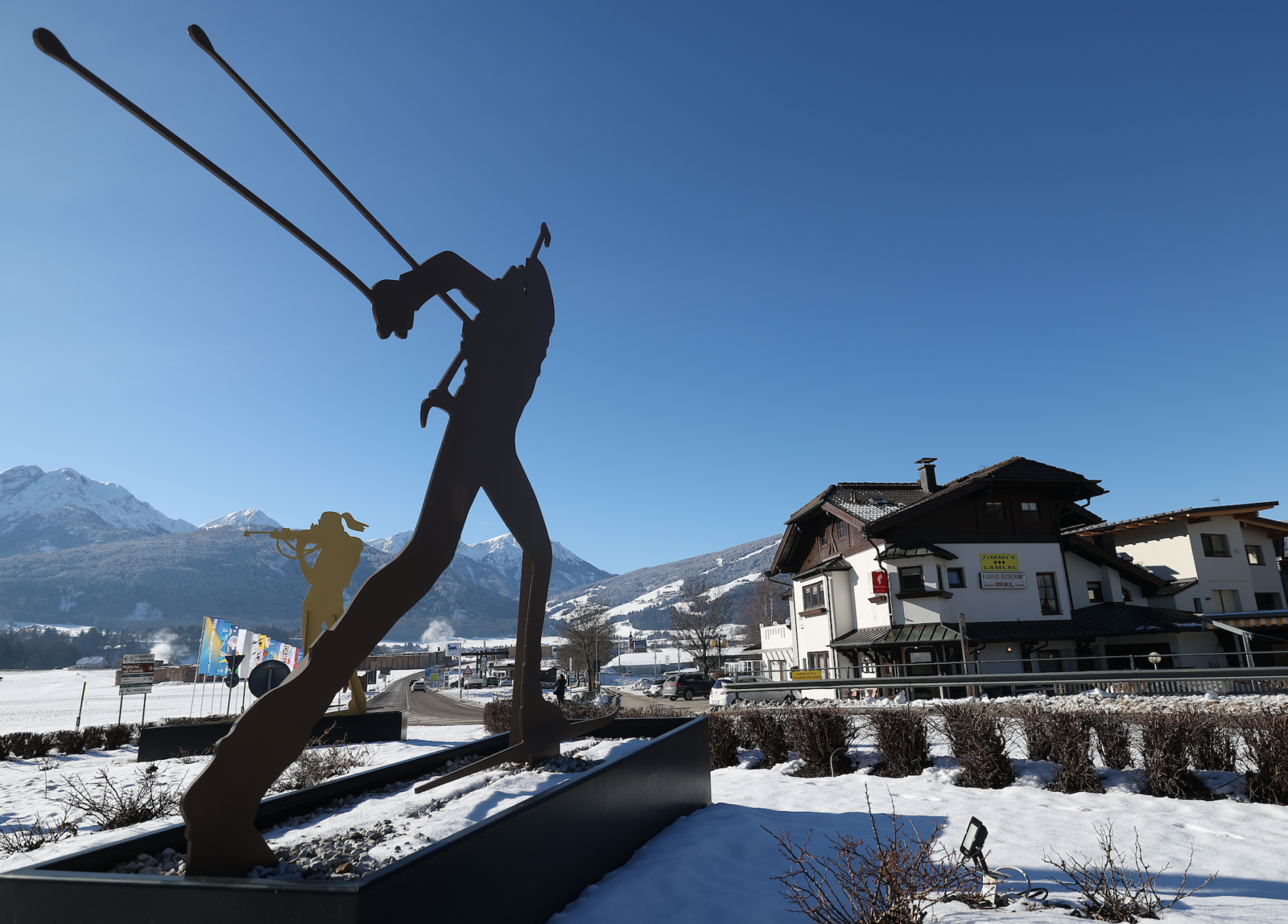
Photo: Antholz, an idyllic mountain village and renowned biathlon hub, hosted the 2026 Olympic biathlon competitions for the first time.
Beyond the podium moments of the Milan-Cortina Winter Olympic Games 2026 lies a story not only of personal bests, but of capital investment, infrastructure transformation and a long-term legacy of hosting such major international events. For years before the first downhill skier hit the Alpine slopes or curling teams appeared on Italian ice, the region was preparing for its role as host.
With around €3.5 billion ($4.1 billion) invested across 98 projects, Milan-Cortina 2026 reflects not only the scale of Italy’s ambition, but also the incredible complexity behind such a mega-initiative. Overall, it entailed 51 major transport and road upgrades and 47 sports facilities over more than 22,000 sq km in the Lombardy, Veneto and Trentino-Alto Adige regions. The scale was local, regional, national and international, all at once, and all of it expected to perform perfectly under the spotlight of global media.
Veronica Vecchi, Professor at Milan’s Bocconi University and SDA Bocconi School of Management, is Chairperson at Società Infrastrutture Milano-Cortina (SIMICO), the state-owned company responsible for the Games’ infrastructure. In a recent conversation, she outlined what it really takes to deliver on a challenge of this magnitude.
“Delivering infrastructure for world-class events is never only about construction,” she says. “We had to develop the ability to turn complexity into long-term value, while taking full public responsibility. Italy has delivered Olympic assets and facilities, top-tier sporting venues, across a highly diversified and challenging territory, while ensuring a positive legacy for local communities.”
The closing ceremony, held in the unique setting of the Verona Arena, did not mark the end of the investment, she says.
“While attention to date has largely centered on sports facilities for the events, many of the most significant legacy projects—designs approved and authorizations secured—are scheduled for completion after the Games.”

Vecchi says Italy’s experience offers lessons for major international events everywhere. “First, the institutional model matters. SIMICO has a dedicated purpose and is closely connected with policymakers and regulators, enabling faster decisions and smoother implementation. Second, sustainability must be treated as a strategy, not simply a check-box or, worse, a window-dressing. And it must be considered broadly across four pillars: efficiency, environmental footprint, social dimension and governance.”
Delivering efficiently on time and on budget is key to success—an undertaking given the massive scope and complexity of these projects. The Milan-Cortina infrastructural plan required fast problem-solving, flexibility and intelligent use of digital tools to tightly coordinate over 300 contractors and more than 600 subcontractors, over 80% of which are SMEs. More than 3,200 workers were operating simultaneously across multiple sites.
“The Olympics is not just a major sporting event, but a powerful engine capable of activating local production chains, employment and investments,” Vecchi says. “It draws on and develops the ‘artisanal intelligence’ of entrepreneurs who often work away from the spotlight but are indispensable to the success of the event.”
Sustainability is particularly challenging under tight timelines and budgets, and requires a lifecycle perspective that goes beyond individual projects. While the environmental footprint may first come to mind, the social dimension is no less important. Digital safety monitoring and improved working conditions beyond legal requirements were introduced on construction sites: “We wanted to ensure these were platforms for integration and inclusion, true social ecosystems,” she says. “People from 52 different nationalities worked together for months.”
To establish the highest quality of governance, SIMICO worked alongside Italy’s Ministry of Interior to enhance a sophisticated anti-corruption framework through a public platform. Every 45 days, updates on projects, costs, timelines and procedures were provided. This approach included an elevated use of AI tools, digital twins and Building Information Modeling. “If it takes more than three clicks to get your information, that’s not good enough,” Vecchi says. “Our open Milan-Cortina dashboard was designed to demonstrate that full transparency is possible, though it requires taking full public responsibility, knowing that the public might read it in ways you don’t intend.”
None of what the Milan-Cortina Olympics has showcased to the world would be possible without all the people behind the projects—engineers, technicians, craftspeople, civil servants, contractors—who combine technical excellence with adaptability and problem-solving skills. “We’ve shown a very practical form of Italian capability: the ability to deliver results under conditions that would normally be thought unfeasible,” Vecchi says. “This is the intangible legacy we aim to leave to the Italian public sector and all the organizations involved in delivering major global events—a legacy of governance and competence.”
Meet the authors

More from this issue

Investment Universe
Most read from this issue

A Generational Deal

Africa’s Energy Opportunity
You might also like

A Washing Machine, and a Promise Kept

The Long Road to Lobito