
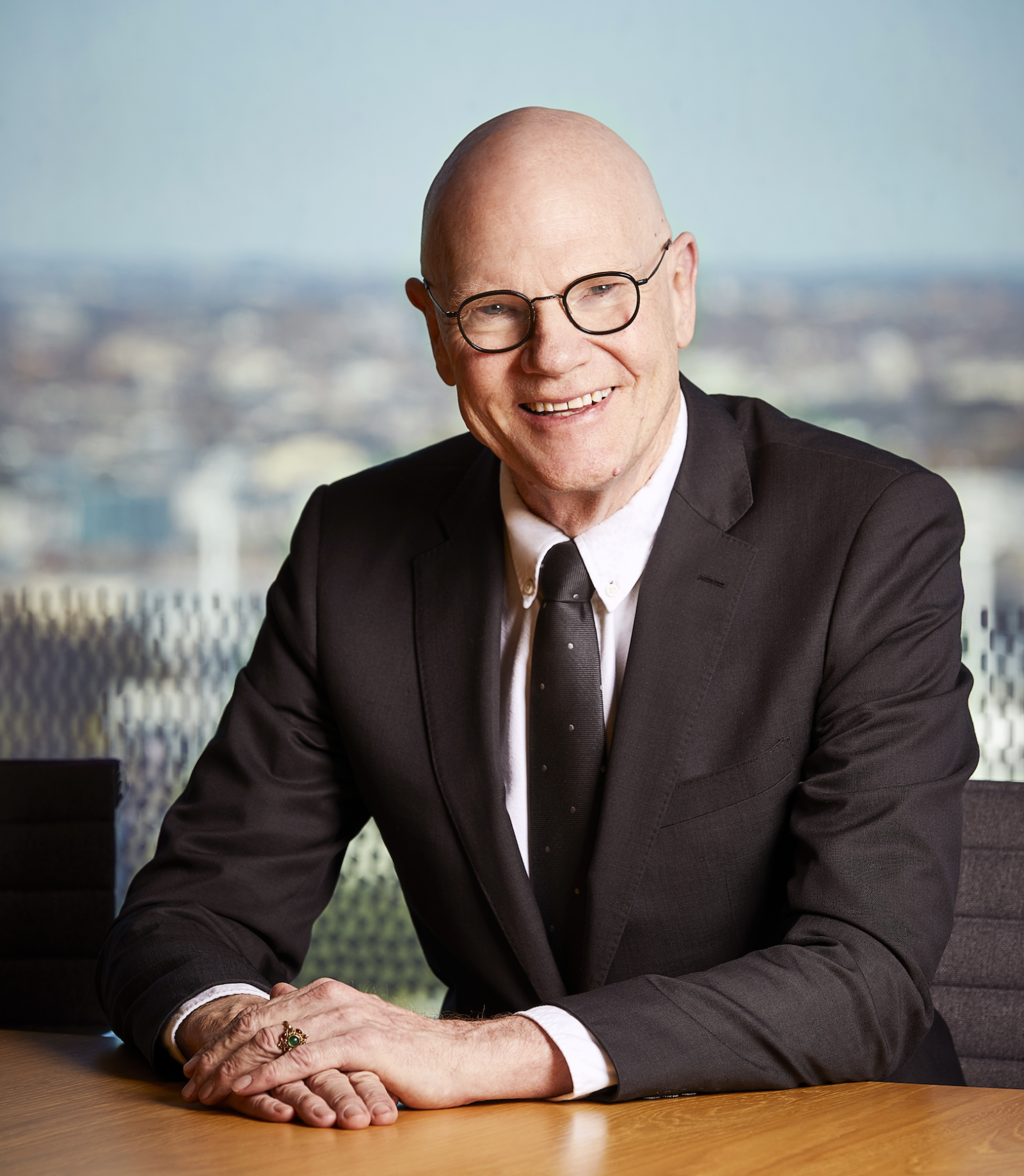
How Australia’s biggest super-annuation fund continues to transform the nation’s economy.
Don Russell is the Chair of AustralianSuper, Australia’s biggest superannuation fund with assets over $410 billion. The Australian superannuation funds now manage more than A$4.5 trillion in assets ($3.2 trillion), making the funds collectively the fourth-largest pension pool globally, a ranking expected to rise to second by 2035. Nearly 50% of those funds are invested offshore, and superfunds, including AustralianSuper, have the capacity to invest either directly or passively.
Russell, who holds a Ph.D. from the London School of Economics, is a highly respected voice on economic and policy matters in Australia and the surrounding region. His previous government positions include Secretary of the Department of Industry, Innovation, Science, Research and Tertiary Education, Australian Ambassador to the United States, and an advisor to Treasurer Paul Keating, who later became prime minister.
As the Australian superannuation system approaches its 35th anniversary, how has having one of the largest retirement savings pools in the world, relative to its economy, changed Australia’s economic resilience?
One of the objectives from the outset was to create a pool of capital that would be transformative in terms of the Australian economy. That has come to pass. With 12% of salaries compulsorily set aside, we have brought the community on a journey where they have had to be willing to systematically forgo current consumption in the interest of much larger future consumption when they retire. Countries which save more and find a way of channeling those savings into sensible productive investment over time tend to be richer, and that’s been the virtuous circle for Australia. We have brought the community along a path where Australia consumes less but can look forward to a dramatically improved retirement. If you look at the numbers, private consumption in Australia as a proportion of GDP is less than in the US or the UK. We don’t consume as much. We save more.
We’ve also been blessed by successive Australian governments that have not tried to gobble up too much of what savings are available. Australia has been able to fund a quite large growth in investment in the private sector, particularly around the time of the resources boom when Australia secured much of the global supply response prompted by the urbanization of China.
Australia has been able to fund things which we would not have been able to fund without the huge superannuation pool. Take infrastructure: Australians are always a bit surprised, when they go to the UK or the US or other parts of the world, at just how rundown and dilapidated local public infrastructure is. Things get funded here. Not quite like the private equity set up in the US, but given that we are only 27 million people we have quite a vibrant private equity market here.
We also have a surprisingly imaginative corporate bond market, where you have people borrowing in the Australian bond market out of Asia and even Europe for example. That would not have happened without our retirement system. The Australian capital market is significantly deeper, richer and more innovative than it would have been otherwise.
In what appears to be a global era of short-term politics, what are the implications for long-term savings?
Long-term savings matter. But countries around the world are wrestling with unstable politics, unstable coalitions, disgruntled electorates and changing political alliances. So there’s huge pressure on governments to deal with the immediate. They have no flexibility to look through current problems to focus on solutions and policies that hold out the prospect of much greater, beneficial, longer-term returns.
“We are forever asking ourselves: Is this a good security to hold in our portfolio for our members? And that has proven to be an excellent discipline for us.”
In regard to long-term capital and savings, which global economic or policy shifts are the most underestimated right now?
There are huge demands on government for current expenditure and supporting people through transfer payments. There’s also huge pressure on governments to cut taxes. Governments are borrowing more than they have in the past, and these huge borrowings are leading to larger pools of government debt, raising concerns about interest payments and debt instability. But it’s also upending the savings and investment balances that govern how the whole economy works.
Something tends to get squeezed. I’m not sure people fully appreciate the real economic effects that huge government borrowing will have on the capacity of the corporate sector to invest and even government’s capacity to invest in such things like infrastructure.
In terms of sectors and geographies, what is the current focus of AustralianSuper’s investments?
One of its great strengths is that the Australian system was set up as a defined contribution system. That means the member carries the investment risk totally, which means the funds have to invest the members’ money in the most productive and effective way possible.
Within the setup we have, it would be totally unreasonable for the member to carry not only the investment risk but also other responsibilities, like nation building, or channeling investment funds into things which may be socially worthwhile but don’t necessarily enhance the financial circumstances of the members. It’s entirely up to the board to deliver the best returns for the member, with the trustee making a judgment about risk and return.
We are always under huge competitive pressure to invest the money fully. Because we’re always looking for the best returns that we can get, risk adjusted, and because we are not constrained to look in any particular areas, the world is our oyster, so to speak.
We can make judgments about a whole range of securities and countries. The pressure on us to be sensible and productive in our investment strategy is huge. There is also pressure on us to be imaginative. We are forever asking ourselves: Is this a good security to hold in our portfolio for our members? And that has proven to be an excellent discipline for us.
We’ve delivered returns which people wouldn’t have expected at the time we set up the system 30 odd years ago—annualized returns of 8% and 9% over 15, 20, 30 years. Individuals really like the idea of having financial assets that belong to them. They really appreciate the flexibility, the empowerment that comes later in life, knowing they have financial assets which are entirely under their control. It just makes people feel better.
You have invested quite a bit in the US. How do you see the US progressing over the long term?
We don’t have overarching country views. We’re looking at everything on the basis of individual securities and individual assets. Although, obviously individual assets and individual securities gain their income from particular countries.
There are therefore country risks that must be considered, and we are always watching the changing dynamics of any particular country. But we’re not imposing a judgment from on high about individual countries.
What has stood us in good stead over the years is diversification. You don’t put everything in one place. Find assets that are not correlated, if you can. Build portfolios where you are confident that you know what you are investing in.
What we have also learned over the years is we can use our scale very effectively to build sensible, productive partnerships with large global players, particularly in private markets, where we can take advantage of the partner’s expertise, but also negotiate arrangements that reflect our scale and what we bring to the table. And a good partnership relationship can be one way that we can effectively take account of changing circumstances inside particular countries and individual sectors.
The US has been this huge engine for growth, innovation and the development of particular companies. The US has also had this capacity to refurbish old companies. Private equity is an extraordinary thing in the US, helping companies develop, helping companies refocus. As long as the US continues to be highly innovative and continues to have a capacity to build wealth, we will always want to be invested there.
It’s true that when you are considering the attractiveness of a particular investment, issues to do with institutional stability and the rule of law can be negatives and you have to take account of such things. But as long as the US continues to have this capacity to innovate, create wealth, and do it on a huge scale, it’s always going to be attractive.
“Don’t put everything in one place. Find assets that are not correlated, if you can. Build portfolios where you are
confident that you know what you are investing in.”
And the UK?
The UK is not in the same category as the US. If the US sits in the middle of the road, the world has to go around them. That’s not necessarily the case for countries lacking that size and status.
That said, we’ve been a big investor in the UK. We have a large physical presence there with an office of around 200 people. That’s a large commitment; we see London as an important global financial center, and as a place where there’s deep investment talent. We’re very committed to London, and to the access to skilled people. We’re very much of the mindset that we have this large pool of assets that originates out of Australia, and extends in a large way to London, where our investment capability is global.
How about Japan, where the government has a new, significant majority mandate and has outlined 17 critical priority areas where more investment is wanted, from within and outside?
Again, we look at individual assets against the country’s risk. It’s not Japan on, Japan off. Big calls around a country tend not to be well compensated. But yes, there are good assets and good exposure in Japan and yes, the Japanese corporate sector does seem to be in transition.
There are also good managers who know the local scene well. Certainly we’re big enough to do things in-house. But hiring managers with a local presence gives us another degree of freedom in terms of being able to make calls about what we might want to do in a particular country.
Is there a particular challenge ahead that has your attention?
The success we’ve had to date has been very much built on the accumulation stage of our members’ journey with us. Now those members have quite sizeable balances and are reaching an age when they have to give serious thought as to how they are going to manage their retirement.
The decisions that members have to make as they approach retirement are much more complex than the decisions they had to make during the accumulation stage. The reality is that a fund like ours is very much a mirror of the Australian community.
We have more than 3.6 million members, and the composition of our members is very much the composition of Australia. A sizeable proportion of the community, including our members, are not particularly well equipped to deal with complex financial matters.
We have a system which is very individual based, quite deliberately, and that’s why it’s been so successful; but it also means that we’re getting to that point where we are expecting individuals to make decisions which aren’t just about their super balance with us, but are also about the rest of their personal circumstances too.
Our members are very pleased to have these large financial assets, but they are conscious that they are going to have to make some big financial decisions. We are going to have to help them with these decisions and do it in a way that they find useful. And we are also going to have to do this at scale. That’s a huge task for us. It can be done, but we will have to harness digital innovation.
We’ve got to make sure that our members are protected and equipped to make good decisions. That is probably our biggest challenge.
Meet the authors
-
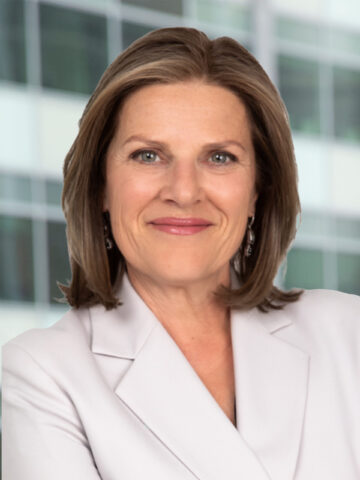
Senior Advisor
Sydney
Michaela Browning is a Senior Advisor with over 30 years’ experience in diplomacy, public policy, defence, technology and international business. She advises clients on navigating…
More from this issue
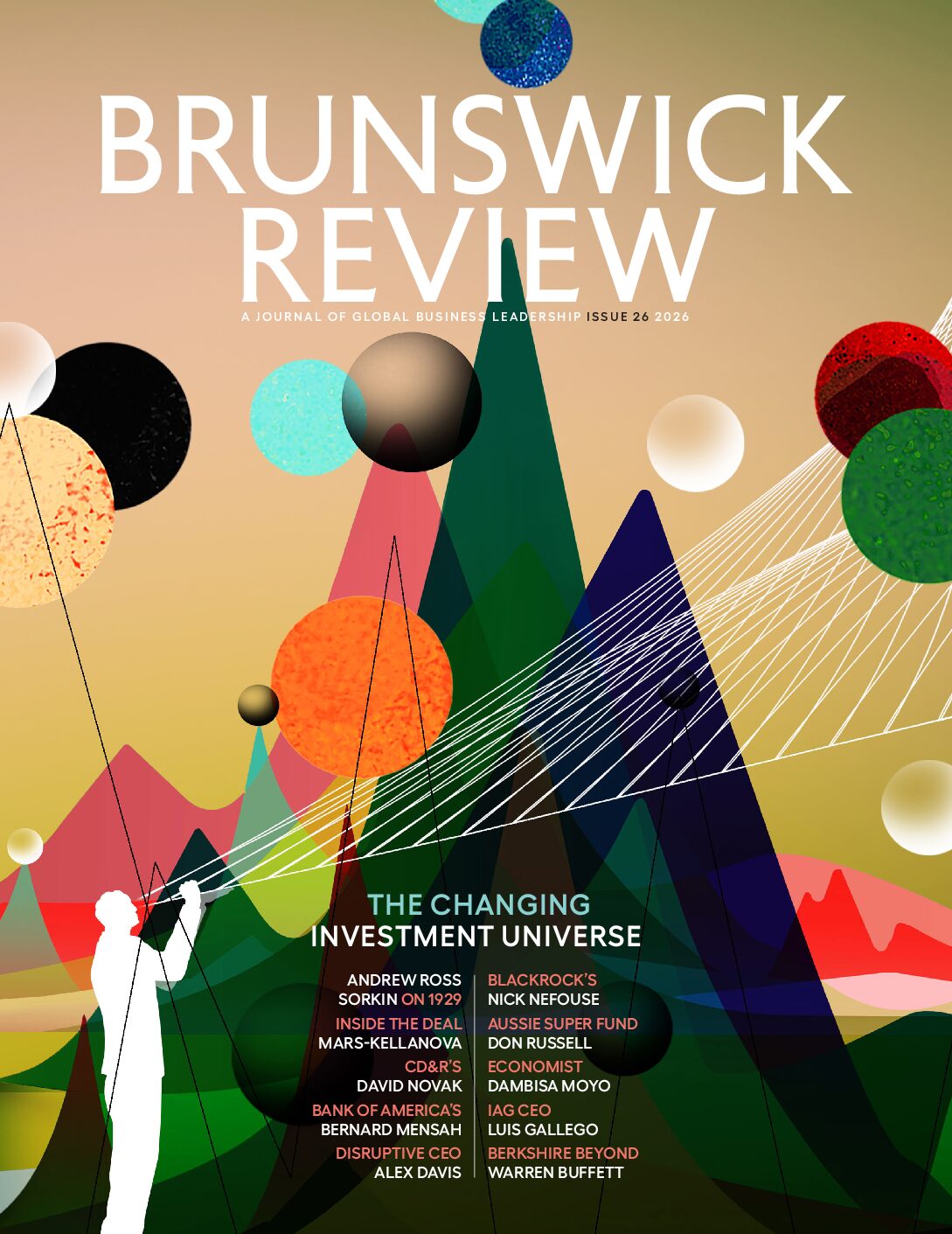
Investment Universe
Most read from this issue
A Women’s Place in History

Africa’s Energy Opportunity
You might also like

Private Equity Visionary

Andrea