
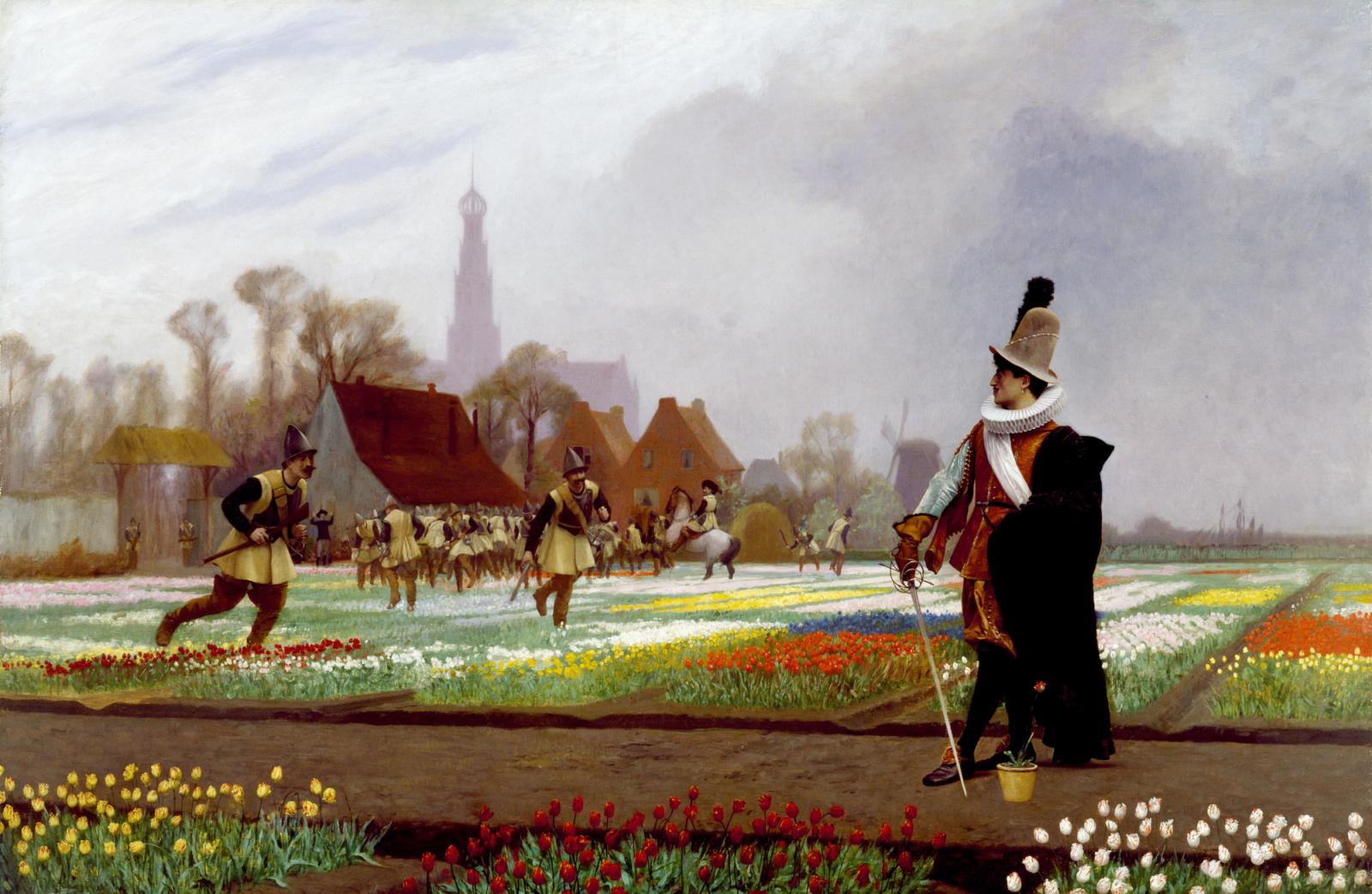
"The Tulip Folly," 19th century painter Jean-Léon Gérôme depicts a nobleman guarding a tulip field during the collapse in prices, while soldiers trample other tulip beds in a vain attempt to drive up demand.
About 70% of forecasts predicting a bubble-bursting market correction turn out to be wrong, research suggests, while that vision of doom that proves prescient is so rare as to build reputations. Who can resist clicking on the latest post from a genuine foreseer of the 2008 crash?
But if prophecy is notoriously difficult, retrospection isn’t necessarily foolproof, as demonstrated by the famous case of the Dutch Tulip Mania. Originally from Asia, tulips took Holland by storm early in the 17th century, with demand so far outstripping supply that a high-quality bulb might cost as much as a mansion. Early in 1637, prices collapsed, leading to the ruination of the Dutch economy, to widespread suicide and bankruptcy.
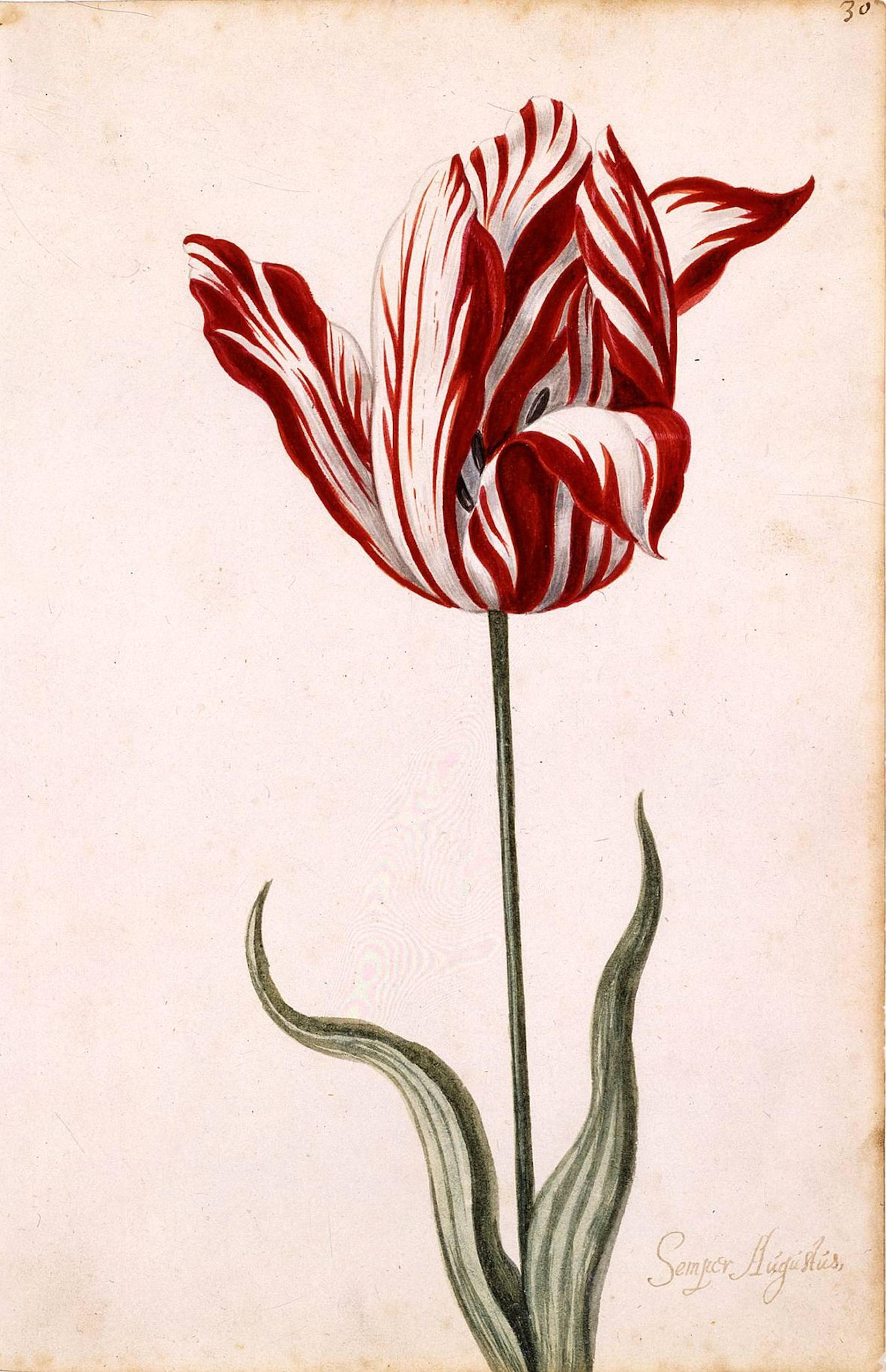
For Gordon Gekko, anti-hero of the 1987 film, Wall Street, it was “the greatest bubble of all time.”
Or so it was believed for centuries.
Now, the work of (among others) Anne Goldgar, a University of Southern California professor of European history, pops that narrative bubble. After years of research in Dutch archives, Goldgar found little if any evidence of widespread economic impact from the 1637 collapse of tulip prices in Holland. No suicides jumping to their deaths in canals. No tulip-induced bankruptcies. The relatively few people who did lose big could afford to do so, she found.
The notion of a tulip-market crash sounded as humorous in the 17th Century as it does to modern ears, Goldgar found. The crash was widely satirized in various accounts that 200 years later were stripped of their humor by Scottish journalist Charles Mackay in Extraordinary Popular Delusions and the Madness of Crowds, a book that remains a Wall Street classic.
Goldgar in 2007 set the record straight in her own book, Tulipmania: Money, Honor and Knowledge in the Dutch Golden Age. A critical and commercial success, it established Goldgar as the leading authority on Dutch Tulip Mania. Yet something about the myths and the alleged devastation has proven resilient. Every hot new investment, it seems, reinvokes the tulip craze. Goldgar has found herself arguing that, “whatever it is, Bitcoin is not tulip mania 2.0.”
On financial websites, on social media, in business school lectures, “tulip mania gets brought up again and again, as a warning to investors not to be stupid,” Goldgar wrote in a 2018 essay for The Conversation, an academic website. But, she added, “tulip mania wasn’t irrational. Tulips were a newish luxury product in a country rapidly expanding its wealth and trade networks. It wasn’t irrational to pay a high price for something that was generally considered valuable, and for which the next person might pay even more.”
Meet the authors
-

Partner
New York
Kevin joined Brunswick in early 2017 as Editor of the Brunswick Review. In 27 years at the Wall Street Journal, he covered politics in London,…
More from this issue
Investment Universe
Most read from this issue

Brunswick’s 2026 US Investor Survey

Taking Ownership
You might also like

Suzano’s Global Bet

Legacy in Milan