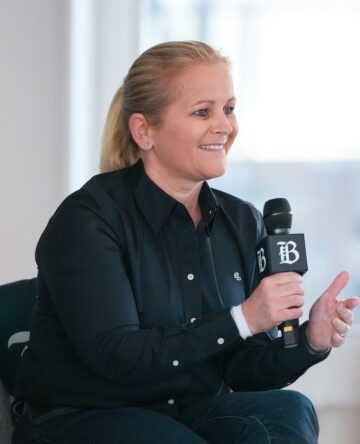

Ravi Kant, former Managing Director and Vice Chairman of Tata Motors, tells Kanhai Parasharya how Indian business needs to rethink leadership, trust and power.
I first met Ravi Kant at the Royal Bombay Yacht Club, a place where Mumbai’s many histories seem to sit in the same room. Kant had spent decades inside the Tata Group and helped steer one of its most visible companies through a period of transformation. He was at the Club to talk to an audience of business leaders about how India’s conception of the modern corporation needs to change.
The Club belongs to a world of polished wood, high ceilings, old portraits and older hierarchies—a relic of the Raj, when institutions such as these were built not only to gather people, but as symbols of who belonged and who did not. Less than a mile down the harbor stands another institution, the Taj Mahal Palace, India’s first luxury hotel. Local legend is that Jamsetji Tata built the Taj after being denied entry to a whites-only establishment. True or not, the story’s lesson is clear: An old, flawed order can be replaced.
Kant argues that corporations are stuck in an old order that emerged as commercial scale demanded structure. Over time, that structure has narrowed and hardened—too focused on money, too willing to dehumanize people in the pursuit of efficiency and too eager to glorify the single heroic leader at the top.
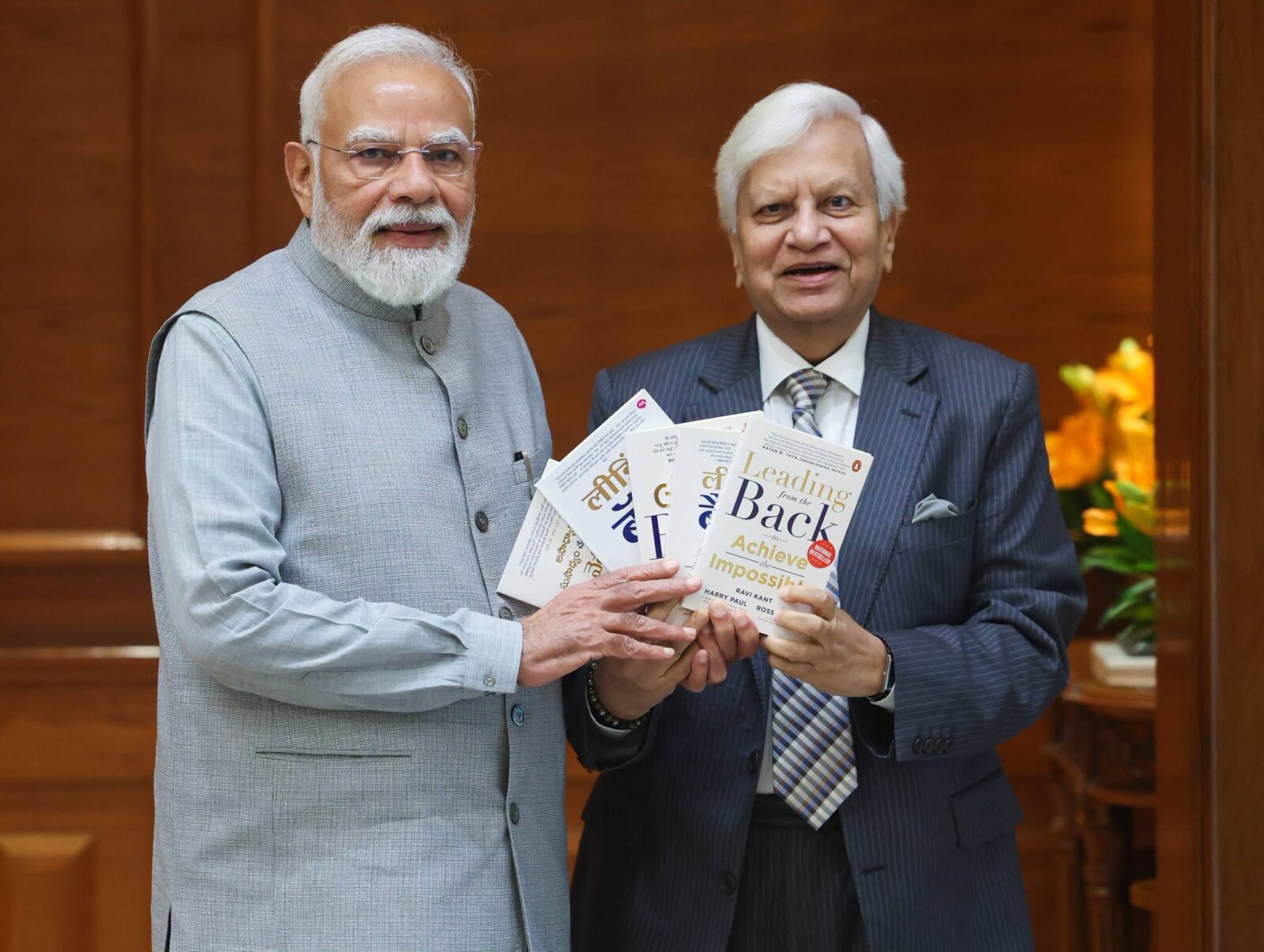
Kant’s suggestions for a new style of leadership are outlined in a book published in 2024 with co-authors Harry Paul and Ross Reck. Titled Leading From the Back to Achieve the Impossible, it draws on his decades of experience as Managing Director and former Chairman of Tata Motors, board member of Philips, and marketing director at LML Vespa. He has been a member of the board of many organizations, including Kone, and has been associated with several nonprofits such as Smile Train, Enactus and Akhandjyoti Eye hospital in India.
A week after his talk at the Club, I met Ravi Kant again for an interview, this time in his office at Cuffe Parade—part of Mumbai’s old central business district. The modern corporation is showing its age, he told me. And the pressure for change isn’t coming from technology, regulation or geopolitics, but from people.
“Gen Z doesn’t want to come and work in a command-and-control type of organization,” he says simply. “In India, we talk so much about the demographic dividend. That is the promise of India, this growing, available workforce. We’ve got a median age of 28. Around 65% of the population is of working age. Do you think Indian businesses are doing enough to capture this? I don’t.”
“Have you heard of Gray Rhinos? It’s a trend or thing that you know is coming. You can see it. It is coming right at you, but you are unable to do anything about it.”
Kant calls this impact of Gen Z a “Gray Rhino” and he compares it to the famous Black Swan disruptions—events that are unexpected, disruptive and by definition unpredictable.
“You know about Black Swans,” he said. “Have you heard of Gray Rhinos? It’s a trend or thing that you know is coming. You can see it. It is coming right at you, but you are unable to do anything about it. That’s Gen Z for corporate India. It’s a very big risk for companies, because they won’t be able to attract people or retain people.”
The bright future for India’s economy could dim considerably if the next generation of workers opts out of existing corporate opportunities. Granted, there are pressures that may create uncertainty or limit the job opportunities for Gen Z. But Kant argues that for any Gen Z entry into the workforce, businesses face a cultural shift. This new generation has different assumptions about work, authority, purpose and belonging. They see more clearly how the environment around companies has changed.
The stress of those changes is already being felt by the existing workforce, Kant says. Companies may not always understand these shifting expectations, and they may not always like them, but they cannot pretend not to see them.
Business leadership, Kant says, needs to adapt. Disruption has always existed, but its scale and speed have increased. In such a world, old rigid hierarchies are too slow.
“You need to have a more flexible, adaptable, flatter structure,” he says. “Information is exploding so fast that 50 years, 100 years of knowledge is now getting compressed. Knowledge is being democratized. Saying I have 50 years’ experience doesn’t mean as much anymore. It’s squashed now. You need distributed leadership to make the most of everyone’s knowledge and experience.”
As his book title suggests, Kant’s idea of leadership is what he calls, “leading from the back.” At its simplest, it is not leadership in the conventional sense at all. It is the work of a mentor, guide and facilitator. Someone who helps other leaders in the organization find their way.
“Another definition would be that you have the ability to create powerful teams,” he says. “That ability pivots on one thing, and that is trust. Creating trust can unleash so much power. It can draw out enormous amounts of energy from a person and between persons. And that is very, very powerful.”
In conversations across around the world, Kant has found many who were already leading this way intuitively, even if they are not necessarily celebrated for it: hands-on leadership, but focused less on your own personal ambitions and rewards, and more on developing new talent, strengthening organizations and creating pipelines of future success.
At Tata Motors, this philosophy was tested at scale. Kant helped bring the company through one of the most consequential phases in its history, a period in which the business expanded its annual revenue from roughly $1.5 billion to $39 billion.
By his own account, he did not arrive at Tata Motors as the person with the deepest technical knowledge of the business. Others inside the company knew far more about its products, operations and markets. Some were skeptical of him and wondered whether he was the right choice.
His answer was not to assert authority more loudly, but to take the time to build trust. Once created, it became the foundation on which his teams managed extraordinary achievements.
“Sometimes you give a guiding hand,” he told me. “Sometimes you give a nudge. Sometimes you have got to go into the trenches yourself and demonstrate how it can be done. But don’t stay there.
Come back.”
In one instance, Kant brought truck drivers into Tata Motors to directly inform engineers and product teams about their experiences. These were the people who lived with the vehicles every day, who understood their strengths and weaknesses not as design abstractions but as working realities. The message to the engineers was unmistakable: The customer was the final judge of success.
In any market, successful products are only made possible by groups of people with different strengths (hardware, software, design, manufacturing, customer insight) working together with intensity and trust. The popular image of Apple founder Steve Jobs is as a lone business and engineering genius creating compelling and ingenious new products. But Job’s greatest strength, Kant believes, was building teams and giving them the space and support they needed to find answers no individual could reach alone.
“Creating trust can unleash so much power. It can draw out enormous amounts of energy from a person and between persons. And that is very, very powerful.”
Even in a crisis, where strong central decision-making would seem the most appropriate, Kant counters that distributed leadership is still the better approach.
“When I joined Tata Motors, it was in a crisis,” he said. “When I joined LML Vespa, it was in crisis.”
At LML Vespa, he said, the company moved from a loss to profit within a few years, while its market share rose from 9% to 32%. At Philips, he recalled, a struggling business moved from 500 units a month to 5,000 in 10 months.
“So, who did that?” he asked, pointing to cultivation of teamwork and trust as the catalyst. “It’s the same people.”
The leader’s role, as he sees it, is to make people believe in themselves, to create confidence, courage and psychological safety. If a person close to the problem is empowered, they can begin solving it immediately. If every decision has to travel upwards first, it may already be too late. One leader may think of 10 solutions, he says. A trusted team, given responsible freedom, may generate hundreds. And in a crisis, a large field of options is what’s needed.
An organization built on trust can also have smoother leadership transitions, he says. He points to lifestyle company Titan, for example, a brand very well known in India for its premium watches, yet few can name any of the several generations of leaders who built the company.
“They were a startup. Now they are very successful and have had four generations of leaders—and you don’t know who they are,” he says. “That’s evidence of leading from the back.”
Kant knows that it isn’t easy for a company to adopt this strategy quickly.
“What I’m talking about is not mere change,” he told me. It is instead change that endures, change that comes “from the heart” and grows both productivity and happiness.
I thought again of the legend behind the Taj Mahal Palace hotel: denied entrance to an established institution, Jamsetji Tata answered not with grievance but by building something new. The Taj became part of the city’s imagination and skyline—a monument not only to ambition, but to a difference in who and what is recognized and valued.
That, if Ravi Kant is right, may be the question facing Indian business too. Indian companies that want to make the most of the generation now entering their offices, factories, labs and shop floors will have to build something new, to reinvent how they work. Not cosmetically, not through slogans about culture, but in the deeper architecture of power: who gets heard, who gets trusted, who gets to solve and who gets to lead.
The Gray Rhino, Kant says, is before us; the question is whether India Inc. will move before it has to.
Meet the authors
-
Account Director
Mumbai
Kanhai is an Account Director advising on complex stakeholder issues and strategic communications in Brunswick’s Mumbai office.
You might also like
Three EU Candidates

Close to the Madding Crowd