
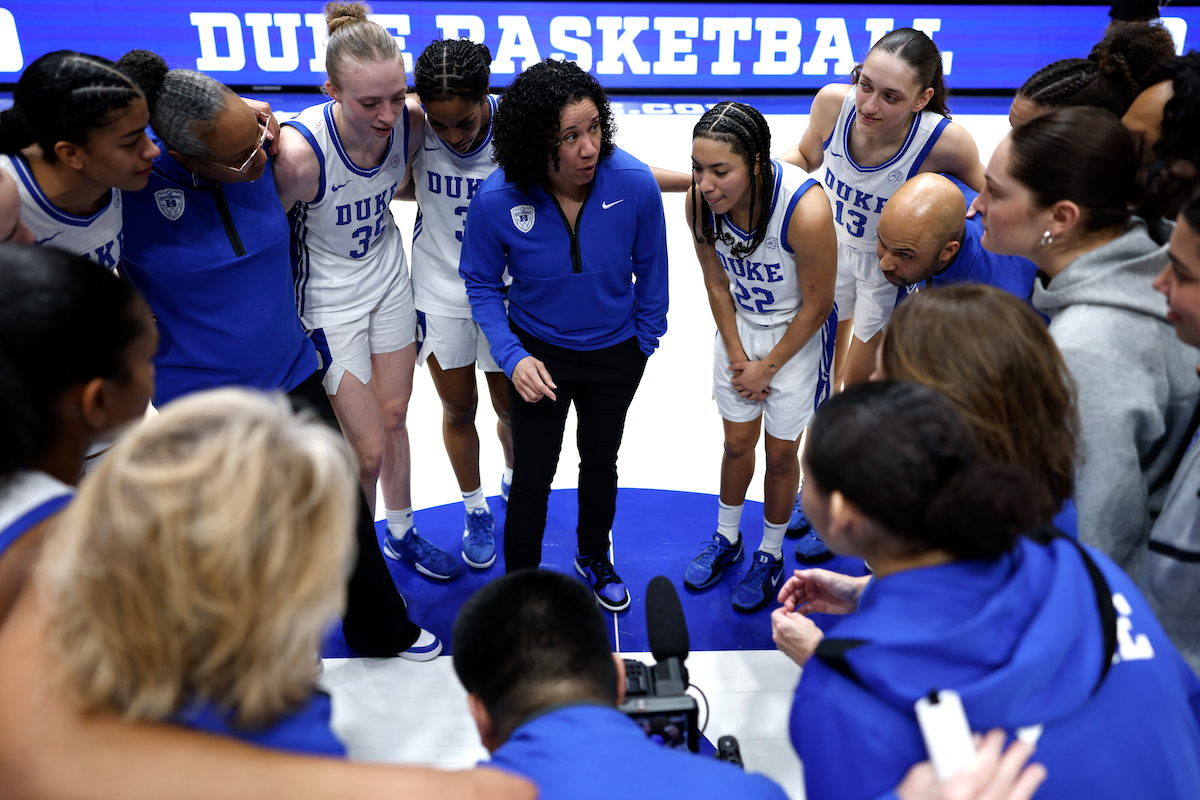
Why leaders everywhere are quoting the three-word mantra of Kara Lawson, Head Coach of Duke Women’s Basketball and the US Women’s National Team.
In the summer of 2022, Kara Lawson stood before her Duke players and delivered an unscripted talk about adversity that a staff member happened to record. The clip, which ran two minutes and 50 seconds, has since garnered millions of views. It is quoted in speeches by CEOs. Military units show it during leadership sessions. It has become the personal mantra of ordinary people everywhere, including some who have never watched a minute of college basketball. Lawson’s central message: handle hard better.
“Most people think that life is going to get easier, basketball is going to get easier, school is going to get easier—it never gets easier,” Lawson says in the clip. “What happens is you become someone that handles hard stuff better.”
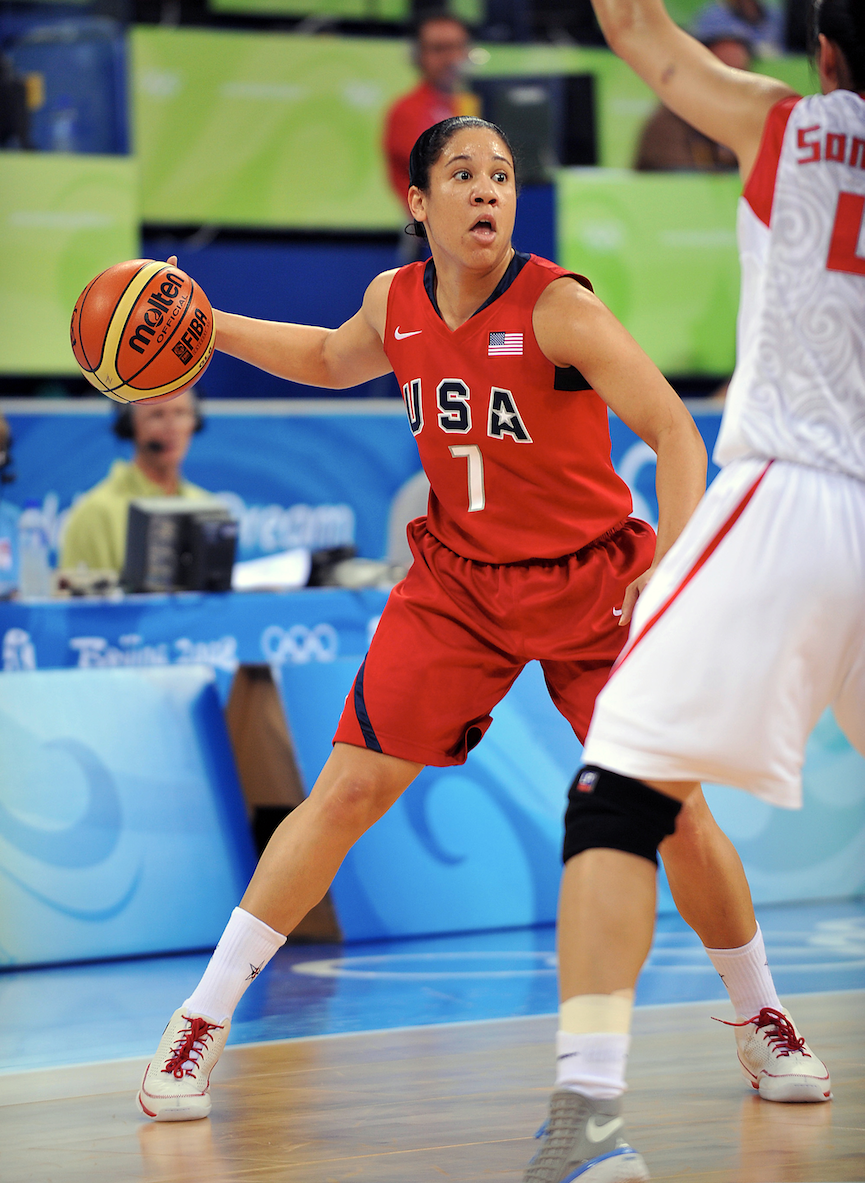
At first glance, Lawson might seem an unlikely authority on the subject. Her basketball career glitters at every level. As a player, she was an All-American at the University of Tennessee under legendary coach Pat Summitt, helping lead the Lady Vols to three Final Fours. In the WNBA, she was both an All-Star and a league champion. She has won Olympic gold as a player and as an assistant coach. In 2019, she became the first female assistant coach in the history of the Boston Celtics, the NBA’s winningest franchise.
And now Lawson is the head women’s basketball coach at Duke, one of the nation’s most storied programs, where she has led the Blue Devils to multiple ACC Tournament championships and deep NCAA Tournament runs. She is also head coach of the USA Basketball Women’s National Team, charged with extending a streak of eight consecutive Olympic gold medals. In that respect, she is following in the footsteps of former Duke’s men’s basketball coach Mike Krzyzewski—often called Coach K—who coached the USA Basketball Men’s National Team to three Olympic gold medals and is the winningest men’s college basketball coach in NCAA history.
But even a résumé that appears to chart nothing but an uninterrupted ascent can contain plenty of setbacks. Last season, for example, Lawson’s Duke team opened the season ranked seventh in the country, then won only three of its first nine games. “Duke was one of the most hyped-up teams in the country,” read one article. “What happened?”
From that low point the Blue Devils rattled off 17 consecutive victories before going on to win both the ACC regular season and tournament championships and advance to the Elite Eight.
Long before her viral speech, Lawson was already one of basketball’s more recognizable voices. In 2007, while working as an analyst for ESPN, she became the first woman to serve as a color commentator on a nationally televised NBA game. In a recent conversation with Brunswick Partner Michael Schoenfeld and Associate Lauren Hendricks, both Duke graduates, Lawson spoke about building teams, surviving tough stretches, and the importance of communicating. “If you’re not an elite communicator,” she said, “it would be really hard for you to ever be a great leader.”
Your “handle hard better” message has resonated well beyond basketball. How do you instill that philosophy in your players day to day?
Honesty and transparency are critical as a leader. The people you lead can see through it when you’re being anything less. And whether you’re coaching a team or leading a company, you’re with people every day, you’re in meetings every day—people see you every day. If you’re direct, you can get to the heart of things very quickly, as opposed to being nervous about having hard conversations. That’s how I am with my players every day. It’s how we talk to one another: Communicate directly, share how we’re feeling about things and then work to a solution.
All of our journeys are designed to have difficult moments. You can’t safeguard yourself from them. They are inevitable. So I think there’s great power in being great in the adverse moments.
I know my players’ lives will be pockmarked with adversity. If I can help them grow in those spaces, and we can talk about what it’s going to feel like, and then when we’re in it I can model what I’m hoping to grow them toward—that has far more permanence in their memory than how awesome we celebrated when we won something once upon a time.
“All of our journeys are designed to have difficult moments. You can’t safeguard yourself from them … there’s great power in being great in the adverse moments.”
How much of that philosophy comes from playing under Pat Summitt at Tennessee?
I’m sure there are roots there, although I can’t remember us ever talking specifically about this. She modeled a lot of things in terms of how graceful she was in handling adversity, how she persevered through it. The foundational principles of what we do here at Duke come from what I learned under her at Tennessee: Having high standards, having expectations, holding people to them. Almost everything I do as a coach probably has some root back to her.
I think I’m just unafraid of what people think of me. If I rub someone the wrong way, I’m unconcerned with that. I have a confidence in who I am and what I can do, and I’m not really worried about what you think about it. A lot of that comes from Coach as well.
We all try to categorize people. “She’s kind of like this person. He’s kind of like that person.” I’m okay that I don’t fit with someone you’ve met before, that you can’t categorize me. I think sometimes that throws people off, and I know it used to throw people off with Coach Summitt. We’re alike in some of those ways. Being a strong female leader is not for the meek or mild.
It can feel like an attack all the time. Every day you can feel that. I never look at it like an attack. I wake up and I’m ready: “What do you have? Let’s rumble.” I’ll rumble with anybody. And that’s not an arrogance thing. As a leader in general—and I will say this is true for all leaders, but especially true for female leaders—you better be ready to rumble. And your ability to rumble better have endurance, because they’re not stopping, and I’m not stopping either. We’re just going to see who stops first. And I can tell you this: It’s not going to be me.
Last season Duke started three and six before turning it around and winning an ACC Championship. How did you navigate that stretch?
External forces are always trying to make the depth feel deeper than it is. We were three and six, and from the outside you’d have thought it was the end of the world. I don’t know how to coach, apparently. I was going to be fired, apparently. Our team is terrible, apparently.
We weren’t that bad. We had things we weren’t doing well that needed to be fixed. But those external forces will make you feel like the hole is deeper than it really is. You can’t allow that.
I was human about it. There were hard days in the beginning. Then one morning I woke up and had that thought we’ve all had in adversity: “When is this going to be over?” And in that same moment I had another thought: “What are you talking about? You do not get to control how long this lasts. If you’re going to wake up every day asking ‘Is it over yet?’—how weak is that?” I have no control over when it ends, so why would I spend time and energy worrying about it?
What do I control right now? I can control how I coach, how we practice. I can watch the film and figure out what we need to solve. I can control how I come in each day, what my energy feels like to everybody around me.
We diagnosed where we needed to improve, communicated that to our players, and started working on those things with great energy and the right focus and discipline. You could see we were starting to improve. That didn’t translate to wins automatically. You’re just setting yourself up for disappointment if you expect that. But over time, I knew we were in the process of becoming a good team.
Duke had a historic year as an athletic department—the first ACC school ever to win conference championships in football and men’s and women’s basketball. What does building a winning system look like in practice?
It’s all about finding the right players, and this is not even about talent, even though you need talented players. At the elite level, talent’s pretty close. So it becomes more about being very clear with yourself about what type of program you want to build, what matters, what’s important to you. And then building that out with people who fit.
I don’t fit everybody, and that’s okay. I am not in a competition to be the most liked and the most popular and the person who can connect with the most players. We have a program and something we’re chasing, and we’re going to chase it a certain way, and we’re trying to find people who fit with that. That’s not everybody, and that’s not a knock on them. There are outstanding, talented people who won’t fit here, and will do great somewhere else.
College athletics are changing constantly—court decisions, legislation, social media. How do you keep your players focused through all the distractions?
Sometimes we get frustrated with the younger generation because they care about things like social media, and we talk about it like it’s a negative. But we would have cared about it too if we’d had it.
My players care about winning. They care about being on a team. They care about being at Duke and getting a good degree. We have a 3.5 team GPA. You think my kids don’t care about school because they have TikTok? They care about school. They just have more things they care about than we did because they have more to choose from.
Just because they take pictures in a bathroom at a restaurant—which is absurd, by the way—to post on their thing, that does not mean they don’t want to sit down and have a textured conversation. They go to the bathroom, they take their pictures, and they come back to the textured conversation. That’s how it is. They are full of all the good things we want them to be full of. They have other things they care about too. That’s okay.
So I acknowledge there’s a lot out there for them. We talk about it. What parts of these distractions matter when you get between the lines? What are you bringing from the outside to practice? And the answer is not “nothing,” because they’re impacted by what happens outside. Some days there’s something they can’t leave behind. Okay, let’s talk about it. Let’s work through it.
Ultimately, you want them to be able to self-edit, because I’m not having 14 conversations at the start of every practice. And on days they can’t, we talk about it after. Why was it so bad? What happened? When this happens again—because it will—how do we manage it better so you can still perform at the level the team needs?
“This is true for all leaders, but especially true for female leaders—you better be ready to rumble.”
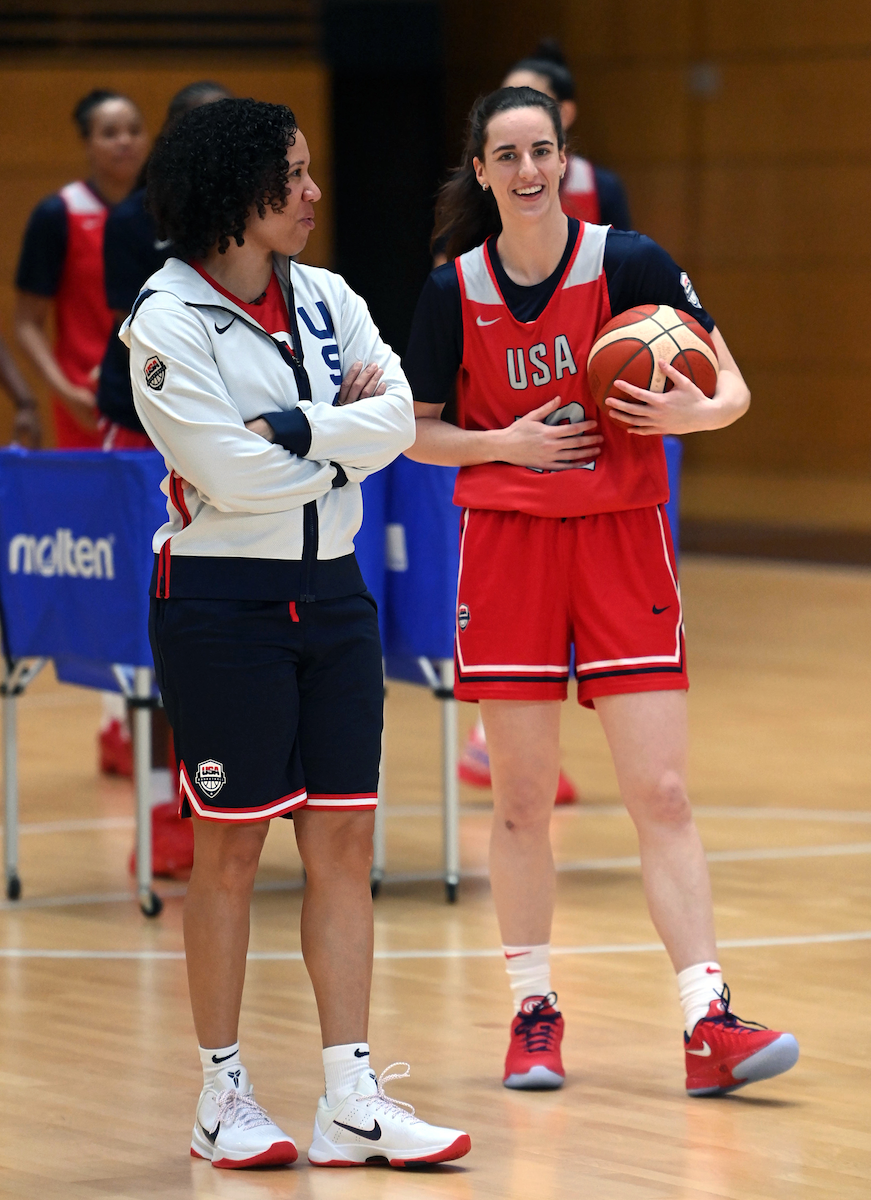
You’re now leading Team USA into international competition, coaching players you didn’t recruit. Does that change your approach?
It doesn’t change a ton. I just have to build connection more quickly. Some of them I coached as an assistant in the last squad, so I have relationships with them already. Others I coached when they were 16, 17. And some I’m working with for the first time, so I’ve been intentional about spending one-on-one time with them.
It goes back to the same thing: honesty, transparency. I tell them what I’m looking for, what I need from them for us to be successful. When you communicate that clearly, people are less anxious because they know exactly what you’re looking for, as opposed to trying to guess.
Being a great leader comes with a lot of things, but one of the main things you have to be is an elite communicator. That doesn’t mean you have to be able to give a great speech or be wonderful at public speaking. It means you have to communicate clearly what you need from people, and you have to be able to listen and help problem solve. If you can do that, you have a chance to be a good leader. Especially with the younger generation, because they want to know why they have to do everything. You tell somebody to do a drill and they say, “Why are we doing this drill?” So, you better be able to explain it.
Have you talked with Coach Krzyzewski about balancing Duke and Team USA?
Not about that specifically, but we talk. He still comes to work every day, and it’s great for all of us at Duke to have him here and be able to draw on his experience. We talked a little when I got the position. Anytime you can get wisdom from someone who has been through it before, that’s valuable.
You’ve experienced success at every level of basketball—as a player, a WNBA champion, an Olympian, an NBA assistant, a head coach. Twenty years from now, what do you hope your former players say they learned from you that had nothing to do with basketball?
That they see themselves clearly in who they are and what they are capable of, and are unabashed in the pursuit of that. That I encouraged that pursuit and encouraged them to be confident in themselves.
I’m hopeful that I’m building impactful people. People who make you feel good when you’re around them. I’m not trying to make cookie-cutter versions of me. That would be a disaster for the human race, probably.
Life is a journey about finding out who you are and impacting others. Before you can truly impact others to the greatest extent, you have to know who you are first. I want them to know themselves, be confident in who they are, and use that to impact as many people as they can.
I wasn’t trying to impact people with a speech. That was never the goal. But I have people come up to me all the time and thank me for the impact it had, and I feel a responsibility in that. Any time you can help, I think you should. Any time you have knowledge, I think you should pass it on.
I learned that from Coach Summitt: Don’t allow yourself to fall short of your potential. You should push every day to reach it.
Meet the authors
-
Partner, Foundations, Education, and Global Health Co-Lead
Washington DC
Michael heads the firm’s education practice and works with some of the world’s leading universities, academic medical centers, research institutes and foundations. He’s also a… -

Associate
Washington DC
Lauren Hendricks is an Associate on the Foundations, Education and Public Health team. She is based in Washington, DC.
You might also like

Calling Balls & Strikes

India Epicenter