
A leadership lesson two millennia in the making.
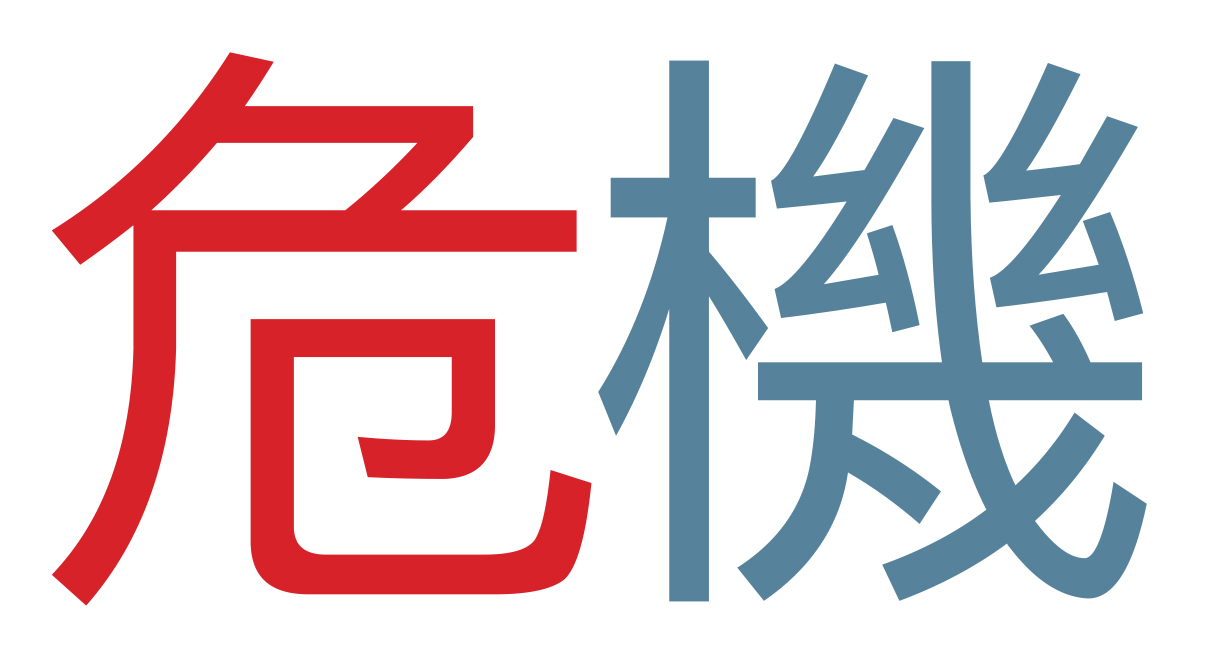
Chinese officialdom has been studying and implementing management techniques for over 2,000 years. Emperors, mandarins, palace staff and, more recently, Communist Party cadres have honed many methods of governance, with periods of sustained success, punctuated by historic disasters. One piece of wisdom built into the Chinese language is the very term for crisis, whose two characters evoke both threat and opportunity: 危機 (wei ji, pronounced way GEE)—a reading that, while not strictly literal, reflects a genuine tradition in Chinese statecraft.
Those two Chinese characters, put together, capture the insight that a disruption or threat very often brings with it a window for substantial change. A wise steward who has led through crisis can see that when something serious happens, it could be a moment to act on a makeover or an idea that would be met with opposition in more peaceful times. Human beings have a tendency to get comfortable with the familiar, and can be more open to change after the ground has shaken.
As a journalist covering China in the 1990s, I first heard a political analyst explain the shrewd machinations of paramount leader Deng Xiaoping, quietly confiding to me: “He doesn’t want to waste a good crisis.” In the wake of political upheaval that had threatened Party control, Deng pushed through economic reforms that China’s bureaucrats had been blocking for years. Over the following decade, I watched the results: stupendous economic growth that lifted hundreds of millions of Chinese people out of poverty, modernized daily life and made China into a world power.
“Never waste a good crisis” has entered the lingo of modern management studies, as applicable in business as it is in government. In my years as an advisor, I have seen circumstances turn in unexpected directions, sometimes quite rapidly. Crisis management requires a special combination of agility, open-mindedness, creativity and a strong stomach.
Not every crisis ends well. Nor can a crisis be easily planned. But when one comes, a wise leader will make the most of it.
The Chinese did not invent the dynamics of crisis. But they did find a succinct way to articulate the double-barreled implications within.
Meet the authors
-

Partner
New York
Seth brings more than 25 years of experience as a strategic advisor, communications expert and counselor on sensitive situations and high-stakes issues. A specialist on…
More from this issue
Crisis
Most read from this issue

The Reporter is a Machine

You might also like

Oz Rising

A Pandemic Culinary Triumph
