
A conversation with Paul Assaiante, holder of the longest winning streak in college sports history, on the importance of pride, the challenges of winning and the lessons from losing.
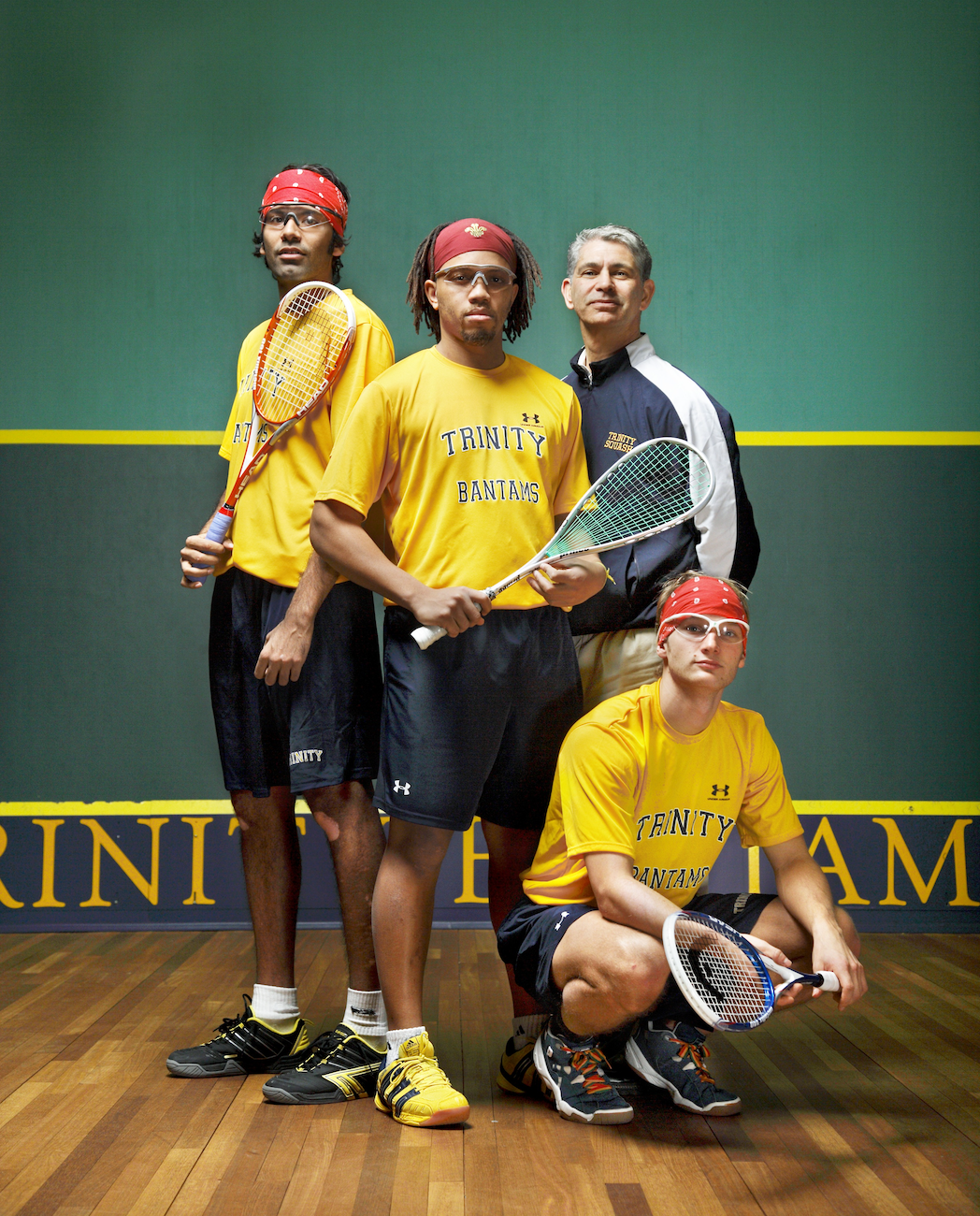
In the photograph above, Coach Assaiante stands alongside first-team All-American players (L-R) Baset Chaudhry, Simba Muhwati and Gustav Better in 2008. They finished the season undefeated, extending their historic winning streak to 183 games.
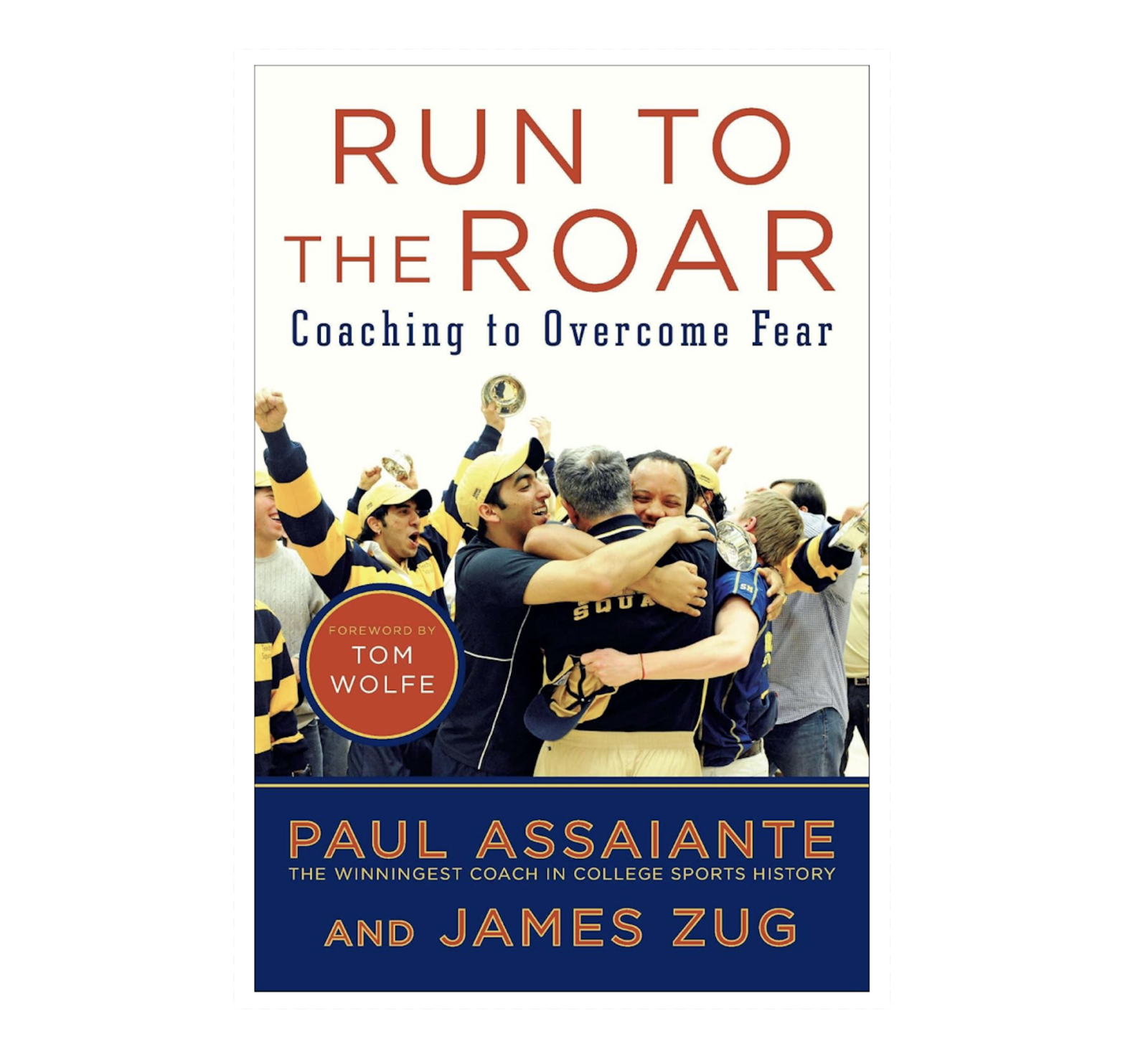
Paul Assaiante spent more than 50 years coaching squash and tennis, most famously at Trinity College in Hartford, Connecticut. During his 30-year tenure as head coach, he guided Trinity’s men’s squash team to 17 national championships and a 252-match winning streak—the longest in the history of intercollegiate sports. He is a two-time US Olympic Coach of the Year and was inducted into the US Squash Hall of Fame in 2016. Assaiante is the co-author of Run to the Roar: Coaching to Overcome Fear. We spoke with him about what coaches know that business leaders often miss, why he dislikes the word “ego,” and why, after five decades, he still shows up.
You’ve spent more than 50 years coaching, what’s kept drawing you back?
I stumbled on a plaque when I was coaching at West Point in 1974. It was a quote from General MacArthur: “Upon the fields of friendly strife are sown the seeds that, upon other fields, on other days, will bear the fruits of victory.”
That was my “aha” moment. What it said to me is that you learn on the athletic field—on the court, in the pool, wherever it is—how to become a highly functional person in a very competitive world.
Athletes learn how to win. More importantly, they learn how to lose. They learn how to strategize and adjust on the fly. And to me, the ability to adjust on the fly is one of the most underrated qualities in business leadership, because it almost never goes the way you planned.
I used to think about John Wooden [legendary UCLA basketball coach], who would reportedly spend longer writing up his practice plan than the practice itself lasted. I tried that. It never went that way. People arrive late, people leave early, someone’s not at 100%. The workplace is no different. You have to be able to read the room and adjust—to take the collective and get it to the desired destination.
You’ve coached incredibly high-performing players, with healthy egos. CEOs are in the same situation. What advice would you give them?
I really dislike the word ego. I am a huge proponent of pride. Ego attaches the process to yourself. If you’re a leader and you attach everything to yourself, you’re going to find it very difficult to lead people.
I’ve been asked about the single most important quality in a leader. My answer is empathy. If you truly want to lead, you need to get on the other side of the table. You need to understand where this person is coming from, what they’re struggling with, and how you can best motivate them. That’s not about ego. That’s about care. There’s a saying: “Nobody will care what you know until they know that you care.”
“Everything is about preparation. You don’t walk into a boardroom unprepared, and you don’t walk onto a court unprepared.”
Take us through the difference between what you learn from winning versus losing.
You don’t learn much from winning. Winning is fun, and when you’ve had a successful season, the year-end evaluations take care of themselves. But losing is the playground of success. That’s where everything is learned. We went 13 years without losing a match at Trinity. I don’t think we were learning a great deal during that stretch—we simply had the fastest horses in the stable.
When you lose, that’s when leaders get to do their real work. Everyone comes out with their magnifying glasses: What just happened? Did we not prepare well enough? Was the team not fully ready? Or did the opponent simply perform better than us?
The timing of when you address a loss or a failure is critical. In the moment of defeat, the internal temperature is very high. The person can’t hear you. I’ve had fights with players over 52 years because I wanted to deliver some brilliant, erudite advice right after a loss, and they couldn’t take in a single word. You have to let the temperature come down.
But with college-age athletes, if you wait until the next day, it’s scabbed over. They’re carrying that failure around and it’s hard to get in there. So, I’d catch them on the way home, or pull them to the front of the bus, or find them before they left for the evening. “This is what I saw. How did you feel? How can I help you build on this?” The window for the right lesson is real, and it closes.
You said winning doesn’t teach you much, yet you sustained that level for over a decade. How did you keep finding the lessons?
Everything is about preparation. You don’t walk into a boardroom unprepared, and you don’t walk onto a court unprepared. I believe in the Japanese philosophy: Cry in practice and laugh in competition. I made practice harder than any match could ever be. So, when we walked in to play, it was almost a relief.
Parents would come up to me on match day and say, “You’re so calm. I’d love to play for you.” And I’d say: “No, you wouldn’t. Come to one of my practices.”
How do you keep the fear of loss alive, to motivate continued improvement?
I don’t ever want the fear of losing to be the motivation. I want players to expect to push themselves to the fullest extent. You can’t do any better than that. Fear is not going to be the best motivator. You can’t run forward looking over your shoulder.
You mentioned that every day we wake up as a different version of ourselves. How do you coach through that variability?
We’re human. We’re flawed. Some days I’m only 60% of my best self, whether I had a fight with my spouse, something at work rattled me, whatever it is. But I have to give the organization 100% of that 60. I must show up. And that’s actually the most important lesson I can teach young people.
We live in a culture of special accommodation: extensions, exceptions, passes. Nobody in the workplace is granting extensions on the big pitch. You are working in a meritocracy, and the sooner people internalize that, the better.
Players compete against each other for their position in the lineup—it’s a source of enormous pride. A world-class freshman might come in and earn the number one spot immediately. He’s still the newest member of the team and has to earn his stripes.
I sit all my incoming players down—11 different nationalities this year—and I say: “Guys, these are your brothers. You didn’t choose them, just as you didn’t choose your actual brother. But they are your brothers. Act accordingly.” Team comes first, always.
Make the case for why athletics belongs at the center of education.
Sport is where learning is most meaningful, because the stakes are real. Every day there’s a scoreboard, a winner and a loser. That attacks the very core of us as human beings, and it forces a kind of preparation for the world that nothing else quite replicates.
What concerns me deeply right now is what’s happening to coaching as a profession. I was talking to a coach at the University of North Carolina recently, and many coaches are simply leaving the field. The aspiration we came into this with—teaching, preparation, the formation of character—has been displaced by other pressures. That’s a loss.
But here’s what keeps me in the game: Last Friday night, I officiated the wedding of one of my former players. And there is nothing—nothing—more beautiful than a former player saying to you: “You stayed with me, Coach, through my whole life.” That is the whole point. That’s why I’ll stay in this game until I’m drooling on myself.
Meet the authors
-

Partner, Healthcare & Life Sciences Global Lead
New York
Raul leads the firm’s Healthcare practice and advises clients on corporate communications, financial situations, and crisis management.
You might also like

A Matter of Principles & Pragmatism
Neal Wolin