How twins born with serious medical challenges became what their proud father calls the “Twinvincibles.”
“Would you like to have him baptized?”
The meaning behind the doctor’s question starts to take hold. We nod, scarcely believing that our son Thomas’ short life is about to end.
“Have him baptized and then we’ll detach him from the ventilator, and you can take him to the quiet room and say your goodbyes together as a family.”
Thomas’ tiny, gray lifeless body lies in the center of the incubator. A ventilator tube runs from his mouth machine-gunning oxygen into his lungs. Wires and cannulas connect to various parts of his body. The oxygen saturation monitor indicates the severity of the situation—its reading sits at 4%. Anything below 90% of oxygen in the blood is considered dangerous.
He is just three days old.
My wife, Georgie, folds into me and I feel her knees buckle. She is exhausted after five days of labor, battling to keep our severely premature twins on board and terrified at the thought that her bravery hasn’t been enough.
A few days earlier, she had given birth to Thomas and Alice just 24 weeks into her pregnancy. They were due in December and had arrived in August. They weighed just a pound and a half each and the doctor had told us that they had a 20% chance of surviving.
A priest arrives, incongruous in his gown under the stark, sanitized lights of the neonatal intensive care unit. He requisitions a nurses’ meds trolley and lays a white cloth across it. On it, he places a bowl of holy water and a cross. He commits a tiny water crucifix to Thomas’ forehead and we amen dutifully.
Our amens are the sign that the time has come for Thomas to be disconnected. All of the doctors’ efforts to keep him alive have been thwarted and just days after learning to call him my son, I realize it’s over.
But then, something miraculous happens…
Slowly the reading on the oxygen saturation monitor starts to climb, indicating life returning to him. The numbers climb through single digits, then 10, 15, 20 and rapidly back up into the 90s. His shade turns from gray to pink. The doctors and nurses glance nervously at one another, afraid to recognize what’s happening and give false hope. But his numbers remain high and it’s clear, after 10 minutes, that Thomas has decided not to let go of the tiny thread connecting him to life.
The following day, the consultant’s tone is grave.
“Your twins have already gone through so much and I want you to know that there will be more episodes like that to come. And you need to know that even if they do survive, there’s a high probability that they will be disabled.”
It was at this point that I uttered perhaps the most offensive sentence to ever come out of my mouth.
I said, “I think I’d rather they died than they were disabled.”
Honestly, I was terrified of what a life with disabled kids would mean, but just seeing those words makes my skin crawl now. How disrespectful to disabled people and to parents who have lost a child. And how disrespectful to my disabled and wonderfully different twins.
Slowly, our grief at the diagnosis becomes acceptance & eventually celebration.
Our twins do survive. And after nine months in the hospital, they come home to huge celebration. But it isn’t long before we are plunged into uncertainty again.
Shortly before their second birthday, a pediatrician tells us: “Your twins have severe dystonic, quadriplegic Cerebral Palsy. These children are unlikely to ever walk or talk. They are going to need permanent care for the rest of their lives. You will always have to feed them, dress them and you’ll need to attend to them every night.”
The knock to our dreams is painful and profound. Suddenly, the smug securities of our previous lives seem a distant memory and we find ourselves existing in a peculiar parallel universe. For a number of years after the diagnosis it feels like our experiences are totally different to the ones that every other parent is having. Family and friends are at a loss as to how to support us and a deep sense of isolation descends over our home. There are endless appointments, endless sleepless nights and endless questions about the future.
One day I’m sitting with the twins in the park, jealously watching fathers kicking a ball with their kids. I look at our twins in their wheelchairs, their legs rendered useless by their disability, never to run and compete with friends.
But as I sit there, I suddenly remember the night Thomas pulled through and the promises I made. I had whispered to him through the porthole of his incubator, “I promise that if you make it, I will not rest until I know that you have the best possible life.”
Thomas made a conscious decision to survive that night and I suddenly realize: Why shouldn’t we do these things together? We just need to find a way to do these things our own way.
Which is how, on a blistering hot June day, with Thomas now age 6, we find ourselves lining up with 1,000 other runners in our local 10k race in Thame in Oxfordshire—me in my trainers, him in his wheelchair. What an experience! As we turn the corner into the final straight the cheers go up for us and I raise Thomas’ arm as we cross the line. His face beams with delight at the rapturous applause and we’re laughing together at the experience of sporting dreams fulfilled.
And slowly, our grief at the diagnosis becomes acceptance and eventually celebration. Celebration for the wonderful people they are and the way they fight to lead meaningful lives.
We have a major breakthrough when we find a specialist school for the twins, where, miraculously, the staff know as much about our twins’ condition as we do. At last, we relax as other experts take on some responsibility and the twins start to make progress with their learning, thanks to hours of dedicated physiotherapy, education and care. We start to see some breakthroughs.
Aged 6, the twins get powered wheelchairs for the first time. Thomas uses all the lessons he has learned through hours of painstaking physical therapy at school to overcome his disability and take control
of the joystick. He shoots off into the flower bed. I pull him back to the safety of the drive, but he turns the machine around and charges straight off through the flowers again. As I start to lose my temper, it suddenly strikes me that this is exactly what he is supposed to be doing. This is him disobeying me for the first time in his life, because for the first time in his life he can! It is a huge moment—after years of being pushed everywhere in his wheelchair, he is finally in control. And what 6-year-old boy wouldn’t want to go careering through the flowers at the first opportunity?
The job of speech is difficult for kids like Thomas and Alice, not because they don’t understand, but because coordinating the muscles around the mouth requires such high levels of control. A huge part of their time at school is spent trying to bring speech to the fore.
For years, I’ve been tucking Alice into bed every night and telling her how much I love her, and she has told me with her eyes that she feels the same, but hasn’t been able to reply. And then, suddenly one night, after 10 years, she raises her head from the pillow and with laser-like focus says the words, “I love you, Daddy.”
Her head falls back onto the pillow, and she laughs as tears fill her dad’s eyes.
These achievements—so small for normal families but so Herculean for us—are what make life with our children so rewarding. The thing about these twins is that they relish and attack life with huge joy and bravery. They laugh every day. Tommy’s killer smile greets everyone who comes into our house. If he’s smiling, why the hell aren’t the rest of us?
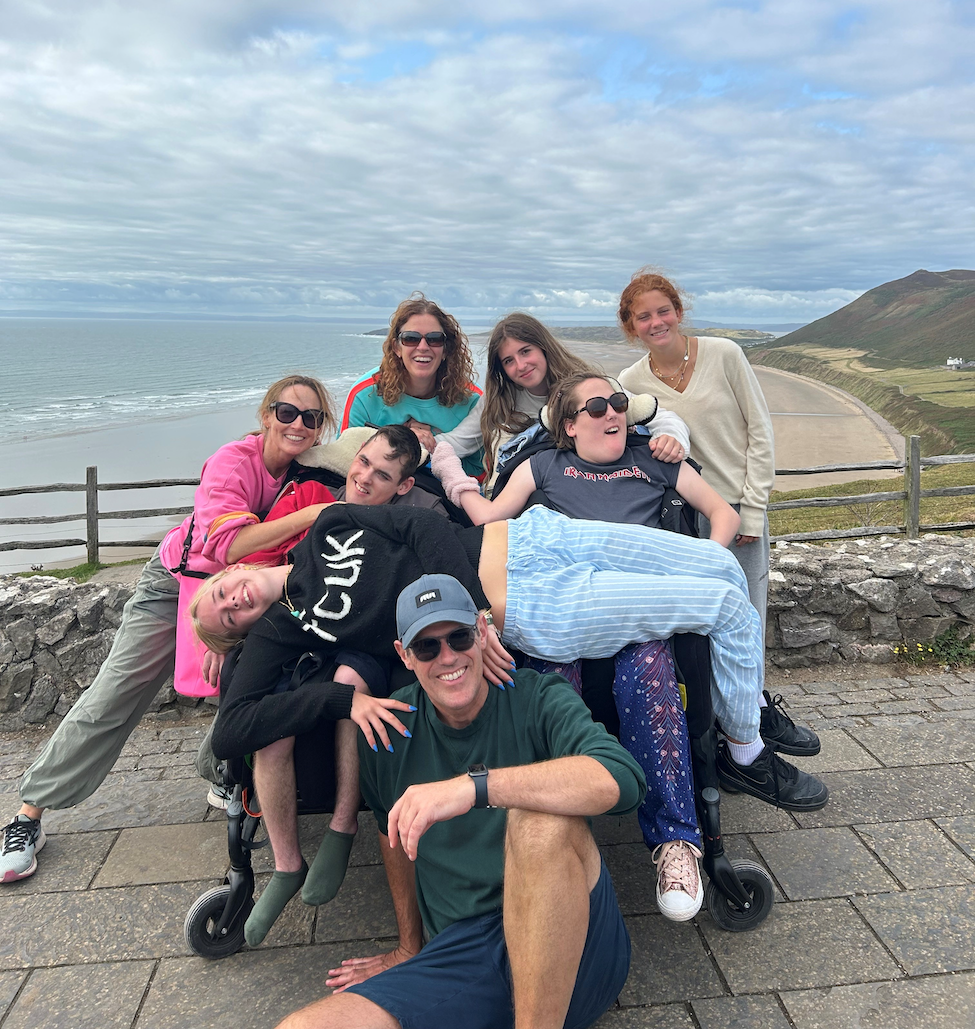
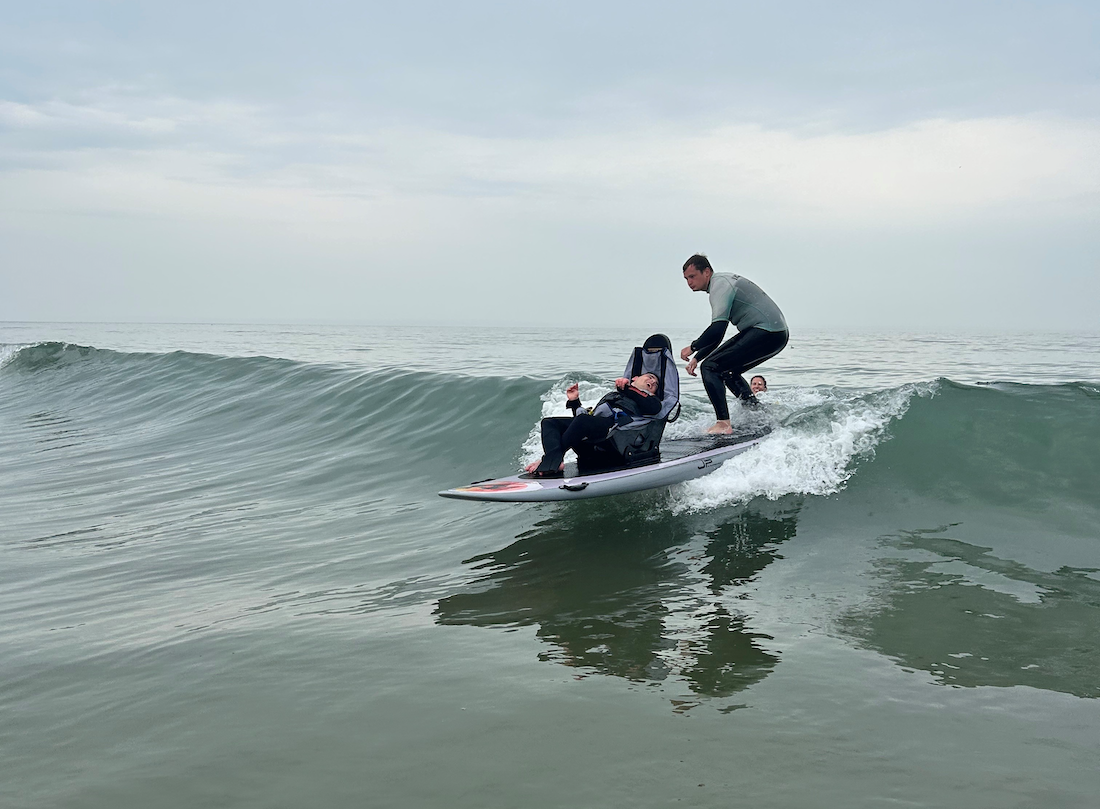
The twins go surfing every summer in Wales, on purpose-built surfboards with a seat on the front. Why shouldn’t they feel the wind through their hair and the water on their face? They have climbed a mountain—Pen y Fan, southern Britain’s highest mountain—to raise money to thank the hospital where they have spent so many years. Why shouldn’t they see the view from the top of a mountain?
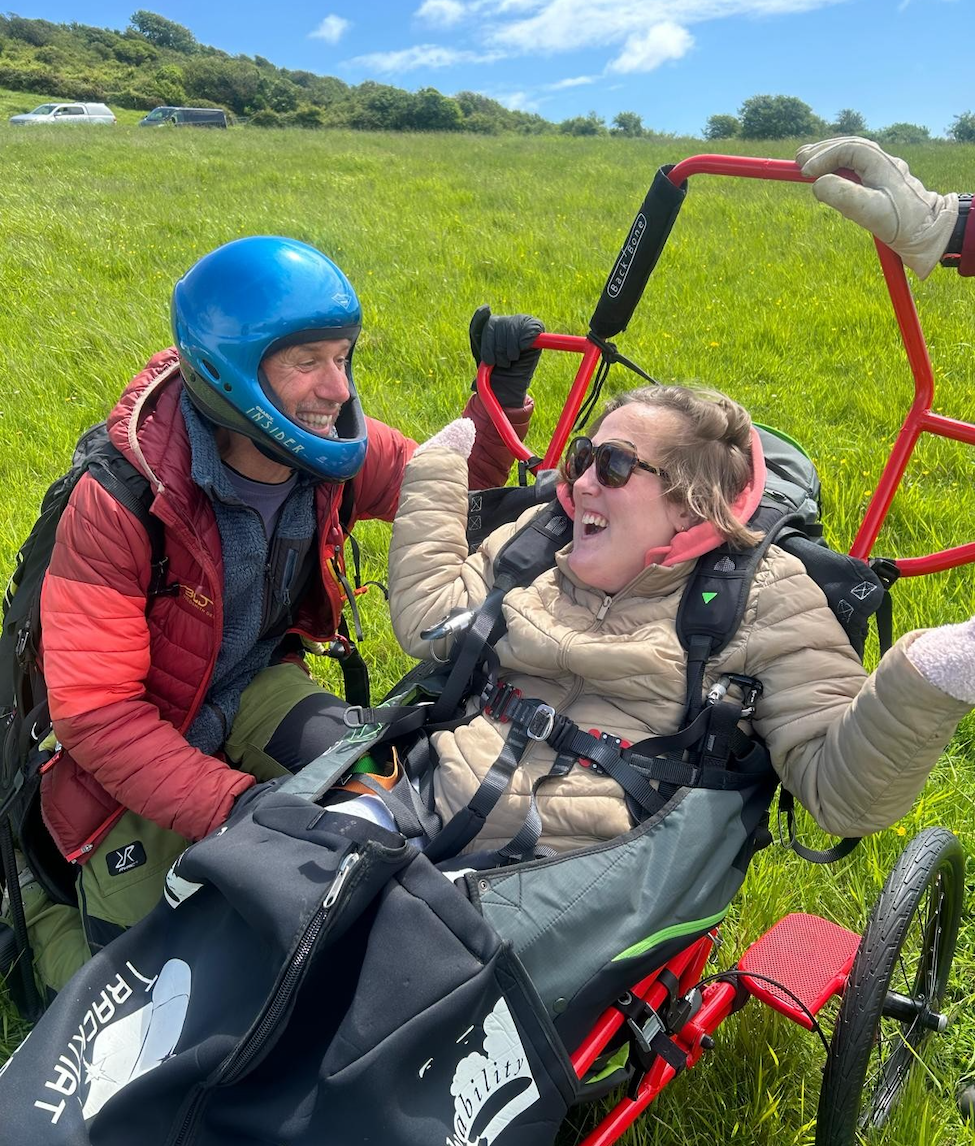
For their 18th birthday, their aunt bought them a paragliding session on the South Downs. (I have to say, I wasn’t too sure about this one!) But why shouldn’t they… you get the point.
None of these experiences are what I was expecting when I became a dad, but my experience isn’t worse for it. It is a different outcome of my dream. But different is what it is. Not worse. Just different.
It’s taken a while to not be frightened anymore. But I now realize I’m the lucky one, because I have Alice and Thomas in my life. They bring me strength in everything I do and there’s something reassuring about knowing that no corporate crisis situation is ever going to be as stressful as being repeatedly told that your child isn’t going to survive the day. I’m a calmer, better advisor for it.
My twins cannot walk, they struggle to talk, they live in pain every day. They’ve survived heart operations, brain surgery, collapsed lungs and hospital superbugs. And yet, here they are, smiling and laughing and loving and making the most of every single day.
They are better human beings than I could ever hope to be. I just wish I’d met them sooner.
Meet the authors
-
Partner
London
James advises companies on the moments where effective communication is critical to growing or protecting value. He specialises in corporate and financial communications, crisis, litigation…
More from this issue
Crisis
Most read from this issue

Meeting the Moment

Training for Uncertainty
You might also like

Chairman’s Letter
Branded Residences