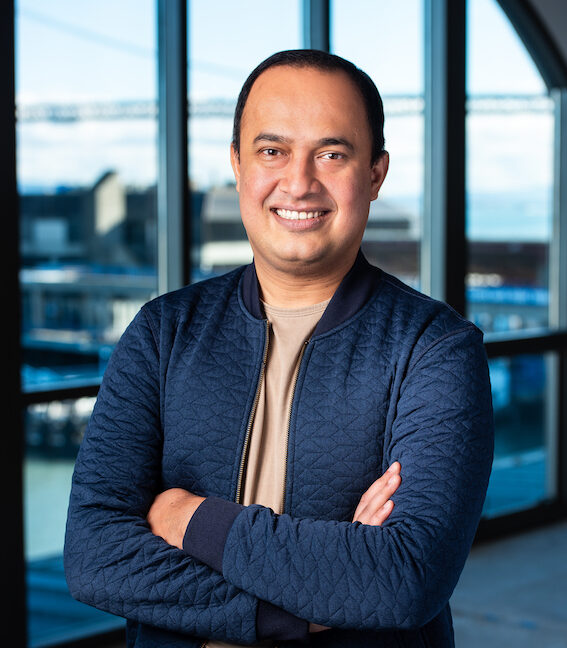

“Our audiences never left us; they were just waiting for movies to return.” Vue Founder & CEO Tim Richards CBE reflects on the industry challenges of the last few years, cinema’s enduring power and the innovations shaping the next era of moviegoing.
One Battle After Another, the title of Paul Thomas Anderson’s 2025 film and this year’s most decorated Oscar Award-winner, is also an apt description of what the film industry has faced the past few years. It has battled pandemic restrictions, the Hollywood writers’ and actors’ strikes, and the rise of streaming.
But belief in the business never wavered for Tim Richards, founder and CEO of Vue International, one of the world’s leading cinema operators. Even amidst the most recent battle: the months-long bidding war between Netflix and Paramount to acquire Warner Bros. Discovery.
Prior to Netflix dropping out of the race in late February, many were concerned about what it would mean for cinemas, and the movie industry as a whole, if the streaming giant acquired one of the big five legacy Hollywood studios—but not Richards. “The demand for theatrical experiences has been proven across all demographics,” he says. “The upcoming slate includes multiple billion-dollar films. Other major studios, both legacy and new tech giants, are significantly increasing theatrical commitments.”
Richards’ confidence is neither naïve nor nostalgic, but gained from over three decades of experience and a willingness to evolve. A former Warner Bros. executive, he left the company in 1999 and founded Vue, opening its first venue in 2000 in Scotland. Under his leadership, the business has grown to be the largest privately held cinema operator in Europe. Currently, Vue International operates 222 sites, providing theatrical experiences across 1,951 screens in eight countries.
For his achievements and contributions to British film, Richards was awarded Commander of the Order of the British Empire (CBE) by King Charles III in December 2024. When we spoke in January, Richards reflected on the rollercoaster of the past few years, the value of the shared movie experience and his excitement for cinematic innovation.
The film industry has faced its share of challenges in recent years and many believed the industry wouldn’t be able to recover. What is it about cinema that makes it so resilient?
I’ve been in this industry through three major recessions: 1990-1991; the dot-com crash in 2000; and the financial crisis of 2007–2008. We have a history as a business of being counter-cyclical to economic downturns. Over the past century, film has survived recessions, depressions, wars, feasts, famines. I think to some, this time felt different, but I believe in the business and I will always believe in the business.
Movies are funnier, scarier, more emotional when they’re shared socially with others, particularly friends and family. That hasn’t changed. Film as an art form is relatively new, but over 120 years we’ve seen that demand for out-of-home entertainment and films.
“What I love about our industry is just when you
think there’s nothing left to do, there are 10 new things. Cinema is constantly reinventing itself.”
Now that Netflix is out of the race and Paramount is set to acquire Warner Bros. later this year, what are your thoughts on the deal and on the preceding bidding war for the acquisition?
I think the outcome removes a degree of uncertainty for the industry, which is helpful.
David Ellison is a highly respected filmmaker who founded Skydance more than 20 years ago and has produced some of the most successful films of the modern era. He doubled Paramount’s theatrical slate after he acquired the studio, from an average of seven films per year to 15 or 16 in 2026, and that was before the Warner Bros. opportunity.
With Netflix, they’ve had a very limited number of films play for minimal runs at small independent cinemas. So there were questions about whether they would collapse the theatrical release window—the length of time between when a film hits the big screen and when it goes to streaming. We saw how that played out during the pandemic. Studios and filmmakers took the opportunity to test a different business model, either bypassing cinemas entirely or simultaneously releasing films to cinemas and home entertainment on the same day, removing the theatrical release window altogether.
The studios have admitted, both privately and publicly, that they lost hundreds of millions consequently. And now they have embraced the 100-year-old-plus model—with a slightly adjusted theatrical release window of 45 days rather than four-to-six months. Perhaps now Netflix has seen Warner Bros’ theatrical model, they might embrace it and release some of their amazing movies on our screens.
I think the studios have a new understanding of the value of the cinema experience. They’ve recognized, along with the analysts, that watching a movie on a big screen is not specific to any one single demographic; it has universal appeal across all audiences worldwide. That’s been proven in the last five years post-pandemic and post-strike, where records have been broken across every genre of film, from The Minecraft Movie to Oppenheimer.
Our audiences never left us; they were just waiting for movies to return.
So, you feel confident that the studios will keep investing in big-screen films?
Feature films that are released in our cinemas are the catalyst for all the ancillary revenue streams. Filmmakers and our partners at the Hollywood studios have made commitments to feature film production that is unprecedented.
Paramount, as part of their deal to acquire Warner Bros., has promised to release 30 films a year between the two studios. We also saw the birth of a new studio with Amazon; they’re building their own distribution offices globally and have made commitments to release 14 to 16 films a year. This is out of nowhere, and they are officially a new studio. Then Apple joined in; they’ve been around for a little while working with some of the top filmmakers in the industry, most recently with Sir Ridley Scott for Napoleon and last year’s release of F1 that grossed over $650 million.
That’s two new studios that have joined, which is extraordinary because these are movies that are being produced that we hadn’t even had in our plans for the next two years. We are going to have a wealth of incredible movies of all genres for all demographics.
After all the recent challenges, do you have any advice for leaders facing similar obstacles?
There’s no playbook for how to react to an entire industry shutdown. We were coming off a very strong trading period globally, a record $42.5 billion in box office revenue in 2019. As a company, we broke all records in 2019 as well. Going from that sort of high to having to close our cinemas in nine countries in the span of three weeks, it was gut-wrenching and apocalyptic.
For us, our loyalty was to the 10,000 employees that helped us build the company. We wanted to preserve their jobs and fortunately, we were successful. But first and foremost, we saved the company.
How did you keep confidence among your staff and investors?
It was tough. We went through a major restructuring in late 2022, and in 2023 we finally started to see an emerging recovery in the industry globally. Filmmakers started to dust off their scripts, they got the production crews back together and started to get films going again. Then in May of ’23 the Writers Guild of America went on strike and a few months later they were joined by the actors, SAG/AFTRA.
Many people didn’t realize this wasn’t just a Hollywood issue, it was a global issue. Filmmakers worldwide stopped production in solidarity. When the strikes ended in late 2023, it took months to rebuild the production pipeline. You can’t just flick a switch. It’s a complex matrix of talent and business that all need to come together again. We had a lot of support from the creative community. That, with my complete and total belief in the long term of the business—I did everything I could. I wasn’t looking at it through rose-tinted glasses but looking at the facts, what had happened historically versus what was happening currently, to keep everyone going.
“Our focus has always been the three S’s: seats, sight & sound. We want to make sure that our customers have the very best viewing experience that they can possibly get.”
Many businesses constantly have to innovate to keep customers coming back, how does that translate to the cinema?
What I love about our industry is just when you think there’s nothing left to do, there are 10 new things. Cinema is constantly reinventing itself.
We were the first company in the world to eliminate box offices back in 2006, one of the few sleepless nights in my career. After our recapitalization in early 2024, we had the chance to start trialing and testing new initiatives again. We took another leap by removing concession stands as a trial in our Swindon cinema; this time I slept well because I was highly confident that we were on to something pretty big.
The ambition is a seamless “seat-to-seat” journey: from the car or train seat to the cinema seat without touching your wallet or phone. We have food and products in our foyer that customers can shop via facial recognition and walk right through. They see it as better service, because our staff are now all front-of-house, greeting and spending time with our customers.
In the theater, our focus remains on the three S’s: seats, sight and sound. We want to make sure that our customers have the best viewing experience they can possibly get. We’ve partnered with Barco, which we believe has the best laser projectors in the market and we cannot roll them out fast enough. We introduced our new Ultra Lux seats, which are wider, enhanced recliners featuring built-in champagne coolers and side tables for storage.
A little over a year ago we realized we were slightly behind on our premium large format experience. We spent a year looking into emerging technology, trying to find the best product. We ended up choosing HDR by Barco with the brand new lightsteering technology and the incredibly immersive Dolby Atmos sound system. We created a new brand called EPIC. We’ve opened seven locations so far, two more are opening soon, with a goal of over 60 by the end of 2027. It’s all about delivering an extraordinary social experience, something streaming can’t replicate.
Speaking of innovation, tell us about Vue’s venture into film production.
Fifteen years ago we saw the opportunity to release movies and work directly with filmmakers, but we got very busy while entering into the European markets and we put that on the back burner. Recently we’ve started again, we saw a gap in the market for high-quality British and independent films, and we launched Vue Lumière at the end of 2024. We brought on Eve Gabereau, one of the most highly respected independent distributors in the UK, if not Europe, to run it for us. We currently have a library of 15 films and have plans to expand across Europe.
Every year in our markets, three to five of the top 10 movies are local films. So that acts as a natural hedge to Hollywood, and it just makes the international market a little bit easier than working in a domestic market, where 95% of films come from local content.
AI is a huge topic in Hollywood right now, how do you see it affecting the industry?
There’s a lot of discussion around AI, and there’s certainly cause for concern. Personally, I see it as an incredible tool, as long as it’s used responsibly and with proper controls and guardrails. The ongoing conversations with the creative community and filmmakers are very constructive; everyone recognizes that certain limitations need to be implemented to protect the industry going forward.
We’re using it effectively. AI books all our screens, determines what we show, where we show it and when we show it, on every single screen. There’s certainly very repetitive work that’s being done currently by computers that can be replicated on AI that can create some incredible images. But it is a tool, and it needs to be used as such.
You must see a lot of films for work. Do you still enjoy them socially, or have you had enough by the end of the week?
I’ve always loved movies. I’m lucky and blessed to be in an industry that I love so much. And when I’m not watching screenings or attending film premieres, in my free time I go and watch a movie.
Meet the authors
-
Partner
London
Dan specializes in helping companies manage their reputation – through both proactive transformation programs and reactive crisis management. He has supported more than a dozen… -
Director
London
Charlotte works across cultural and luxury sectors on integrated international campaigns and corporate messaging.
More from this issue
Investment Universe
Most read from this issue

Flying Colors
A Generational Deal
You might also like

The Argument for Silence
For Love of Oz