
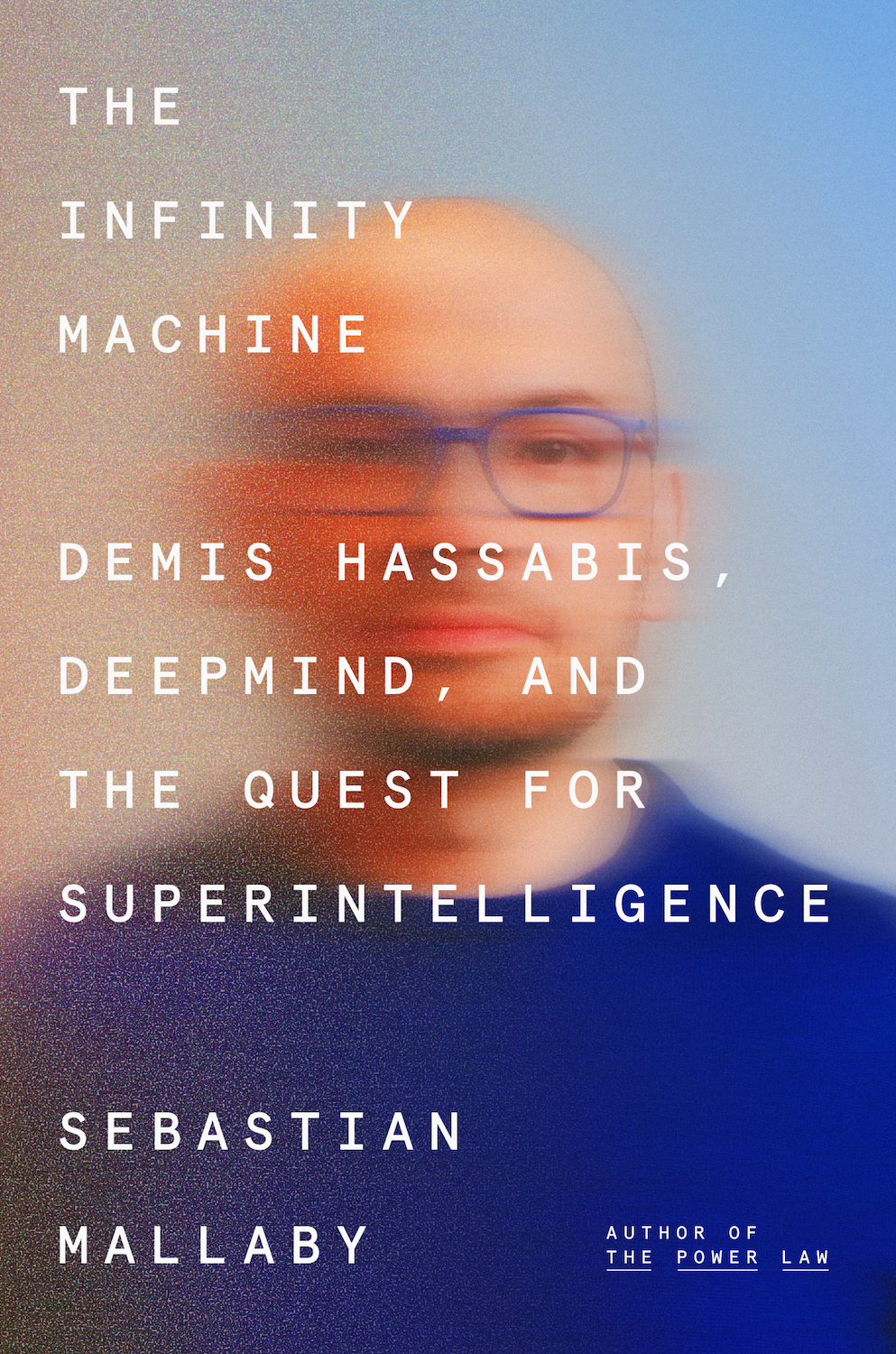
Sebastian Mallaby, author of "The Infinity Machine," asks that question with regard to the book’s subject, Demis Hassabis, founder of DeepMind. Mallaby talks about the challenges of AI with Brunswick’s Michael Fitzpatrick.
In November of 2022, Sebastian Mallaby sat down with Demis Hassabis, co-founder of DeepMind, to discuss the broad approach to the book Mallaby intended to write, a profile of both Hassabis and the current state of AI technology, with all its seemingly limitless potential and its risks. Hassabis, whose startup had been acquired by Google, was the leading voice on AI research and application and the meeting was the first of dozens that would ultimately inform the book.
Just after that interview, on November 30, DeepMind competitor OpenAI released ChatGPT, the first broadly available conversational companion. The release was explosive. It blindsided the tech community and shook the world, effectively launching humanity into the age of personal AI.
“It went from the fringe to the mainstream faster than I ever imagined,” Mallaby says. “And all of a sudden, there I was embedded in Google DeepMind, right when this crazy race began.”
Mallaby recalls Hassabis telling him, “This is war.” By 2025, Google DeepMind had released its Gemini model, a direct competitor with OpenAI’s ChatGPT.
Hassabis’ competitive streak formed early. He first made his mark as the best youth chess player in Britain and second-best in the world. He went on to found a video game company before launching DeepMind in 2010, backed by Silicon Valley investor Peter Thiel. Based in the UK, it was acquired by Google in 2014 and later merged with its Google Brain division. In 2024, Hassabis was awarded a Nobel Prize—not for computing, but for chemistry, for Google DeepMind’s contribution to identifying protein structures that inform medical research.
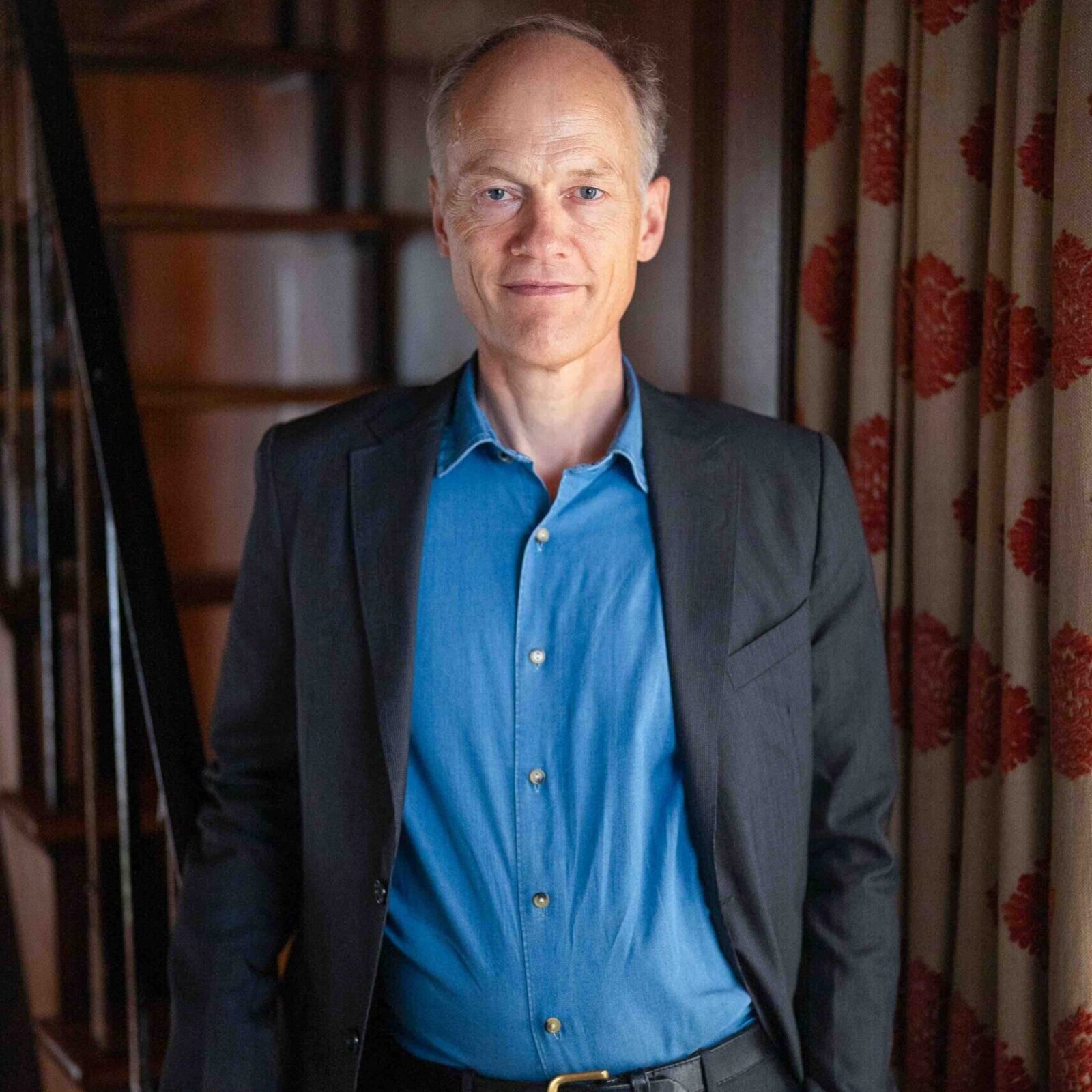
In 2026, Mallaby’s resulting book was released, The Infinity Machine: Demis Hassabis, DeepMind, and the Quest for Superintelligence. Formerly with The Economist and The Washington Post, Mallaby is the author of six books and has contributed to many leading publications, including the Financial Times, Foreign Affairs, and The Wall Street Journal. He is currently the Paul Volcker senior fellow in international economics at the Council on Foreign Relations and is a two-time Pulitzer Prize finalist.
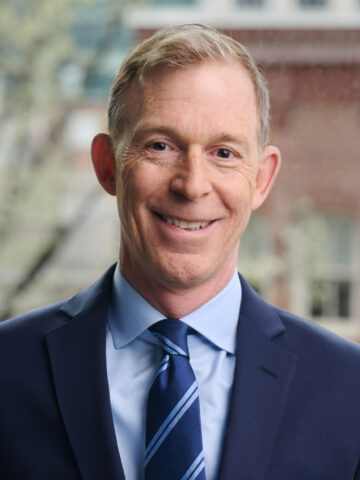
The author appeared with Michael Fitzpatrick in April in a Brunswick panel discussion in New York that ranged across the personalities and politics behind the technology, as well as its promise and poisons. Now a Partner with Brunswick, Fitzpatrick is a former lead at Google’s Regulatory Affairs Center of Excellence and former Head of Regulatory Advocacy at General Electric.
Their conversation has been edited for length and clarity.
Michael Fitzpatrick: Tell us about Demis Hassabis.
Sebastian Mallaby: He is not the most famous person in the AI field, where Sam Altman is kind of the poster child. But I think he ought to be. He is a Nobel Prize-winning scientist and he manages to combine that with being an amazing entrepreneur, who put together an AI company and raised money for it in 2010—before anything in AI was working. He had this vision that AI was going to work. His life story is a way of telling the larger story of the making of modern AI. And so that’s why I’ve chosen him as the central figure for this book.
MF: Always an unfair question, but if you were to focus on a central theme or question that the reader will take through the entirety of this story, what do you think that would be?
SM: You could say, at a high level, it’s the question of can a great person be good? Demis Hassabis has got his hands on this extraordinary technology that is going to change how we live, how we raise our kids, do our jobs, even how we think of ourselves as human.
Can he be good? He wants to be good. He was raised religiously by his mother. These things matter to him deeply. And yet he’s running a large company where you have to make tough decisions sometimes. He’s bringing this incredibly consequential technology to the world, and it will hurt some people. Can he be good at the same time? He struggles with that. And in some sense, I’m delivering a portrait of somebody who is living with that tension.
MF: Let’s talk about that. I think this is one of the through-lines not just in Hassabis’ story, but for the emergence of AI since ChatGPT in 2022—a moment like Prometheus bringing fire to humans. It’s now in the hands of every human to do anything they want, and to scale their good motives and their malevolent motives quickly and powerfully.
So we’re seeing these tensions play out between ambition and governance, between safety and profit, between competition and commercial realities, and a more idealistic sense of social benefits and scientific discovery. As you look at Demis, are there any lessons that you take from that about how we, as a society, are going to confront and resolve these tensions?
SM: It’s a collective action problem. You’ve got different labs that are all producing this technology. And if a couple of them were to be good and to be careful and safe and the other three are not, you haven’t actually improved safety for the world. Demis, as he goes through the arc of his company’s story, has this succession of theories about how he’s going to make AI safe. But at the end of the story, he’s left saying, “Well, trust me. I am a good person. If I have my hands on the wheel, I will drive us in a constructive, responsible way.” That’s all he can give. It’s not really that reassuring.
“If we, as a society, don’t allow a medicine to be released without it being thoroughly tested in human trials, why the heck do we allow super powerful AI models to be released without giving a government agency some kind of veto?”
MF: This seems to be central to the challenges that companies and societies are facing. Even many big tech developers are openly looking for AI standards or regulation, some guardrails. They prefer to self-regulate of course, but competitive challenges make that difficult. Are there any insights that you gleaned about this conundrum?
SM: We’ve witnessed an experiment over the last month involving Dario Amodei of Anthropic, who goes to the Pentagon and says, “Listen, you can’t use my tech either for mass surveillance of US populations or for autonomous lethal weapons.” And the Pentagon says, “You’re now an enemy and we’ll just get the tech from a different lab anyway.” One good person can make a stand and it doesn’t actually change what happens.
Hassabis, I think, would love for the government to regulate everybody because then all these competitors would be sensibly constrained, and he would be too. He’d be fine with that. What he doesn’t want is to constrain himself and have his competitors get ahead of him. In fact, the first sort of public policy response to ChatGPT was the Bletchley Park AI safety gathering at the end of 2023, hosted by Rishi Sunak, the UK’s prime minister at the time—the idea for that came from Demis. He suggested it and said, “why don’t you get the Chinese involved as well? It will at least get us on the path to talking about stuff. And it should be international, because otherwise this race dynamic, which operates across borders, will still be a problem.”
There was a follow-up conference after Bletchley, in South Korea, and that was broadly about safety. But then an inflection point came with the third gathering, which was in Paris. [US Vice President] JD Vance showed up calling for deregulation, warning about being too risk averse. Really, it became an AI acceleration conference, not an AI safety conference. The most recent one in India was kind of in the same vein.
Governments have set up regulatory agencies, just to monitor AI developments and safety. In my view, that’s not enough. If we, as a society, don’t allow a medicine to be released without it being thoroughly tested in human trials, why the heck do we allow super powerful AI models to be released without giving a government agency some kind of veto?
In the US it was at least compulsory for cutting-edge labs to submit their models to the government, to a new agency called the US AI Safety Institute. Trump came in and got rid of that requirement, renamed the organization, and so that was a step backward.
MF: Whoever controls AI is going to control military might and extraordinary economic power. There really is an important battle, from a geopolitical perspective, about who is going to come out on top, because the ramifications are so profound. Do you agree with that?
SM: It’s true that AI translates into military power for sure. But that is also true of nuclear power. In 1962, we had the most intense confrontation of nuclear powers, with the Cuban missile crisis. But then six years later you have the Nuclear Non-Proliferation Treaty.
With AI, you could say we’ve had our period of tense confrontation. You could date it to 2022, when the Biden administration put semiconductor export controls on China to try to prevent it from getting AI. That was highly confrontational. We are now four years off of that. If the nuclear analogy were to hold, we might be two years away from some change of wind. Maybe it’s three because then we’ll have a new president. And we could think again about this.
Export controls have not prevented China from getting very good AI, nor are they going to stop China from keeping up. Every time a cutting-edge model comes out of an American lab, a Chinese lab basically reverse engineers it by querying the model and using the answers to train a Chinese version of the model. So it’s very easy to be a fast follower. It favors the catch-up country.
So the US is not going to extend its lead to years. It’s just not possible. It’s going to be a few months at most. And then, if you apply that and think about turning the frontier model into a military application—which itself takes a few months, maybe a year, maybe more—that three- or four-month lead for the cutting-edge model just doesn’t matter that much.
We just have to recognize that the US and China are both technology superpowers. We should agree to share technology if they agree to make safety a priority. Their models are open-weight, meaning they are easy to download, modify and apply to nefarious ends. That’s very, very bad for safety. So I think there’s a deal to be made with China. I’m not saying that’s easy. But that should be the goal.
“Some people compare the advent of super-powerful AI to the Industrial Revolution. I think that’s understating it. This is the first time a new form of cognition has come into the world since humans themselves first appeared.”
MF: Even if there’s a consensus that regulators need to set guardrails around AI, there’s still a real question as to how and where to regulate. Regulators and policymakers face extraordinary challenges around prioritizing applications and attendant risks, as well as the speed of continual change and impact of AI innovation. Is there anything that could give us some comfort that regulators are going to be able to figure this out?
SM: Some people compare the advent of super-powerful AI to the Industrial Revolution. I think that’s understating it. This is the first time a new form of cognition has come into the world since humans themselves first appeared. But even if I back off that claim and say, “All right, it’s just like the Industrial Revolution”—that was pretty big! And not long after it started it was followed by political revolutions all across Europe.
So in the face of this kind of tumultuous change, the correct response for governments is not to do nothing. And AI risk is not some future theoretical worry. There was already a big cyber hack in Mexico done by people who were apparently not particularly technical, but who used publicly available models to hack the federal, state and municipal entities in Mexico and steal data on taxpayers, health care, elections and so forth. So this just illustrates that cyberattacks are already becoming more of a threat. AI has been helpful to those cyber attackers. This is happening now.
There is a formula for what we should do. Three things: First off is to restrict these very strong “open weight” models, which allow end users to fine-tune LLMs to specific tasks, and which preclude model providers from shutting off a user’s access if the user embarks on a cyberattack. The second is to strengthen those national AI safety institutes, which I mentioned before. And the third is to encourage more research, engineering research, into what’s called “alignment,” where you essentially are trying to guarantee that these models do what humans want, that they align with human interest. This is a whole field of scientific inquiry.
There’s already a decent amount of investment in alignment research from Anthropic and other labs, because they recognize it matters. But there needs to be a public policy that boosts the effort. I think it’s just a simple taxing fix where every time a private lab is spending $1 billion to train a new model to increase the capability, there’s some level of tax which redistributes money into safety endeavors. So you just change that balance between acceleration and safety.
MF: It’s also true that, among other differences, the Industrial Revolution evolved over a century and allowed for some level of societal adaptation. One provocation I’ve heard from many is, are people asking for AI at this scale and impact on society? Certainly, companies are innovating hard and rapidly, and that’s how they make their money, but for many the speed and depth of change to their professional and personal lives can be anxiety inducing, or worse. To invent an example, let’s say you’re a teacher and you wake up one day and it’s been decided that your entire pedagogy, your approach to teaching, has to change—now—because of this new technology. One could argue that it looks bad for the innovators if they just say, “Well, you figure that out, teachers and educational institutions. That’s your problem.” Is that something that resonates?
SM: This echoes the question I raised earlier about Demis Hassabis. Can he be good? You’re posing a variant: “How can you justify doing this?”
Demis and I had these long conversations about why he is pursuing AI and how he justifies it. What makes him do it is what Geoffrey Hinton, the AI academic, said: “It’s the sweetness.” As a scientist, you see something sweet in technology that you can’t resist. Demis is massively curious as a scientist.
He often would meet me in a London pub near his home in North London. There was sort of a dusty room upstairs, and nobody else ever went up there. So it would be just the two of us for two hours at a time. We’d do these every month or so. And so there was a lot of time to get into things like, “What gives you the right to do this?”
For him, trying to understand the fabric of reality, of how physics works and how biology works, was a spiritual quest. He’ll say, “I’m sitting at my desk at 2 in the morning reading a science paper because that’s when I do my thinking. And I feel reality screaming at me, staring me in the face, saying, ‘I’m here to be discovered. It’s your mission to discover me.’ If I can get closer to an understanding of nature and how it works, then I will be closer to understanding what may presumably have been created by a divine intelligence. So pursuing AI to unlock science is my religion. This is kind of like finding God.”
Now, is that bad, or is it acceptable? By this time, he hadn’t been able to get what he wanted in terms of concerns over AI being deployed safely. So why not stop pursuing AI in that case? The simple answer is if Demis quit his job tomorrow and took up a professorship in Princeton, which he does sort of fantasize about, it would not make the world safer. We would just get somebody else running Google DeepMind.
In addition, maybe not pursuing technological advance is just not in our nature. All of us see technology as both exciting and scary. And we take the trade. We move ahead with it. Because if we didn’t, we would still be living in caves. It’s not just, “I think, therefore I am.” It’s, “I invent, therefore I am.” This is what we do as humans.
Meet the authors
-
Partner
Washington DC
Michael focuses on public affairs and regulatory counseling across many sectors, including technology, industrials, infrastructure, energy and transportation. Michael also advises business leaders on crisis…
You might also like
Trends 2026, A Preview

Running at the Speed of a Girl