
Satsuki Katayama, Japan's Minister of State for Financial Services, discusses mobilizing finance for growth investment and her message to global investors.
To read this article in Japanese, click here.
Global investors are taking a fresh look at Japan. On October 21, 2025, under Prime Minister Sanae Takaichi’s administration, Satsuki Katayama became the first woman to serve as both Minister of Finance and Minister of State for Financial Services. She was reappointed in the Cabinet reshuffle of September 17, 2026. Today, senior leaders from major global financial institutions and asset management firms are visiting Minister Katayama to understand where Japanese policy is heading.
While Minister Katayama’s appointment to these two important posts marked a historic first for a woman in Japan, she is known for the depth of experience in fiscal and financial affairs that she has built as both a public official and a politician. On the international stage, she has also attracted market attention through her discussions on currency and fiscal policy with US Treasury Secretary Scott Bessent.
Minister Katayama’s focus as Minister of State for Financial Services is to advance Japan’s growth strategy through the power of finance. Before joining the Cabinet, she served for four years as chair of the Liberal Democratic Party’s Research Commission on the Finance and Banking Systems, leading policy discussions across the financial sector. Although Japan has substantial household financial assets and a deep corporate base, private-sector risk-taking and growth investment have long remained insufficient. At the heart of Minister Katayama’s policy agenda is the strengthening of Japan’s financial ecosystem through both direct and indirect finance: channeling household savings through financial and capital markets into enhanced corporate value, while enabling banks to fulfill their role in financial intermediation and support corporate growth.
On July 21, 2026, the Japanese government adopted the “Financial Services Strategy to Promote Growth Investment—Upgrading ‘Promoting Japan as a Leading Asset Management Center,’” a new growth strategy for the financial sector designed to further develop Japan’s asset management initiative that strengthens the investment chain. In financial and capital markets, the strategy aims to direct domestic and international capital toward growth areas by further advancing corporate governance reform and developing the asset management industry. In the area of indirect finance, it seeks to strengthen the role of banks and other institutions in providing funds and supporting growth, thereby boosting corporate investment, including at the regional level. The strategy also positions cybersecurity and the use of AI and on-chain technologies as part of efforts to strengthen the infrastructure underpinning the reliability and efficiency of the financial system.
Since autumn of 2023, “Japan Weeks” has become an established annual, global platform for showcasing to investors Japan’s financial and capital markets, along with the government’s related initiatives. Ahead of Japan Weeks 2026, in October, Masato Ui, a Partner at Brunswick Group, interviewed Minister Katayama.
How have your experiences at the Ministry of Finance shaped your sense of mission as Minister of State for Financial Services today?
I joined the Ministry of Finance in 1982, and as an official in the Securities Bureau, I was responsible for discussions with the US Securities and Exchange Commission and for Japan’s participation in the International Organization of Securities Commissions (1986 to 1988). Later, in the late 1990s, when the Banking Bureau was at the center of Japan’s financial crisis response, I moved there from the Budget Bureau and worked on frameworks for resolving the housing-loan company problem, disposing of non-performing loans and securitizing receivables (1996 to 1997). I feel I helped build many frameworks that Japan had not previously had.
Through that experience, I saw financial institutions fail before an appropriate framework for public capital injections was in place, and I saw the real economy suffer deep damage from credit pullbacks. I came to believe that this happened because politicians and policymakers did not fully understand the power of finance—both its positive and negative effects. That was an enormous lesson for me.
The Financial Services Agency was born out of the response to, and reflection on, Japan’s financial crisis. Because I saw that process firsthand, I have always felt that this time we must get it right.
I felt the same throughout the four years I served as Chair of the LDP’s Research Commission on the Finance and Banking Systems. Financial system stability, protection of financial services users and market transparency are the foundations of financial administration. Only with that foundation can finance make a positive contribution to the economy.
“By enabling finance to serve as a cross-cutting pillar at the center of the growth strategy, Japan can build a strong economy.”
In July 2026, the government formulated the “Financial Services Strategy to Promote Growth Investment.” Why is this new strategy needed now?
For a long time, what Japan has lacked is private investment, especially corporate growth investment. The persistent savings surplus in the corporate sector is one of Japan’s distinguishing features among the world’s major advanced economies. Looking over the long-term, I believe the shock of the financial crisis of the late 1990s has not fully dissipated.
After the experience of credit pullbacks, companies accumulated retained earnings, while financial institutions became more reluctant to take risk. But if they do not take risk, financial institutions cannot fulfill their proper role. We must reflect on the fact that finance’s leverage function has not worked sufficiently.
By enabling finance to serve as a cross-cutting pillar at the center of the growth strategy, Japan can build a strong economy.
How will upgrades to the “Promoting Japan as a Leading Asset Management Center” initiative connect household asset formation with growth investment through financial and capital markets?
The initiative to promote Japan as a Leading Asset Management Center is a very important undertaking, and we will develop it further. I see it as a policy designed to contribute to people’s well-being. In an aging society, it is extremely important for households to have sufficient financial assets by the time they retire.
In the United States, many people reach retirement with meaningful financial assets to support life after work, built through equities and retirement accounts. Japan is still at an earlier stage. But by broadening the base of asset formation and asset management, I believe Japan can become a society in which people can look to life after retirement with confidence.
To achieve that, each participant in the investment chain—households, corporations, asset management firms and asset owners—needs to play its role. Household funds should flow through financial and capital markets into growth investment, and the returns should flow back to households. We want to strengthen that virtuous cycle.

“The government’s role is not to replace the market. It is to create the conditions for the private sector to step forward.”
What changes do you expect from Japanese companies?
Among Japanese companies, management that is more conscious of the cost of capital and stock price has advanced, and the importance of shareholder returns through dividends and share buybacks is now well recognized. There has also been considerable progress on governance. On the Tokyo Stock Exchange Prime Market, almost all listed companies now have independent directors representing at least one-third of their boards. Compared with the past, the mindset of Japanese corporate management has changed significantly.
On the other hand, what matters going forward is finding the right balance between shareholder returns and growth investment. Delivering appropriate shareholder returns is important. But unless companies allocate capital toward forward-looking growth investment, they will not become attractive over the medium- to long-term. Leading companies overseas strike this balance very well. In recent years, capital allocation by Japanese companies has been somewhat overly tilted toward shareholder returns.
In July 2026, we revised the Corporate Governance Code to encourage companies to give careful consideration to achieving an appropriate balance in the allocation of business resources, including shareholder returns and growth investment that enhances corporate value. By ensuring that it works in conjunction with the Stewardship Code, which sets principles for institutional investors, we aim to support the sustainable growth of Japanese companies and enhance their corporate value over the medium- to long-term.
What role should the banking sector, including regional financial institutions, expect to play?
Banks have a very important role to play in realizing growth investment. In Japan, after the experience of the financial crisis and credit pullbacks, financial institutions became less willing to take risk. But if they do not take risk, they cannot fulfill their critical role in supporting economic growth. It is important for financial institutions to return to their proper role and put finance’s leverage function to work.
Even if the government sets the direction of policy, growth investment cannot be sustained unless private-sector investment and lending follow. The key question is whether a project is bankable—in other words, whether it can attract investment and lending. Banks should not simply avoid risk. Rather, they should assess growth potential, help shape projects into forms that private financing can support, and provide the necessary funds.
For regional financial institutions, we formulated the “Regional Finance Strengthening Plan” in December 2025. Regional financial institutions have a highly significant role in supporting local companies and projects. They should understand regional economies and businesses deeply and connect their financial intermediation function to regional growth. Through such efforts, we want to broaden the base of growth investment nationwide.
How should the government promote growth investment while ensuring fiscal sustainability?
The Takaichi administration’s “Responsible and Proactive Public Finances” does not mean fiscal profligacy. It means building a strong economy while paying close attention to fiscal sustainability. We are also closely monitoring developments in the Japanese government bond market.
What matters is not expanding fiscal spending for the sake of scale, but directing funds, with discipline, toward areas that will lead to growth. In the budget formulation process for fiscal year 2027, through the “Investment Framework to Build a Strong and Prosperous Japan,” we will seek to enhance predictability while supporting areas with growth prospects that can attract private investment. At the same time, we will conduct disciplined assessments, placing importance on clear answers to the 5W1H questions: who will do what, by when, where, why and how.
The government’s role is not to replace the market. It is to create the conditions for the private sector to step forward, and boldly and strategically advance investments that promote growth and strategic investments that enhance resilience against potential crises in areas where private investment alone has not been able to overcome the risks. By applying the principle of wise spending, we will seek to balance investment in growth with fiscal sustainability.
“I hope investors from around the world will come to Japan and see firsthand the changes taking place here.”
In strengthening the infrastructure that supports the financial system, how do you approach cybersecurity and advances in AI and on-chain technology?
Upgrading financial infrastructure is crucial for enhancing the reliability and efficiency of Japan’s financial system.
First, on-chain finance can improve operational efficiency and the speed and convenience of customer-facing services, including in areas such as trade finance. The Financial Services Agency has supported private-sector efforts toward the real-world implementation of on-chain finance through coordination with relevant ministries and agencies, as well as through its pilot-program framework. At the same time, international discussions are needed on how to position new technologies within institutional frameworks—for example, which functions are suitable for peer-to-peer arrangements, and how on-chain and off-chain systems should be used in combination. Japan will actively contribute to these discussions in international forums.
Regarding frontier AI and cybersecurity, we have been working to better understand the emerging risks and challenges in this area, benefiting from information obtained at an early stage from the United States. AI-enabled vulnerability-discovery capabilities can significantly strengthen cyber defenses, but they can also be leveraged for offensive purposes. Financial institutions cannot simply disconnect themselves from the internet to mitigate cyber risk. Connectivity is essential for processing payments and performing their core functions as financial intermediaries. For this reason, it is important to establish clear priorities including which vulnerabilities require immediate remediation and what should be protected, and to what extent, taking into account the costs involved. Where financial institutions face challenges in strengthening their cyber resilience, the government will provide appropriate support. In particular, we aim to ensure that Japan’s Mega Banks maintain robust cyber-defense capabilities commensurate with their position as globally significant financial institutions.
Finally, what message would you like to send to global investors?
International attention to Japan is very high today. Top executives from major global financial institutions and asset management firms have been visiting me one after another, and we have had in-depth discussions. What matters is turning that interest into actual investment and sustaining it.
Japan is a major economy, yet it once experienced financial institution failures without sufficient safety nets. We have extensive experience of failure—and of recovering from it. Today, Japan’s financial institutions have very substantial capital and are strong defensively. On that foundation, I believe this is the time for them to take risks, leverage their balance sheets and generate the positive effects of finance for the Japanese economy. Japan has learned from past experiences and is entering a new stage in which it is using the power of finance to advance its growth strategy.
The annual Japan Weeks event, held every fall, is increasingly gaining recognition internationally. I hope investors from around the world will come to Japan and see firsthand the changes taking place here.
To read this article in Japanese, click here.
Meet the authors
-
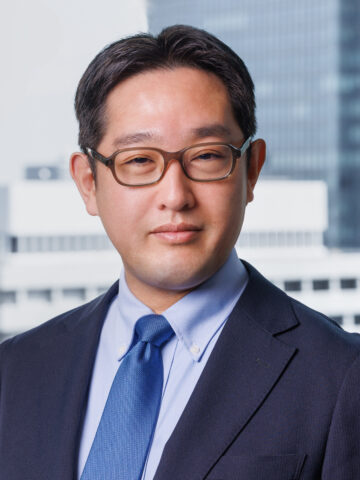
Partner
Tokyo
As a leading member of Brunswick Group’s global Japan practice based in Tokyo, Masato advises Japanese companies on addressing critical issues in the global market…
You might also like

Moyo on AI

Major Minor