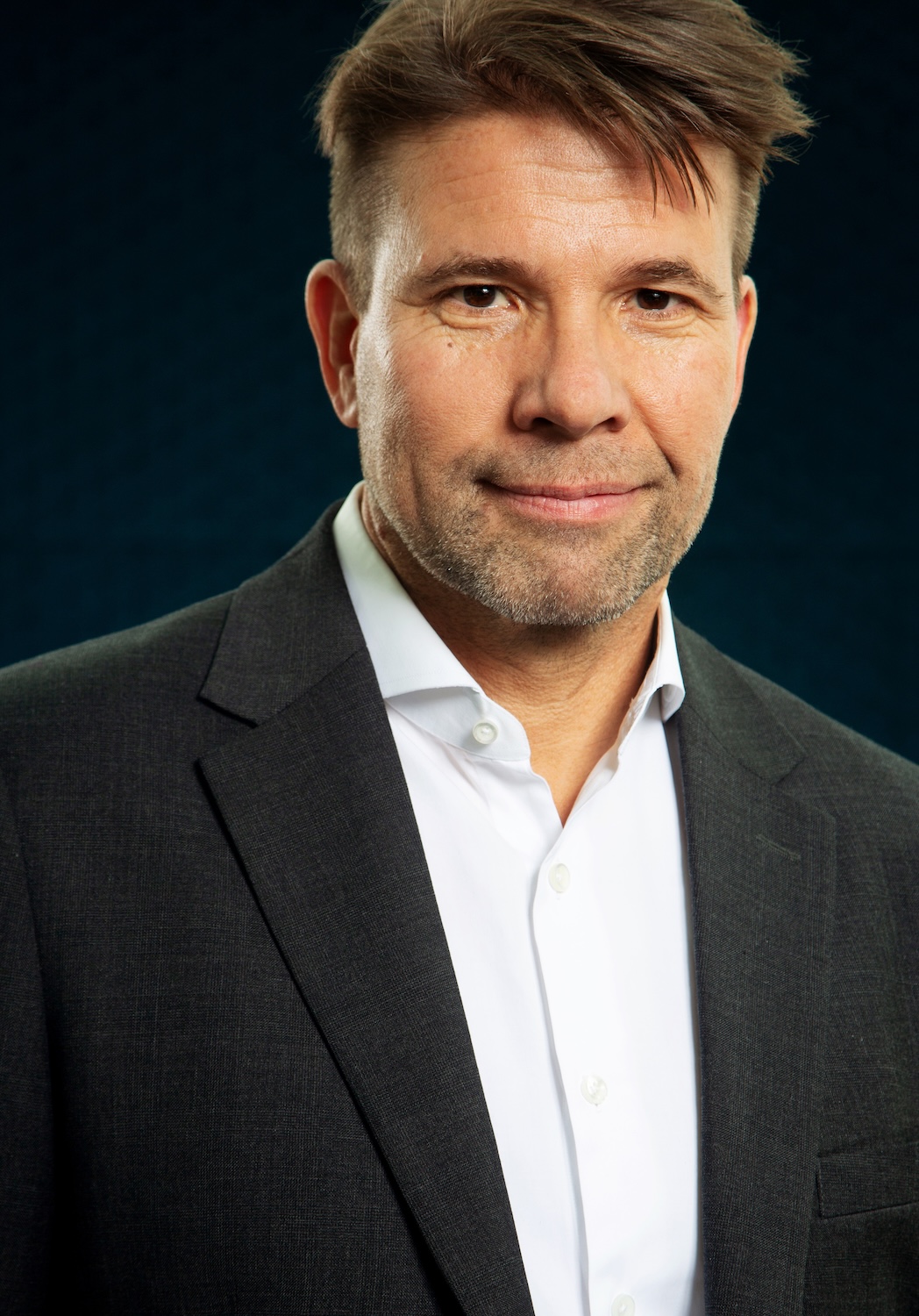
Author and former executive in the automotive sector Dr. Mathias Hüttenrauch tells Brunswick’s Philipp Perwanger about the risk to Europe from a manufacturing culture gone soft.
What shapes a global business leader? Any CEO will likely give you a different answer. For Mathias Hüttenrauch, it was a little over 2,000 kilometers.
A year before the Berlin Wall fell, effectively liberating East Germans after 45 years of rule by the Soviet Union, the 25-year-old Hüttenrauch made a dramatic escape. Making his way from his home in East Berlin through the Eastern bloc to Bratislava, Hungary, he swam to freedom across the Danube to Austria. In his mouth was his passport, his ticket to a new life in West Germany.
“People think, its 200 meters across so you just have to swim 200 meters,” Hüttenrauch says. “But actually you have to swim more like 400 or 500 meters, because of the current.”
A friend met him on the other side and drove him to Nuremberg, where he was treated for some painful cuts on his eyes sustained while making his way through a cornfield in the dark. From there, he boarded a plane to West Berlin, a flight that briefly took him over the half of the city he had just left. “That was pretty emotional because I flew exactly over my house.”
In all, more than 2,000 kilometers—to get from one side of the city to the other.
But West Berlin meant possibility to a young entrepreneur. Hüttenrauch quickly established his own small business and, after the wall fell, helped East German businesses to privatize their operations. He later went back to school in Switzerland and the US, earning an MBA and a Ph.D. By 2011, he was CEO and Chairman at Nedschroef Holding and, later, CEO of Europe for CATL, the Chinese automotive battery manufacturer.
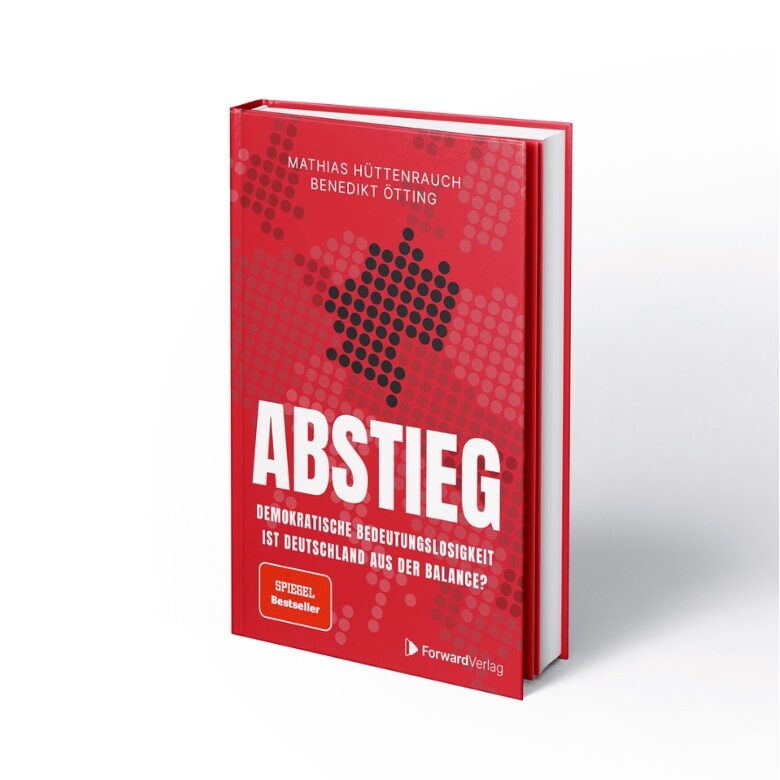
Now on the advisory boards of several global operations, including South Korean battery manufacturer SK On, and Bain Capital Hong Kong, he finds that his early experience as a determined refugee still colors his outlook for Europe. No fan of socialism, he is nonetheless critical of the “super individualism” of the West. “As successful leaders, we have also a responsibility for the society,” he says. He is the co-author of a German bestseller, Abstieg (Decline), outlining how his country is being left behind in the global market. And he is currently working on a follow-up.
Characteristically modest about his achievements, neither book includes the story of his East Berlin escape. Maybe they should? “It’s a good point,” he says. “My daughter says the same thing! Maybe someday I’ll write about it in a separate book.”
Hüttenrauch spoke with Brunswick’s Philipp Perwanger and Carlton Wilkinson about Europe’s prospects in the global economy and what, in his view, needs to change.
Does Europe have a chance to lead?
We had the chance, and we still have the chance. We can build on our manufacturing experience. We would have done very well if we would have used our leading position in the manufacturing of physical products, to add on the digital, data-driven models. Unfortunately, we didn’t do that thoroughly or well. There were players in other regions that did not have that background but were faster in adapting. If you look at where the batteries for the cars are coming from, for instance, where the software is coming from, it’s either the US or China. Not Europe.
CATL, for example, where I was CEO of Europe, is a Chinese company that was founded only something like 15 years ago and now has $60 billion revenue, the dominant player in the battery business. They did not have the entry route in manufacturing that we had. Tesla is another good example. Founded in 2003 and now an important player. Sometimes I have the impression these companies are faster because they don’t initially have a route of entry. It’s somehow more of a benefit than a disadvantage.
But the potential is still there for us of course. We can make our experience into a benefit.
“If a generation grows up in a very safe, prosperous environment, with a lot of inherited wealth, inherited security, their drive is different. A motivation like productivity doesn’t necessarily work for them.”
Do you feel like Europe is losing global relevance?
Europe has huge challenges. Some of it is structural. The way we make decisions on national level, on European Union level, is slow. In Germany, the state has increased in size and bureaucratism. We have become a little over-regulated, overly complex with our 27 member states in the EU. We have still a lot of potential, a lot of brain power, a lot of know-how. But we need to bring that energy to the streets. We need to allow more private initiatives, leave more space.
We have a lot of data regulations, for instance. But when you see how much we have regulated, how difficult it can be for European companies, it’s a little surrealistic. In the morning, we support these regulations. And in the afternoon, we give Chinese or American companies our data without any problem.
So our long-industrial culture is not meeting the moment for this data-driven model, which is more network than hierarchy, more connected, flat and interdisciplinary.
In your book, you say that Europe suffers from a “prosperity-driven individualism.” Is that a generational shift?
I wrote the book together with Benedikt Ötting, who was born in 1999. One of our goals was to bring together the perspectives of two generations and understand how younger Germans view these challenges. There is a whole generation that grew up with prosperity, yes, and we lost our way somewhat with regard to performance. We ask kids more, “How do you feel?” instead of, “How did you really perform?” But blaming one generation is too easy. My generation, born after World War II, also lived with a lot of prosperity, celebrated it, and sometimes I think we didn’t really earn it. I wouldn’t call it luck, but we had an environment that was very accommodating—cheap energy, low interest rates, access to markets.
As a result, our culture focuses on individualism. We see problems that our predecessors three or four generations before us wouldn’t have identified as problems. And that diverts our focus from important things, like productivity, like being competitive.
If a generation grows up in a very safe, prosperous environment, with a lot of inherited wealth, inherited security, their drive is different. A motivation like productivity doesn’t necessarily work for them. They put their energy into something that makes sense for them—material dreams, cars, whatever.
What do you feel are other big headwinds facing Germany and Europe right now?
If you look at the cost of energy in Germany, it’s four to five times higher than in China. How do you compensate that? There are good reasons to get behind renewables, but it’s still a fact that our industry and energy costs are the highest in the world. And now it’s doubly hard with the crisis in Europe.
The workforce of qualified employees is another one. In mathematics, physics, chemical, there is a big gap of good, qualified workers. And then there’s a decline in productivity and too much bureaucracy.
Also, the competition has changed. When I was a child, and Germany played football against Japan, for example, we were disappointed if Germany at minimum didn’t win 4 to 0. Today, we are happy if we win at all. It’s not only because our team is worse. But it’s also that the other teams are better. Same is true in business. We rely on being innovative, being very productive, and maintaining this gap between ourselves and the competition. But that gap isn’t what it was. It has become very narrow now. And that is a big challenge for Europe. Over-regulation adds to that.
We were very innovative in basic R&D 15 years ago. But when it comes to industrialization at scale, we have struggled to maintain our lead. In photovoltaics, for example, Europe played a leading role in the underlying innovation, but China ultimately succeeded in scaling and industrializing the technology. Much of the industrial base subsequently moved there. Same with microelectronics. And now we’re running into that risk with the automotive business. So we need to get better at keeping our innovations industrialized in our own region.
What’s China doing right and what’s it not doing so well?
I was in China many times. What I’ve observed is that they are exceptionally strong at taking technologies and improving them at scale. When you look at high-speed trains, for instance. Before the Beijing Olympics in 2008, China had only just begun developing its high-speed rail network. The Germans, the French and the Japanese supplied much of the initial technology—we delivered our fast trains there and the country started its fast train network. The first 100 trains, we produced here in Europe. And then we had to localize production in China.
Today, the Chinese fast trains, I would say, are better than the Europeans because they took the basic innovation and improved it. They have a hunger that we’ve lost somewhat for doing things better. Today, they have thousands of kilometers of high-speed train networks. Hundreds of thousands of people travel between Shanghai and Beijing every day on these fast trains. I’ve done that. You can make that 1,300 kilometers (a little over 800 miles) in around four hours, and you’re always on time. So that is where they are very strong.
Now, if you ask, what do they not do so well? I would say understanding foreign markets sometimes can still be challenging for them. I’ll give you an example: In the car industry, when they brought the first Chinese cars, EV cars, to Europe, they brought premium cars in the range of €60,000 to €70,000. That strategy struggled because they didn’t fully appreciate how the European consumer in that segment is expecting more than just the car. Europeans expect service, a relationship with the company and so on. Now in the second wave, they came with smaller, cheaper cars and were much more successful.
So I would say that understanding foreign markets and cultural differences is still an area where many Chinese companies are learning. But they are improving rapidly, just as companies from Europe and elsewhere had to learn when they first expanded internationally.
“How do we keep that hunger, in the role models for our young people in particular, to get them to strive for that extra meter, that level of performance?”
The theme that we’re seeing throughout this interview is that in Europe, there’s a lack of drive or hunger to compete internationally. Would you say that’s correct?
Yes, I think that is exactly right. It starts from the wealth of the past, leading to that prosperity individualism, to cultural changes, to seeing problems where there are no problems. We lost focus and others passed us by. It’s something structurally we really need to remedy. How do we keep that hunger, in the role models for our young people in particular, to get them to strive for that extra meter, that level of performance?
When I look at China 10 or 15 years ago, the motivation to perform was often driven by the opportunity to create a better life for yourself and your family. It wasn’t only about material success, but also about opportunity, recognition and social mobility.
Today, that has changed somewhat. Many young people have grown up in much greater prosperity and security than their parents did. In that sense, China is beginning to face some of the same challenges that many developed economies face. But there is still a stronger focus on collective goals and team achievement. In Europe, we tend to place greater emphasis on the individual.
Sometimes we would benefit from a greater sense of perspective. If you think you have a problem, wake up your grandmother, who had worked 20 hours a day helping to clean up rubble and rebuild entire cities after World War II, and ask her what she thinks. That generation faced challenges far greater than many of the ones we face today. Their determination, resilience and willingness to work toward a common goal are qualities we should not lose.
Where do you see the most important opportunities for European businesses to regain momentum?
We still have a strong industrial base with a lot of touchable products, physical products. If we make them “smart,” we are building on our established success. We have the benefit of 100 years of understanding the car as a product.
As a child, I would look at a car and think about horsepower and things like that, how the car drives. My grandchildren, if they see a car, will ask, “Is this car connected to a network I can get on the minute I get in? Can I call it by an iPhone?” It’s still a car. But they have a different view of it. We need to understand that and learn how to integrate the future needs of the customer.
There also needs to be transformation in processes. We still have that industrial base. We can bring robotics and AI into those industries. These process innovations—not just product innovation—are something we have to do.
And then we have to focus also on the development of basic R&D and industrialization. For that, we need to change our environmental conditions to be competitive and productive. I don’t think it’s an edge which we can regain overnight, so we have to start.
There’s pushback against electric vehicles, particularly now in the US. How do you see that evolving in Europe?
When you talk about e-mobility, it’s important to understand that we are not talking about just a car. We’re talking about a new ecosystem. If you would have bought an e-vehicle five, six years ago, your biggest challenge would have been the reach, how far it can go without charging. And how fast can you charge it? Many of those challenges will be solved within the next few years. You will get batteries which definitely make 600 kilometers, which can definitely charge enough for 400 kilometers in under 10 minutes.
The problem then moves from the car to the infrastructure. It’s not practical if it takes 25 minutes—not because of the battery but because the charging station isn’t upgraded, or because it’s already occupied, or it just doesn’t work. The infrastructure has to be there. Assuming that is solved, I’m very positive about electromobility.
I’m an old car guy and I like to drive a petrol car from time to time. But I think for our grandchildren, it’s kind of game over for petrol.
Meet the authors
-
Director
Munich
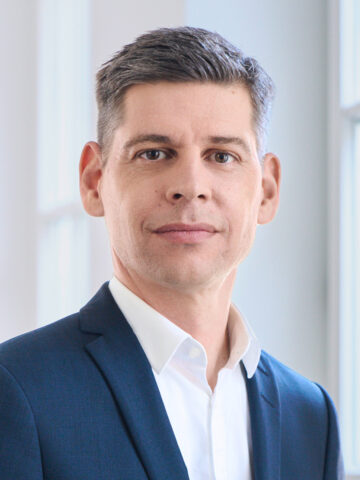
Philipp is a corporate communications expert. He advises clients in a broad range of business-critical situations with a focus on litigation, restructuring and corporate reputation.
You might also like
Learning Curve

Singapore Years