
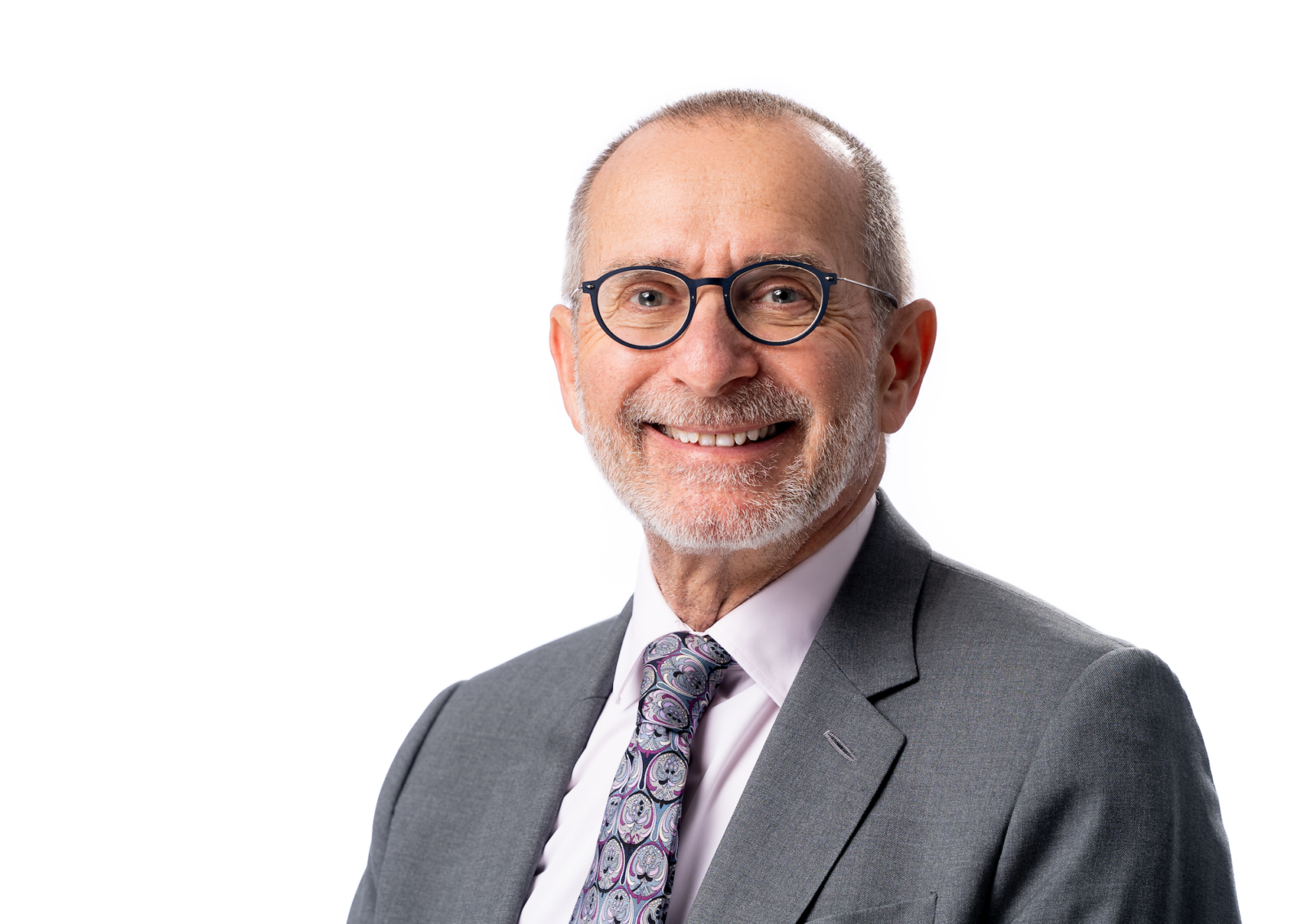
Martin Kingston, Executive Chairman of Rothschild & Co. SA, discusses B4SA and the public-private compact driving economic reforms in South Africa.
In 2020, as the then-Vice President of Business Unity South Africa (BUSA), Martin Kingston helped oversee a pandemic response that he believes could serve as a model for marshalling resources to solve immediate societal problems.
“We created Business for South Africa, or B4SA, as an all-of-business response,” he tells us in a recent interview. “We mobilized hundreds of businesses pro bono, large and small, formal and informal, across all sectors of the economy, domestic and international, in a very agile and dynamic way to partner with government in dealing with this existential threat.”
Kingston is today the Steering Committee Chair of B4SA. In his work with the organization, he has been able to bring to bear his own extensive network and professional experience as Executive Chairman of Rothschild & Co. SA, a financial advisory firm that has been involved in shaping South Africa’s economy. Alongside him are over 160 leaders of domestic and international businesses representing 1.4 million people, including Sasol, Exxaro, Anglo American, Standard Bank, Sanlam, Dow, DHL, Toyota and Coca-Cola.
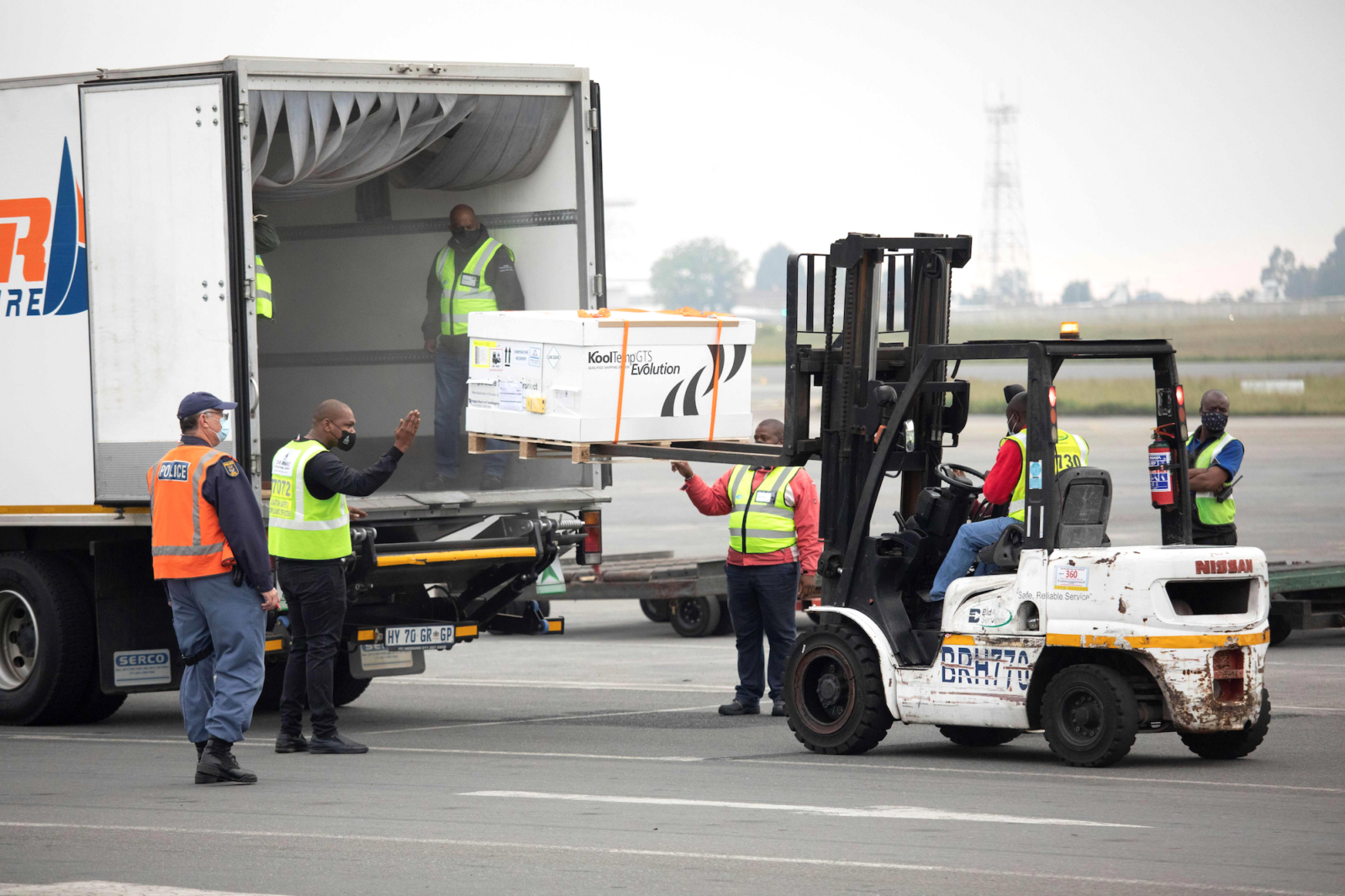
To address the threats of the pandemic, B4SA’s initial focus was on three areas: bringing PPE (personal protective equipment) to all areas of the country, establishing a COVID relief grant to aid the unemployed and recommending economic interventions. Later in 2020, the group began to work closely with government to construct and then implement an effective vaccination rollout program. At the core of the project’s effectiveness was a focus on trust and common goals. This program was a material success, resulting in over 38 million people (64% of the population) receiving access to COVID-19 vaccines.
“It was unprecedented in the context of what had happened in South Africa since 1994,” Kingston said, “this concept of business partnering with government in a very critical area that was impacting society at large, not just the economy. And not just the government but also partnering with civil society, organized labor and faith-based organizations, all of whom came together in that context.
“We made sure there was complete transparency and visibility in respect of everything we were doing,” Kingston said. “We accounted for every Rand and cent. We mobilized support at the highest level.”
In 2022, as the threat of COVID started to recede, the group presented to the country’s President Cyril Ramaphosa specific goals to rebuild the troubled economy in the areas of energy, transport and logistics, crime and corruption, as well as to address the challenges of youth unemployment. The President made the public-private compact with B4SA a key component of the recovery strategy.
“At that time, we were meeting every six to eight weeks,” he said. “Today, we have three or four chief executives of key businesses leading and overseeing the work in each of those areas. They all sit on the Joint Strategic Oversight Committee that I co-chair on the business side, along with Phindi Baleni, the Director-General in the Presidency and the Cabinet Secretary on the government side.”
“We’ve sent a signal back to the business community that being patriotic South Africans is not only in our self-interest, but in the national interest if we’re going to achieve our potential as a country.”
For more than a decade, even before the pandemic, South Africa faced low growth, rising unemployment and persistent infrastructure failures, particularly in energy and in transport and logistics. The dominant narrative had been one of structural decline.
Today, the picture of South Africa is shifting. The more deliberate partnership between the state and organized business has begun to stabilize key systems, reduce risks in electricity and logistics, and restore elements of macro financial credibility. While not a “big bang” transformation, steady and discernible progress is being made on many fronts, laying the groundwork for a more investable and predictable economy.
The collaboration has helped to drive the structural reforms needed to grow the economy, to create jobs, lift confidence in the country’s economic future both domestically and internationally, and increase opportunities for business. In November of 2025, Standard & Poor’s upgraded the nation’s credit ratings, citing improving growth and strengthening revenues. One dramatic sign of progress: Two years ago, South Africans endured nearly 300 days of “load shedding,” rolling blackouts that rationed electricity across the country. In 2025, that number fell to single digits.
“Any load shedding is too much, but it marks a profound shift,” Kingston notes. “We’ve sent a signal back to the business community that being patriotic South Africans is not only in our self-interest, but in the national interest if we’re going to achieve our potential as a country.”
The reforms have also sent a signal internationally, he says. South Africa is one of the continent’s most diversified economies, a hub of growing importance as the African Continental Free Trade Area gradually takes shape. Investors with a long-term perspective and tolerance for volatility are seeing new opportunity.
If we were to look ahead, what does South Africa need to do in order to attract investment?
Employment ultimately is a function of growth, and growth is a function of investment. The majority of the investment comes from the private sector. Whether it’s domestic or international, you’ve got to have an appropriate enabling environment for it. Structural reform plays a significant role, but structural reform is not about dealing with crime and corruption. Those are society-wide challenges and they can act as a huge disincentive for investors.
International investors are not going to come in if domestic investors aren’t themselves investing, and they won’t if the opportunities available aren’t predictable, secure, stable and attractive enough. There’s no doubt that having the private sector at the forefront of working with the government in enabling reform sends a very strong signal.
At B4SA, we’ve got 160-plus chief executives of leading companies in South Africa—not just South African companies, but companies invested in South Africa—who signed up to a pledge. And what does the pledge say? The pledge says that we recognize the potential in the country and we’re prepared to put our shoulders to the wheel to achieve those objectives. That is a very powerful signal to the investment community.
Chief executives or business leaders were and continue to be deeply concerned about the anemic level of growth in the country. You can’t have 1.2% growth when you’ve got 1.6% population growth, 60% of youth that are unemployed, over 40% unemployment under the broad definition. That presents not only a social hazard in the country, but a real threat to growth.
Patriotism and altruism also inspire business leaders. It’s not just a selfish view that motivates people. Because we are focused, disciplined and very transparent about what we do—and because people can now start to see real progress being made—that helps build momentum. If you look at the leaders involved in our work on energy, transport and logistics, crime and corruption, and youth unemployment, they all felt they could make a difference and that has borne out. So it self-perpetuates.
There is significant capital in the pipeline in terms of driving investments in the country, it’s enormous and you clearly can’t do that without the structural reforms having been implemented that government is committed to. Lots of chief executives acknowledge that. Do they want to be at the forefront of that process? For sure, they do.
In technology, what should South Africa be doing more of?
AI and technology were featured heavily in both B20 [the business component of the G20 summits] and G20. But to be competitive, we need to have some of the building blocks. For data centers, you’ve got to have access to cheap and reliable power. Well, we don’t have that yet. We’ve got to have an adequate supply of reliable, competitive power. We need to have the ability to train people to use AI effectively within their businesses.
For the public at large, we’ve got to have data network systems and telecoms that reach everybody. At the moment, they don’t. In telephony, you’ve got to have a regulatory environment that is fit for purpose.
In the financial services sector, I think that we are light years ahead of many parts of the rest of the world in terms of fintech, the sophistication of our banking and our insurance systems and our regulatory structures. So there is scope for business and government to work together in creating the right sort of infrastructure and talent for AI. But—and this is a big “but”—we have major capacity constraints as a country.
Water is not the next emerging crisis; it’s a current crisis. Shouldn’t we treat water as we’re treating energy, and transport and logistics? But the reality is that water is being handled by municipalities, not nationally. Health is likewise a provincial competence. What we’ve done here in the context of the partnership is mobilize resources and interventions at a national level, such as expanding employment, particularly youth employment.
Obviously, AI permeates much of what we’re talking about. But do I think that it is the most significant opportunity and challenge facing the country right now in the context of everything we know about? No, I don’t.
“Our legacy is a real acknowledgement that in an appropriately organized way, we can leverage the resources of the business community for the good of the country and her people.”
Private sector funding has been slower than expected. But building the right investment environment takes time. Mobilizing the scale of capital required to repair the electricity grid and grid expansion depends on having the right structures: clear market rules, effective competition frameworks, cost reflective tariffs, and a predictable pricing regime. These elements are being put in place, but they cannot be built overnight.
At the same time, our intensified focus on crime and corruption, particularly within the criminal justice system, underscores the fragility of the current environment. Progress is being made. Standard & Poor’s recent upgrade is a welcome signal, and lower inflation and interest rates all point in a positive direction.
But the critical task now is to maintain the momentum needed to drive economic growth, to create jobs and to build confidence. Investors, both local and international, want clarity that reforms will continue and that progress will not stall.
If that confidence is reinforced, I have no doubt we will see meaningful, incremental capital mobilization in the sectors that are ready for it.
Is there any big decision that you believe will be B4SA’s legacy?
B4SA is a temporary platform, assembled for a particular purpose at a moment in time. But it’s a manifestation of how business can partner with government in the national interest.
I suppose my professional training has taught me to put in place structures that endure. When you look back, it was just a concept. But now that we can see results, its very rewarding.
Virtually every single call that my colleagues and I have made has resulted in a willingness from leaders of business to commit, including their own time. Not always funding—we’re all constrained by funding—but positive responses from those that I have been in touch with.
Our legacy is a real acknowledgement that in an appropriately organized way, we can leverage the resources of the business community for the good of the country and its people.
When you’re actually doing the work, it seems like you’re sort of swimming through treacle, but when you look back six months, 12 months, 18 months at what we’ve done, I think we’ve made enormous progress.
BRSA’s CEO PLEDGE
Over 160 CEOs of businesses with operations or investments in South Africa have committed their signatures to the following statement:
“As South African business leaders, we firmly believe in the immense potential of our country. We are committed to building it and have come together to address the current challenges with the aim of achieving sustainable, inclusive economic growth. Through strategic partnerships and focused interventions, we have the power to make a significant and positive impact on our nation, creating hope for all South Africans. We are resolutely committed to being a force for good.”
Meet the authors
-
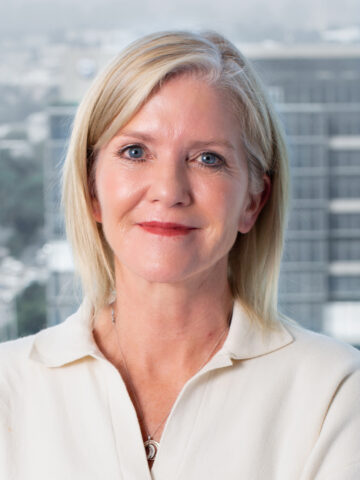
Partner
Johannesburg
Di leads on a number of M&A, investor engagement and issues management mandates, both regionally and cross-border. -
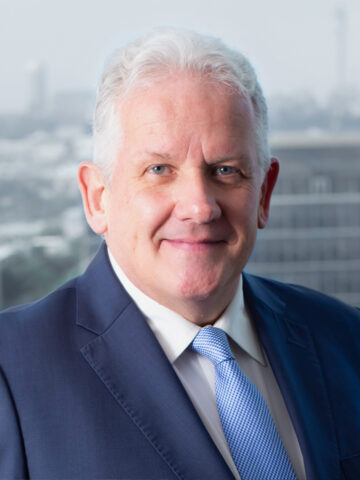
Chair, APAC & IMEA
Johannesburg
Rob is responsible for leading Brunswick’s business development in emerging markets and is the global relationship partner for some of the firm's largest clients.
More from this issue
Investment Universe
Most read from this issue

Hacking Reputation

Embrace the Complexity
You might also like
The Great Energy Balancing Act

United for Africa
