
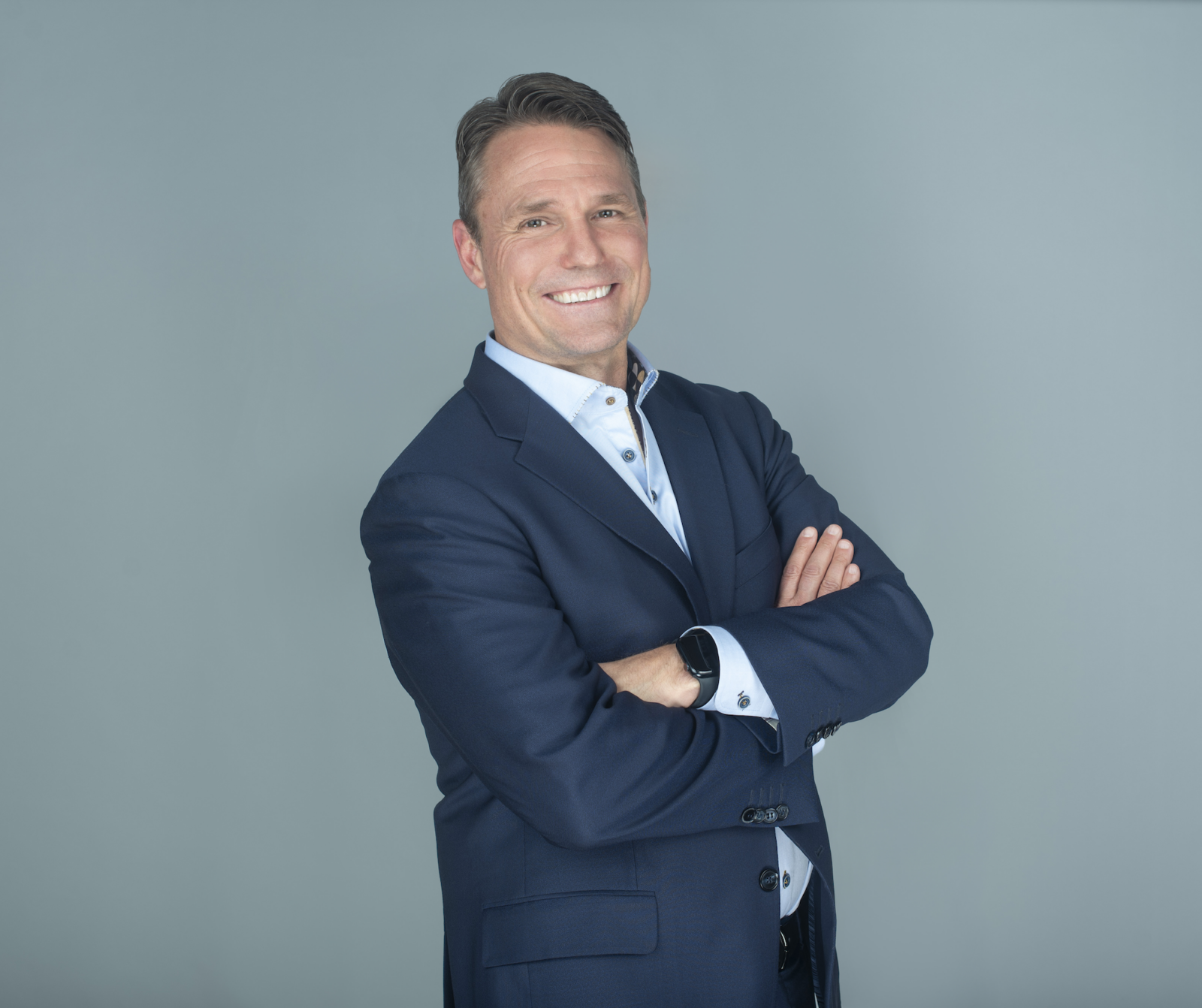
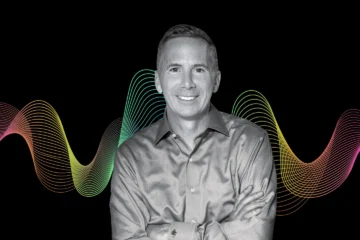
As CEO of CPP Investments, John Graham oversees the management of almost C$800 billion in retirement funds on behalf of 22 million Canadians, about half that nation’s population.
During the 10 years ending in 2024, the Canada Pension Plan ranked second out of 25 global pension funds in terms of investment returns, according to Global SWF. With an average annual return of 9.19%, Canada trailed only Sweden’s AP7 fund during that period.
The leader in charge of that plan’s investment decisions is John Graham, who earned accolades (and patents) as a scientist at Xerox before joining Canada Pension Plan Investment Board (CPP Investments) in 2008. Brunswick Partner Alex Yankus interviewed Graham about his investment thoughts and philosophies.
In your investment approach, how are you balancing geopolitical risk and the heated debates around it?
We’ve been around for 27 years. Go back 10 or 15 years, and investing was about following the money, about profit maximization. Gradually, concerns like industrial policy and national security began influencing the flow of capital. Now, geopolitical risk or domestic political risk has been brought forward from the appendix to the first or second page of almost every investment recommendation.
As an organization, we’ve invested heavily in building our tools internally to assess risk. We also listen to many different perspectives. But we must also be realistic in acknowledging that we don’t have an edge in predicting these things.
For example, I can sit in a meeting for two hours, hear a lot of really interesting information, then at the end I ask myself, “Am I going to make a different decision based on what I just heard?” If not, then what information do I need to make a different decision? We’re very careful not to swing the portfolio around based on the news cycle of the day.
This is why one of our core beliefs is diversification. The expression we always use is “diversification is an act of humility.” We’re having lots of opportunities to be humble these days in the investment markets.
You’ve talked about how others think in quarters while you think in quarter centuries. In today’s environment, what does it mean in practical terms to act as a long-term investor?
Sometimes it means you need courage. I’ve described our portfolio as a super tanker. If you’re a super tanker, you must have a destination and for us, the destination has to be long term. You can’t turn a portfolio the size of ours on a dime.
Right now, the investing world is being challenged to think long term and to really think about what that means. If we look at GDP growth for the past 150 years, we have a pretty good track record of growth and prosperity, through world wars, pandemics and trade wars. We have bumps along the way. But you see—over the last 100-plus years—that curve going up and to the right.
One of the most important lessons is to stay invested in the market, even though you know that there are periods when that is going to be painful. There’s 100-plus years of evidence that shows that those who stayed invested in the long run prospered. The opportunity cost of trying to get in and out of the market is really high.
We take a view that over 20, 30 years you will get paid for risk. And you’ll keep getting paid for risk. We’re in a period right now of technological revolution, and it raises a couple of questions: What happens to the investments we made before ChatGPT launched? Does the value of changing your mind go up, when you’re going through a technological revolution? Long term, we keep coming back to the fact that there will be ups and downs and we need to stay invested and stay on risk.
“I subscribe to a kind of biological view that how the organization will fulfill its mandate is constantly evolving.”
Did you anticipate transitioning from science to investing? Or did you think you were going to be a scientist your entire career?
The transition was never as abrupt as other people think it must’ve been. I worked as a scientist for Xerox, though even there my role evolved a bit onto the business side, and I did my MBA part time. It did mean that I brought a quantitative skill set to CPP Investments.
I started here in the very early days of CPP Investments. I do have to say, when I first received the call about this opportunity, my reaction was, “John Graham is a very common name. Are you sure you have the right John Graham?”
How are you improving and modernizing the organization—whether that’s through technology, talent, decision frameworks—to ensure it remains adaptive?
First, always, we anchor ourselves in our purpose. We manage the surplus funds of the Canada Pension Plan for 22 million Canadians. Our mandate is enshrined in federal legislation. And that is to act in the best interest of contributors and beneficiaries, and to maximize returns without undue risk of loss.
The legislation that created CPP Investments is pretty clear. It says, “This is your mandate. This is your purpose.” Everything else we’ve done as an organization has been a management choice to fulfill our mandate.
For example, we’ve made the choice that the best way to maximize returns without undue risk of loss is to be an active global investor, to have offices around the globe in New York, London, Hong Kong, Mumbai, São Paulo and Sydney. We’ve also made a choice to invest in both public and private assets. These are choices. That’s not our mandate. And that’s not our purpose. Those are execution choices the organization makes.
I subscribe to a kind of biological view that how the organization will fulfill its mandate is constantly evolving. The world is in constant evolution and so are we. The inevitability of change is an ethos we try to embed in the organization.
We look different from 10 years ago. And in 10 years, we’ll look different from today. To maximize returns without undue risk of loss, our approach will constantly evolve. We’ve opened offices. We’ve closed offices. We’ve grown and we’ve shrunk. We’ve gone into asset classes. And we’ve changed how we think about entering into an asset class, making sure we never get stuck in the middle, as these markets evolve.
On AI, what is your approach to it as an operational tool, and as an investment?
We’ve deployed multiple tools to every single employee in the organization. We have provided ample opportunities for training. We’re trying to create superusers in AI, with a view that we can’t even think of some of the things AI will create, so let’s not limit our approach to senior management thinking about a couple of great things to do with it. On the investing side, this has been an opportunity to be humbled. We do have investments in the sector, including in many of the big model companies. But it’s a bit like putting chips on a lot of different squares right now, because we don’t know who will win.
We have been knowingly underweight on some of the AI stocks in the public markets for various reasons. We were knowingly underweight, because we were a little bit uncomfortable with the way risk was being concentrated in the public markets. We know we are peeling away from the S&P 500—it becomes very hard to keep up with the S&P 500 when you’re not putting 35% of your portfolio in the Magnificent 7. But that’s a deliberate decision we have made because we want to avoid concentration risk, and because we need to manage the Fund over a very long time horizon.
The discussion on software over the past few months has been something really interesting to watch. In the span of a week, you see the invisible hand of the market evolving from, “AI is a tailwind to the industry,” to AI being a headwind. That “winner” might turn out to be a loser with AI. We’re trying to work through that. It’s not easy.
In describing your organization’s evolution, you used the word biological. As someone who holds a Ph.D. in chemistry—and who for years worked as a scientist—do you make use of that expertise as an investment CEO?
I’m a big proponent of the scientific method. What is the question I’m trying to answer? And how do I answer that question? As opposed to: Let’s boil the ocean and see if we find any answers.
But having been in this career for 20 years and still knowing very little with certainty, the one thing I do know with absolute certainty is, I’m not a scientist anymore. I don’t do science anymore, because science has answers. Investing just has inferences.
“I also think private credit is a positive source of
capital in the market. I’m similarly bullish on private equity and private assets in general.”
You’re both an investor in private equity funds and a co-investor with them in their deals. How does this dynamic work?
I’m a big champion of what we call the partnership model, where we invest as a limited partner with those who we think are the best and the brightest general partners. Then we have an opportunity to co-invest or co-underwrite on an economically advantaged basis. It’s been a model we’ve been running for 20 years. And it works. I think it works for everybody. I think it’s a true win-win.
Does it ever create extra complexity?
Having done it for 20 years, I don’t think it’s easy. For sure it adds complexity. It means we have to invest in high-quality teams to do the co-investing and the co-underwriting. At the end of the day, it’s probably hard to drive attractive returns without accepting a certain amount of essential complexity. What you need to avoid is the accidental complexity that often is a hanger-on.
What are your thoughts about recent challenges in the private credit markets?
I’m still positive on private credit. I think private credit has a real role to play. Private credit is good at matching the duration of the assets with the duration of the source of funding. Mismatches can occur when you have retail investors involved who have a shorter investment horizon. Institutional investors like us understand that an investment may have no liquidity for 10 years.
I also think that private credit is a positive source of capital in the market. I’m similarly bullish on private equity and private assets in general. As an investor with a long horizon, we know that pendulums will swing back and forth, and we’ve built a portfolio designed to deal with that.
Recognizing that you’re not the pension plan, you’re its money manager—is there any concern about there being sufficient funds to accommodate increased human longevity?
When you think about the sustainability of the pension plan, longevity is definitely an issue. It comes back to the value of CPP Investments, and a review released by Canada’s Chief Actuary in December 2025 showed that the plan is financially sustainable for at least 75 more years across a wide range of demographic and macroeconomic conditions.
CPP is the compulsory program that all Canadians contribute to. It is the same as Social Security
in the US. Every paycheck, there’s a deduction (the standard is about 6%) for Canadians that says CPP. What they get in return is a promise, a promise that when they retire, they’re going to get an inflation-adjusted pension for as long as they live. If they live to 120, and we hope they do, they will keep getting CPP.
We’re here to be promise keepers, to help make sure that the promise that’s been made to 22 million Canadians is kept.
Meet the authors
-
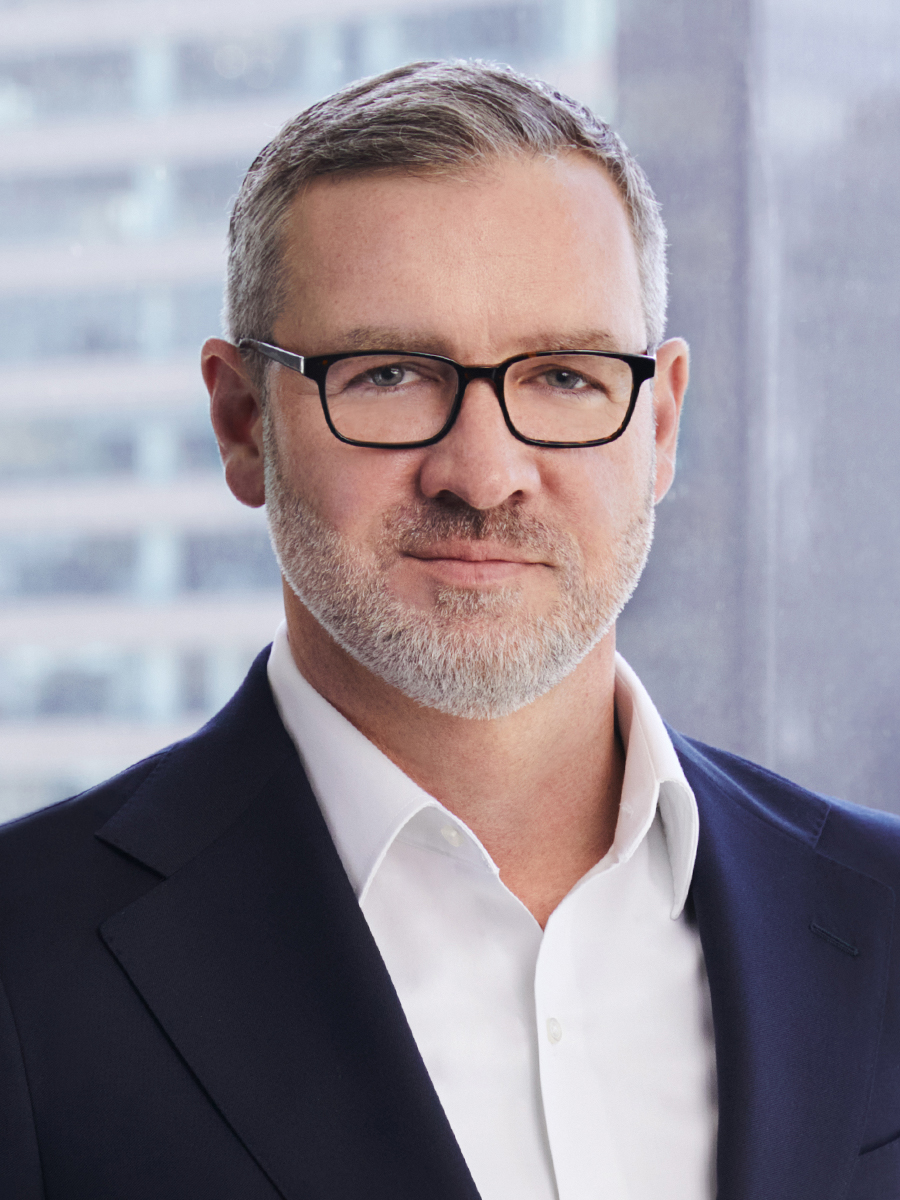
Partner, Financial Institutions Group Global Lead, Global Co-Head of Private Capital
New York
Alex leads the firm’s global Financial Institutions Group and has been counseling leading private investment firms and publicly traded financial institutions on a diverse range…
More from this issue
Investment Universe
Most read from this issue
Taking Ownership

Hacking Reputation
You might also like
Rebel CEO
Better Together