

CD&R Co-President David Novak on the pressures facing private equity and the path to value creation.
David Novak, Co-President of CD&R, estimates there are between 15,000 and 20,000 private equity firms today—a far cry from the “cottage industry” that existed when he joined the industry in 1993, and CD&R just four years later: “It was a small partnership, half a dozen people or so around the table hustling to find, bootstrap and finance investment opportunities,” said Novak.
An American based in London for the last 26 years, Novak helped build CD&R’s European business while private equity transformed in ways few could have anticipated. The industry now manages more than $10 trillion and many firms operate through scaled, global and increasingly complex organizations with strategies that bear little resemblance to those early partnerships.
That explosive growth is exemplified by a transaction CD&R completed in 2025: the €16 billion ($18.3 billion) carve-out of Opella, Sanofi’s consumer healthcare division, maker of Allegra and Icy Hot. The partnership, which was one of Europe’s largest private equity transactions, saw Sanofi retain a substantial stake.
Brunswick Partner Mark Barnett spoke with Novak as private equity firms navigate their most challenging environment in years: higher interest rates, more expensive leverage, aging portfolios, intense competition, AI disruption and growing scrutiny over their role as stewards of capital and jobs. In their conversation, Novak made the case that private equity’s strengths—engaged ownership, operational focus, long-term approach and a track record of value creation—matter more now precisely because so many of the industry’s tailwinds have subsided.
What do you think of the characterization that private equity has matured from a “rebellious teenager” into a “mature adult”?
I wouldn’t use those exact words, but I understand why some might think of it that way. I prefer to describe it as moving from a cottage industry to something more scaled, professionalized and institutionalized—the sources of capital, the organizations that invest that capital, the processes they use. All of it resembles a much more established industry.
The segmentation has been fascinating to watch. The industry has innovated to create adjacent asset classes and investment strategies that parse out risk and reward in very specific ways. You don’t just have a pool of capital looking for common equity investments in private businesses. You have different pools slicing up the risk-rewards—less risk, slightly lower rewards. Structured investments in private companies, minority investments in public companies, primary and secondary entry points. In my view, that segmentation, along with improved liquidity, has been a powerful driver of growth and accessibility to the asset class.
So yes, there are aspects that resemble maturity, relative to what it was. The biggest shift may be simply who’s participating. It used to be the purview of endowments and some pension funds. Now, it’s hard to argue it’s not a relevant asset class in most institutional portfolios and increasingly retail too. Everyone talks about alternative assets today as an important part of a balanced portfolio.

In your almost three decades at CD&R, what has been the biggest surprise about that maturation?
When I started to understand private equity, I was surprised it wasn’t bigger, because in many cases, I think it can be a better form of capitalism than public capital. I wouldn’t have used those words in the early ’90s—I thought of it only as a pretty small investment asset class.
Today though, private equity and private capital are more broadly capital markets in their own right. It’s also a governance model and an ownership model, in addition to being an asset class. I certainly didn’t think of it with that level of sophistication or complexity 30 years ago, and I don’t think a lot of people did. Its success in large part is due to how private equity engages with the companies in which it invests, aligning all parties around the pursuit of long-term value creation over quarterly guidance, or engagement on key strategic and organizational value drivers over navigating the puzzle of public company regulation. That, and ensuring management teams are aligned in value creation initiatives.
I also believe that private equity tends to be more efficient with capital—not just at the company level, but in capital structures. I think, for instance, some public companies are over-equitized. That obviously plays into public markets’ focus on predictability and hitting guidance, which can be good, but can also reduce investment, innovation and risk-taking. That dynamic is a key reason why more companies are choosing to remain private for longer, as private ownership increasingly offers a compelling long-term alternative. I think this reflects how private equity has matured into a fully formed capital market in its own right, rather than being seen simply as a stepping stone to the public markets.
Assets under management skyrocketed while interest rates were historically low. Now that the cost of capital has risen, how does that change the playbook for creating value?
We have to acknowledge that the period from the financial crisis through COVID was unique for all asset owners. Low interest rates, quantitative easing, considerable liquidity—together they lifted the tide for many assets. Private equity and public equity investors both benefited from that.
Recently, I was looking at data from 2013 to 2023 on all private equity investments. Something like half of the returns came from multiple expansion, which was clearly supported by that environment. That was a good way to make money, make no mistake. But it feels different today. In some ways it brings you back toward fundamental value creation.
In our view, you really do have to invest in making businesses better—strategically, operationally and organizationally. That’s how we spend our time at CD&R. Operating capability has been a part of our DNA from our beginning almost 50 years ago. Two of our named founders, Gene Clayton and Marty Dubilier, were operating guys, not investors. Today, we have more than 50 operating partners and advisors engaged by our funds, all former leaders of companies, who are involved in the entire lifecycle of our investment business.
In addition to these senior, experienced operators who are experts in their sectors, we’ve built out real functional capabilities across supply chain, digital, IT and sustainability—all focused on making the businesses we back stronger operationally and driving earnings growth through top-line improvement and margin initiatives. For example, we’ve invested significantly in our AI capabilities—not only to enhance productivity internally but more importantly to help our portfolio companies innovate in practical ways, whether that’s small process enhancements or more transformative change. Taken together, this operational toolkit seems to be the best way to create value across cycles, especially in the current environment which won’t be driven by low interest rates and abundant liquidity.
“In our view, you really do have to invest in making businesses better—strategically, operationally and organizationally. That’s how we spend our time at CD&R.”
Many firms have morphed into broad, multi-asset platforms, while CD&R has stayed specialized. How do you see the trade-offs between specialization and diversification, and what does it take to succeed as a specialist today?
The diversified asset managers have become very large, very scaled and very important to the financial ecosystem. To be good at that, they need to participate at scale across a number of asset classes and then bring that diversification and insight to their investors. They need to be good aggregators of capital—that’s what they’re trying to do to drive market returns across their asset classes. With that product diversity, they also have a good offering to the wealth and retail channels.
For those of us trying to specialize—and there are lots of different ways to specialize—we need a slightly different strategy. For us, it’s private equity and private equity only, one fund at a time. We are not public; in fact we are 100% owned by our partners. Everyone who comes to work at CD&R, whether in New York or London, is focused on maximizing CD&R’s private equity business in an aligned way.
We think that focus and alignment lead to a bunch of decisions that support success. Then it’s about leaning into where else you can differentiate. For us, it’s industry expertise, operating capability and deep engagement with our portfolio companies.
Governance is under a microscope. How has CD&R’s approach evolved?
Given how the industry has grown, we’re invested in a lot more companies overall, and they tend to be bigger businesses that touch the lives of consumers and people around the world. With that comes responsibility and accountability for good governance and stewardship.
We have to be honest that there are examples where people—perhaps fairly—thought private equity has not been a good steward. The truth is, I believe, there are many more examples on the positive side, but our industry hasn’t done a great job communicating that. We have to get better at explaining how we drive growth, how we lead investment and innovation, how we create jobs, and how that leads to better businesses, more value creation and ultimately more job creation.
For us, sustainability is a tool to drive growth and create value—it’s not just a buzzword. The concept of doing more with fewer resources is good business. The fact that it’s also good for the environment is another positive. Diversity is similar. We’ve talked about that for a long time. From our experience, having a diverse set of experiences, backgrounds and perspectives among our employees—both at our portfolio companies and across the firm—is just good business.

The lines between public and private markets seem to be blurring. How do you see the relationship between the two?
As private capital has taken more share of company ownership, it’s been interesting to observe changes in the public markets. The number of public companies is down about 50% since the late 1990s. At the same time, passive investing, or index investing, has become a much larger share of the public markets.
I’ve been thinking about what this means for the traditional active manager, the value-based investor in the public markets. It seems in large part that they have been crowded out. I think that’s the role private equity plays today and can continue to play in a scaled way in the future. We are the fundamental investors. We are the active investors. We are, in many cases, value investors. This is an important investment approach for many institutional and retail investors that provides an engaged, value-add governance model for companies and management teams.
When you look at Europe, which sectors or regions illustrate how private equity’s opportunity set is evolving?
I continue to think Europe is an attractive place to invest. It is different from, and more complex than, the US, but you can make good money investing in Europe. Europe still leads in a number of areas, such as sustainability, the energy transition and parts of the life sciences sector, among others. It also benefits from a deep base of industrial technology. However, where China once competed largely on cost from an industrial perspective, that dynamic has shifted, in that China now has some of the best technology in the world. So, while Europe has a strong starting point in industrial technology, it has to be repurposed in a proactive way to be ready for the next wave of industrial innovation.
From a pure investment and business perspective, I believe there will be a rethinking of the whole defense complex, and that is an opportunity. At the same time, traditional industries in Europe, such as the auto industry, are under real threat of disruption as new players from across the world, most notably China, continue to advance.
Europe is clearly grappling with its place in the world, and what this means for the future of its competitiveness. These types of environments, while complex, can provide really interesting and exciting investment opportunities, but you have to look hard.
The curious thing about investing in Europe is that investors can get caught up talking about macro, but private equity investing—particularly the way we do it—is a very micro business. It’s focused on the geography, the industry, the sub-sector, the specific company, and the specific management team and the unique value-creation opportunity. Notwithstanding the additional complexity that exists in Europe relative to the US, if you’re willing to embrace it, there are a lot of places where you can create value. I happen to think complexity is the fun part. One reason I’ve stayed in Europe this long is I like that complexity, I like the challenge it presents.
Not everyone would agree that complexity is fun, but even in our US business, we’re leaning into complexity even more than we used to. There’s a level of strategic consistency in what we do, but what comes with it is more hard work, more grind to do things differently and do them well. You have to be up for that, but we believe the results will follow.
“Private equity’s success stems from how it engages with the companies in which it invests, aligning all parties around the pursuit of long-term value creation.”
How do you expect the fundraising environment to change over the next five to 10 years?
Fundraising has a cyclical component. We’re in one of those periods where it’s harder. But I think private equity will continue to perform, so the long-term trends for capital flow into private equity should be good.
When interest rates are low, and the macro is good, it’s easier to make money and return capital. When the macro is tougher and there’s more uncertainty—geopolitically and economically—it makes sense that the institutional LP [limited partner] market will be more focused on where they put capital.
The other side is the growth in the wealth and retail channel—which some estimate is $150 trillion, with only a small percentage allocated to alternatives today. That’s a new opportunity for the private equity industry. It’s hard not to think the wealth and retail channel will be an increasingly large part of the capital base. Some describe it as the democratization of private equity.
Not every firm and asset class is suited for that. Our strategy of private equity only—where we get commitments for five years and call capital when we have a deal—doesn’t lend itself well to retail products. I think the diversified firms will likely be the early winners in raising capital from the retail channel.
What would you tell someone just starting a career in private equity?
I’d tell them it’s hard to invest well. It’s not hard to take out your phone, open your Robinhood account and buy a few shares of Apple or Nvidia. But if you want to be really good at your craft you have to embrace the fact that it is hard to do it well, so be prepared to do the work.
I would also emphasize that private equity is an experience-based business. The more reps you get, the more businesses you see, you develop pattern recognition and become a better investor. It’s important to think long term about your career and development path.
I’d also tell them: Think about why you want to become a private equity investor. The attraction is great; you learn about investing, capital markets, finance; you get exposure to different industries and businesses; you work closely with senior management teams even at a young age. There are a lot of great things about the job. But if those things are not of interest, there are a lot of other exciting things to do in the world beyond private equity.
The world doesn’t need another private equity investor. If you do choose to do it, however, do it because you love it, because it gets you out of bed. Do it because you get energized not only by the exposure and what you learn, but also the day-to-day grind that it takes to actually become good at it.
If that resonates, then get involved—private equity still has meaningful work to do, and its next chapter will be written by those who truly want to do the work.
Meet the authors
-
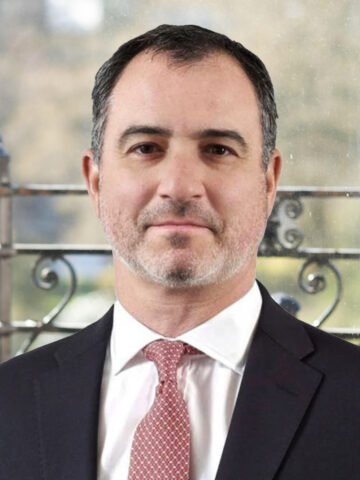
Partner
London
Mark is a Partner in the Global Financial Practice Group with a focus on Investor Engagement across the UK, Europe and globally.
You might also like

Foreword

Vallée of Time