
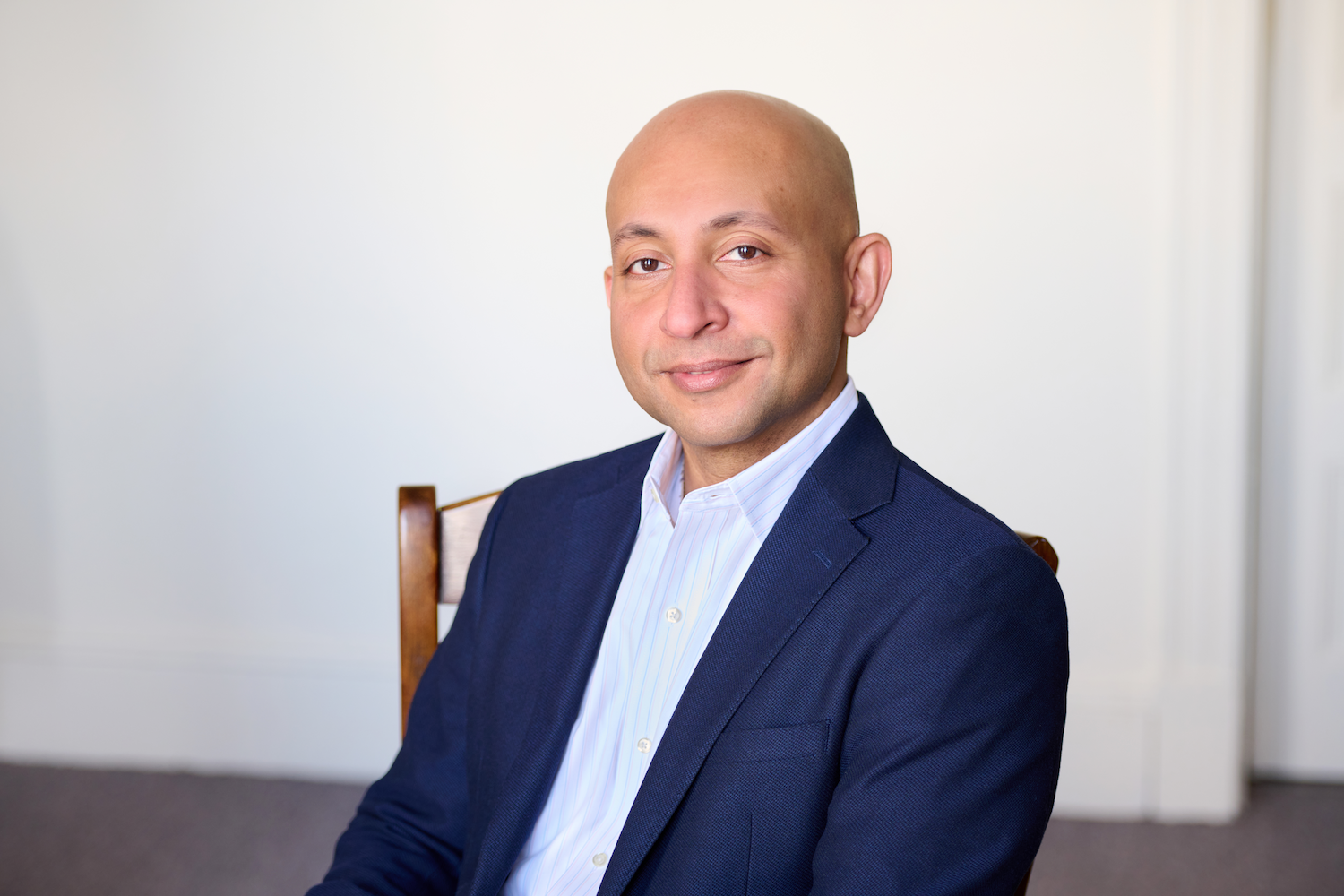
A career biotech executive and an investor talks about the importance of narrative toward better health outcomes.
Thaminda Ramanayake has spent his career at the intersection of science and capital—at EY, Amgen, Sanofi among others. Trained as a scientist and raised in a family circle of educators and physicians in Sri Lanka, he has long been driven by one question: how to improve outcomes for the critically ill.
That mix led him into biotech investing. At CureVac, he helped orchestrate its sale to BioNTech, arguing the deal gave both companies’ science the best chance of getting their innovations to patients.
Today, he is a Venture Partner in biotech at Entrée Capital and the new CEO of Swiss biotech Anaveon, which is specializing in new therapies for autoimmune disorders.
Yet, with all of his expertise, he has found that the decisive factor in biotech success is simpler: storytelling.
“I’ve made a little bit of a corner for myself as a ‘turnaround guy,’” Ramanayake says. “And the first thing I pay attention to in each case is turning around the communication narrative. Every time I’ve tried it, it has worked. We have to appreciate the power of a communications perspective, a stakeholder management perspective.”
In our interview, Ramanayake shares his excitement for the stories about the science and the growing markets for health care innovation that he has encountered. The outlook for the future is bright, he says, but it requires the often-divergent tracks of communications, business and science to work closely toward common goals.
What first drew you to the sector? And what continues to energize you about it?
Very early in my career I wanted to become a physician scientist. I’ve seen the transformation that can be achieved with patients. Growing up in a developing country, you experience a lot of hardships, especially in health care. Most of these patients only see the doctor as a last resort.
I remember watching TV shows like Little House On the Prairie, where the doctor goes from house to house, with the little medicine bag, and is close to patients. But as charming as it is, that reality is just not possible today. The patient care is so distant, there are so many intermediaries, that the patient care has eroded, especially in the United States. I didn’t want that reality for myself, to be so distant.
I found this translational space where business partners with science and medicine toward better health outcomes. There is a notion that medicine sits in one corner, business sits in another corner. That institutionalizes behaviors that result in patients not getting the service they need, or innovations that would benefit patients not getting to market.
Biotech should look more like tech. Innovation in the biotech industry lags tech by about five to seven years. By the time biotech innovation arrives, tech innovation has gone way, way out there.
I’m hopeful that people understand this now and are working to bridge the gap. It will take time. It’s hard, but we proceed with the idea that our practice will eventually become permanent.
If you can marry things that would otherwise not interact and drive towards a greater outcome, you can create a miracle. We can be change agents. How powerful is that?
Is AI part of bridging that gap?
AI is a part of exposing the gap. We are hoping that AI might be bridging the gap.
Everyone knows that AI can help. But even in its current state, AI can go beyond just helping, to be a partner sometimes. Somebody who would have spent six years studying in a library building a thesis, could now have the thesis done in six minutes. That person has shortened their workload by plus or minus six years. Think about the transformation you could do from there.
I remember writing a clinical development protocol draft, on a four-hour flight from Boston to LA, a process that usually involves about 40 people and can take up to four months. I had internet. I had my kid right next to me and the computer. Instead of months, we had it right away, as a baseline. And from there we could do something even better.
So that’s what AI brings to the partnership right now. And because of it, I’m really hopeful that the development curve will be parabolic.
“In the US, the pitch is far more confident, the story is better. The concern over not wanting to fail publicly has kept other geographies quiet for a very long time.”
Would you say that biotech innovation is still focused in the US, or are other regions catching up?
Overwhelmingly it is happening in the United States. Why is that? Well, we are great at telling stories. Biotech is happening in Europe, in the UK, in Switzerland, in China, Australia, New Zealand, Singapore, Israel—and now, it’s also happening in India, Brazil and Mexico. But none of them tell a good story.
In the US, the pitch is far more confident, the story is better. The concern over not wanting to fail publicly has kept other geographies quiet for a very long time.
Does regulation play a part in this attitude?
I don’t know where there’s any other place regulatory-wise more complicated or restrictive for innovation than in Europe. There are very concrete steps they can take, stepping up the review process for instance. While policymakers are understandably focused on attracting capital, investors also need confidence in clear and achievable pathways to realize returns.
Funding is leaking out of the US at the moment. There’s no better opportunity, no better time than the next three maybe four years for Europe to step up and take control. But they’re not doing it. You have an overwhelmingly skilled labor force that is dying to innovate that is kept from it by the regulatory overhang.
You were at CureVac while it was being acquired by BioNTech. What was that experience like?
This particular transaction was the most complicated you can imagine. This was the first all-stock deal by two German companies. Five jurisdictions were involved [the companies between them had significant operations in Germany, the US, the Netherlands, Belgium and the UK].
But there was a unifying thread between myself and Uğur Şahin [Founder and CEO of BioNTech] that came to light that I believed in. How do we preserve mRNA as a technology and not let it be derailed before it can come to market and fulfill its promise?
I had seen similar patterns before in areas like cell and gene therapy, where promising science struggled to translate because the ecosystem wasn’t ready to sustain it.
For us, it became very clear that continuing to invest in the science was not optional—it was existential. The only way to sustain that level of investment, and to give the technology a real chance to succeed, was through a partnership or by becoming part of something larger that could provide the necessary scale and stability. In that sense, the transaction was about much more than a single company or moment in time. It was about safeguarding the long-term potential of an entire platform.
If this transaction had not happened, the mRNA that we potentially could deliver for the next 40 years would probably be dead.
Would you say this needs to happen more within the industry?
Yes. One of my inspirations was Frederick Frank, who was a Lehman Brothers banker, known as one of the founding fathers of biotech investment. He would say if you’re an innovator building a biotech, you first have to build something called a JITCo, a “just in time” company—someone who brings a particular new product that fills a clear need. And your primary goal is to partner. Not to try to be commercial yourself.
Once you have your JITCo, you can convert it into what is called a RITCo, royalty income trust company, meaning you’ve successfully partnered it, and then now you have royalty income potentially coming in. That archetype is financeable, fundable and has an equity value much greater than the beginning JITCo. Then you can convert that phase into a fully integrated biotech company, a FIBCo, allowing you to build the commercial capabilities, advance the science, et cetera. If you don’t follow these steps, you’re building a shitco. (LAUGHTER)
And that’s what happens. People forget about that blueprint and they start focusing on innovation, not collaboration. Everybody wants to be by themselves. And it’s an absolute disaster.
What kind of biotech companies do you think are here to stay?
First, you need to be very disciplined financially, down to the last dollar. Second, you need to be absolutely focused from a pipeline perspective. You’re building a JITCo, remember. Identify a need and build that company. Then you absolutely have to have an acceleration of development and the only way to do that is to embrace technology. Because guess what? Somebody else is already doing it. So you’re going to be falling behind. The days of just thinking alone with a cigar and a whiskey are gone. The talent and the skillset to do that are out there. You have to take advantage of them, because otherwise, someone else will.
So the biotechs you’ll see 10 years from now will be financially disciplined, pipeline-focused and embracing technology.
“If you can marry things that would otherwise not interact and drive towards a greater outcome, you can create a miracle.”
Can you tell us about your new role as CEO of the biotech firm Anaveon based in Switzerland?
This is a Swiss biotech. A highly skilled group of bioengineers who are attempting to precisely modulate the immune system. It’s a creative way of thinking. I fell in love with the story they are trying to tell. They are using the same skillset and similar principles used in oncology in the immunology space.
For the first time, I saw the T-cell compartment being targeted precisely to achieve deep depletion of pathogenic cells to achieve immune re-balance. That is the gold standard for immunology. The early data told me they have a best-in-class solution.
I’ve spent a lot of time in that space during my pharma days—and I have seen companies actively working in this space. Most of them struggle to achieve the depth of response required to achieve a meaningful clinical outcome. When companies failed, I know why they failed, and this company seems to have fixed all of those mistakes. And I saw the talent they have.
I was humbled to receive the board invitation to join as the CEO, and be given a change to advance the big vision I have for the company. My goal is to focus the company to an immunology company, a single therapeutic area, by borrowing learnings from our past oncology experiences, and to advance the lead asset into the clinic in ’27, to see if we can actually make a dent in the immunology space.
This is very ambitious, but that’s how you could cure an autoimmune disease. Other therapies can subdue the disease, but cannot take the disease out.
You have the same basic immune system that the last common ancestor between mammals and amphibians had about 350 million years ago. The modern African clawed frog, descended from that ancestor, has a lot of the same immune functionality as us, even down to those associated with specific diseases, like cancer, asthma, heart disease. That demands a certain level of humility, knowing that we are indeed tackling a highly complex system, as we go after autoimmune diseases.
What attracted you to Entrée Capital?
It is the opportunity to bridge biotech and tech at a time when healthcare’s structural misalignments are ripe for disruption.
The system heavily incentivizes expensive, provider-administered treatments—like IV infusions—over simpler, patient-friendly options like oral pills. Why? Because reimbursements cover the full infrastructure: the drug, bag, tubing, nurse, chair time and facility fees. A pill you take at home generates far less billable activity. This incentive distortion drives up costs dramatically and often prioritizes system economics over patient comfort and outcomes.
I see the historical separation between biotech and tech as partly rooted in these misalignments—tech enables fast, scalable, low-cost iteration, while traditional biotech is entangled in legacy models. Bringing them together—through AI, data platforms, genomics, or programmable biology—can realign incentives around what’s right for patients: effective, convenient therapies.
Entrée is actively investing at this intersection, backing founders like those at Cavos Biotherapeutics (using genomics and data science for novel cancer targets) and Eleven Tx (AI-synergized nucleic acid therapeutics). I’m motivated to help exceptional teams fix these systemic issues, because it’s both the right thing for patients and where massive impact and returns lie.
You have colleagues sitting in Israel, in the US, in Europe. So it’s really a global team looking at biotech investments, right?
Yes, a global team. And we are motivated to catch and incentivize folks that otherwise would not get the attention of biopharma. That most often sits in the European ecosystem because the US biotech is quite transparent.
There are so many companies in Europe that want to be famous but are hiding until they have the right data to showcase their ambitious goals. We are trying to pull those companies out into the limelight, to start sooner to see if we can get them investments.
One company has invented an imaging system to replace ultrasound imaging. Ultrasounds are relatively quick and easy, but with an ultrasound, you just have to trust the doctor because all most of us really see is just a big, gray cloud. This company has built something the size of an iPhone with the imaging of CT scan. The device is linked to a data repository. Using AI, it analyzes and reports immediately for the physician and the patient. So you see the picture clearly, not like an ultrasound, and the AI helps you get a diagnosis immediately.
This was built for military purposes, something that you can use anywhere. Now the technology is making it to the retail market. It’s going to replace the need for a technician. It’s going to replace the need for warehousing. And it’s going to replace the need for a specialized reader. The system pushes back against those kinds of efficiencies. So this is the battle.
Meet the authors
-
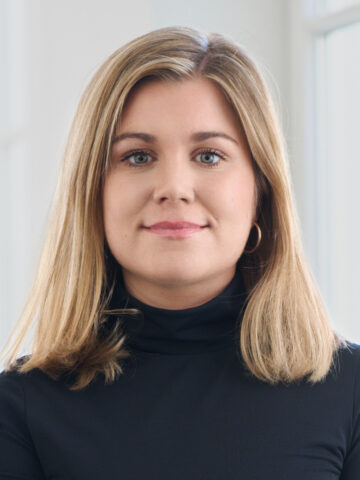
Director
Munich
Natalie specializes in financial communications and corporate positioning. She advises clients across a range of complex, high-stakes situations, including restructurings, issues management, and complex transactions. -
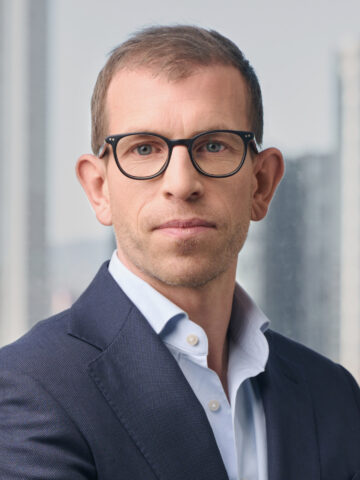
Partner
Frankfurt
Felix advises clients on financial and corporate communication issues with a special focus on public M&A, shareholder activism and investor relations.
More from this issue
Investment Universe
Most read from this issue

Andrew Ross Sorkin on 1929

Embrace the Complexity
You might also like
Going Local for Real-World Impact
Familial Footsteps