
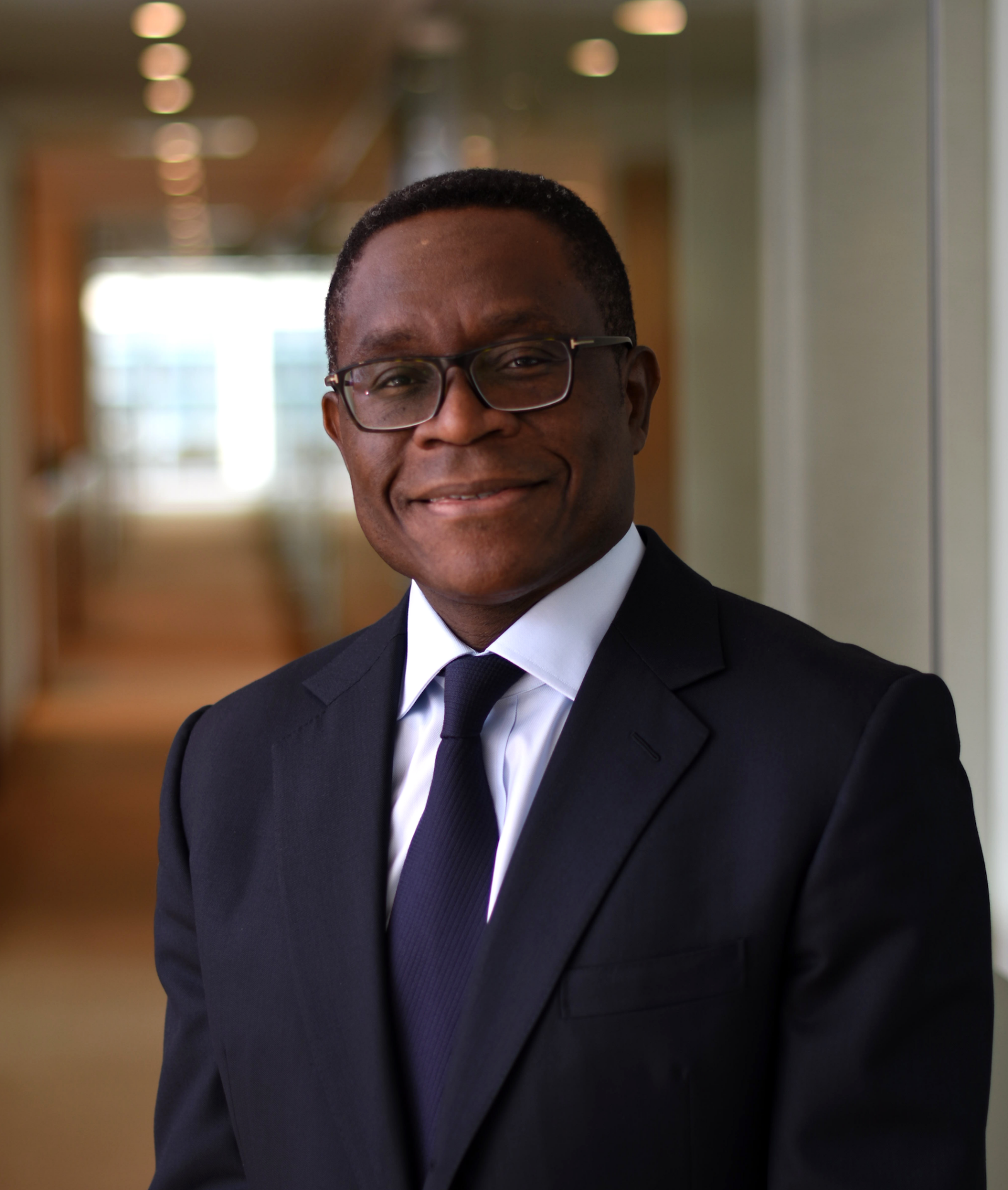
Bernard Mensah, President of International for Bank of America, talks to Chris Thompson about AI, the global economic landscape and the changing nature of risk.
Bernard Mensah started out his career on the trading floor at a time when spreadsheets, personal computers and the internet were still nascent technologies. Over three decades, he has watched the progress of technology significantly increase trading volumes and radically transform the speed of financial activity.
Since 2010, he has been part of the global executive team for Bank of America, which has one of the largest annual technology investments in the banking world. Since 2020, Mensah has been President of International and a board member of the global bank’s European operations, including Merrill Lynch International, Bank of America Europe DAC and BofA Securities Europe SA. Prior to his current position, he jointly led the bank’s fixed income, currencies and commodities trading business globally.
Born in Ghana and based in London, he is on the board of the Carnegie Endowment for International Peace, an organization which generates strategic ideas and independent analysis, supports diplomacy, and trains future scholar‑practitioners to help solve global problems and advance peace. He is also a member of the Stanford University Parents and Family Advisory Board, and previously served as co-chair.
In a recent interview with Brunswick Partner Chris Thompson, Mensah shared an expansive outlook about the state of finance and investment around the world. A focus on people remains paramount, he says, even as the increasingly fast pace of innovation is changing the working world in important ways. He talks about the AI infrastructure race, the fracturing of globalization, unsustainable sovereign debt and the durability of human judgment in an age of machines.
How is AI technology changing the way that capital is moving across markets and geographies?
AI is forcing a certain globalization of capital, moving different pools of investment capital more quickly around the world. The speed of the technology itself and the speed of change help drive the tendency, allowing investors to take advantage of new opportunities across borders.
You can’t be complacent as an owner of capital, thinking, “I’m OK in my space”. You need to be alert as to how this technology might disrupt markets. We’ve seen that kind of disruption recently in the re-rating of some of the software stocks.
I spoke sometime last year with a large private equity fund manager, who was scrubbing through his 100 or 150 portfolio companies, getting each of them to assess how they might be impacted by AI. I don’t remember the exact numbers but, speaking very roughly, he found about 40% would be massively impacted. Of that group, about half could see the disruption coming. But the other half, 20% of his companies, just couldn’t. They were like, “Yeah, everything’s good.” And he’s sitting there thinking, “AI’s going to eat your lunch.”
You can’t tell, of course, exactly how it will play out. But capital has to move very fast and everybody needs to review their portfolio.
“We’re paid to know the right speed. That’s the judgment or the art. There isn’t one template.”
People have been talking recently about the end of globalization. Do you see it increasing?
Well, it depends on what we mean by “globalization.” If you think it means we’re going to be one global pool of trading activity, then yes, that’s receding to some extent. But while there are many different pockets of trading activity, more fragmented, they are still interacting around the world—and that is a version of globalization. People aren’t trying to completely pull away from that.
We wanted to fiercely trade across all the different parts of the world. So in that sense, I see an absolute intensification. If you have a company in Japan, in an earlier time, you accepted a standard trade architecture. You just needed to tweak it a little bit here or there. Now, you’re having to be intentional. You can’t expect that what worked before is going to work now.
What is your strategy for Latin America, how does it need to change? What is your strategy not just for North America, but for Canada separate from Mexico? And even as you tailor these strategies country by country, that interconnection still shapes your overall global approach. So in that sense, there’s fragmentation, but also intensification—the stakes are higher. It’s changing how we think about “globalization.” It’s global activity and you need to be more strategic about what that means.
How do you see the investment landscape for AI infrastructure?
The infrastructure needs are clear and obvious. The question is, who is going to pay for it, and whether those investments will ultimately generate the returns people expect. The scale of capital required is significant, and while the long-term demand is undeniable, the economics are still evolving.
There are strong analogies with the internet boom around 2000. Enormous investment went into fiber‑optic networks and related infrastructure, much of which only realized its full value years later. As with any developing sector, a restructuring phase is likely—where early investors may not see the benefits they anticipated before the market settles. Many early internet companies were absorbed or overtaken as the sector matured, even though the underlying infrastructure became essential.
Given that context, how do you manage risk?
That’s where the rubber meets the road. We’re paid to know the right speed. That’s the judgment or the art. There isn’t one template.
I had a boss at a former bank and he jokingly said, “Go too fast and have an accident, and I’ll come over there and fire you. Go too slow, not doing any business, and I’ll do the same.” I was like, “Great. That’s helpful.”
But his implicit lesson has stuck with me: I consciously need to determine the speed. Am I going too fast? Too slow? Is it 80 miles an hour? Is it 100? Is it 70? And, of course, it’s not a constant. You have to be moving at the pace of innovation.
For Bank of America’s investment in AI, I was an advocate for fast adoption. But we had to make sure we had the right guardrails, making sure there were no biases, that our data was secure and so on. Others naturally thought we needed to drive slower. Our CEO listened to both and chose the right speed. And now, with those guardrails in place, we’ve been able to accelerate. That’s a good example of how we approach risk on a case-by-case basis.
The New Bank of America Podcast
Bank of America recently launched its podcast series “Breakthrough Technology Dialogues”, showcasing the emerging technologies redefining global society. Guests include CEOs, innovators and investors, drawn from the attendees at one of Bank of America’s most exclusive events, the Breakthrough Technology Dialogue, held annually in the UK and Singapore. “This series also allows us to share the expertise of the Dialogues community more widely, and gives us the space to take a deeper look at the stories and ideas behind the breakthroughs,” says Bernard Mensah.
Listen wherever you get your podcasts: breakthroughtechnologydialogues.podbean.com
Has technology made it easier or harder to price risk?
That’s an interesting question. Technology has certainly changed the speed and scale at which we operate, but the fundamental challenges of pricing risk haven’t really changed. When I first worked on the foreign exchange desk, we had 15 traders. Today, thanks to technology, that same desk runs with only two or three. At the same time, technology has pushed volumes to more than 10 times what they were, driven by high-frequency trading, rapid analysis of huge datasets and increasing automation—machines interacting with other machines.
So it’s a different type of calculated risk. I don’t think things are any less risky. Different types of risks have emerged that you need to be careful about.
Thirty years ago, you didn’t need to be that interested in technology, beyond knowing how to navigate spreadsheets on early computers. But now, you need to be very curious and interested in all aspects of technology and innovation. Technology is impacting all aspects of business, affecting products, the way businesses are run, human resources, reporting—everything. The pace of innovation is going faster as well. The curve is a little parabolic. If you’re in finance, you need to be very interested in the latest advancements and how they affect your trading and your investments, all the details.
Bank of America’s tech spend over the last decade was around $13 billion annually. How do you think about that in terms of broader trends?
We spend over $4 billion annually on new tech initiatives, and more than $8 billion on running the bank. This sustained investment is a competitive advantage, but even more so, it’s important that we are transforming and delivering the right technology both for employees and our clients. One broader area of focus, for example, is cybersecurity, which is a high priority and a large part of that—we’ve got to be secure.
Our CEO ensures that we keep a consistent investment cadence in our technology stack, and the results of that are evident in our work. Take Erica, for instance, our virtual financial assistant in the US. It was started in 2018 and has just passed over 3 billion customer interactions. In the nine months prior to September 2025, it had half a billion interactions. It was already a very sophisticated chat bot and it’s now moving into the Generative AI space. That’s an example of our continuing investment.
Part of our investment is addressing local concerns in countries around the world. India asks for data localization, for instance. These things can consume some of your budget. And that’s why I think you see some of our competitors pulling back. You need to have the scale that we have to be competing in the more than 35 countries we’re in, with all of the local regulations in Australia, Japan, India, Brazil and everywhere else. Our tech investment is necessary in order to stay competitive.
What kind of role does AI play in hiring talent? at Bank of America?
I get asked this frequently but AI doesn’t play much of a role in hiring talent. We hire smart talent. We look for diligent, hardworking and principled people. We value strong teamwork and a natural sense of curiosity. Good communication skills are essential. And we actively seek people from the arts and the humanities as well, because they bring different perspectives that help us to be better at what we do.
We can’t rely on AI to identify candidates with those qualities.
“This iteration of technology will bring together access to a wide range of knowledge. To make strong use of it, the importance of integrity, of character and judgment, will become more important.”
Do you think AI actually raises the value of soft skills, like critical thinking or the humanities?
Yes, I think so. You can have all the facts and data in the world, but that doesn’t automatically translate into understanding. That’s where the role of human insight becomes even more important. It’s all about judgment.
In the short term, there may be some pressure on traditional skill roles. But other skills are already in high demand—particularly those needed to build and support the infrastructure behind these technologies.
And for young people, the opportunities this creates are enormous. This iteration of technology will bring together access to a wide range of knowledge. To make strong use of it, the importance of integrity, of character and judgment will become more important.
You’ve seen many periods of heightened global volatility. What stands out to you about the current global economic landscape?
I sometimes wonder whether I see it as really complex only because I have a seat at the table, or whether it really is harder now. This moment feels different. It feels more intense.
Over 20 or 30 years, there has been more global integration. We thought it was a linear path, and it would continue. The thesis was that, as long as you open the door to this capital system and this work creation, it’s self-evident and people would buy into the system. Obviously, that has turned out not to be the case. As you pointed out earlier, there is some dismantling of that global integration.
We’ve also seen sovereign debt levels go higher and higher to the point where the overall debt burden seems almost unsustainable.
On the other hand, the amount of global prosperity that has been generated has been incredible. The productivity gains and our ability to share knowledge, those have been huge achievements.
I don’t want to be blasé about this as there are huge challenges across the globe right now. But in aggregate, we’ve seen real progress in standards of living, and because technology can now simplify daily tasks, we have the ability to enjoy the little things differently.
We all need to work a lot harder to make sure we’re not going into reverse. Our job is to set the table for future generations to successfully continue that progress.
Meet the authors
-
Partner
London
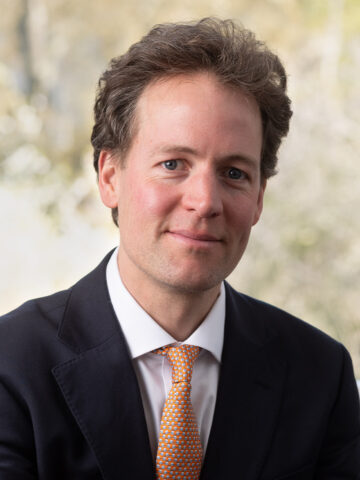
Christopher advises on financial communications, crises, M&A, IPOs and improving media relationships for clients across Europe and the UK. He joined Brunswick in November 2021…
More from this issue
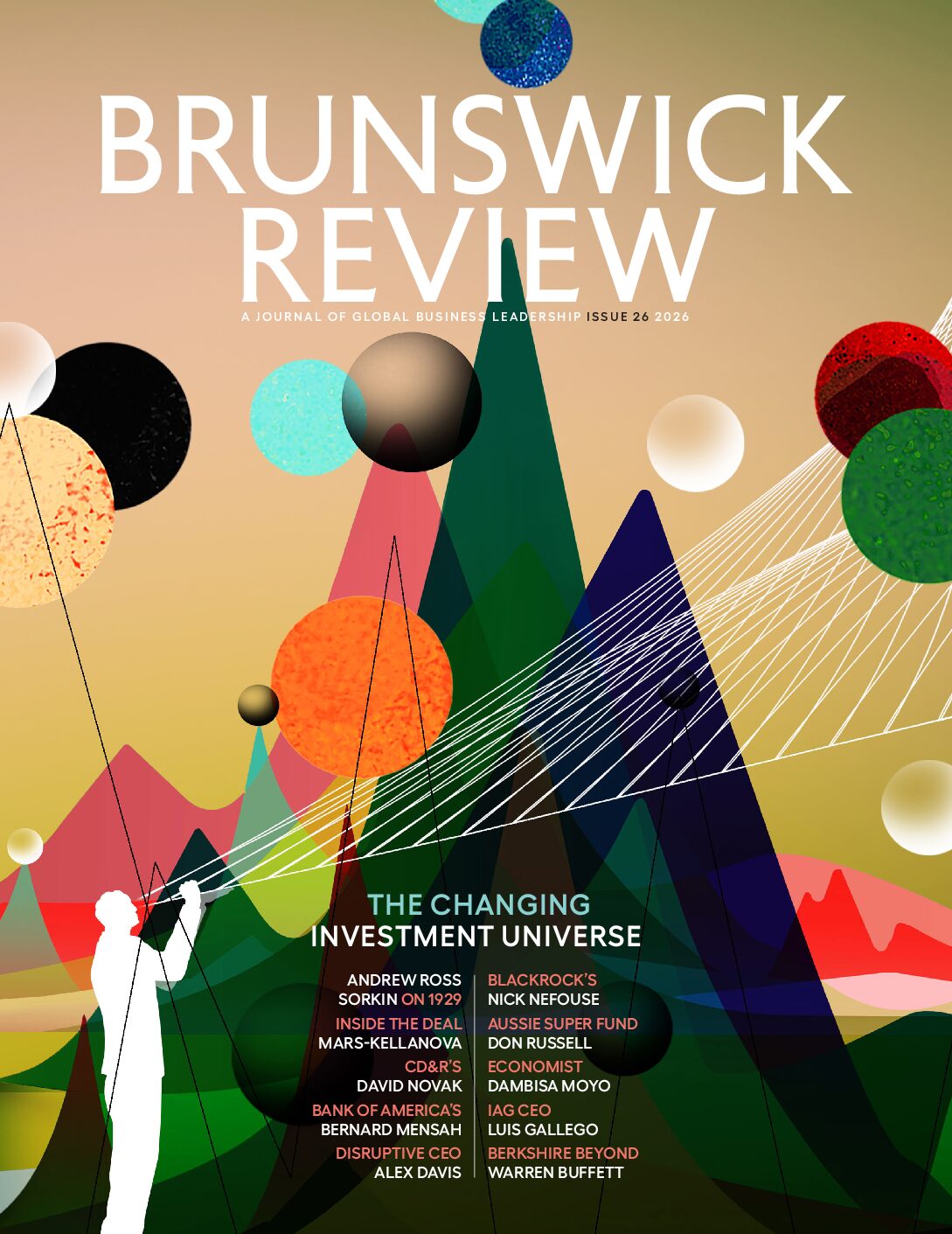
Investment Universe
Most read from this issue

A Women’s Place in History

Critical Moment: Investment Universe
You might also like

The Wizard of Ads
Real or Fake?