
What if the first thing employees hear about a labor dispute comes from a chatbot?
Upcoming union campaigns and contract negotiations will be among the first conducted in a world where AI search shapes how employees, journalists, investors, regulators and politicians understand companies and labor disputes.
That changes the rules.
For decades, companies managed labor narratives through traditional channels: internal communications, media relations, websites, ads and search engine optimization. To gain information, employees and other stakeholders had to click links, visit websites and consume curated information.
Now they can simply ask AI:
- Does this company treat workers fairly?
- Why are employees trying to unionize?
- Is management trusted?
- What happened in the last strike?
AI then generates an instant answer—synthesizing news coverage, social media commentary, employee reviews, Reddit posts, activist content and public filings into a single narrative.
No clicks required.
The New Labor Narrative Risk
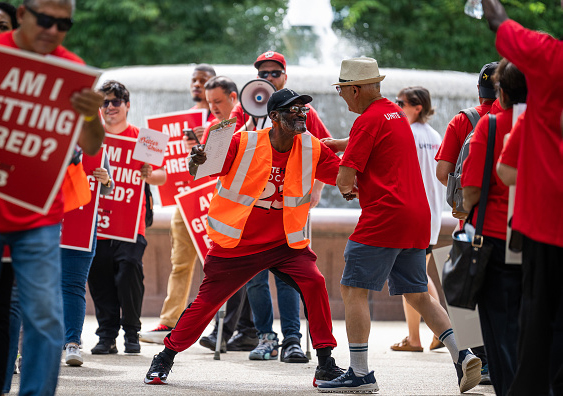
AI rewards volume, repetition and emotional clarity. If negative narratives dominate online conversations, AI systems are likely to reinforce them. A years-old Glassdoor review, viral TikTok, strike photo or activist op-ed can quickly become part of the consensus view presented to employees, reporters, investors or political officials.
Unlike traditional media cycles, AI-generated narratives do not disappear when attention fades. They persist, compound and resurface. In effect, every labor dispute and negotiation now creates a permanent training dataset.
Why This Matters
Employees considering unionization may increasingly rely on AI summaries instead of company materials. Journalists may use AI tools to frame reporting on contract offers. Policymakers and investors may receive an AI-generated overview before meetings or earnings calls.
The result: Organizations can lose control of the narrative long before they realize it has shifted against them.
What Companies Should Do Now
Pose your own questions to AI platforms:
- How does this company treat workers?
- Has the company faced labor controversies?
- What are employees saying?
The answers may surprise you, as will the impact you can have by managing this strategically.
2. Treat Labor Communications as Search Strategy
Every statement, FAQ, executive interview, employee story and bargaining update contributes to an AI-readable narrative environment. Silence leaves a vacuum. Repetition matters.
3. Build Credibility before Conflict
Organizations with established trust and credible employee advocacy are more resilient when disputes emerge. AI systems synthesize patterns over time, not just isolated events.
4. Prepare for Multi-Stakeholder Campaigns
Union campaigns increasingly target customers, communities, investors, elected officials and supply chain partners simultaneously. AI amplifies that visibility. An employee issue can quickly become an investor or reputational issue.
5. Move Faster
Narrative lag is increasingly dangerous. Companies that wait days to respond may find that AI systems have already synthesized and distributed a version of events.
The Bottom Line
The labor landscape is entering a new phase: the age of AI-mediated reputation. The best-positioned organizations won’t necessarily be the loudest. They will be the organizations most credible, discoverable and trusted before conflict begins. Because in the next labor campaign, employees may not start with a union flyer or company memo.
They will more likely start with a prompt.
Meet the authors
-

Partner
New York
Michael is a global leader in high-stakes corporate, crisis, and change communications and transforming corporate affairs and internal communications for maximum bottom-line impact. He has…
You might also like

Cleveland Clinic’s London Calling

Leading AI’s Biomedical Revolution