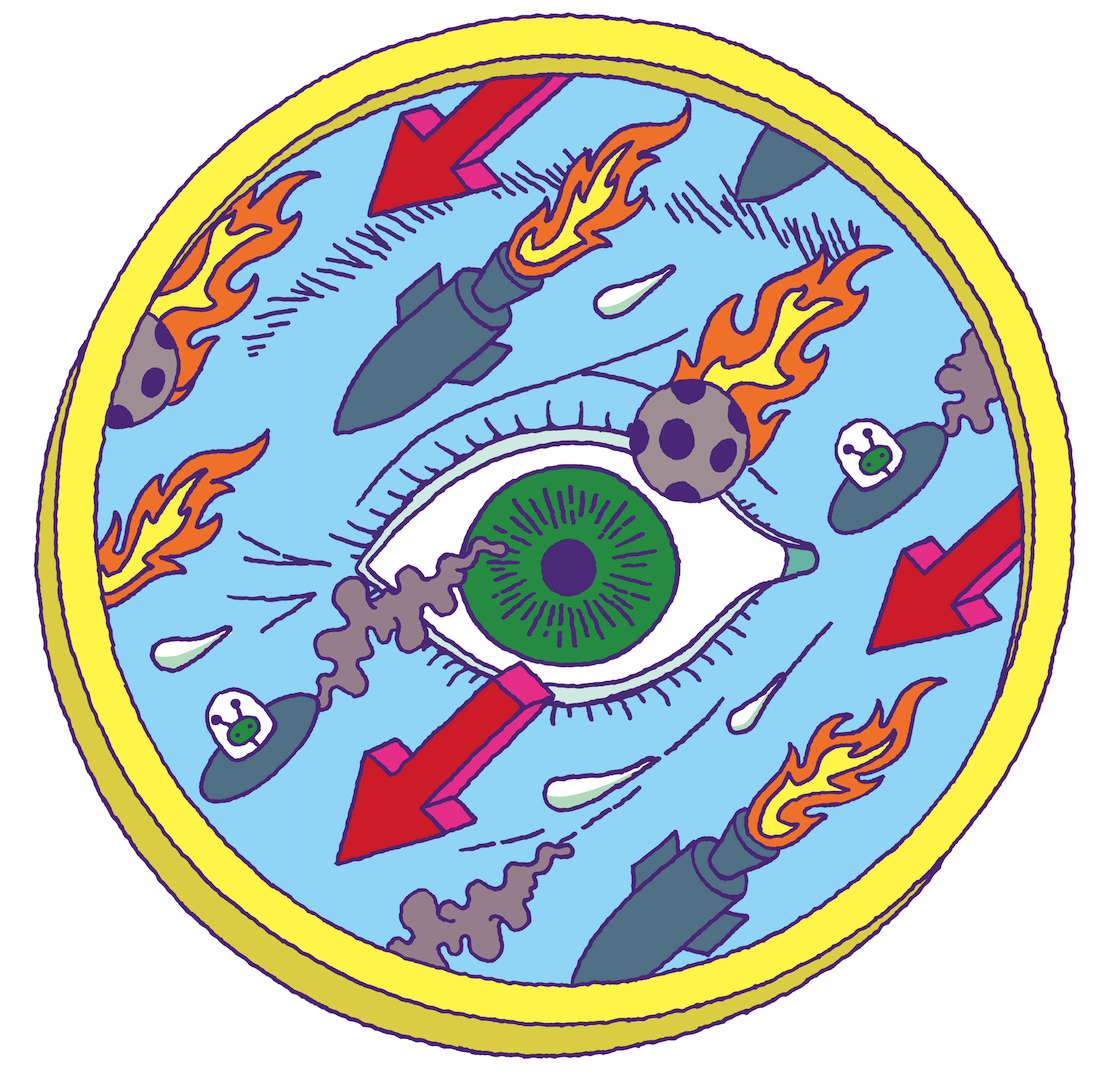
A history of crisis shows that our expectation of normality is an illusion we would be better off without.
The idea of an operational “normal” is a creation of our minds. It is our mental pursuit of equilibrium and structure in a dynamic world.
We like to think of wars, geopolitical friction, political upheaval, financial collapses, speculative busts, technological disruption, corporate bankruptcies and many other high-impact events as “crises” that disrupt “normal” business operations. But a normal or equilibrium state we imagine may be an illusion, one that helps reduce our cognitive load. A careful review of the historical record suggests a continuously changing system. Disruptions in an interconnected world are not an exception to a stable operating environment. They are the operating environment in a world that is volatile, uncertain, complex and ambiguous.
We looked back 50 years to 1976, analyzing each year, and every year had at least one “crisis” that impacted business. Sample any three-year period and you will discover a plethora of crises. Take, for example, the years 1979 to 1981: 1979 saw the second oil shock, the Iranian revolution, the Soviet invasion of Afghanistan, and the Three Mile Island nuclear reactor accident. The next year saw the Iran-Iraq war, the Volcker Fed tightening interest rates and triggering a US recession, and ongoing Cold War tension. The year after that saw the first reported cases of what would become known as AIDS, a spike in US unemployment and the beginnings of the Latin American debt crisis. Three successive years, numerous exogenous shocks, all set against the backdrop of dynamic technological advance and industry disruption.
A sample of years within this 50-year period finds many other instances of significant, and often multiple exogenous, crises per year. In addition to those of 1979–1981, we find: 1987, US stock market crash (“Black Monday”); 1989, Fall of the Berlin Wall and collapse of Eastern European Communist regimes, Tiananmen Square and the continued US Savings & Loan crisis; 1997, the Asian financial crisis with cascading corporate and bank failures; 2001 to 2003 included the 9/11 attacks, war in Afghanistan, the bursting of the dotcom bubble, the Enron and WorldCom bankruptcies, the US anthrax attacks, the invasion of Iraq and SARS; 2008 to 2010 saw the Lehman Brothers bankruptcy, the Great Recession, TARP and the Arab Spring; 2020 to 2021 was the so-called COVID “polycrisis” period; and the current period of global hostilities that began with Russia’s 2022 invasion of Ukraine, in which the Russia-China-North Korea-Iran alliance deepened, geopolitical trade tension increased, and the Iran conflict arose. Even excluding these more momentous 19 years, we still find frequent exogenous crises.
We can generalize the impacts over the last 50 years into eight “crisis” eras:
- The Energy, Stagflation, Cold War Crisis Era (1976–1980)
- The Cold War Endgame, Monetary Shock and Debt Crisis Era (1981–1989)
- The Post-Cold War Transition Crisis Era (1990–1999)
- The Globalization, Internet and Terror Crisis Era (2000–2006)
- The Great Financial & Debt Crisis Era (2007–2012)
- The Populism and Fragmentation Crisis Era (2013–2019)
- The COVID Polycrisis Era (2020–2021)
- The Ukraine and Iran Conflicts Crisis Era (2022 to Present)
The goal of this analysis is to help leadership teams see that any given seven-year CEO tenure is highly likely to manage through wars, financial crises, recessions, election shocks and many other exogenous events that materially impact operations. Over the past 50 years, it is impossible to find seven consecutive years without a major crisis. What we think of as “crisis” is normal human history.
A skeptic could argue that some of these “crises” were geographically limited, not global, and that some may not have been disruptive to businesses across sectors. The first critique could apply before globalization and the advent of the internet, after which geographically disparate activities became much more tightly connected. This means too that there are many second- and third-order effects, causing crises to compound, as they did in the COVID Polycrisis Era (2020–2021).
This analysis does not include as “crises” major, disruptive, technological advances or significant social movements. These drive considerable change and may stress an organization over years, but they are forces more than events, though ones that can still elicit a near-crisis response.
The crises listed are exogenous shocks, generally outside a company’s immediate control. Organizations also regularly experience crises within their organizations, though these are more difficult to measure, because not all are well-reported and captured in the historical record.
By avoiding the “normal” versus “crisis” dichotomy, we can better understand, accept and navigate the world around us. Dispensing with the illusion of normal operations and accepting change frees us to build and execute strategy, but know that we will be required to improvise, adapt and overcome. The Prussian military leader Helmuth von Moltke famously wrote that “no plan survives contact with the enemy.” It is also true that no plan survives contact with change.
Meet the authors
-

Partner
Washington DC
Robert is a Partner, data-driven strategist, and futurist in Brunswick’s Washington office.
You might also like

Oscar Munoz
The New Age of Connectivity