
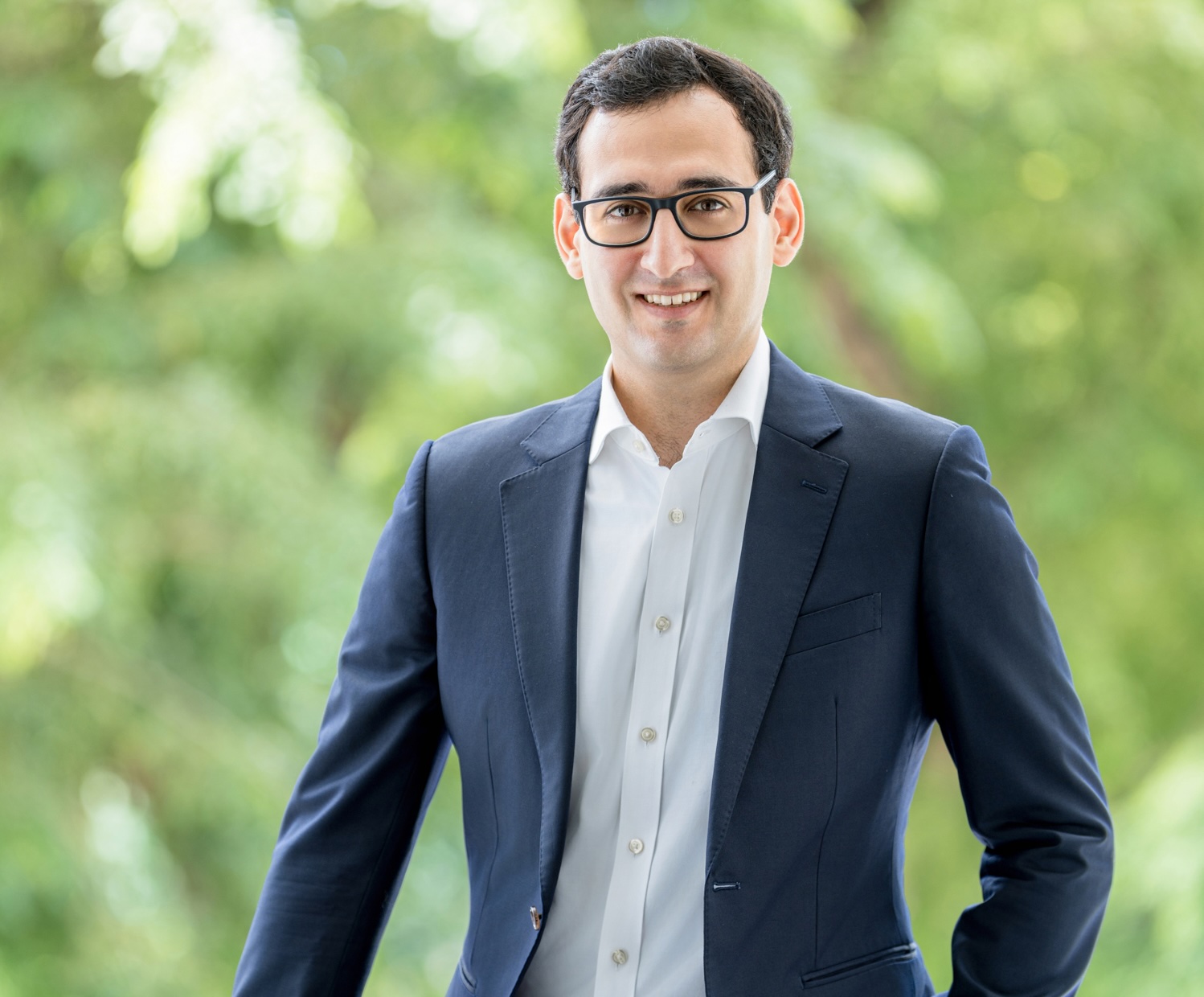
The future of sustainability lies in its benefit to core business strategy, says Schneider Electric’s Sorouch Kheradmand.
Companies may have been quieter about climate and environmental issues in public in recent months. Yet, among both practitioners and decision-makers, sustainability is increasingly considered in terms of value chain risk and opportunity.
We spoke with Sorouch Kheradmand, who is Global Head of Sustainability at Schneider Electric, the Paris-based energy technology company that has for years been a strong proponent of sustainability as a value driver and differentiator. Kheradmand joined Schneider Electric, an international business of now over 160,000 employees, more than a decade ago and runs sustainability programs across the organizaton. In that time, he held leadership positions throughout Schneider Electric’s global operations, which gave him a deep understanding of the demands of the business and its strategy.
In a recent interview, he says the business value of sustainability is greatly underestimated, offering a opportunities from product innovation and brand growth to future-proofed business models.
The talk around sustainability is increasingly shifting to how it is driving business value. Schneider Electric has been on that journey for some time. How has the mission changed?
Today, there seems to be a kind of a winter in sustainability. We see that with the latest elections, some regions are slowing down with their sustainability ambitions. But from the lens of people working in sustainability, it can be a blessing rather than a hurdle. We’re able to move past the hype to focus on actions that drive outcomes that are as beneficial for business as for the planet. And I believe that’s how you drive systemic and long-term change—sustainable change, you might say.
Climate change and planetary boundaries should not be ad hoc topics. They are intrinsic risks—to your business and your operating model. We’re going to face a world where those risks increasingly rise to represent a new normal. This is what I call the net-zero world. A world where companies need to rethink their model to reduce exposure to the consequences of climate change, like resource availability.
As a CEO, your fiduciary duty is to ensure the company is creating value in the long term, so understanding those trends and including them as an integral part of your strategy is essential. Not only in the way you operate, but also in the value you can provide to customers.
Let’s take a concrete example: Aluminum, copper, lithium, and other metals and minerals are critical in our industry. As highlighted by McKinsey in last year’s industry report, copper demand is growing twice as fast as supply, with demand expected to outstrip supply by 2030. The same goes for other critical minerals. If you are a business leader and one or several of these resources are a key part of your profit model, you should look into that issue, right?
At Schneider Electric we started a circular economy initiative where we take back, repack, refurbish or extend the lifespan of our equipment. This provides new business avenues and helps us reduce our reliance on raw materials particularly as tensions in the supply chain increase. It’s a strategic business decision that proves profitable for the long term.
That is precisely why going beyond sustainability as a certification exercise is essential. You do what business people do, which is solving issues and creating profits by being customer-focused and creative. This builds an edge for long-term competitiveness.
“You have activists on one side and businesses on the other. This presents a risk that both sides will miss opportunities because they don’t speak the same language.”
Can you give an example of a program or an innovation that has helped in pursuing your sustainability goals that you can also link to share price performance over time?
We are at the juncture of several trends that will be defining our future: investment in data centers for AI and the need for energy to power it; electricity demand for electric vehicles and urbanization; the rise of digital to model and manage business and asset performance; and the ability to deliver while taking into account planetary boundaries.
We’ve built a portfolio through the years that positions us to respond to those trends with a well-defined value proposition: energy technology for efficiency and sustainability. All of that while really trying to understand what different stakeholders and investors are looking for to bring undisputable value.
One thing they look at is the total cost of ownership of their assets, and how they can optimize that. And they see that it is not something unrelated to sustainability. Making good use of the resources you purchase, as well as making sure that what you produce is actually optimized, with wastes minimized, is the basic playbook of running efficient and cost effective operations, and running a more resilient and more sustainable business.
The potential for us is to look into how we can advise our customers, anticipate those changes and make decisions accordingly, so that they understand why they invest in some technologies and what they can expect from them in a way that is tangible, measurable and replicable. We want to deliver that promise. But you can’t lose sight of being really strict and focused on the delivery.
In the end, the market is not going to wait for you. The current share price that you see is a testament to our capacity to execute in line with what we announced to the markets. We successfully positioned ourselves at the intersection of those mega trends—the latest one being AI.
How do you see Schneider Electric’s role in helping to ensure the benefit of AI can be unlocked in a way that is more sustainable and resilient?
If you look at AI today, there is an investment surge and a tremendous need for power. You have projects everywhere coming onto the grid. AI alone is expected to consume 945 terawatt hours of energy by 2030, which is roughly the equivalent of what a country like Japan consumes in a single year.
We obviously have several roles here. We provide the equipment that enables safe and reliable delivery of energy into the data centers. But on top of that, we also offer solutions that support reducing the operating costs of running a data center with support from design to operations and maintenance.
The data center industry has always been best in class in the way it creates and manages its assets because the business case for energy reliability and efficiency is so clear. In addition to energy availability, cooling is a major topic that drives energy usage, but also asset longevity and performance, hence the importance of heat management, energy efficient cooling and so on.
Every data center has a different profile with different access to energy, renewable resources, or cooling potential. You can imagine a data center operating in Norway will need different cooling than one operating in Thailand. Likely, grid readiness and infrastructure will be very different between what you can find in Europe or China and what you would face in Indonesia or the Philippines. In those cases renewables, distributed energy with micro grids, battery systems, and so on, can be part of the solution—solving several issues in one go.
There’s a lot of progress in optimization strategies using Gen AI, offering new ways to learn, optimize, automate, solve complex issues, et cetera. The key is finding the right use cases, including for sustainability-related issues, and finding the right AI tools to run it. We can’t overlook the pitfalls—every AI has its own biases, and a person or legal entity will always be the ones bearing the risk, so proper governance and processes are required to make the most of it with long-term value creation in mind.
“Regulations are useful, but the business case we’re able to build should now speak for itself.”
When you look at the policy and investment landscape, is there a particular change or opportunity that Schneider Electric is advocating for, to unlock the value you just described?
There is a sort of consensus in the industry and among sustainability professionals that you need to have regulations to push behaviors. I think this is true to some extent. Regulations do help, and to be fair, most large companies already report accordingly.
Indeed, by asking companies to disclose their data, it increases awareness of the risks they’re facing. With this detailed understanding, the data can serve to build plans that help companies reduce their risk surface—and in some cases, their costs too.
However, reporting alone does not suffice. The good news is that sustainability efforts have matured considerably. We are no longer at the stage where we are just experimenting or trying to justify a business case for sustainable transformation. And importantly, a business case that is already profitable today is very likely to be even more profitable as climate change progresses or resource scarcity becomes more common.
We collectively have a deeper understanding and can anticipate outcomes from sustainable transformation, which we can then tie to financial outcomes, be it in the reduction of costs or reliance on volatile sources of energy or supply.
Regulations are useful, but the business case we’re able to build should now speak for itself. In that sense, there is still a need to educate and bring a new narrative around sustainability that reflects this. Being sustainable helps you reduce your costs, improve access to financing (with green bonds), reduce your risk profile, improve your resilience and position you to better serve customers when they’re faced with similar challenges. As a company, it’s something that deserves to be looked at as an opportunity, rather than a box tick only to satisfy a particular regulation.
Do you have any thoughts on the future of the CSO role?
Once you start looking at climate or planetary boundaries as a risk factor for your business and for customers over the next five to 10 years, then you see that the role of a CSO can be much more than what it is generally considered to be today. I believe sustainability should not be its own silo of experts looking only into the company’s footprint or reporting. It should be embedded in the strategy of the company, moving from compliance and certifications to business integration and competitive advantage.
Where the CSO has true potential is in supporting business strategy. First, how you position your company to reduce your risks with regards to climate change. Second, determining the challenges your customers will face and how you can support them, while also generating new growth avenues. And lastly, looking at what innovations and new business models you can create that prepare the profit pools of tomorrow.
Is there anything we want to bring up that we haven’t discussed?
Sustainability is a valuable conversation and one that highlights collaboration rather than competition. But I think we also need to speak the language of business. You have activists on one side and businesses on the other. This presents a risk that both sides will miss opportunities because they don’t speak the same language. Activists are good for awareness, but businesses are the ones with the money and resources. I think we need to reconcile those two, and that’s why I think we need more and more people who understand what’s at stake and talk the language of business, so that the agenda moves on.
Sustainability also has benefits that are intangible but should not be underestimated. It’s an opportunity to build new company narratives that attract talent and build a more purposeful brand that resonates with employees, customers and the market.
Meet the authors
-
Partner
New York
Jordan leads the U.S. Sustainable Business practice’s work with global companies on their most consequential challenges in a new era for value-creating sustainability. -

Account Director
Chicago
Anna is an Account Director in the Sustainable Business practice. She is based in Chicago.
You might also like

Is Optimism a Good Thing?