
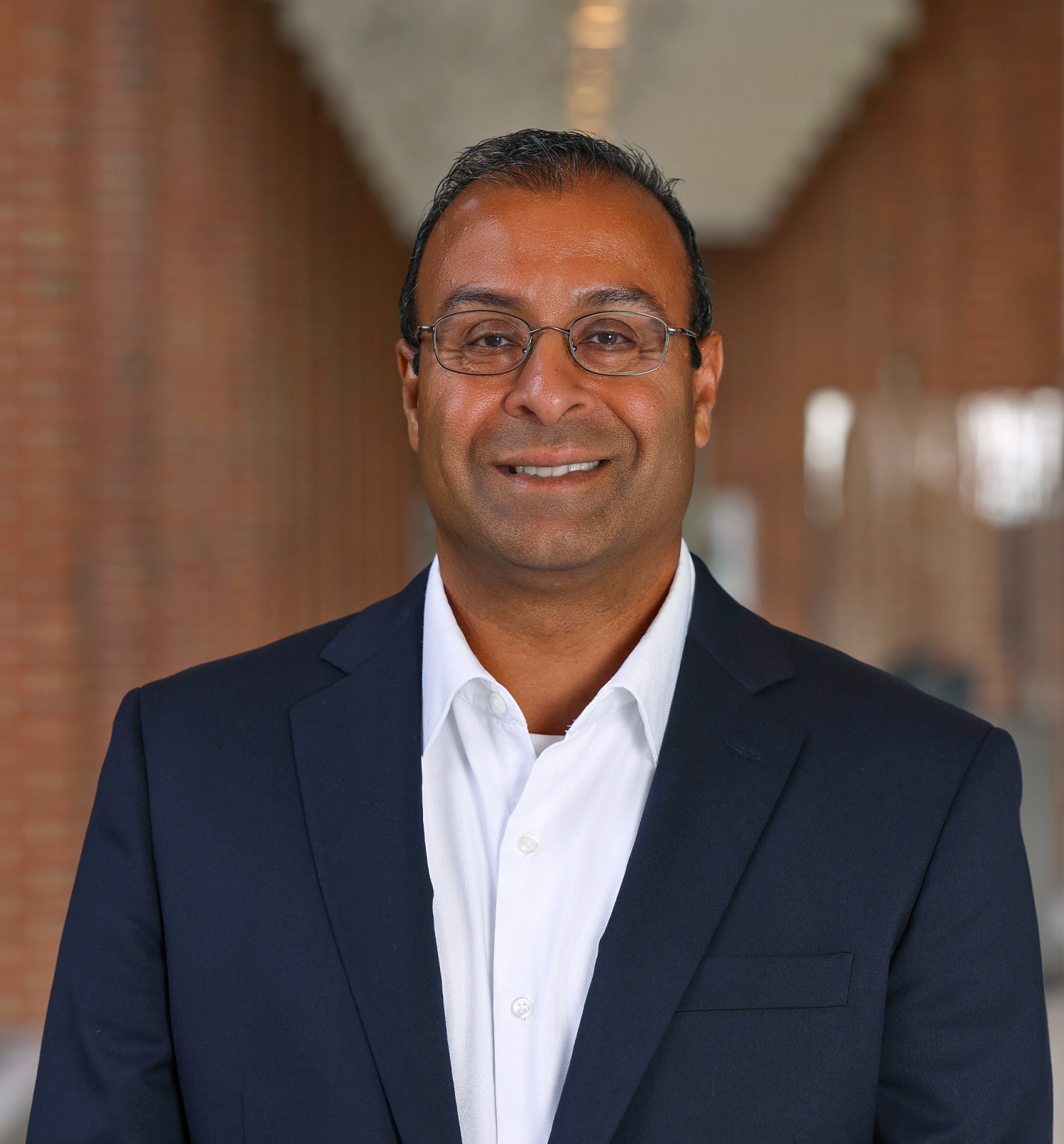
Merck’s Head of Corporate Development and BD&L Sunil Patel on his almost three decades at the company and what it means to him to stay true to Merck.
Sunil Patel joined Merck in 1998, fresh from getting his MBA from Carnegie Mellon University’s Tepper School of Business. Having gotten his undergraduate degree in pharmacy from Purdue University, he wanted to get closer to the pharmaceutical industry and had a desire to make a bigger impact on being part of the system.
“As I was choosing where to go, I was drawn to come to Merck,” he says. “Because—and it’s resonated with me every day that I’ve worked here—it’s a company that puts innovation and patients first. It’s a company that lives by their model. If you put patients at the center of everything you do, the profits will follow. It struck a real chord with me.”
Throughout his 28 years with the company, he held positions across commercial marketing, licensing and business development. Today, Patel is Senior Vice President, Head of Corporate Development and Business Development & Licensing.
In our recent discussion, it’s clear how proud Patel is not only to have spent his career at Merck, but of the culture and values the company has continued to hold. He reflects on what it means for the company to stay true to themselves, how they maximize innovation and his favorite deal.
You’ve been at Merck for a long time, how has your career evolved within the company?
I would say that over my career, this is the best time to be in pharma. The evolution of where science is going and the speed at which breakthroughs are happening is unprecedented.
My first role at Merck, and probably a quarter of my career, was on the commercial side. Being in commercial was a great experience because it helped me understand how to take all the healthcare information and the drug data and convey it not only to the providers but also the patients. It gave me a really strong foundation in my career.
But primarily, I’ve been in business development. In my role as head of business development, I’ve got a front-row seat to some of that amazing science that’s happening. I’m in charge of the end-to-end of business development for Merck, from finding new scientific opportunities, to negotiating them, to bringing them in. The bulk of what I do today is really trying to bring innovative science into Merck. It lets us connect deeply with the entire ecosystem throughout the world. Our remit isn’t just the US. Science happens everywhere, so we’re scouring the globe to bring the best science in.
“When we bring a medicine to the market, we’re changing lives, we’re saving lives. We’re changing how health systems can engage with their communities. We’re bringing medicines that can fundamentally improve the lives of people around the world. And that is what’s so great about this business.”
What’s something about pharma that you think people outside of the industry don’t realize?
We deploy billions of dollars for R&D and external investments, and many of those investments are binary in nature. The medicine is going to work or it’s not. And we don’t get to make a version 2.0 or 3.0 of a medicine. We have to deploy our capital to reinvent ourselves every 10 to 13 years as the medicines go off patent. That’s the challenge.
We believe that we need to be focused on the long term and deploy capital for the long term. We are unafraid to deploy large sums of capital because we know the end outcome is what the world needs. When we bring a medicine to the market, we’re changing lives, we’re saving lives. We’re changing how health systems can engage with their communities. We’re bringing medicines that can fundamentally improve the lives of people around the world. And that is what’s so great about this business.
How would you describe your approach or your philosophy to business development and how does that fit into Merck?
Whenever I get asked about our business development strategy, I always say, “I don’t have a business development strategy. I have a Merck strategy.”
Our strategy is a One Pipeline approach and that is to bring in the best external medicines to complement our internal discovery efforts. We look for areas where there’s a high unmet medical need, where people still have short lifespans. And then we look to meet that with a medicine that we think can have a profound impact on those patients’ lives.
When we bought Acceleron Pharmaceuticals for $11.5 billion, that drug was only in phase 3. People with pulmonary hypertension, predominantly women, many of them had less than five years life expectancy. We looked at this and said, “Here’s an area of high unmet medical need. Here’s a new area of biology that hasn’t been tested.”
We are very robust when we do diligence. And when we asked ourselves, “Is this a Merck drug?” we said yes. We also asked, “Does society expect Merck to bring a product like this forward?” And our answer was also yes. So, we think it’s right, not just for the executive team, the BD team, the shareholders, the employees, but for the patients.
That is a favorite deal of mine because it just reaffirms to all of Merck who we are.
We understood that this could be binary in nature. Within 12 months, if this drug didn’t work, we were going to have to write off $11.5 billion, which would have been the largest pre-phase 3, pre-commercial stage deal done in history. But Rob Davis [Chair and CEO] and Dean Li, they sat down and looked us all in the eye, and said, “These are the bets Merck is supposed to make. If we’re going to be a science company, we cannot be afraid to bet on science.”
It was a complete alignment with our executive team and our board. That conviction resonates all the way down to your newest hire at the company. That’s why people come to work here. So that makes it easier to make these decisions.
How do you work with Dean Li, Merck’s Chief of R&D, to decide how to approach business development and partnerships?
With Dean, it’s a seamless connection. Our scientists want to bring great medicines to market. That’s all they want to do. And they really do not care whether it’s internal or external innovation. He and I are in constant communication about how we can keep advancing Merck’s scientific heritage and bring the best science in. We’re not short-term focused. And neither is any of the executive team. This is a long-term game.
Merck has been around for close to 140 years. We see it through the lens of being around for decades, if not centuries more.
“There’s a saying we used to use at Merck that I think is still timely: We’re less than 1% of the world’s research. We can’t do it alone to achieve our goal. We’re always actively having to engage in the community.”
How does the BD team work with the discovery group?
We sit in the same ecosystem as our scientists. For example, I have a team sitting in San Francisco working side by side with scientists to make sure that we are bringing the best science forward. We actively want our scientists out engaging in the community, the biotech community, in academia, for them to tell us what they see that is exciting.
It’s not just a one-group game here. Everybody at Merck is encouraged to pursue science. All of us being together, interacting every day, we understand what we’re looking for to move Merck forward. We’re actively every day integrating with our scientists.
That has no geographical boundaries. For us, it’s pursuing the best science no matter where it is. Right now, we have teams in headquarters, in San Francisco, in Cambridge, Massachusetts; we have a team in Europe; and we have a group also in Asia-Pacific.
China’s been a great source of innovation for Merck. We have a tremendous relationship with Kelun-Biotech Biopharmaceuticals. And that’s brought us our TROP2 antibody-drug conjugate [targeted cancer therapy], which we think is going to have a dramatic impact on patients’ lives. It’s one of our largest programs to date. We’ve also done collaborations in the GLP space [treating type-2 diabetes] and immunology in China.
How would you describe the current deal-making/BD environment globally, and how has it changed recently?
Over large time periods, the environment fundamentally doesn’t change because we always need to bring external scientific innovation in. There’s a saying we used to use at Merck that I think is still timely: We’re less than 1% of the world’s research. We can’t do it alone to achieve our goal. We’re always actively having to engage in the community.
You need an active and working biotech community, and capital markets need to work. Entrepreneurs wanting to take a shot on new science or academic groups wanting to spin something out—they need funding, so we need the VC markets to work, we need the IP markets to work. People need to take capital risk to bring scientific innovation.
As we’re looking to translate science and develop it at scale, we need all parts of the ecosystem to work for us to do that, to achieve our goals.
If you were starting your career today, what skills or experiences would you prioritize? And what have you learned over the years that you think would be good for people who are coming up to know?
I would say, ask as many questions to as many people as you can find in this industry because there’s always somebody who’s going to teach you. And you have to approach each day with a burning level of curiosity.
The other thing that is very important in this business: We’re dealing with very complex scientific information, and you have to be able to understand how to speak to that scientific information to all levels of the company, management and your board of directors. The discussion you have in a scientific meeting cannot be the same discussion you have with your executive team and cannot be the same discussion you have with your board of directors. It’s really understanding how to synthesize complex information to different audiences. That’s probably the main skill I’d prioritize, how to sit shoulder to shoulder with the scientists, then move to the executive team, and then move that information to your board of directors, all while telling the same information but in different forms of communication.
I would also say, the one thing we’ve learned when we’ve looked at our deals, is we feel we’ve always stayed true to ourselves. For Merck, we know the investments we make, whether it’s for internal or external development, they’re very high-risk bets. But they can have profound outcomes. And we challenge ourselves to never deviate from that. Because when you do deviate from that and you try to be something you’re not—maybe willing to take bets that are middle of the road, that aren’t going to be so high science because we know they can come through—those are the ones that we think usually wind up as big mistakes for Merck.
We are a high-science company that will take bets that will sometimes work and sometimes won’t. But when they do work, we will have outsized returns: not only for our shareholders, but for society.
Meet the authors
-
Director
New York
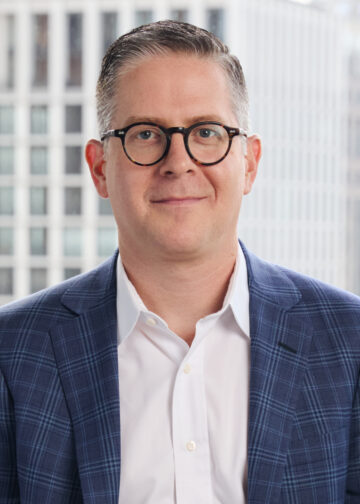
Jared is a Director on Brunswick’s Global Healthcare & Life Sciences team, where he advises clients on narrative development, investor engagement, media relations, and crisis.
You might also like

Intelligence Report
Rewiring America’s Retirement