In conversation with Brunswick’s Jamil Fahmy, MDLBEAST CEO Ramadan Alharatani and COO Talal Albahiti describe turning Saudi Arabia’s live music moment into a music economy.
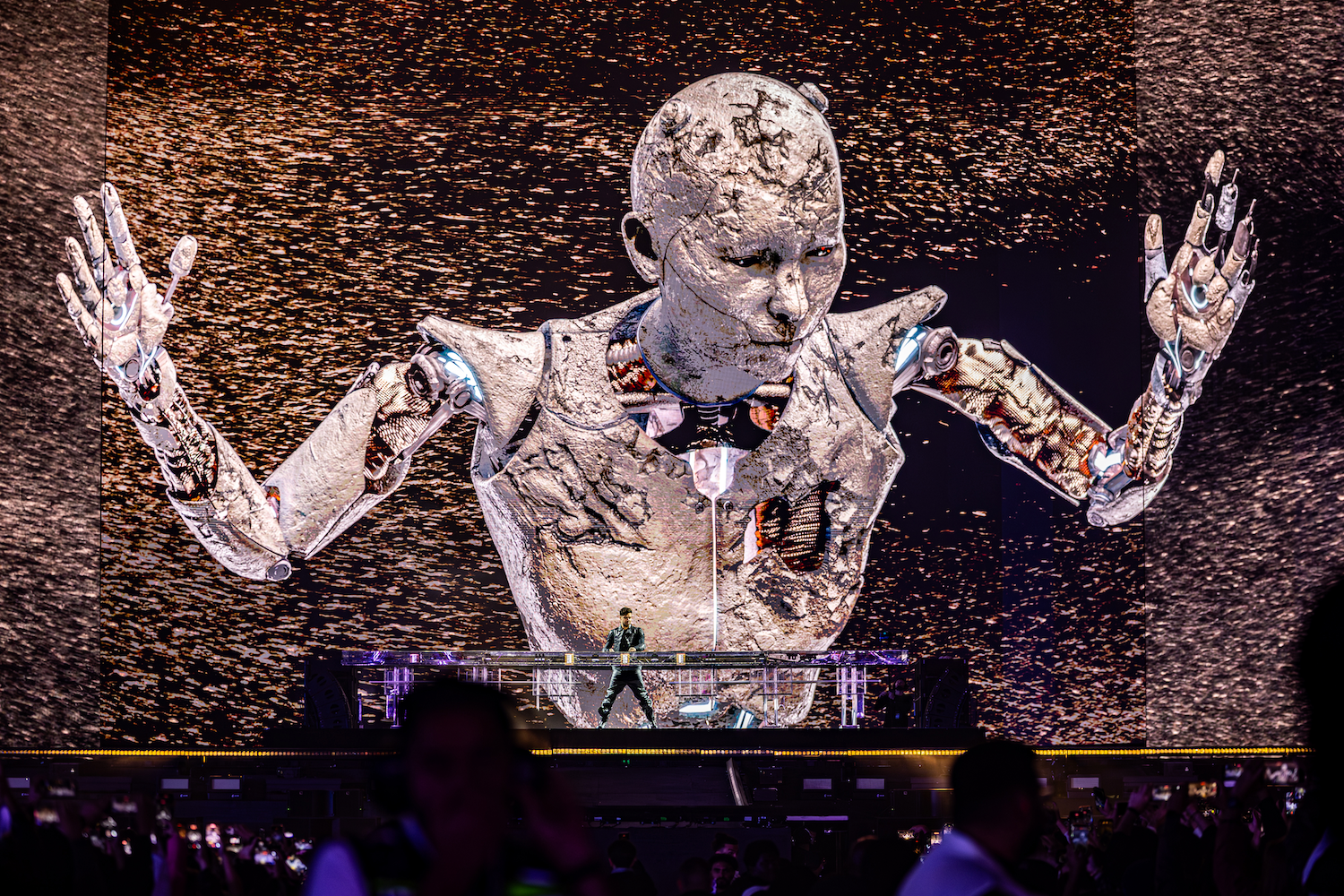
In December 2025, in a desert clearing outside Riyadh, hundreds of thousands of fans gathered across three nights for what has become the largest music festival in the Middle East. Post Malone, Cardi B, Calvin Harris and Swedish House Mafia headlined. Pitbull, Halsey, Tyla and many others, including regional names like Palestinian DJ Sama’ Abdulhadi, filled out a bill of more than 200 artists across 14 stages. The festival’s main stage, Big Beast, holds the Guinness World Record for the largest continuous LED screen.
None of this existed five years earlier.
This is MDLBEAST Soundstorm, the festival that has put Saudi Arabia on the global live music map. Its first edition in 2019 came just three years after the creation of the General Entertainment Authority opened the Kingdom’s public sphere to commercial entertainment—and the crescendo continues. In addition to the festival itself, MDLBEAST now operates a record label, an artist management arm, the regional industry conference XP Music Futures, a 24-hour radio station, a hospitality portfolio anchored by Beast House and the Pool Club, and an advisory unit that consults non-music companies on how to embed music into their brands. Acts from its label have begun reaching audiences far beyond the Kingdom: Egyptian artist Tul8te, who performs in a mask, now sells out shows in London and New York. Saudi rappers like Slow Moe and Klash share festival lineups with Playboi Carti at home.
The Middle East and North Africa represent the fastest-growing music market in the world, with revenue in 2024 increasing over 22% over the previous year, according to a report from the International Federation of the Phonographic Industry. Global artist tours now schedule five or six regional stops where they previously included none. And as Saudi Arabia prepares to host Expo 2030 and the 2034 FIFA World Cup, music has moved from a question of permissibility to a strategic pillar for how the country projects itself globally.
Behind much of this sits MDLBEAST, founded in 2019 by Ramadan Alharatani and Talal Albahiti. CEO Alharatani brings the institution-building lens—ecosystems, regulators, infrastructure, long-term sustainability. Albahiti, Chief Operating Officer and Head of Music, has a background as both a management consultant and a DJ rooted in the Kingdom’s once-underground music scene, a history that allows him to read both spreadsheets and dance floors.
Recently, the two sat down with Brunswick’s Jamil Fahmy. Their conversation moved past the now-familiar story of Saudi opening up, and into what comes next: the harder work of turning a visible moment into a viable, exportable music economy.
What do people outside Saudi tend to misunderstand about the music scene here?
Talal Albahiti: There’s a lot of misconception, and most of it shifts the moment someone arrives and experiences it. The biggest one is that music culture in Saudi suddenly appeared in 2019. It didn’t. Music has always existed here—in communities, in homes, at weddings, in the underground youth scene. What changed in 2019 was visibility and legitimacy. Suddenly there were platforms, venues and investment. Artists could actually build a creative career and earn from it. Fragmented communities started connecting into a broader ecosystem.
People outside the region tend to assume Saudi simply “decided” to allow music in public—and lump it in with women being allowed to drive, or cinemas returning. That’s not the story. Music has been rooted in Saudi culture long before 2019. We just gave it a stage.
Ramadan Alharatani: We had a strong launching pad because of that grassroots foundation. You already had musicians and venues—but the venues were private. What changed was the move to regulated venues that ensure safety and guest experience. Even our first event was built around a local headliner alongside the global names. Five years on, that launch pad has become an industry.
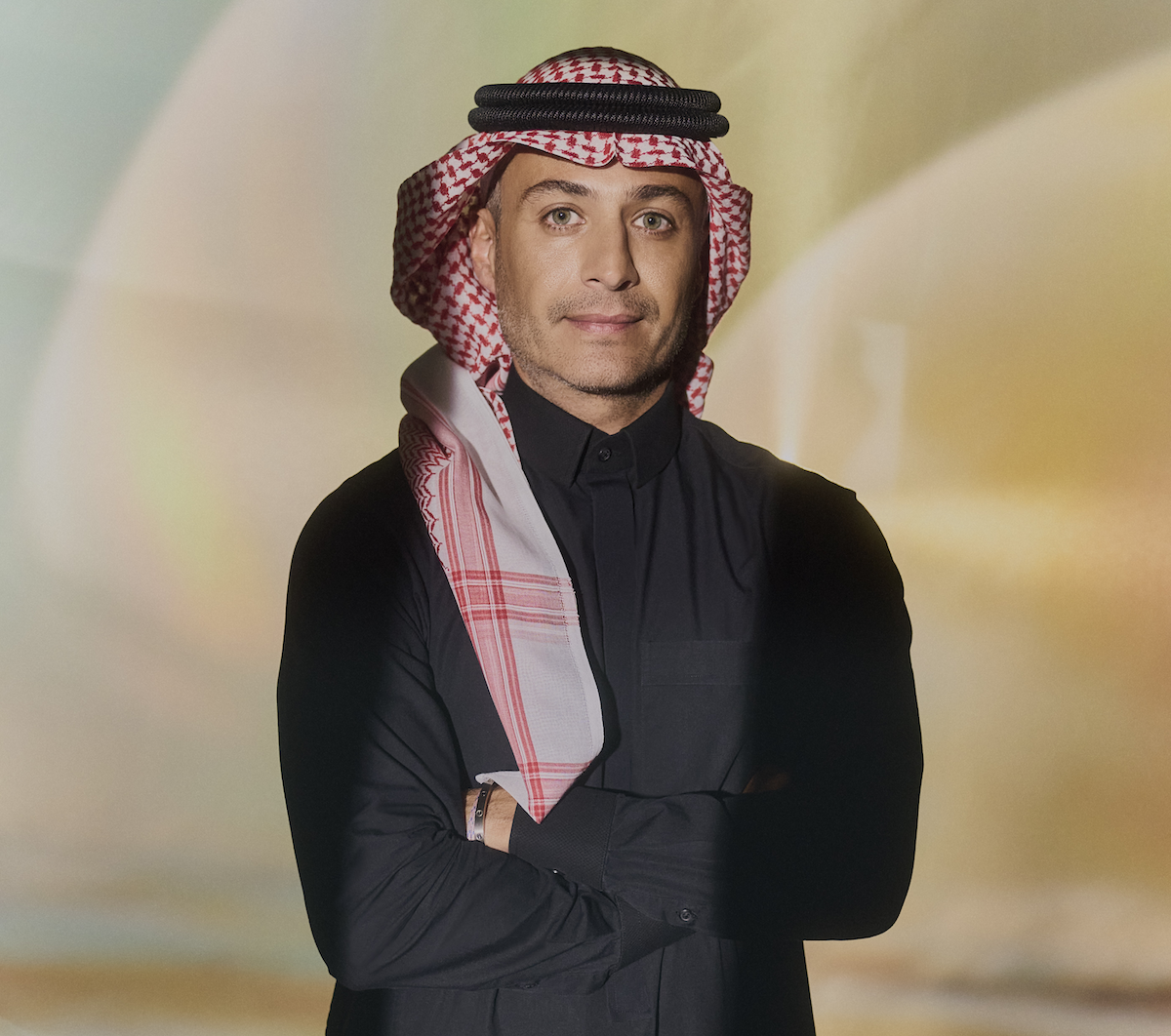
“We don’t have a choice between local and international. We have to do both. And what’s produced locally is what will keep the calendar fresh, year after year, for residents and visitors.”
Ramadan Alharatani, CEO, MDLBEAST
What moments define for you what MDLBEAST has become?
RA: What I see now, five years in, isn’t really about the mega-events. The defining moments are independent Saudi artists being booked at major festivals around the world. People leaving corporate jobs to pursue music full time. Investors creating venues and content. Local talent shaping the subculture of Saudi today. That’s the value—what’s happening beyond the headlines.
TA: Every product we run is an IP we built ourselves—Soundstorm, our flagship event; A Thousand and One, our techno-leaning festival; and XP Music Futures, our industry conference. None of it is something we bought off the shelf. These were all cooked in our kitchen and delivered to the public, and that’s a big part of what defines what we’ve become. When you see fans buying tickets, investors approaching us, artists wanting to be affiliated with the brand—that’s the exciting part.
Ramadan, you describe the mission as building a creative economy, not just staging events. In practice, what does that require?
RA: No single entity can build a creative economy. You need a broad alignment of education, venues, publishing, regulators, talent development pipelines—all around a common objective. When you host a major event in a city like Riyadh, the impact extends well beyond ticket sales. It’s hotel bookings, travel, tourism, hospitality spend, cultural exchange. We try to measure success more broadly, and over a longer horizon.
Some initiatives don’t return capital quickly. Talent training, our XP Music Futures conference, our grassroots platforms—these are foundational. They build a pipeline that, years from now, produces enough streams, exports and IP to feed back into the creative economy. That’s a long compounding curve, and it requires multiple stakeholders willing to invest in that horizon.
The most successful music industries in the world don’t just produce local stars. They export their culture beyond their borders. Music has no geographic boundaries. We’ve all listened to and sung along to songs in languages we don’t speak. That’s the power of the sector we’re in.
Are there constraints on growth specific to Saudi?
RA: Most of what slows us down is industry-specific, not Saudi-specific. For example, an artist in our part of the world receives around a dollar per thousand streams, while an artist on the same platform elsewhere may earn three. Same artist, same consumption, very different economics. That’s a global industry issue.
Another one is rights infrastructure—the performing rights organizations and publishing systems that allow artists and labels to capture revenue properly. Globally, these are inherited legacy systems. Our opportunity is to build something fit for this time and place, rather than to retrofit. Defining how Saudi handles music rights and regulations is part of the work of the next phase.
Talal, your path is unusual: management consulting and underground DJing. What does the combination give you?
TA: I think of it now as a superpower. Consulting trained me to think about systems, scale, industry development. DJing taught me the opposite side—instinct, energy, human connection. When you play music to a crowd, you learn very quickly that scenes can’t be manufactured purely from strategy. People respond to authenticity. They want to feel represented emotionally and culturally.
My perspective is about connecting structure with culture, protecting the organic energy that makes it meaningful in the first place. Lose that, and the rest doesn’t matter.
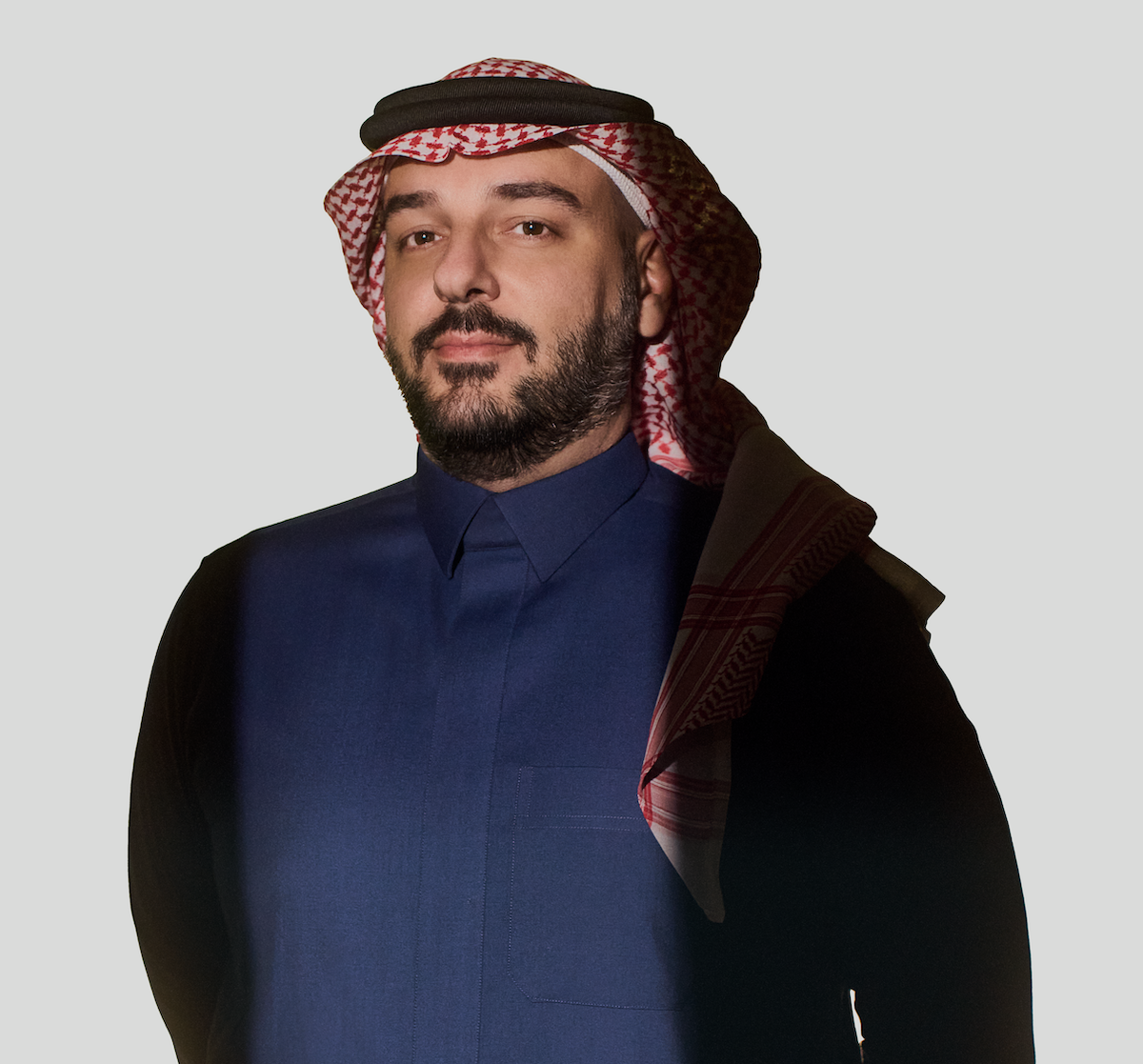
“People outside the region tend to assume Saudi simply ‘decided’ to allow music in public—and lump it in with women being allowed to drive, or cinemas returning. That’s not the story.”
Talal Albahiti, COO, MDLBEAST
Can you give an example where instinct mattered more than the data?
TA: A recent one is a genre that’s been emerging here and across the Gulf called “Hobbeh” music—essentially a Saudi take on hip-hop, with a distinct local flavor. None of the early data justified investing in it. But our people are in those scenes, in those communities—we could feel the energy in the audience and we knew it was going to explode. So we signed artists, developed them, started booking them more aggressively into our events. The crowd reaction spoke louder than the data.
The platforms—TikTok, streaming algorithms—have caught up since. One of the genre’s tracks ended up becoming the soundtrack for Al-Ahli’s championship celebrations in Jeddah. That’s a moment data couldn’t have predicted, and exactly the kind of cross-industry cultural moment that makes the bet worth taking.
How do you scale without losing authenticity?
TA: Part of our responsibility is to create platforms broad enough to accommodate the diversity that already exists. You can hear this on MDLBEAST Radio—we play from many pockets of the community. Whichever frequency you tune into, you should find something you can connect with, whether you’re Saudi, an expatriate living here or just a music fan elsewhere in the world.
Saudi isn’t one community. Each region has its own sound and its own stories. The work is making sure our IPs and platforms reflect that range, rather than flatten it into a single template.
There’s been a clear national strategy of attracting global cultural capital—across sport, music and the arts. How do you balance that against developing local talent?
RA: They complement each other. A sector that runs purely on imports will never sustain itself. The strongest industries in the world built strong domestic scenes first and then exported their culture.
Take Balad Beast, our festival in Al-Balad—Jeddah’s historic UNESCO district. The lineup there is around 70% local. And we’ve seen Saudi artists like Slow-Moe and Klash draw audiences as large as global names like Playboi Carti at the same event. We don’t have a choice between local and international. We have to do both. And what’s produced locally is what will keep the calendar fresh, year after year, for residents and visitors.
Is the growth confined to Saudi, or is it regional?
RA: Dubai and Cairo have launched their own music conferences modeled on XP Music Futures. Neighboring countries are introducing their own mega-festivals. So, you’re seeing a regional spillover that lifts the broader industry. It’s healthy.
We’ve been approached to bring our IPs into other markets in the region. For now, our priority is Saudi. But we’re open to expansion once the fit is clear.
“Music has no geographic boundaries. We’ve all listened to and sung along to songs in languages we don’t speak. That’s the power of the sector we’re in.”
Ramadan Alharatani
Walk us through the business model. How does the company actually generate value?
RA: MDLBEAST sits on three pillars: live, hospitality and music. Live covers our festivals and concerts. Hospitality includes venues like Beast House and the Pool Club, and a former equestrian club we’ve turned into a multi-experience venue in Diriyah—Riyadh’s historic district and another UNESCO World Heritage Site. The music pillar covers the label, publishing and artist services. These three pillars feed each other: We can sign an artist to the label, develop them, book them through our hospitality venues and showcase them at our live events.
TA: There’s a fourth area that connects all three pillars: services. Hotels opening across Saudi now want a sonic identity—what does a guest hear when they arrive at the resort, in the elevator, at the spa? We advise on that. Government entities approach us on venue codes, music IP standards, rights frameworks. Automotive, gaming and destination clients come to us to build music into their brand DNA.
We’ve effectively become a trusted advisor for organizations that want music to be part of their story but don’t have the in-house capability to build it. It’s a category that didn’t really exist here before 2019.
How far is Saudi from a self-sustaining music industry?
RA: Since 2019, the first phase has been the build phase: brand positioning, the conference, label, publishing, ecosystem partners, venue infrastructure, the regulatory side. We’re now in the maturity phase, and in some ways leapfrogging—looking at what other industries elsewhere have done well, but also what they’ve left undone. Success in this next phase will mean a year-round music culture across destinations. Nightlife economies. Smaller venue circuits. That depth is what creates real sustainability.
TA: Things move fast here. We’re not on autopilot yet, but the pace is accelerated. Small and mid-sized events can already be run without state support. With larger events, it still happens that the ambition exceeds what commercial economics alone can carry today. As that gap closes, sustainability follows.
In cities like London, clubbing culture is in decline. Why is nightlife rising here?
TA: People aren’t really chasing “clubs” anymore—they’re chasing experiences. That’s what we focus on. Beast House attracts a like-minded crowd around certain artists and genres. The Pool Club is members-only—exclusive, curated, designed. These aren’t undifferentiated clubs; they’re tightly designed environments around a sound and a community.
There’s another global trend worth noting: Alcohol consumption is dropping. When we started, we assumed we couldn’t sell out without alcohol. We were wrong. Our shows have proven that—and we’re seeing international visitor numbers rise regardless. Globally, “brunch clubbing” and morning sets with coffee are now real categories. Saudi, where the majority of the population is under 30, is well-positioned to lead that shift.
Looking ahead, what’s the ambition? What are you still trying to build?
TA: We’re not chasing scale for its own sake. We’re chasing relevance and sustainability. What we want to build is something that, if Ramadan and I weren’t here anymore, would keep growing—where an artist can make a living being an artist, without needing a day job in a bank or a clinic to pay for it. That’s why XP Music Futures exists: to have those candid conversations with artists, with government, with industry, about what sustainability really requires.
RA: For live events, we want to keep building a diverse portfolio of unique experiences. For hospitality, we want a network of venues that make Saudi cities more vibrant for residents and visitors alike. For music, we’d love to one day see an MDLBEAST artist win a Grammy. That’s the goal.
With Expo 2030 and the 2034 FIFA World Cup ahead, we have roughly a nine-year runway. We have the formula: local context, artist relationships, production know-how and the ability to create viral moments at scale. The opportunity is to use that runway to build something that hasn’t been seen before, alongside those events. We’re grateful for the past five years, and even more excited about the next five.
Meet the authors
-
Partner
Dubai
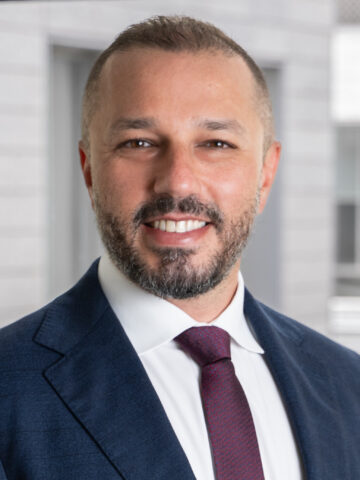
Jamil brings a wealth of experience in advising Middle Eastern and multinational companies on their capital markets, investor relations, and corporate reputation activities.
You might also like
Banking on Entrepreneurs
Lotus Technology and the Road Ahead