

A literary approach to stock analysis, an eye for overlooked signals, and an appreciation for great sports writing has made a star of Gordon Haskett’s Don Bilson.
An item in Don Bilson’s May 13 column asked whether there might be some “bloat” in Pepsi. Barely three months later, news broke that a well-known activist had purchased a $4 billion stake in Pepsi.
“Not every noodle we throw against the wall sticks, but yeah, we nailed Pepsi months before everyone else did,” Bilson says in an interview with the Brunswick Review.
Among those who make their living analyzing stocks for an audience of investors, Don Bilson stands apart. He writes five columns a week at about 2,000 words each, a rate that any writer’s guild would find abusive, except that nobody is driving Bilson except Bilson. He writes first and foremost for his readers. If that sounds obvious, and commonplace—don’t all writers write for their readers?—consider that bank analysts often must tailor their analysis to please or avoid displeasing bank clients, rendering the reader second class. Bilson, on the other hand, writes for Gordon Haskett, a pure research firm. The reader is his client.
If the reader comes first, and the reader’s an investor or hedge fund, a reader will want the column early. Bilson rises at 3 am Eastern to meet a 9:30 am deadline. The column he composes in that time consists of about six items, each rich with fact and analysis. His subject matter is publicly listed companies, some of whom wait anxiously every morning to see if they will get a mention in Bilson’s column.
Information is Bilson’s bread and butter, and he has no special access to it. He gathers his research from the same sources available to the public at large, including his readers. His specialty is seeing significance, connections and red flags that others miss.
At Gordon Haskett, Bilson is Head of Event-Driven Research, explaining why his column is known as EDR. A category of Bilson’s own making, he describes it as broader than what’s known as special-situations research. “Event-driven includes everything from M&A and shareholder activism, to corporate restructurings, to big dislocations in the stock, to management changes, changes in shareholder roster, and more,” says Bilson.
A former investigative journalist in Washington, DC, Bilson started the column almost 15 years ago, at dealReporter, then brought it with him two years later to Gordon Haskett. “We have 200 paying client organizations but many readers at each, so I think the overall distribution list is close to 3,000 people,” says Bilson. “We know who opens it and who reads it through. A significant percentage read it through every day. The largest percentage reads three columns a week or 12 a month. What shows how well we’re doing is the renewal rate. Nobody ever cancels.”
Mainstream publications have made no secret of their admiration for Bilson. A 2019 Barron’s profile, noting that Bilson is a frequent source for the publication, praised him for a set of “stock-picking criteria you wouldn’t expect.”
According to Donna Anderson, a long-time EDR reader who recently retired as Head of Governance at T. Rowe Price, Bilson brings to mind the plot of a 1990 Hollywood thriller.
“Remember the scene in Hunt for Red October where there’s a tracking chart of submarines clustered in the North Sea, and Alec Baldwin asks, ‘Hey, what’s this boat thousands of miles away on its own?’ In the end, that boat, the Dallas, saves the day,” she told the Review. “Don Bilson is the Dallas. He’s patrolling the same ocean as other event-driven analysts, but because of his pattern recognition genius, his bets/themes are just off in a different quadrant.”
Knowing there’s competition for investor attention, Bilson spices his column with relevant references to sports and popular culture—which is exactly why Anderson used a Hollywood analogy to describe him. “Don is always weaving in references to culture. Never anything cliché or easy. Always something selected just for the connoisseurs among us.”
To anyone familiar with a journalist known as “The Sports Guy”—Bill Simmons—the inspiration for Bilson’s column will be apparent. Simmons, a columnist turned podcaster turned pop-culture celebrity, found great success by lacing his sports commentary with entertainment references and reviews. He also always wrote from the point of view of a fan in the seats, not an insider in the boardroom.
When he finds errors in his coverage, Bilson blows the whistle. “We’re flagging ourselves being offsides last Friday when we mentioned the nomination deadline at PEP is February 2 when it is really February 6,” he wrote in an October column.
In an interview with Bilson, Brunswick Partner Jonathan Doorley recalled with a grin once receiving a frantic call from a client who had just read Bilson’s analysis of his company’s strategy during a pending transaction: “He said, ‘Who the hell is Don Bilson and how is he listening to my thoughts?’”
Bilson’s response: “Everything we write is traceable to a publicly disclosed piece of information, whether that is an earnings release, or something said on an earnings call, or something appearing in a press release or a public filing. It might be an obscure filing that nobody else is looking for, but it’s out there.
“We’re tracking corporate jets. Again, that is publicly available information. We might be the only ones using it, but this is not hedge fund X gets a wink from a CFO on a road show or something like that, calls us up, and we say that the company is leaning in this direction or that direction.”
More activists than public company executives are subscribers to EDR. Should companies reading your research assume that your views reflect those of the activist targeting them?
No. We will talk to the activists after they disclose their position to make sure that we have their full story, and what their full thesis is. But this is not a sounding board for the activist community. In certain circumstances, we’ve taken a position that I know has left the activist pretty disappointed. I’m not a sounding board or mouthpiece for one group or another. One thing I will make clear is we do not traffic in unsubstantiated market chatter.
In the past, our experience is that companies and fellow defense advisors have been reluctant to engage with you the way we would with a bank analyst or a columnist at a financial publication. What’s your take on that?
In the last three or four years we have gone from very little traction in that group, to almost full coverage. So thankfully, people are reaching out now, to get their views across. I make no guarantees about how anything is going to appear in print, but everyone should know that we’re open to talk.
“For me, CEO tenure and CEO age are very important places to look for idea generation.”
What’s your process like for researching and writing EDR?
I try to do most of my hunting and pecking and searching the day before. Before I wake up, I have a couple things written based on what companies said the day before. But I’ve been writing under deadline for a long time. I sort of thrive on it.
Some days, it turns out you’re just sort of checking the box. The best notes are when we have said, “Hey, watch out for X to happen,” and it actually happens. When Elliott shows up at Pepsi after we have been discussing Pepsi since May, that’s a pretty good one. Doesn’t happen that often. We had a pretty good stretch in September where it was happening a lot.
Those are the touchdowns, and we’ll spike the ball in the end zone on those. Sometimes we’re off in left field. But hopefully, the product is around 12 years later because somebody thinks we’re getting it right.
Is it true you see CEO age as a possible flag?
Absolutely. An older CEO who hasn’t made any money in their current spot, meaning any real money, that’s the dangerous CEO, the one who is willing to do something late in his career to change the narrative, or to go out on top.
We really start paying attention when a CEO gets to be 62, 63 years old, if they’re sitting on weak returns, or returns that have come back to earth in the last couple of years. That’s who we find are the most interesting situations. CEO tenure and CEO age, for me, are very important places to look for idea generation.
I think a lot of CEOs who read the material probably push back like, “Who is this guy, trying to push me out the door? I’m only 64. I still am youthful. I still have many years to go.” Well, 70 might be the new 65, but in not all situations.
Last week you dedicated a note to the late Tom Petty, who would have turned 75. Is there an entertainment angle this week?
The Rock and Roll Hall of Fame is hosting its induction ceremony on Saturday. So, Friday’s note will have a lot of references to this weekend’s inductees—The White Stripes, Soundgarden, Bad Company, Cyndi Lauper. The downside is it makes the note three times harder to produce because a lot of thought has to go into it to make the references relevant. We know people like it because most of the feedback we get doesn’t concern the underlying investment material. People will call in and say, “How come you didn’t use ‘Breakdown’ by Tom Petty?”
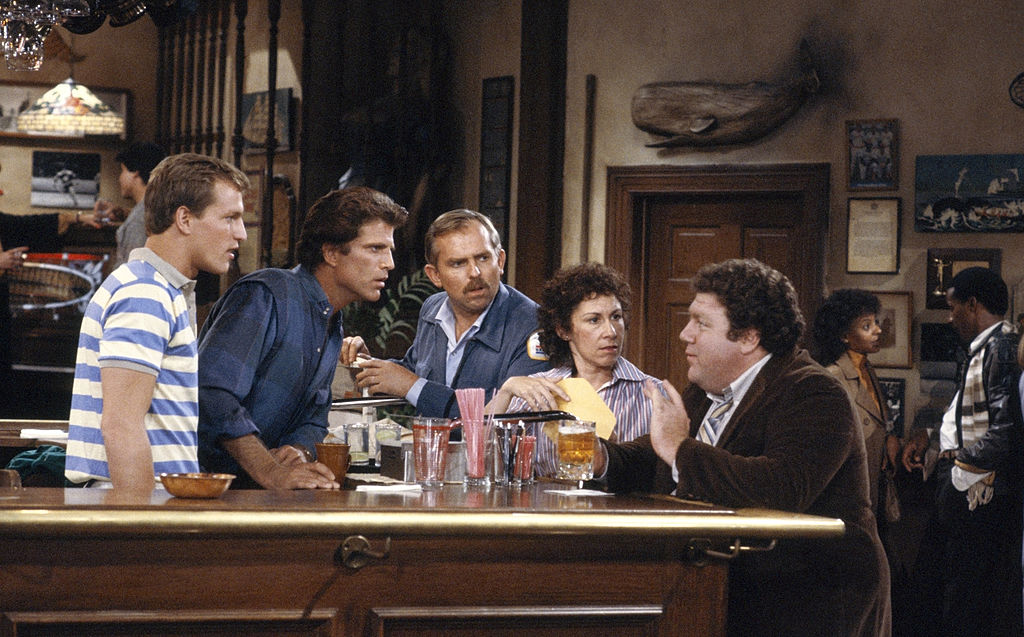
Don Bilson’s EDR column, August 4, 2025:
The final episode of “Cheers” ends with Sam Malone realizing that his one true love is his Boston bar. One could probably say something similar about another celeb that is intertwined with Boston, only instead of owning a bar, this someone owns Sam Adams, Boston’s most popular beer label. We’re speaking, of course, of Boston Beer (SAM) Chairman Jim Koch and it turns out that he has decided it’s time that he takes firmer control of the company he founded. What this means is Koch will be replacing Michael Spillane as CEO. The 65-year-old Spillane is a long-time SAM director who was named CEO in April of 2024. His run lasted just fifteen months and he’ll be passing the baton to Koch, who is 76 and hasn’t served as the company’s CEO since 2001. There is no obvious “Number Two” ready to step in for Koch so succession now becomes an issue.
Meet the authors
-

Partner, New York Office Head
New York
Jonathan is a Partner and Head of New York, overseeing the growth and operations of Brunswick’s largest office in the Americas with more than 250…
You might also like

Deployment: WFH

Building Belief