

As Europe confronts an increasingly interconnected risk landscape, new research from Brunswick Group raises pressing questions about the ability of governments, businesses and societies to prepare for disruption—and maintain confidence when crises strike.
Latest research from Brunswick Group reveals a substantial confidence gap across Europe. The Resilience Pulse 2026, conducted for Brunswick by YouGov across the UK, France, Italy and Germany, finds that at least half of respondents in each market believe their country is not well protected from security threats, with cyberattacks and disinformation emerging as commonly perceived vulnerabilities.
The findings reveal a challenge that extends beyond national protection into the corporate sphere. Public willingness to fund greater resilience remains limited, while many employees are uncertain about their organizations’ preparedness. This raises a fundamental question for European leaders: How can institutions build the trust, confidence and support they will depend on when the next crisis strikes?
The research comes at a critical moment. Conducted in April (Germany) and September 2026 (UK, France and Italy), the research highlights the importance of preparing for increasingly interconnected crises that can ripple outward to impact businesses, essential services and communities. For leaders, this means anticipating not only the immediate threat, but how disruption could spread.

“Resilience has become one of the defining leadership challenges for businesses and governments across Europe. As risks become increasingly interconnected, the consequences of disruption rarely stop at the initial incident. Our research points to a significant gap between the threats people perceive and their confidence in how institutions are preparing to respond. Closing that gap requires more than systems and processes—it demands credible leadership and clear communication. The leaders best equipped to withstand disruption will be those who have earned that trust long before it is tested.”
Sarah West | Managing Partner, UK & Europe
View from Europe
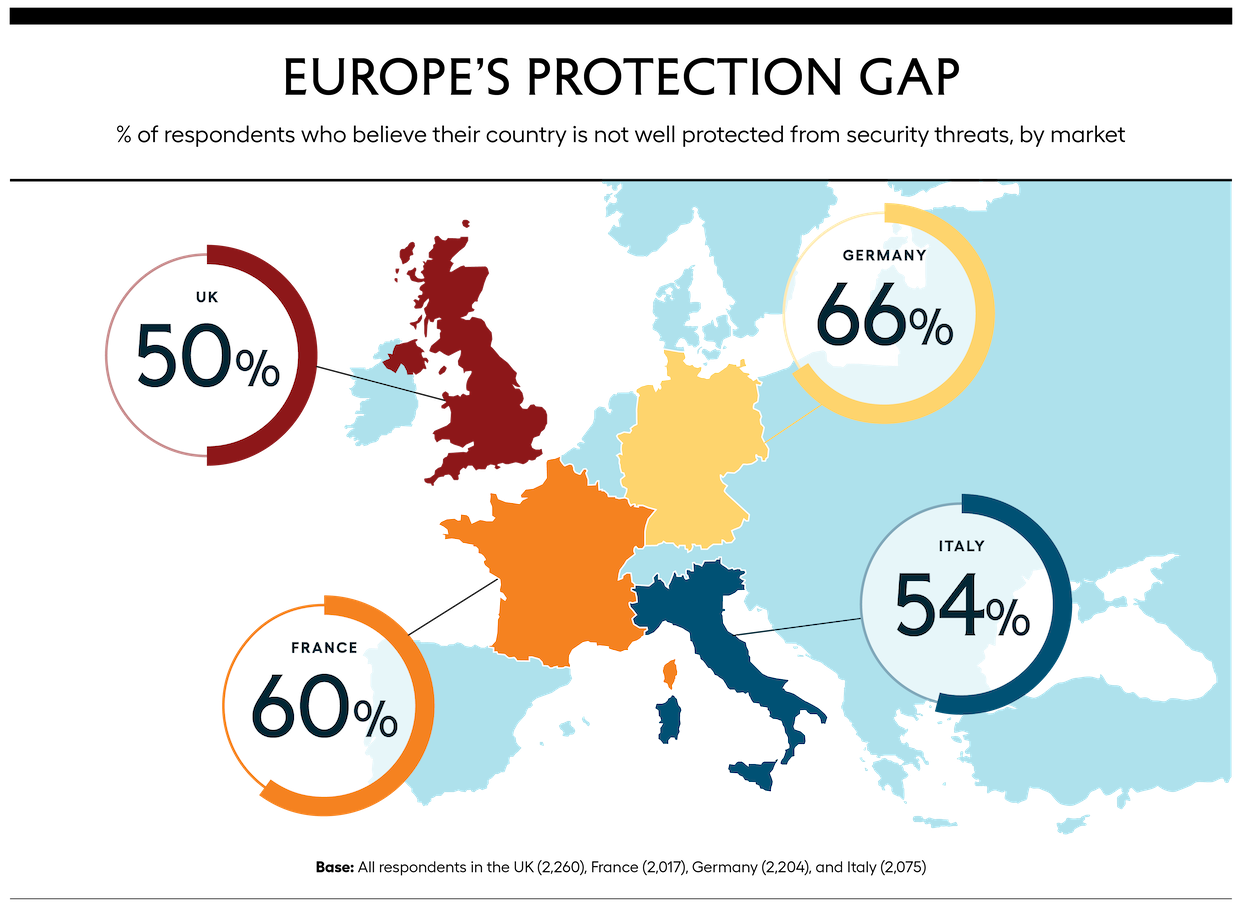
Public confidence in national protection is weak across all four markets. In Germany, 66% believe their country is not well protected from security threats, followed by France (60%), Italy (54%) and the UK (50%).
Digital threats emerge as the clearest shared vulnerability. In France, 76% believe the country is not well protected from cyberattacks, compared with 71% in Germany, 64% in Italy and 62% in the UK.
Disinformation is another common concern. Seven in 10 Italians (70%) believe their country is not well protected from disinformation campaigns, alongside 68% in the UK, 65% in France and 63% in Germany.
Perceptions of conventional security threats vary more widely. In France, 52% believe the country is well protected from military threats or armed conflict, compared with 45% in Italy, 43% in the UK and just 25% in Germany.
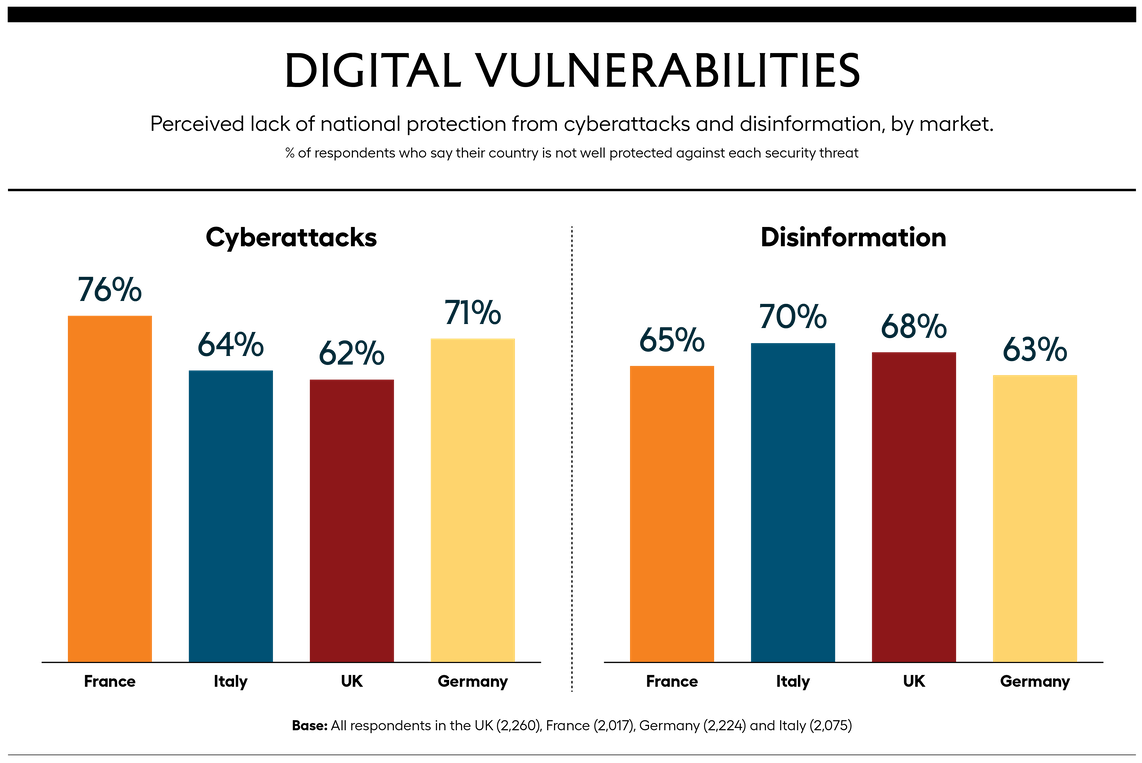
These differences may reflect national circumstances and expectations. But the shared concern about digital threats is striking: Cyberattacks can disrupt essential services and business operations, while disinformation can amplify uncertainty precisely when reliable information is most needed.

“Resilience is as much a leadership challenge as a technical one. AI is supercharging everything. With convincing deepfakes and impersonation tactics, it is ever easier for criminals to deceive employees and gain access to organizations, and geopolitical tensions are adding further layers of complexity. But what often determines how well an organization comes through a crisis is not just its ability to contain the threat, but how well its leaders have prepared to handle it. Can they make difficult decisions quickly, communicate clearly and maintain the confidence of their stakeholders? That kind of resilience cannot be improvised in the middle of a crisis.”
Marina Bidoli | Partner, European Cyber Co-Lead, Milan
Information Gap
Alongside concerns about protection, the research reveals a significant information gap. In France, 65% say they do not feel well informed about potential security threats, compared with 62% in Italy, 61% in Germany and 57% in the UK.
A generational divide is also evident. Across the four-market sample, 40% of 18- to 29-year-olds feel well informed about security threats, compared with just 28% of those aged 50 and over.
The research highlights a challenge for institutions: without clear, reliable and accessible information, people may struggle to understand the risks they face, the measures being taken to protect them and what they can do to prepare. Strengthening resilience therefore requires not only effective protection, but communication that builds understanding and enables people to act with confidence.
Credibility Test
Businesses have an important role to play in strengthening resilience, not only by protecting their own operations, but by helping employees and wider stakeholders navigate disruption. Yet the research reveals a gap between this responsibility and employees’ confidence in their organizations’ preparedness.
Employees report higher levels of awareness about their employers’ security measures—higher than the general public’s awareness of national security threats. Yet fewer than half of employees across all four markets feel well informed about the measures their organizations have in place.
France records the greatest information deficit on the security measures being put in place by employers, with 53% feeling poorly informed, compared with 37% who feel well informed. Italy presents a similar, if less pronounced, imbalance (45% versus 40%). Even in Germany, where awareness is highest, only 45% feel well informed.
The UK presents a different challenge. While employees are almost evenly divided on the question of security awareness, with 39% selecting well informed and 37% selecting poorly informed, 25% answered “don’t know”—nearly double the proportion in Germany (13%).
Confidence in their employers is similarly limited. In Germany, 44% of employees think their employers are well prepared, followed by the UK (40%), Italy (37%) and France (34%). In France, almost half of employees (48%) believe their employer is not well prepared.
The relationship between information and confidence is particularly revealing. In France, 70% of employees who feel well informed about their employer’s security measures believe their organization is well prepared, compared with 15% of those who feel poorly informed. Similar patterns emerge in Italy (67% versus 19%) and the UK (80% versus 21%).
France presents a further contrast: While only 34% of employees say that their employer is well prepared, 44% are confident it is investing sufficiently in security. This raises questions about how effectively investment translates into preparedness that employees can recognize and trust.

“For businesses, the information deficit is a risk in its own right. If employees, media, and investors do not understand what a company is doing to protect itself against new security threats, they won’t trust the company’s ability to withstand them. And when confidence in a company’s preparedness erodes, the consequences can extend well beyond reputation, affecting its relationships, operations and ultimately its business performance.”
Nicolas Bouvier | Partner, Paris
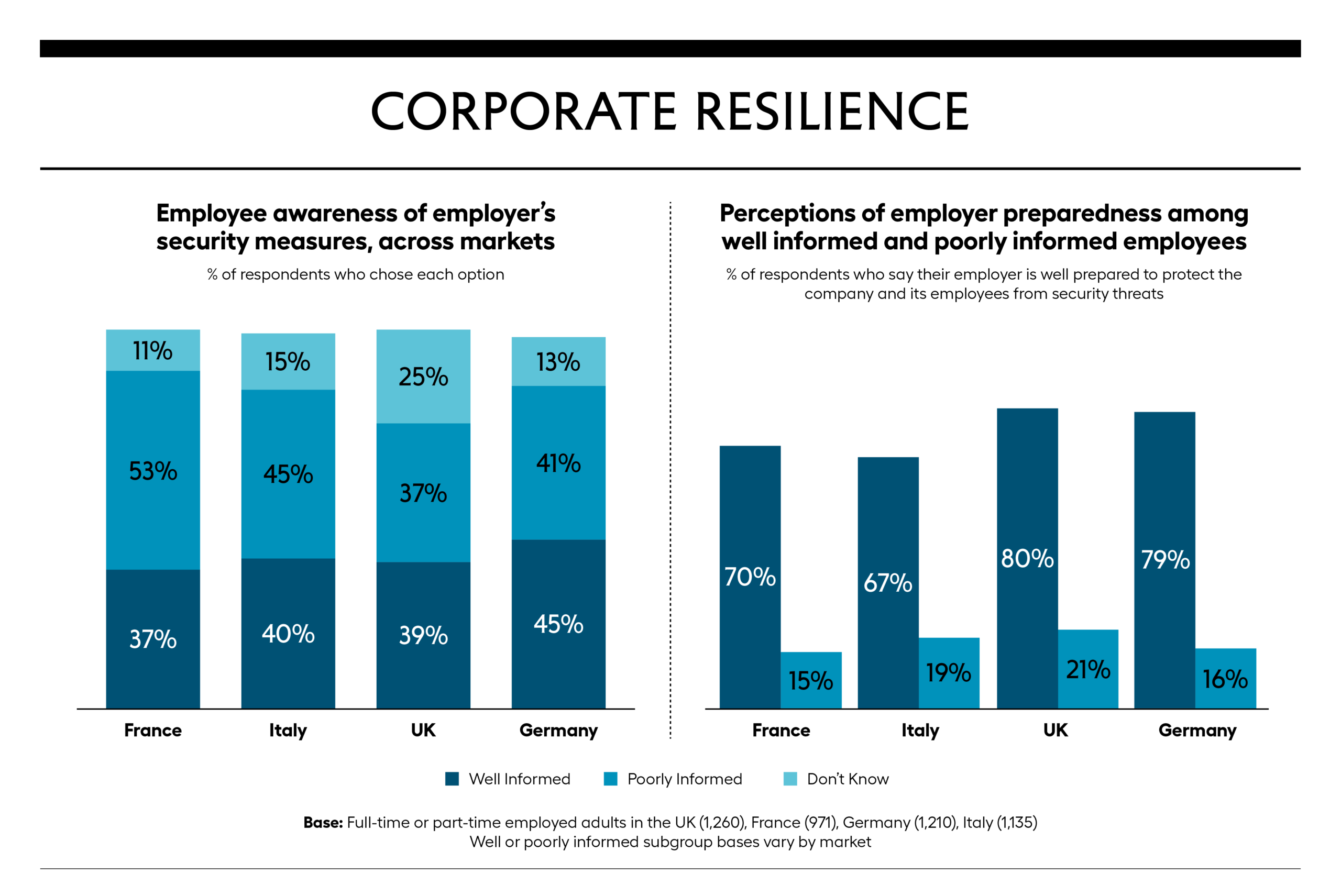
These findings suggest an important underlying question that business leaders must address: Does limited confidence reflect shortcomings in preparedness itself, or in employees’ understanding of the measures already in place? Or both?
For business leaders, preparedness must be demonstrated through credible action, clear communication and the relationships organizations build with employees and other stakeholders before disruption occurs. As businesses work to close the wider resilience gap, investment in protection alone will not be enough if employees do not understand what is being done or how they can contribute.

“When it matters most, companies need a robust resilience framework that is communicated and stress tested across the organization. It is critical for protecting employees, safeguarding business continuity and maintaining stakeholder trust. But frameworks alone are not enough. Organizations also need clear guiding principles, the agility to adapt to fast-changing developments and the confidence to make difficult decisions and prioritize resources under pressure. Those that embed resilience into their culture will not only navigate multiple, interconnected crises more effectively, but emerge stronger from them.”
Suntka von Halen | Partner, European Cyber Co-Lead, Munich
The Price of Greater Protection
Across Europe, widespread concern about security threats sits uneasily alongside limited willingness to accept various funding options to strengthen security and resilience. This creates a difficult dilemma for governments already facing competing spending priorities: How can they strengthen resilience while securing public support for the investment required?
Not even a third of respondents in any of the four markets support paying higher taxes for security and resilience measures. Support is highest in the UK (28%), followed by Italy (21%), Germany (17%) and France (14%).
When separately presented with three funding options—higher taxes, reallocating existing spending or increased government borrowing—41% in the UK said that they would accept reallocating existing government spending, compared with 28% in France, 26% in Germany and just 11% in Italy.
Italy illustrates the dilemma particularly clearly. More than half (54%) would accept none of the three funding options tested, compared with 41% in Germany, 39% in France and 23% in the UK. A deeper analysis reveals a further tension: Among Italians who believe their country is insufficiently protected, 61% reject all three funding options, compared with 47% among those who consider Italy adequately protected.
France highlights a related challenge against a backdrop of fiscal pressure. More than three-quarters of respondents (76%) are concerned about national debt, while just 14% support paying higher taxes to fund greater security and resilience.
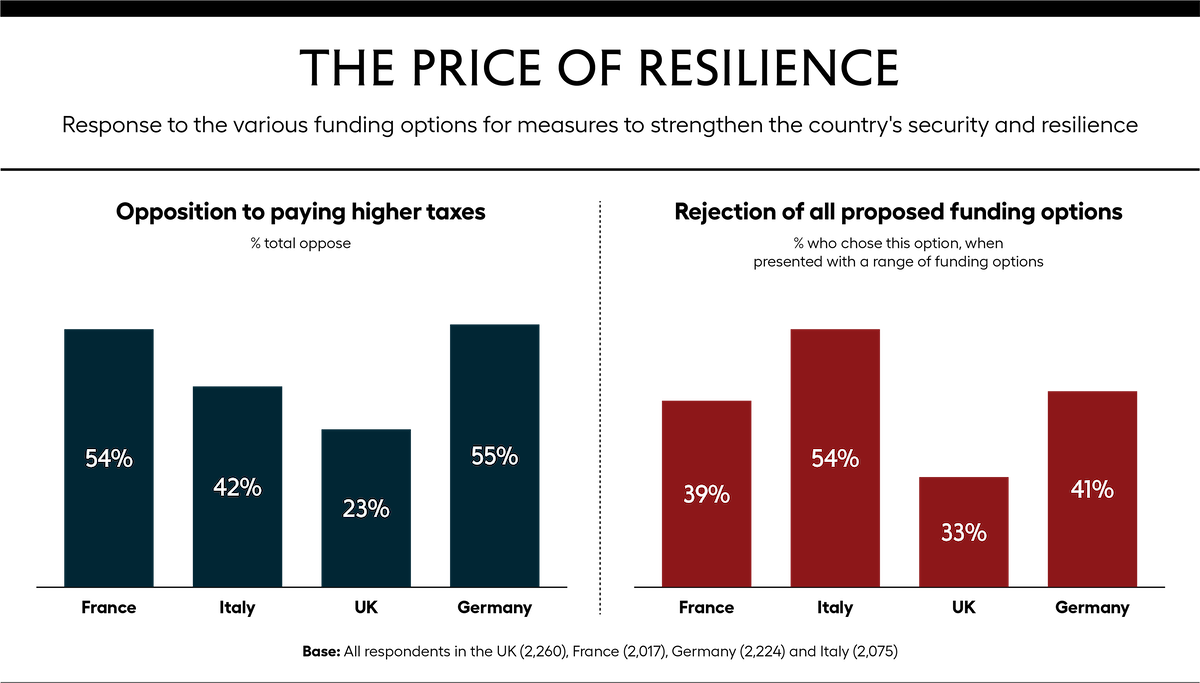
For policymakers, the challenge is not simply to identify where greater protection is needed, but to demonstrate the value of investment, explain the trade-offs involved and build public support for action.
For businesses, it raises a related question: What role can they play in strengthening resilience beyond their own operations, particularly where public resources are constrained?
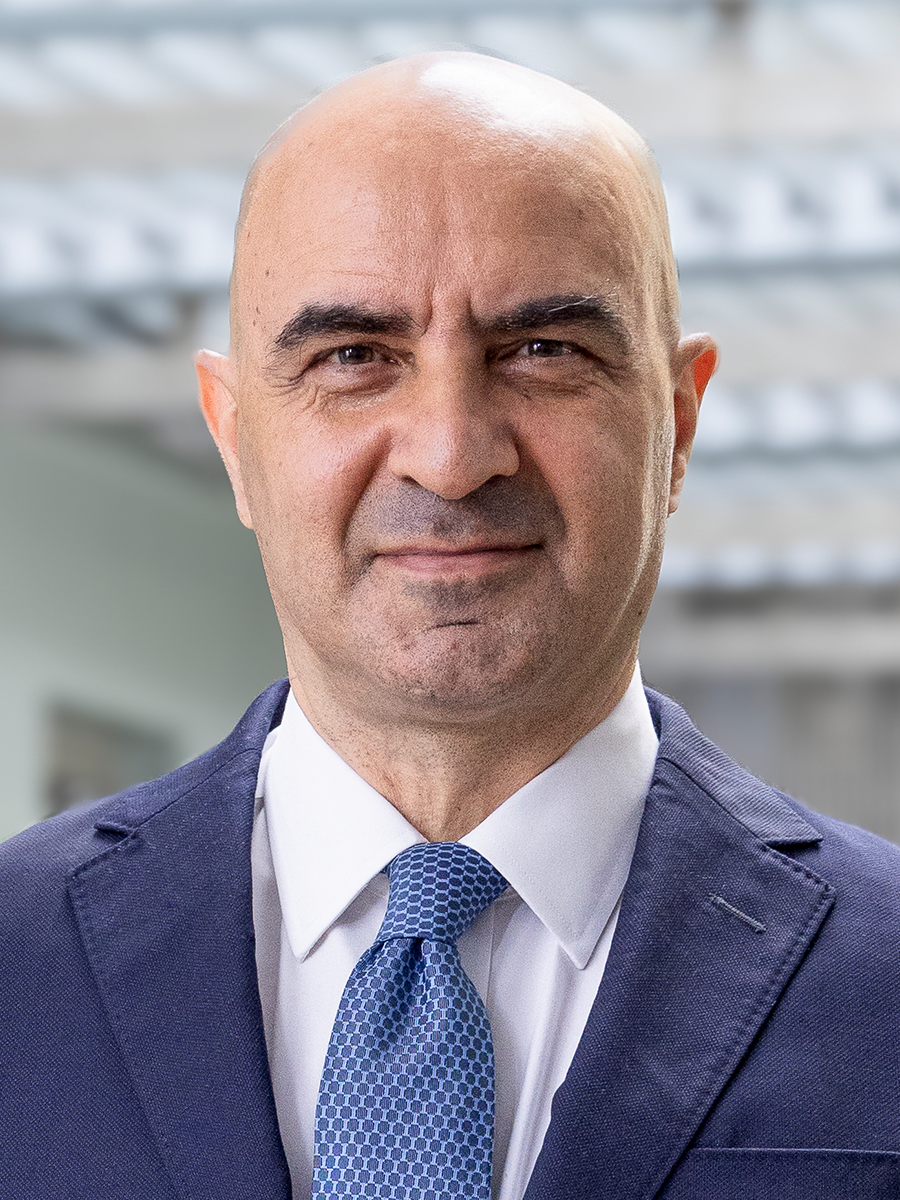
“With Italy approaching the 2027 elections amid growing geopolitical and economic uncertainty, businesses need to prepare for a range of political and regulatory scenarios. Resilience means understanding how these developments could affect investments, operations, and stakeholder expectations, and being ready to make strategic decisions while maintaining trust and business continuity.”
Alessandro Iozzia | Partner, Head of Milan
National Resilience by Industry
The research in France and Italy adds another dimension: which industries people believe have the greatest role in strengthening national resilience. In France, energy leads (35%), followed by defense and food and agriculture (29% each). In Italy, food and agriculture (28%) and healthcare (27%) rank highest, ahead of energy (23%).
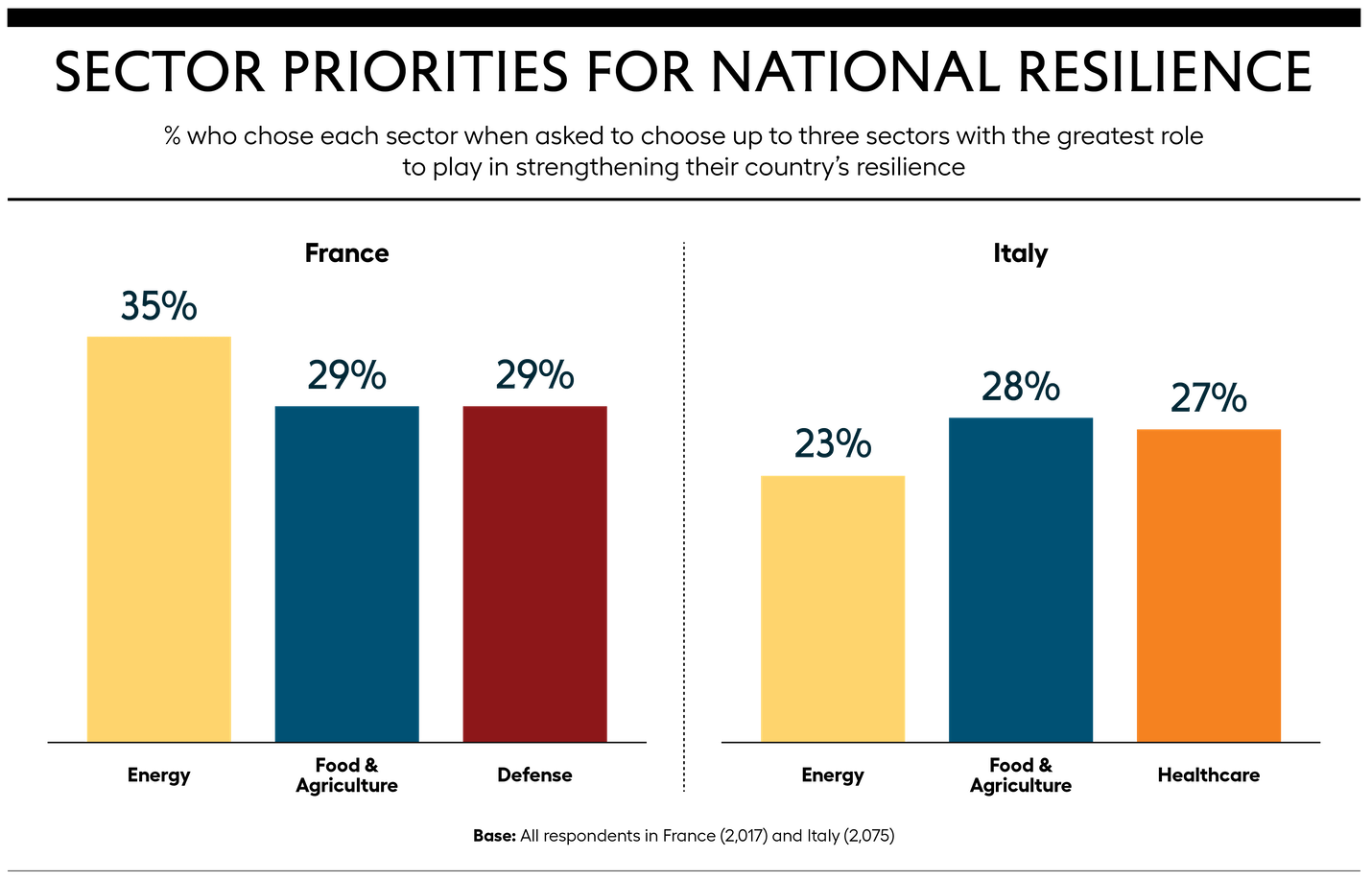
Although national priorities differ, the findings point to a broader understanding of resilience—one grounded in the continuity of essential goods and services, the security of supply chains and the ability of critical industries to operate through disruption.
They also raise questions about the role businesses in critical sectors may be expected to play alongside governments in maintaining essential services and wider societal stability.
The UK research highlights a related vulnerability: the ability of households to absorb disruption. While 55% expect their finances to remain stable over the coming year, 63% lack confidence they could cope financially with a significant reduction in income. Even among those confident in their household’s financial stability over the next 12 months, 51% doubt they could manage such a loss of income.
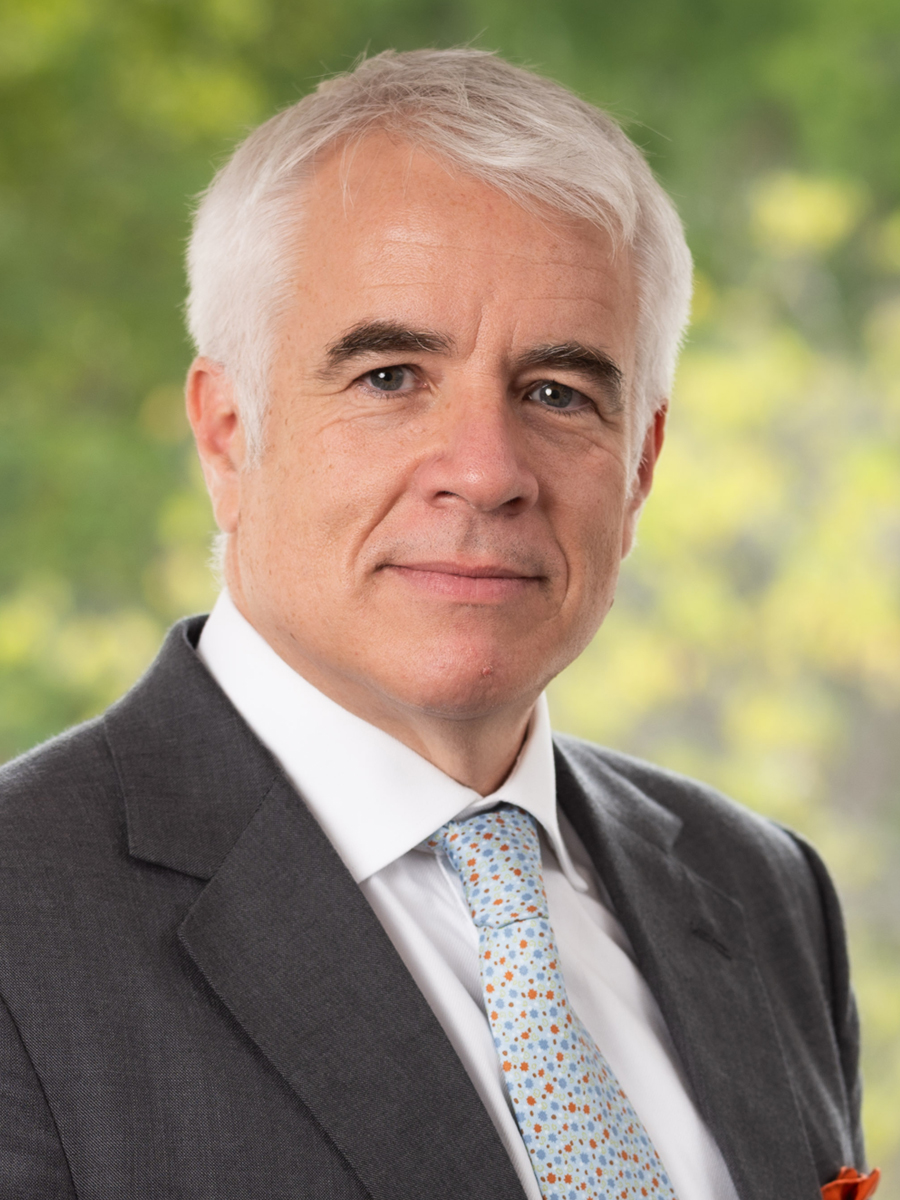
“A crisis doesn’t end when an organization restores its systems or resumes operations. For employees waiting for wages, suppliers facing delayed payments or customers relying on essential services, the consequences can last much longer. Businesses need to understand these dependencies before disruption strikes and prepare for the difficult decisions that follow.”
Dan Roberts | Partner, Global Co-Lead, Crisis, Paris
These findings highlight the importance people attach to businesses operating in essential sectors and raise broader questions about how companies can contribute to collective resilience alongside governments. Resilience must therefore account not only for the continuity of essential services, but for the capacity of the people and businesses that depend on them to withstand disruption.
Crisis Beyond the Crisis
As these findings suggest, the consequences of a crisis can extend far beyond the immediate disruption. Cyberattacks can become operational and reputational crises. Economic disruption can create workforce uncertainty and political scrutiny. Disinformation can intensify confusion when organizations most need stakeholders to trust the information they provide.
The next test of resilience may therefore come not from the initial incident itself, but from the wider consequences that follow.
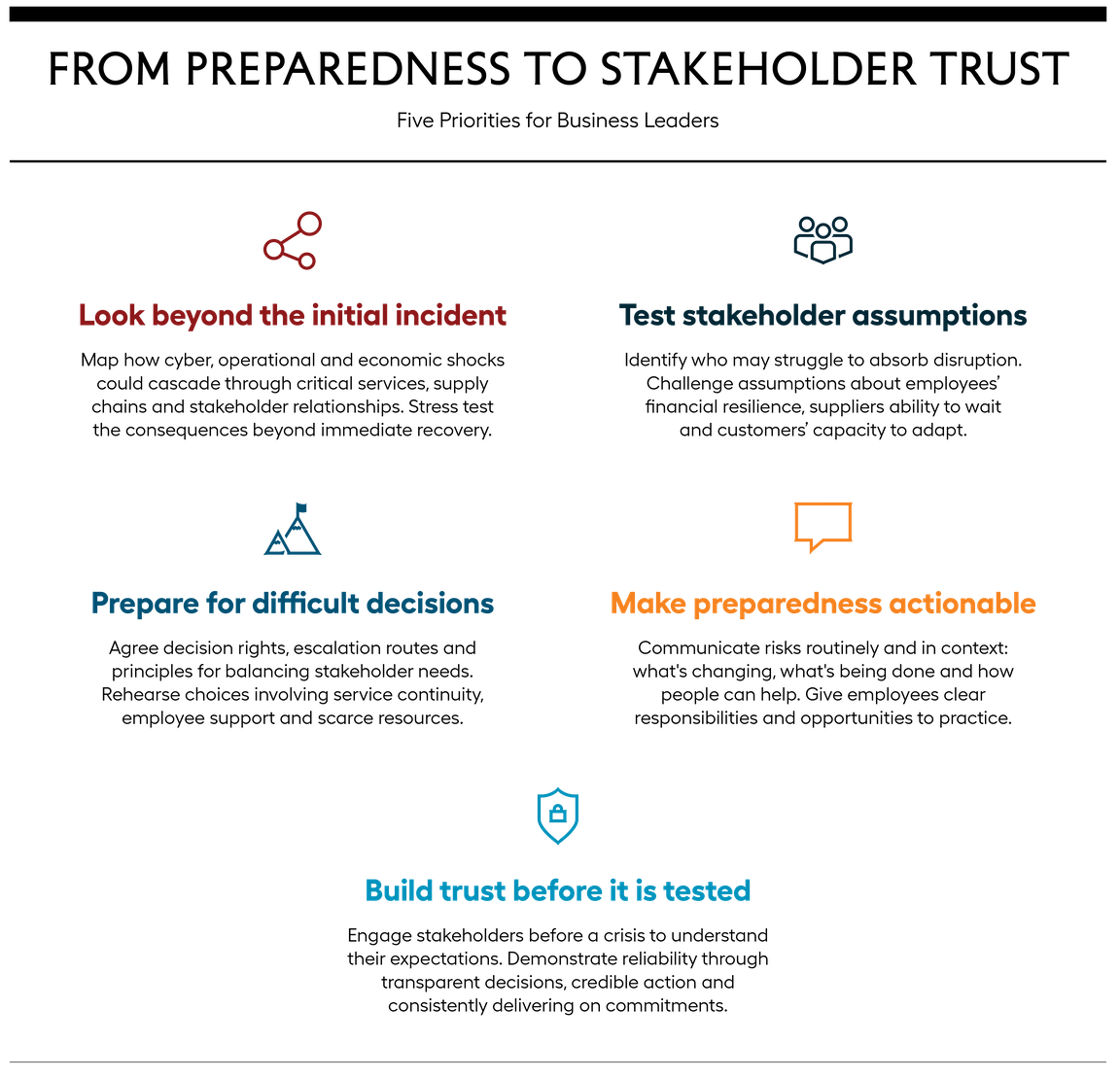
For businesses, this demands an understanding of the people and relationships on which they depend. A cyberattack that interrupts payroll may become a financial emergency for employees. Delayed supplier payments can create pressure further down the supply chain. Decisions that protect an organization’s operations may create new vulnerabilities for those relying on it.
Leaders must anticipate these consequences and establish how difficult decisions will be made under pressure. Robust systems and processes are essential, but so too are sound judgment, clear accountability and the ability to balance competing stakeholder needs.
Trust must be built before it is tested. Communication about resilience should be regular, proportionate and grounded in an organization’s operating environment. Employees need to understand the risks they face, what their organization is doing to prepare and what is expected of them when disruption occurs. Crucially, communication must be supported by credible action, clear responsibilities and practical opportunities to rehearse a response.
The same applies to governments. Public preparedness depends not only on protective measures, but on credible information, clear expectations and confidence in institutional leadership.
Ultimately, resilience will be judged not simply by how quickly an organization recovers, but by whether it has earned the trust and built the relationships needed to bring its stakeholders through the crisis with it.
Download the individual studies: Germany, France, Italy, UK
About The Resilience Pulse: The Resilience Pulse is a Brunswick Group study conducted online by YouGov among 8,576 adults across four European markets: the UK (n=2,260), France (n=2,017), Italy (n=2,075) and Germany (n=2,224). Data were weighted to be representative of the adult population (aged 18+) in each country. Fieldwork took place between 24 and 27 April 2026 in Germany and between 10 and 24 September 2026 across the UK, France and Italy. Differences involving Germany may therefore reflect the timing of fieldwork as well as differences between countries. The findings reflect respondents’ perceptions and attitudes rather than objective assessments of preparedness. Results are representative of the individual national adult populations surveyed, not Europe as a whole.
Additional Contributors:
France: Julia Cailleteau, Account Director; Katarina Rebello, Director; Sophie Gotelf, Director
Germany: Dr. Joachim Peter, Partner; Alexander Gruber, Associate; Suntka von Halen, Partner
Italy: Angela Convertini, Associate; Cesare Calabrese, Director; Chiara Bellieni, Executive; Natasha Aleksandrov, Director
United Kingdom: Laura Sullivan, Partner; Owenna Griffiths, Partner; Sean Gordon Dalton, Executive; Simon Finkelstein, Director
Contributing Experts: Sarah West, Managing Partner, UK & Europe, London; Marina Bidoli, Partner, European Cyber Co-Lead, Milan; Nicolas Bouvier, Partner, Paris; Suntka von Halen, Partner, European Cyber Co-Lead, Munich; Alessandro Iozzia, Partner, Head of Milan Office; Dan Roberts, Partner, Global Crisis Co-Lead, Paris
Meet the authors
-

Associate
London
Beverly is an Associate and the European Crisis Practice Manager, based in London. She advises global clients on reputation building, crisis and transformation. -

Director
London
Mike has over 20 years’ experience across roles in insights, consultancy, and academia. He specialises in helping clients turn data and intelligence into insights and… -

Director
London
Jack provides data-driven advice to organisations facing critical issues, grounded in his expertise in opinion research. -

Account Director, Insight
London
Zarya is an Account Director with Brunswick Insight in London, where she works across qualitative and quantitative research and data analysis, with a focus on…
You might also like


A Privacy Expert on Profits, AI and … Dystopian Sci-Fi