

Global business leaders are under historic levels of stress.
The Brunswick Leadership Stress Index tracks what keeps business leaders awake at night, drawing on a multi-method research program combining long-term data analysis, a major international survey of C-suite executives, and in-depth interviews with CEOs and senior advisors across the US, Europe and Asia.
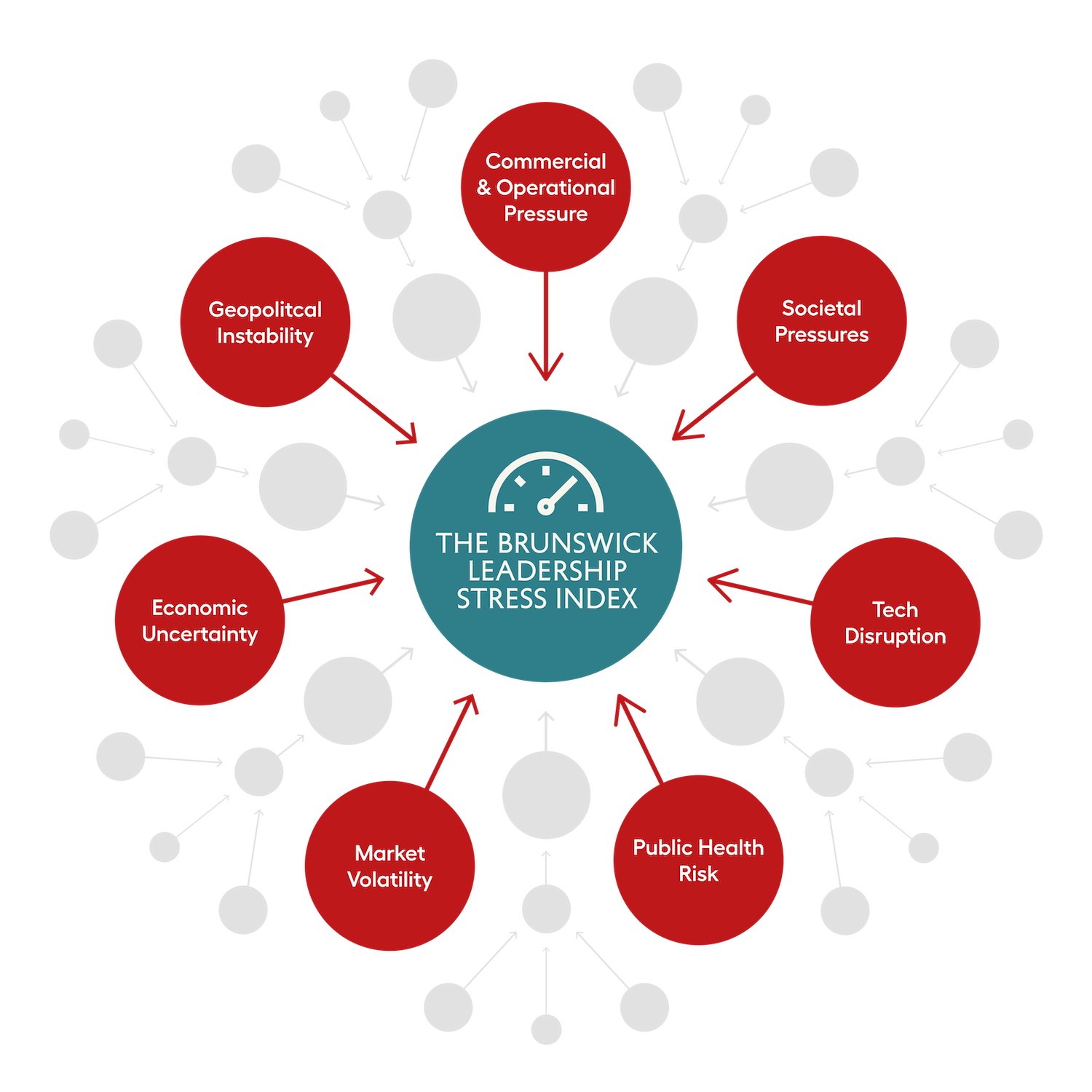
The Index tracks the main stressors facing CEOs across several domains, including economic uncertainty, market volatility, geopolitical instability, technological disruption and sustainability risk. We measure these using publicly available data alongside Brunswick’s own analysis, then weight each factor based on how CEOs told us they worry about and prioritize these risks, combining them into a single overall indicator.
The findings paint a stark picture of leadership under strain: Pressure is intensifying, the pace of disruption is accelerating and many leaders feel exposed and under-prepared for what comes next.
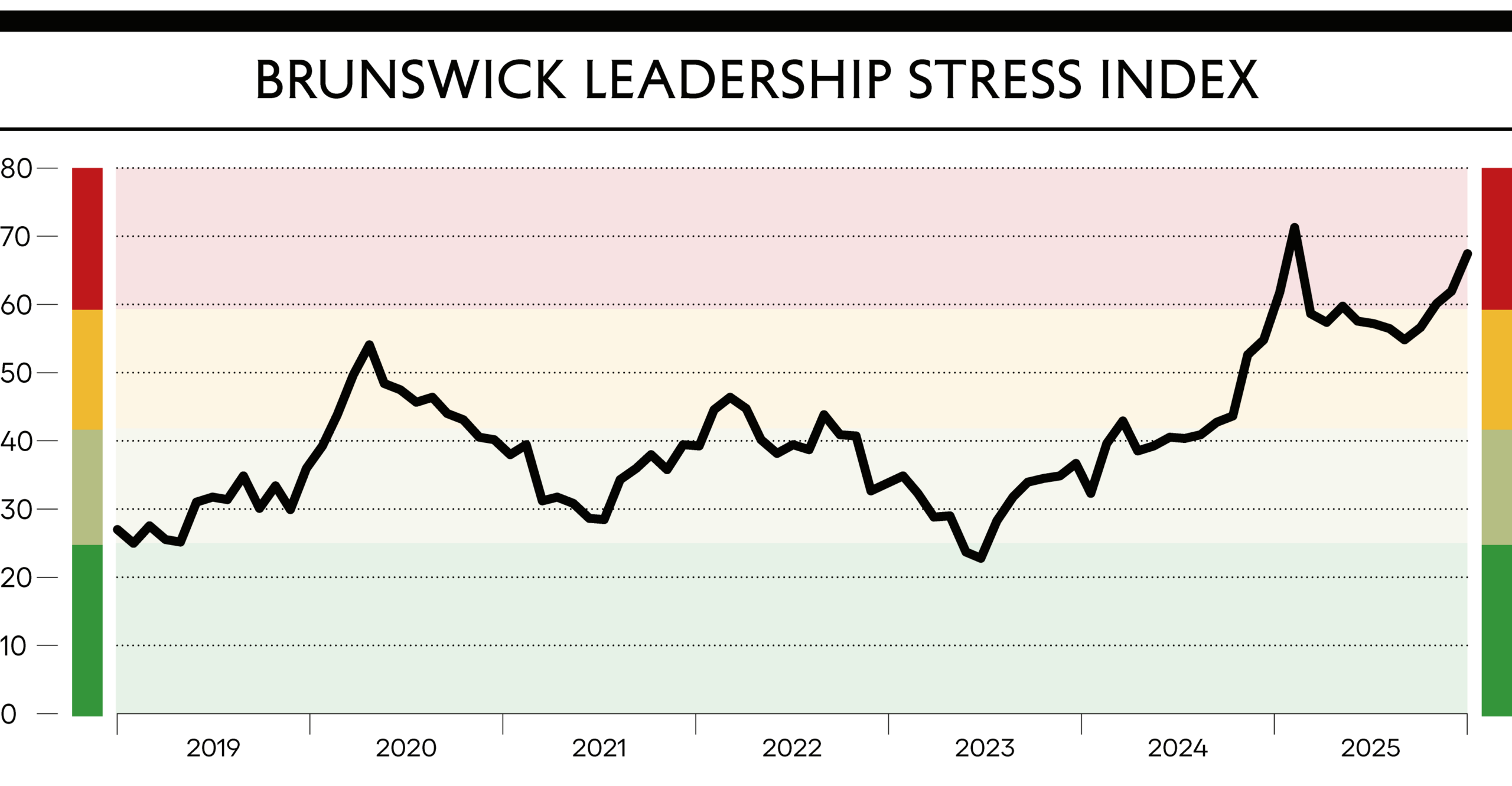
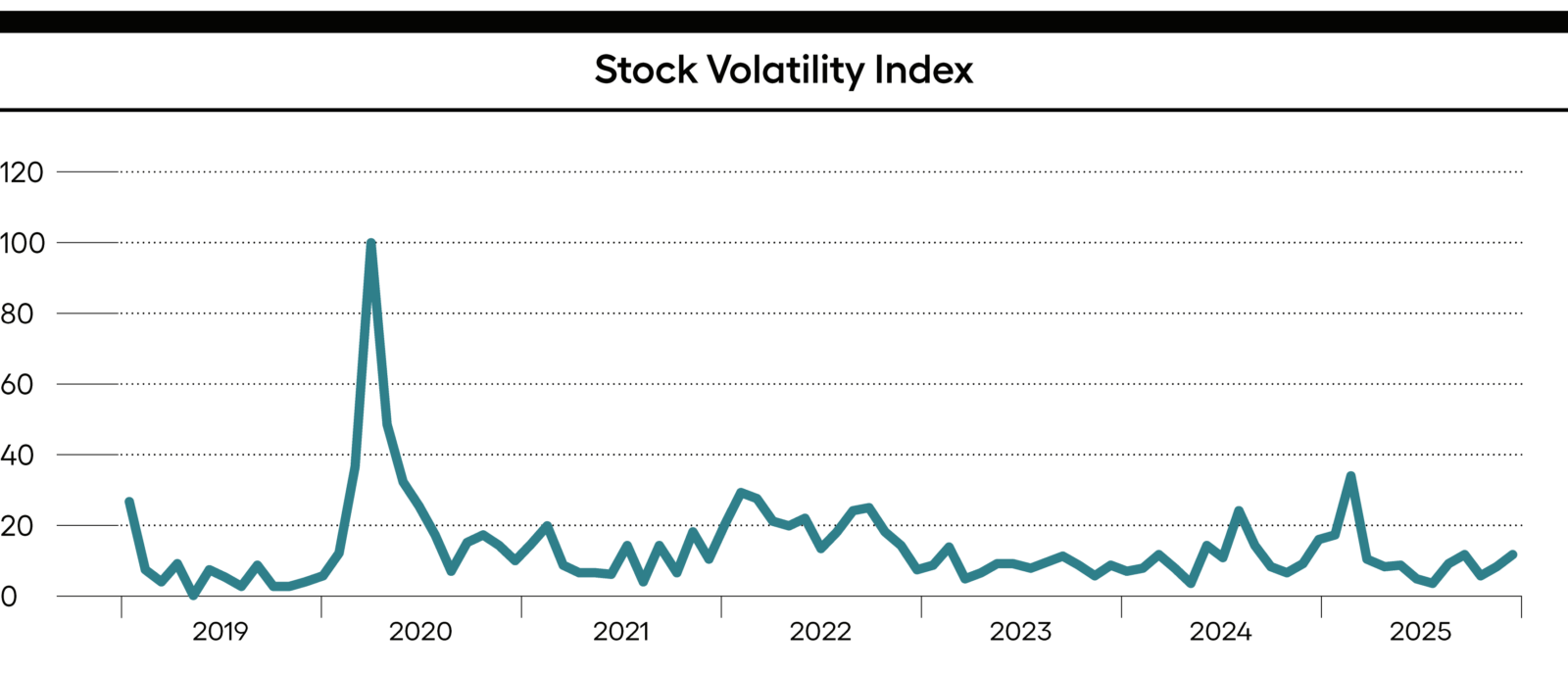
In recent months, pressure facing leaders has been higher than even during the Covid-19 pandemic. As one leader told us: “During the pandemic there was a clear enemy, a shared enemy. Now it’s coming from all directions.”
Leaders Say Stress Is Rising—And Likely to Rise Further
The Index is underpinned by a new international survey of 400 senior leaders at large corporations across the US, UK, Germany and Japan—one of the most comprehensive snapshots to date of executive stress.
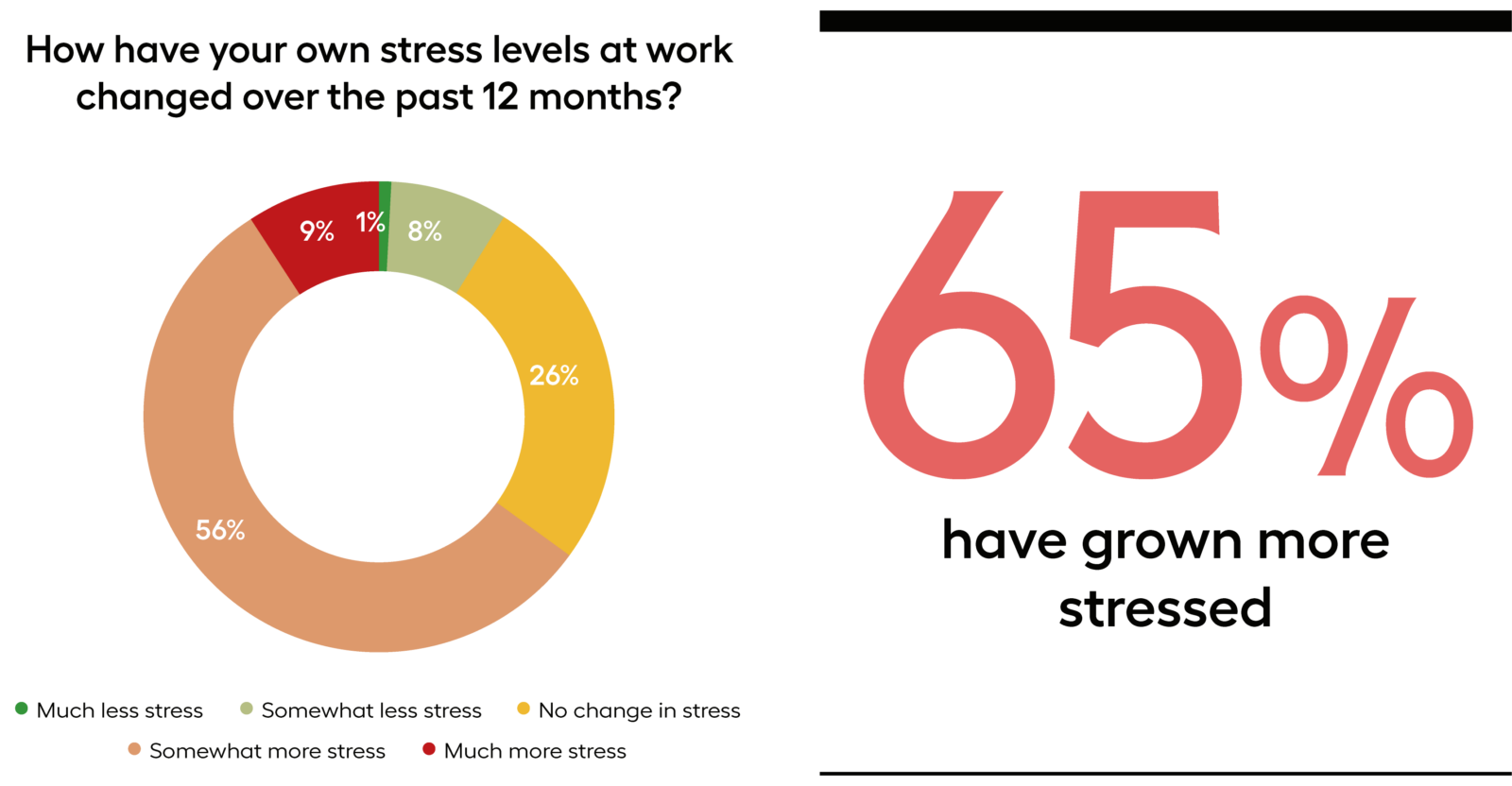
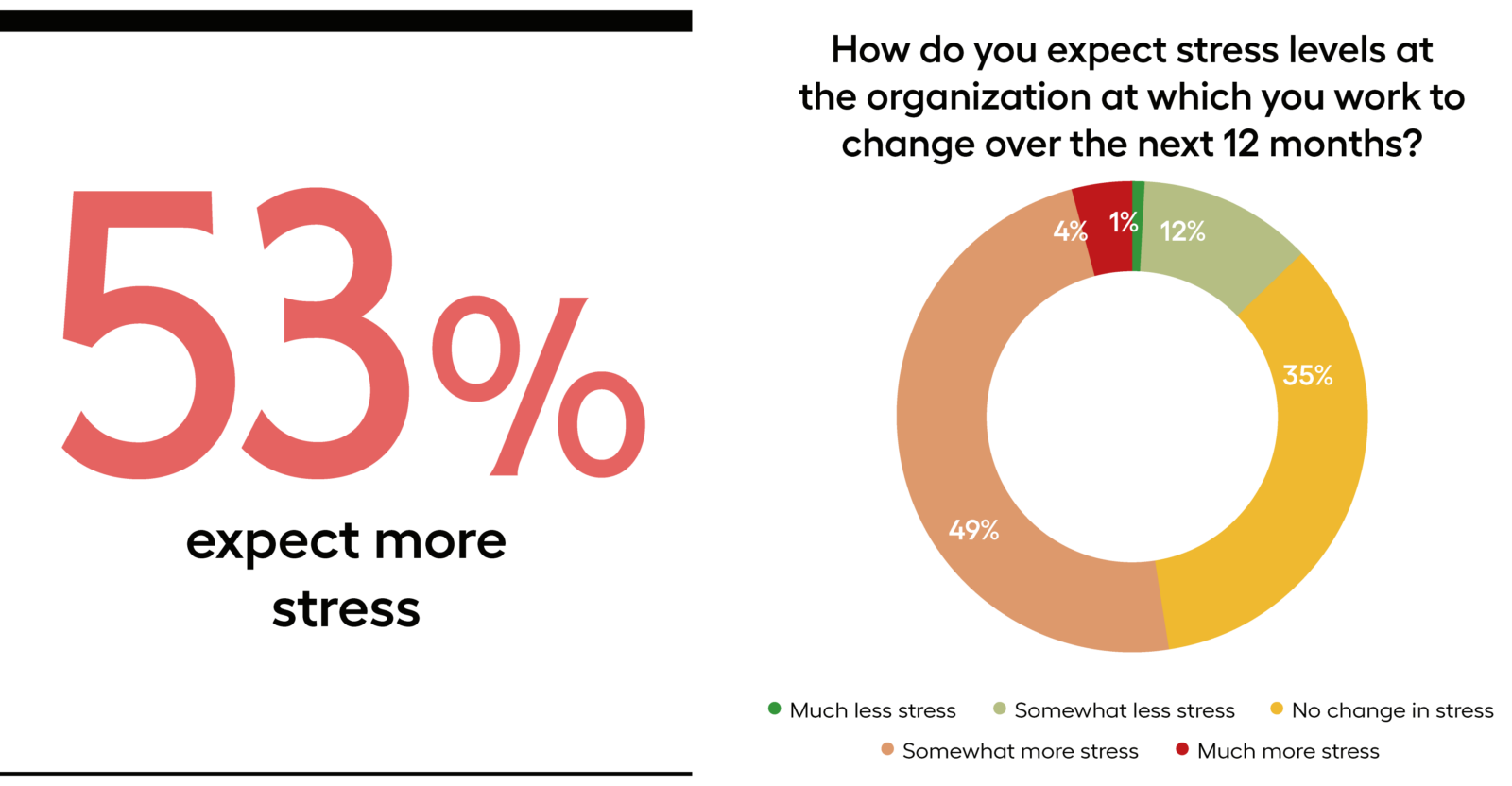
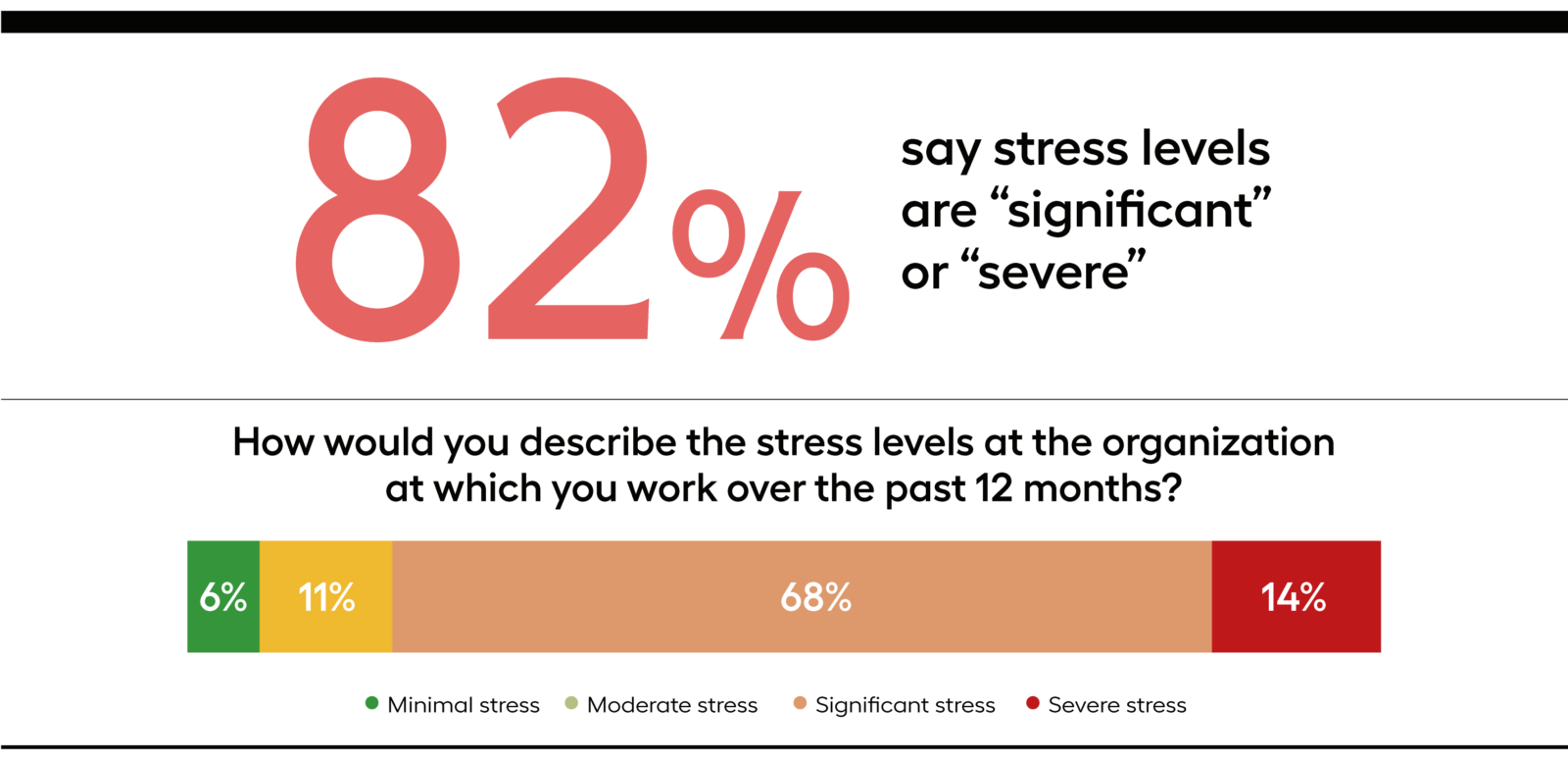
As well as investigating the impact of pressure on individual leaders, we also wanted to get a sense of the effects at an organization level. Here too, the results are stark.
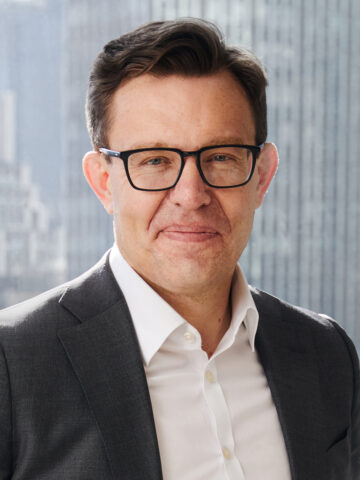
“The message here isn’t that leaders need to meditate more—although that might help. We need to talk about shifting the cognitive load from individual leaders onto intelligent systems, tools and culture. That’s how to manage pressure and improve performance.”
Henry Timms
Brunswick CEO
The High-Stakes Issues For Leaders
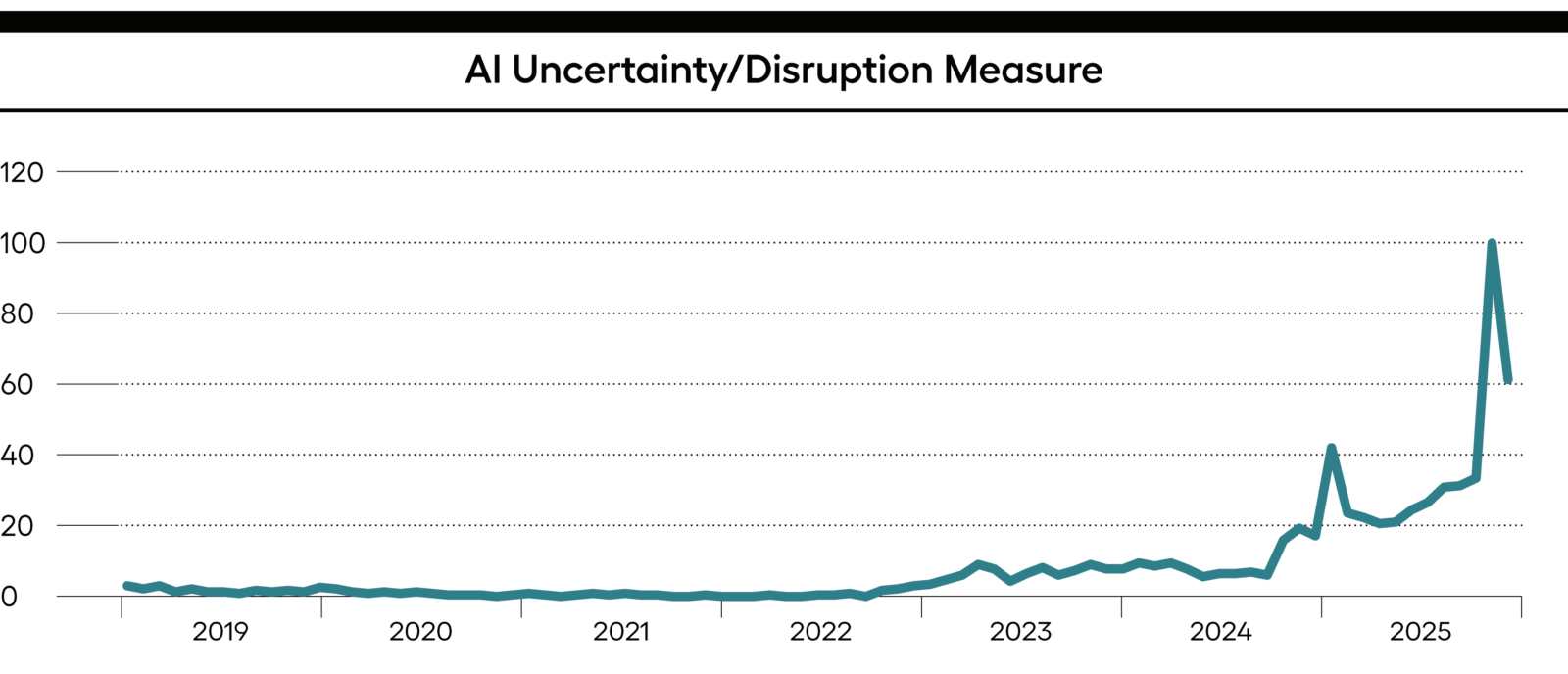
AI Disruption
No issue was more pressing for the leaders we spoke with than AI disruption, yet the execution gap is huge.
68% of leaders put digital transformation at the top of their agendas, but only 6% say AI is integrated into their business.

“AI is forcing CEOs to make high-consequence decisions before the rules, risks or expectations are settled. That is why this is not just another technology shift. It is a test of leadership judgment: how to move fast enough to capture the opportunity, carefully enough to protect trust, and clearly enough to bring employees, investors, customers and regulators with you.”
Claire Thomas-Daoulas
Partner, Co-Lead European Technology, Media & Telecoms Practice
Economic Uncertainty
Leaders are braced for a shock, but most feel unprepared.
71% see a major market shock as likely in the next year, yet only 33% feel their business is prepared.
“It’s often said that the worst thing for investors isn’t bad news—it’s unexpected news. For CEOs, a similar sentiment applies to economic data: downturns and headwinds are unhelpful, but instability and unpredictability are harder to manage. Forecasting becomes less reliable, which adds risk to capital allocation and makes it harder to generate value for and communicate with shareholders.”
Jonathan Doorley
Partner, Global Financial Practice Lead

Policy Pessimism
A backdrop of uncertainty and pessimism around management of the economy.
57% of leaders are anxious that their country is on the “wrong track,” and 63% disapprove of their government’s handling of the economy.
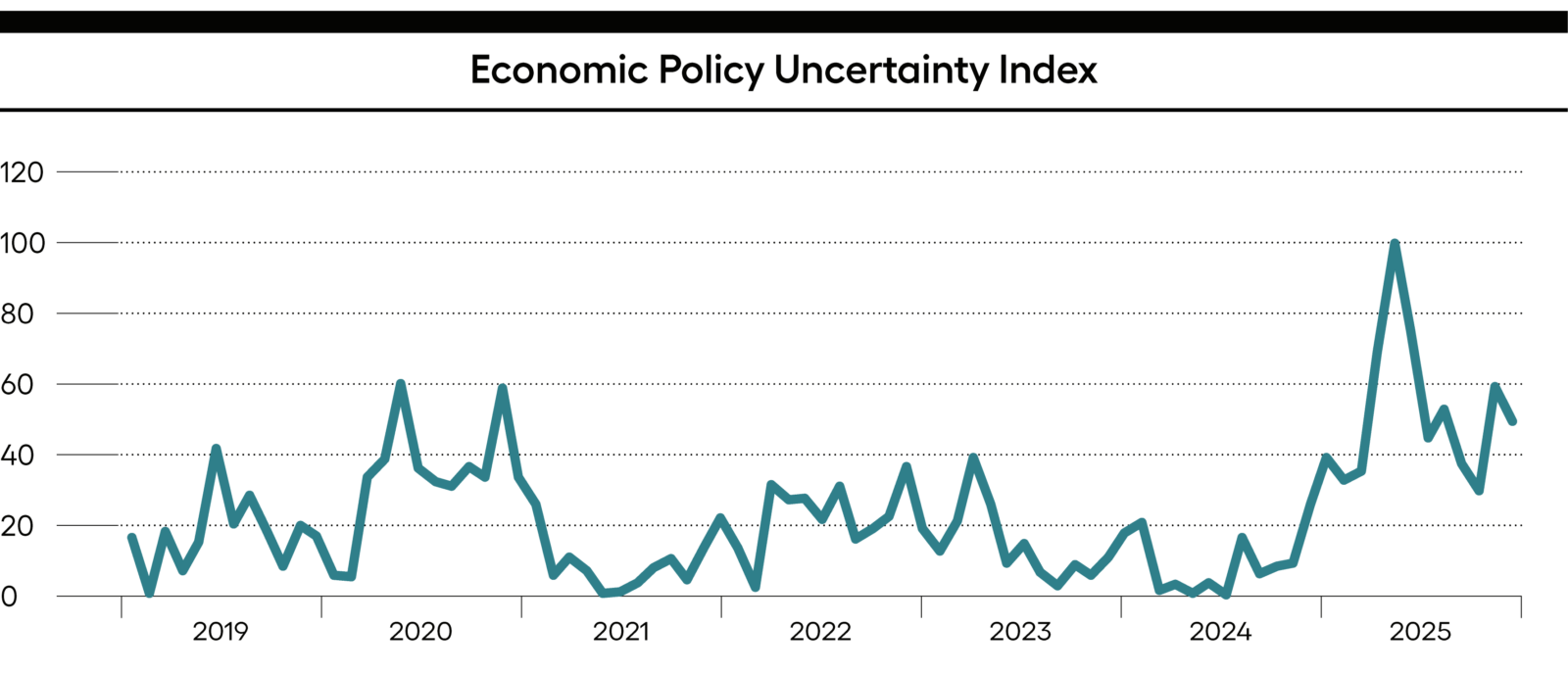

“We’re seeing a cumulative fatigue here: Successive shocks have reduced confidence that institutions can restore predictability, nobody expects that the external political and regulatory environment will become easier to navigate any time soon. Given polarization, it may never be again.”
Patti Solis Doyle
Partner, US Public Affairs, Policy and Regulatory Co-Lead
Societal Pressures
Environmental/social activists are the most impactful source of external pressure, but few are prepared for increased societal risks.
52% expect societal risks (DEI, climate, inequality) to increase, but 80% say they are largely unprepared.
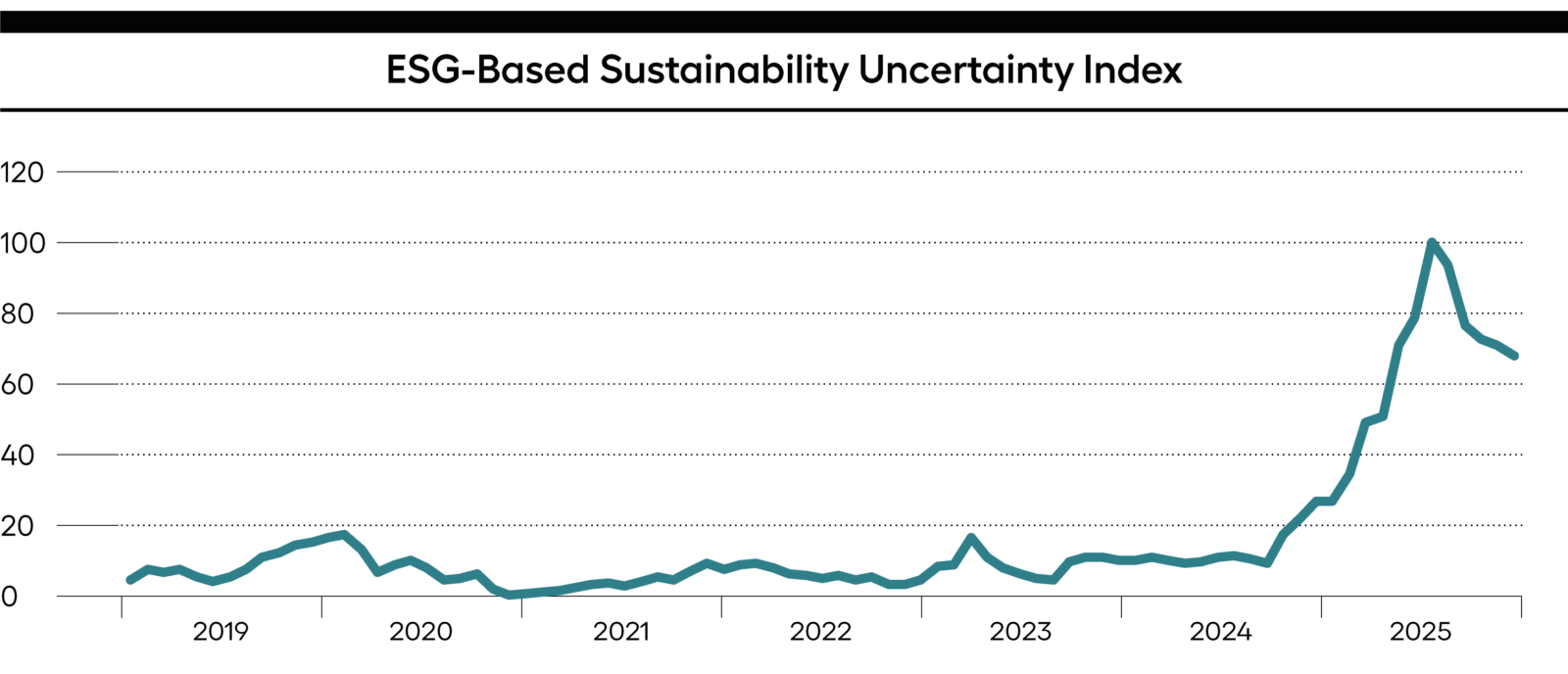
“What we’re seeing is that societal risks are rising, and the challenges are coming from all directions—employees, investors, policymakers, customers, the list goes on. Regulations vary by market, expectations keep shifting and social norms are increasingly contested. The uncertainty for leaders just keeps on growing.”
Lucy Parker
Senior Partner, Co-Founder of Sustainable Business practice group

Activist Investors
Shareholder activism has hit new highs, but leaders aren’t expecting it, and aren’t prepared for it.
79% of leaders think that an attack by activist investors on their business is unlikely, and only 33% say they are prepared for an attack if it comes.
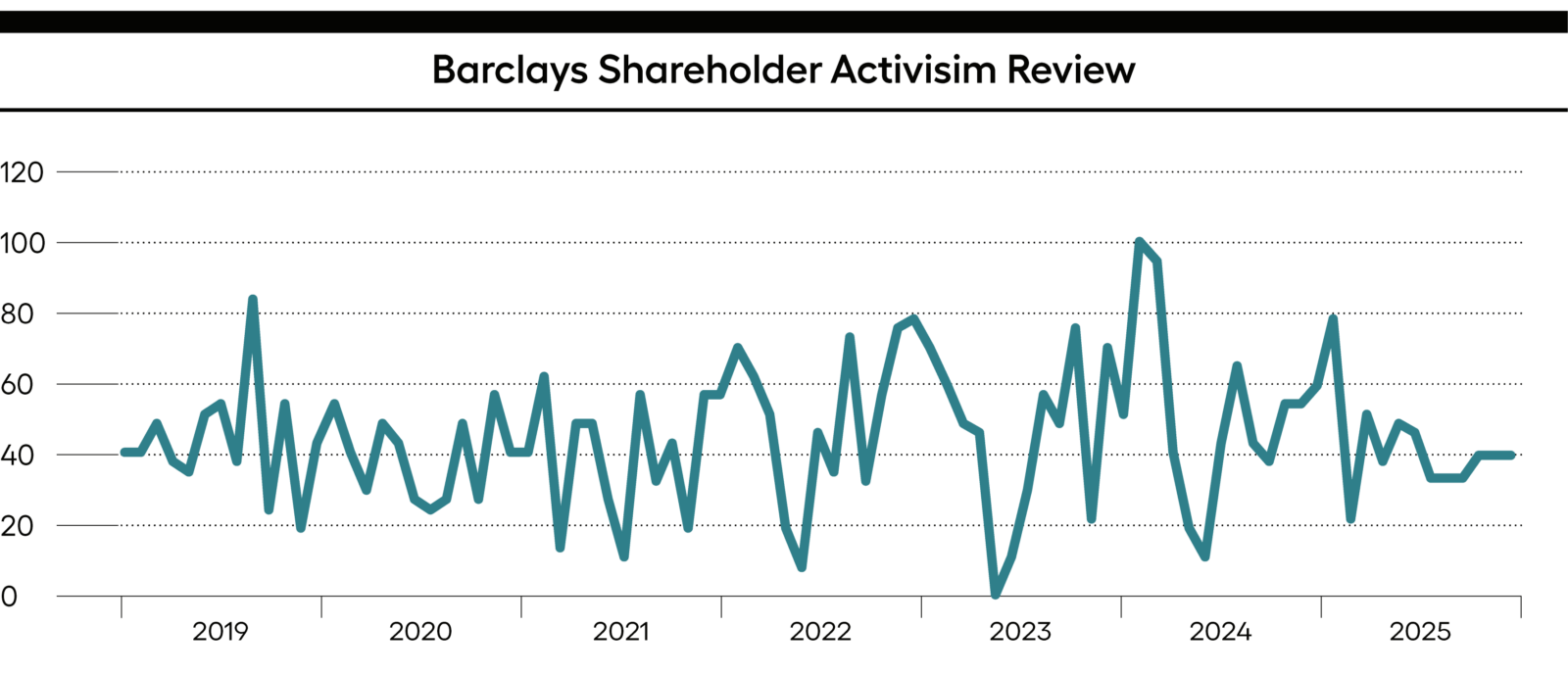
“Campaigns by activist shareholders reached a record level in 2025, and in fact activity has remained above average for four consecutive years. This is a new reality for CEOs, and a rising number of them are stepping down following activist interventions. With the range of activists, ensuring you have a deep understanding of their strategy and likely tactics is critical to ensure your defense campaign is effective.”
Simon Sporborg
Senior Partner, Global Financial Practice Lead
Geopolitical Instability
Such instability is a higher stressor in non-US countries targeted by tariffs.
In Germany and the UK, geopolitical instability is the third-most-pressing issue. In Japan, it ranks fourth. But in the US, geopolitical instability does not crack the top 5.
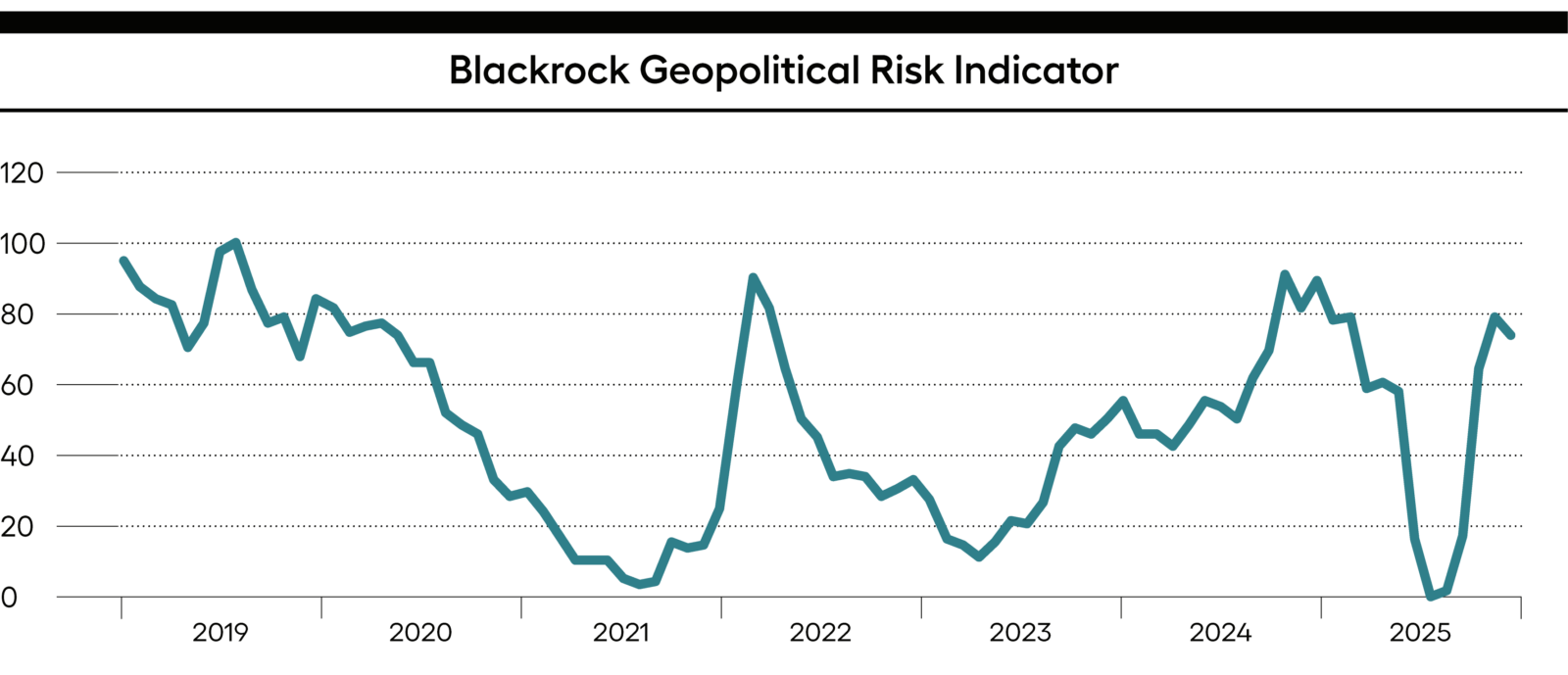
“Asia Pacific is the epicenter of escalating strategic competition, supply chains complexity and technological disruption; and disproportionately impacted by Iran conflict-related energy and commodity shock waves. Deep geopolitical, policy and regulatory awareness have moved from the periphery of risk management to become a priority, not only because of the significant costs accompanying meeting complex compliance needs, but because it is increasingly a defining feature of what it means to be a global business.”
Michaela Browning
Partner and CEO, Asia Pacific
Talking to Senior Leaders
Alongside our high-level international survey, we spoke to dozens of CEOs, C-Suite functions and those who work closely with them including Chief of Staff roles and senior advisors. Here are some of the themes that emerged.
The Job Has Changed
The role of a CEO today is to manage complexity across multiple, intersecting systems, and to do this in a time of global instability and cascading crisis. They must manage domino-effect risks and interdependencies that exceed traditional scenario planning.
“I’m glad I’m not a CEO today. I had my share of challenges, but for CEOs now it’s in spades. The CEO today has to be a diplomat, a foreign policy expert, a sociologist, understand all the social trends, and has to be great at running the company…” said one survey respondent.
As another executive told us: “The top jobs are so much more complex now—it takes a special kind of person to want to be a CEO these days!”
The Pace is Increasing and Unrelenting
Leadership attention is increasingly concentrated in very short cycles: nearly half of CEO time is spent on issues under one year. This reflects shrinking time horizons across the board: shorter innovation cycles, faster technology diffusion, leading to seemingly relentless market disruption.
“Leadership is an endurance sport,” one executive told us. “You’re expected to run sprint after sprint after sprint, and there’s no space for the recovery.”
“It’s the immediacy. Everything is compressed. The buffers have gone, events just bang into each other. You’re still dealing with the last crisis when you’re thrown into the next one, so there’s no longer any time to catch your breath, to reorientate,” another leader said.
A Constant Sense of Jeopardy
Today’s leaders must manage perpetual turbulence, dealing with radical uncertainty in real-time with incomplete information. As the final decision-makers, CEOs carry the brunt of this stress. It’s a high-wire act, every move subject to increasing scrutiny, critics on all sides waiting for the slightest misstep. “CEOs used to plan an exit, work on a succession plan,” one leader told us. “Now I think most of us feel the end will probably be unexpected and could come any time.”
An executive half-joked: “No crisis ever happens in the middle of the day when you’re all in a room and you can manage it.”
Another said, “At any moment you could be hauled in front of the senate or find yourself on the front page. You could wake up any morning and find you’ve been fired. My advice is, don’t turn on your phone ‘till after breakfast!”
The Brunswick Leadership Stress Index is developed by Brunswick Group, alongside the Institute for Business in Global Society at Harvard Business School. The team is Drew Keller, Barton Lynch, Travis Malone and Jon Miller.
Meet the authors
-
Partner
London
Jon left an award-winning career in advertising to help businesses play a more positive role in the world. He is the founder of Open For… -
Account Director
San Francisco
Barton is a University of Houston-certified Strategic Foresight researcher with client experience across issues and industries.
You might also like

25 Years Later
Exponential